
 Ishan Crawford
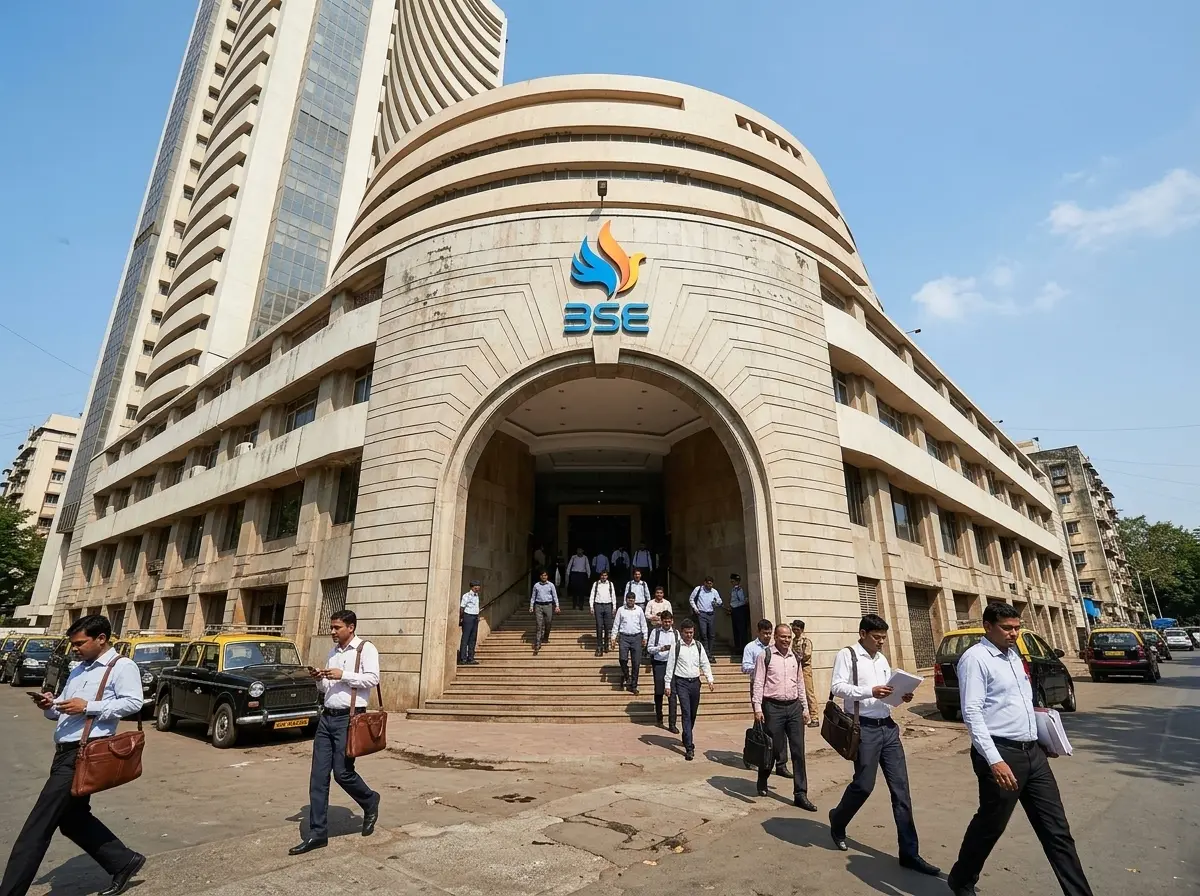
 Jefferies cut BSE Ltd to underperform from hold and lowered its price target 16% to Rs 2,940 from Rs 3,520, citing stacked pressure on the domestic proprietary traders who drive half or more of equity options notional turnover. The stock fell as much as 5% on Monday to session lows near Rs 3,283 after closing the prior session at Rs 3,502.80, a market value near Rs 1.4 lakh crore.
The note lands two weeks after the Closing Auction Session went live and months after the STT hike and tighter bank-guarantee rules began raising costs for the very desks that had fuelled BSE’s options growth.
The downgrade crystallises a shift already visible in the August turnover data. The same prop complex that once amplified BSE’s share gains is now absorbing higher tax, funding and close-auction costs at once, and the early volume response has been swift enough to force earnings and multiple resets.
Three rules hit the same revenue pool
Domestic proprietary traders account for 50-60% of equity options notional turnover, Jefferies said, with domestic firms likely half of that slice. The brokerage’s conversation with one futures and options trader pointed to higher losses for those desks under the new close auction.
The securities transaction tax changes from Budget 2026 raised futures STT from 0.02% to 0.05% and options premium STT from 0.10% to 0.15%. Those costs land heaviest on high-turnover prop books.
- STT hike: futures rate up 150%, options premium up 50%, effective from April 2026 and still working through volumes.
- RBI bank-guarantee norms: full collateral backing required, at least half in cash; Jefferies sees up to 10% dent to premium turnover over the next year with no instant hit.
- Closing Auction Session: live from 3 August 2026 for F&O stocks; early data already show thinner liquidity and higher prop losses at the close.
Together the three measures raise the cost of the leverage and speed that domestic prop firms used to dominate short-dated options.
The sequencing matters as much as the size of each change. STT has been biting since April, bank-guarantee norms are still rolling through funding lines, and CAS only began in early August. Desks that might have absorbed one friction now face all three against the same premium-turnover pool, which is why Jefferies treats them as a single stacked headwind rather than isolated policy noise.
Options turnover already slipped after CAS
BSE’s options average daily turnover fell 12% month-on-month in August while NSE’s dropped 14%, according to the Jefferies report. Both exchanges saw options ADTO down 20-23% in the second week of CAS versus the first week.
| Metric | BSE | NSE |
|---|---|---|
| Options ADTO MoM August | -12% | -14% |
| Week 2 CAS vs Week 1 | -20% to -23% | -20% to -23% |
| ADTO vs Rs 27,000 cr consensus FY27 | Below for three months | n/a |
Early BSE derivatives tallies after the 3 August start showed proprietary accounts down roughly 50% and FPI-plus-retail down about 40% on some days. That pattern matches the higher losses Jefferies heard from traders and undercuts the volume path baked into many forecasts.
The 20-minute Closing Auction Session rules set a reference price from the 3:00-3:15 pm VWAP, run order entry with a +/-3% band, then match at the equilibrium price that maximises executable volume. SEBI designed it for cleaner closes, yet participation from the liquidity-providing prop desks thinned while the system settled.
The week-two slide of 20-23% on both venues shows the adjustment was not a one-day curiosity. Prop books that previously supplied tight quotes into the final minutes now confront a structured auction with a hard band and an equilibrium match. Until those desks rewrite playbooks around the 3:15-3:35 pm window, thinner closes remain the base case rather than a temporary glitch.
Who pays when the volume engine stalls
BSE’s market-share gains have slowed outside the T-0 and T-1 days, and its expiry-day share now sits near NSE’s. Consensus models that still bake in Rs 27,000 crore options ADTO for FY27 plus 20% growth thereafter look optimistic if further Sensex share gains fail to materialise at the old pace.
Jefferies cut FY27-29 EPS estimates 5-12% on slower ADTO growth and higher clearing costs. A flat market-share path in FY28-29 versus FY27 would add another 2-5% earnings downside. The challenger exchange that rode options notional higher now faces the same cooling that was meant to protect retail traders.
- Domestic prop books lose cheap leverage and face higher STT plus auction friction.
- BSE loses the rapid share gains that justified premium multiples.
- Investors who paid for volume-led growth confront a thinner growth runway and lower multiples.
Offshore and foreign prop desks sit in a relatively stronger spot. Earlier reporting on the RBI curbs on bank funding for prop trading noted that foreign firms can access cheaper leverage offshore and may shift activity, while smaller domestic players lack balance-sheet room. NSE, already the dominant venue, absorbs the same volume drop from a higher base.
For BSE the mix shift is sharper. Its recent options advance leaned on the high-turnover domestic prop cohort now most exposed to STT, collateral rules and auction friction. When that cohort cuts size, share gains outside the near-expiry window slow first, which is the pattern Jefferies flags against still-bullish consensus ADTO paths.
SEBI locks in the new close
On the same Monday the Jefferies note hit, SEBI Chairman Tuhin Kanta Pandey told reporters the auction is permanent.
CAS is here to stay for sure, only we will see if there are certain constraints or certain issues that we can improve, certainly we will improve.
Pandey said the regulator is analysing trader feedback, expiry data and tracking-error concerns but has no plan to roll the session back. That removes one potential relief valve for the desks now posting higher losses at the close.
The permanence also means BSE and NSE must adapt systems and liquidity patterns around a 3:15-3:35 pm auction window rather than waiting for a reverse. Any recovery Jefferies expects in the second half of FY27 therefore depends on traders adjusting strategies, not on policy retreat.
Improvements at the margin remain possible. The chairman left room to ease constraints once feedback and expiry data are digested. Even so, the direction of travel is fixed: cleaner closes take priority over restoring the old continuous-close economics that prop desks preferred.
Fee levers look thin against the volume gap
Jefferies listed two clear offsets. BSE could raise option fees from the current Rs 325 per Rs 10 lakh of premium turnover toward NSE’s Rs 350, a step that might add 6-7% to EPS. Higher messaging fees at its colocation facility could add another 8% to profit after tax.
| Lever | Current level | Potential EPS/PAT lift |
|---|---|---|
| Option transaction fee | Rs 325 per Rs 10 lakh premium | 6-7% EPS |
| Colocation messaging fees | Existing schedule | 8% PAT |
The brokerage warned that investors have been paying for volume-led growth rather than these fee-based moves. A one-time price rise cannot replace multi-year ADTO compounding if domestic prop activity stays muted. Similar caution on valuation multiples has appeared in Jefferies price-target work on Reliance when growth assumptions shift.
Stacking both levers still leaves a gap if options ADTO stays below the Rs 27,000 crore consensus marker and share gains outside T-0 and T-1 remain slow. Fee income can cushion a softer year. It does not rebuild the compounding story that supported the prior target of Rs 3,520.
How the boom reached this squeeze
India’s equity derivatives market swelled far beyond the cash market, drawing heavy retail participation and, according to official studies, losses for the large majority of those retail traders. Policymakers responded with a sequence of brakes.
- 2025-early 2026: limits on expiry days and contract counts to reduce continuous churn.
- Budget 2026 / April 2026: STT rates on futures and options raised sharply.
- February-July 2026: RBI proposals and final norms requiring full collateral for bank guarantees used in capital-market prop activity, raising funding costs for domestic desks.
- 3 August 2026: Closing Auction Session begins for F&O-eligible stocks on both exchanges.
Each step targeted excess leverage or noisy closes. Cumulatively they raised the operating cost of the prop model that supplied liquidity and turnover to both exchanges. BSE, which had taken meaningful options share in recent years, now shows ADTO stuck below the Rs 27,000 crore level for three months and slower gains away from the near-expiry window.
The same RBI that runs large balance-sheet operations such as the RBI forex swap programme scale is also tightening the bank-funding channel that domestic prop firms relied on. That dual role leaves little room for easy relief.
Read as a single arc, the four steps moved from product design to tax to funding to market microstructure. Prop desks that thrived on continuous expiry churn, light collateral and a free-form close now operate inside tighter product limits, higher STT, cash-heavy guarantees and a formal auction. BSE’s volume engine was built for the earlier regime; the new one rewards balance-sheet depth over pure speed.
Three Cost Layers Compound Over Time
Jefferies does not treat the STT hike, bank-guarantee norms and CAS as three equal, simultaneous shocks. Their timelines differ, and so does the path of the damage.
- STT has been live since April 2026, with futures rates up 150% and options premium rates up 50%, and is still working through turnover.
- Bank-guarantee rules require full collateral with at least half in cash and point to as much as a 10% dent in premium turnover over the next year, without an instant hit.
- CAS only began on 3 August 2026, yet week-two options ADTO was already 20-23% below week one on both BSE and NSE.
The near-term print is dominated by the auction’s effect on prop and FPI-plus-retail participation. The medium-term drag is the funding channel, which still has room to tighten as collateral schedules fully bind. STT is the permanent layer underneath both.
That stagger explains why Jefferies can cut FY27-29 EPS by 5-12% now while still flagging further downside if market share flattens in FY28-29. Early CAS data reset the volume path; the collateral rules keep pressure on for another year; the tax change does not reverse. Recovery in the second half of FY27, on this reading, requires desks to adapt inside the new cost stack, not wait for any single rule to lapse.
Offshore Funding Leaves Domestic Desks Behind
The RBI’s full-collateral stance on bank guarantees used for capital-market prop activity does not land evenly. Domestic firms that relied on local bank lines now need more cash and more balance-sheet room. Foreign and offshore prop desks can still tap cheaper leverage outside that channel and, as earlier reporting on the curbs noted, may shift activity rather than shrink it.
BSE’s options advance drew heavily on the domestic half of the 50-60% prop slice of notional turnover. When that half faces higher STT, heavier collateral and auction losses at the close, the exchange loses a disproportionate share of the incremental liquidity that once lifted Sensex options outside the T-0 and T-1 window.
NSE absorbs the same absolute volume chill from a larger base and with less dependence on recent share gains. The competitive gap that BSE had been closing on expiry days, where its share now sits near NSE’s, becomes harder to reopen if the marginal domestic prop lot simply does not return at the old size. Fee rises and colocation messaging income can blunt the earnings hit. They cannot recreate the domestic leverage machine that regulatory design has deliberately made more expensive.
Risk-reward tilts heavily one way
Jefferies set a base-case target of Rs 2,940 on 34 times September 2028 core earnings, a 6% haircut from its prior 36 times multiple. The upside case reaches only Rs 3,420 (roughly 2% below the pre-note close) on 19% revenue CAGR, 20% EBITDA CAGR and 100 basis points of margin expansion to 65%. The downside case drops to Rs 2,600, a 26% fall, on 15% revenue and EBITDA CAGRs with flat margins. The stated upside-to-downside ratio is 1:10.9.
| Case | Target | Key assumptions |
|---|---|---|
| Base | Rs 2,940 | 34x Sept 2028 core earnings (from 36x) |
| Upside | Rs 3,420 | 19% revenue CAGR, 20% EBITDA CAGR, margin to 65% |
| Downside | Rs 2,600 | 15% revenue and EBITDA CAGRs, flat margins |
A pending management transition adds a secondary watch point. BSE’s managing director and CEO approaches the upper age threshold in June 2027. SEBI’s proposal to lift that limit for market infrastructure institutions has met resistance in reports cited by Jefferies. The exchange has already named two executive directors, Saurabh Shukla for critical operations and Gopalan S Raghavan for regulatory, compliance, risk and investor grievances. Succession questions of this type have kept investors alert at other large financials, including the management succession watch at HDFC Bank.
BSE still has pricing power and a working colocation business. Those tools can cushion earnings. They do not restore the rapid options-share gains that once supported the higher multiple. With CAS confirmed as permanent, STT already higher, and bank-guarantee costs still rising, the domestic proprietary engine that powered the last leg of growth is running hotter and producing less. The stock’s reaction on the day of the note simply priced that reality in faster than the consensus models had.
 ONGC licence frees Venezuela cash and operatorship talks
  Anthropic Hits $65 Billion Run Rate and Flips the AI Cash Test
  Supreme Court grounds the fare free-for-all with three-week clock
  Gold Nears $4400 as Soft Data Meets Oil Inflation Risk
  Nifty Slips as Zaggle Circuits and Dhoot Debuts Big
  Diesel Crack Tops $100 as Iran Rhetoric Lifts Crude