
 Ishan Crawford
 Apple’s iPhone 18 Pro event date is crystallizing around Wednesday, September 9, with the formal invitation most likely landing on Wednesday, August 26. Four straight years of exact 14-day notice and a fresh internal staff lottery for the first half of September leave little room for surprise.
The same window will open the hardware chapter for new CEO John Ternus and introduce Apple’s first foldable phone alongside the Pro models.
Four Years of Exact Two-Week Notice
Since the pandemic shortened the window in 2020 and 2021, Apple has settled into a rigid rhythm. The company has announced its main iPhone event exactly 14 days ahead for four consecutive years.
| Model | Announcement | Event date | Days |
|---|---|---|---|
| iPhone 17 | Tue Aug 26, 2025 | Tue Sept 9, 2025 | 14 |
| iPhone 16 | Mon Aug 26, 2024 | Mon Sept 9, 2024 | 14 |
| iPhone 15 | Tue Aug 29, 2023 | Tue Sept 12, 2023 | 14 |
| iPhone 14 | Wed Aug 24, 2022 | Wed Sept 7, 2022 | 14 |
| iPhone 13 | Tue Sept 7, 2021 | Tue Sept 14, 2021 | 7 |
| iPhone 12 | Tue Oct 6, 2020 | Tue Oct 13, 2020 | 7 |
The table shows the pattern that now drives every prediction. A September 9 event would keep the streak alive with an August 26 invite. An August 25 drop would stretch it to 15 days and break the recent habit.
That four-year lock-in matters because it turned a once-flexible calendar into something closer to a fixed corporate habit. The two pandemic-era seven-day notices sit clearly outside the current rule. Once the company returned to fourteen days, it never wavered.
Apple’s archive of past September events shows the company has returned to early-to-mid September dates after the 2020 October outlier, with multiple recent keynotes landing on September 9 itself.
Repeating September 9 therefore does double duty. It honors both the fourteen-day invite streak and the preferred early-September slot that has replaced the late October experiment.
The Staff Lottery Gave the First Hard Clue
This week Apple opened the Event Support Experience Program to U.S. retail employees. The internal memo told staff the event falls in the first half of September. Selected workers will organize lines, check in guests, greet attendees, offer directions and support security teams at Apple Park.
- Applications close August 8
- Selected employees notified by August 17
- Workers who staffed WWDC 2026 or the 2025 iPhone launch are ineligible
- Role limited to U.S. store team members
Bloomberg’s Mark Gurman first reported the lottery. His post detailing the first-half September timing quickly circulated among Apple watchers.
Gurman’s report on the employee lottery confirmed the company is already staffing an in-person gathering rather than a purely remote show.
- August 4: Memo and lottery open, first-half September language appears
- August 8: Application deadline
- August 17: Selected staff notified
- Early September: Event Support Experience at Apple Park
The eligibility rules themselves tighten the signal. By barring anyone who worked WWDC 2026 or the prior iPhone launch, Apple spreads the experience across a fresh cohort of retail staff. Limiting the pool to U.S. store teams further confirms the gathering stays on home ground at Apple Park.
Labor Day falls on Monday, September 7. Apple has historically avoided forcing media to travel the day after the holiday. That tilts the odds toward Wednesday, September 9 over Tuesday the 8th, giving a clean travel day.
First-half September language plus that travel preference leaves only a narrow band of workable dates. Tuesday the 8th collides with the day-after-holiday problem. Wednesday the 9th clears it. Later dates push past the first-half window the memo already named.
Why August 26 Sits at the Center of the Calendar
If the event is September 9, the 14-day rule lands the invite on August 26. That date already carries recent precedent: Apple used August 26 for both the iPhone 16 and iPhone 17 invitations.
Tuesday, August 25 remains possible but would mark the first 15-day gap since the pattern stabilized. Most analysts and the circulating fan timelines treat August 26 as the default.
The invite itself usually arrives as a simple media email with a short teaser video or still and the exact time, almost always 10 a.m. Pacific at the Steve Jobs Theater.
Two straight years of August 26 drops make any other choice noticeable. Breaking the fourteen-day habit for a single extra day would require a clear operational reason that has not surfaced. Until one appears, the default date holds.
What the September Stage Is Expected to Hold
The hardware slate is unusually dense for a single keynote. Apple is widely expected to show three flagships and skip the standard model.
- iPhone 18 Pro and iPhone 18 Pro Max: the core annual upgrade pair, with supply-chain reports pointing to a 2 nm process node
- iPhone Ultra (or similar foldable name): Apple’s first book-style foldable, long rumored and now described as on track for the same event
- Apple Watch hardware: the traditional September companion
- Possible AirPods: not guaranteed every year
The standard iPhone 18, iPhone 18e and a second-generation Air are expected to shift to spring 2027. That split turns the fall event into a pure premium and experimental showcase. The change also alters the usual upgrade math for buyers who wait for the non-Pro models.
Readers tracking the high-end path can already see early signals in the iPhone 18 Pro Max pricing and 2nm path reporting that has circulated this summer.
Crowd discussion on X has zeroed in on the base-model absence as the lasting calendar change. Once Apple normalizes a dual-cycle year, the September show becomes the place for Pro silicon, cameras and form-factor experiments while spring handles volume models.
The density of the remaining slate explains why the company can drop the volume phones without emptying the keynote. Pro silicon on a new process node, a first foldable form factor, and the usual Watch refresh already fill a full stage. AirPods remain the only optional add-on.
The First Hardware Show of the Ternus Era
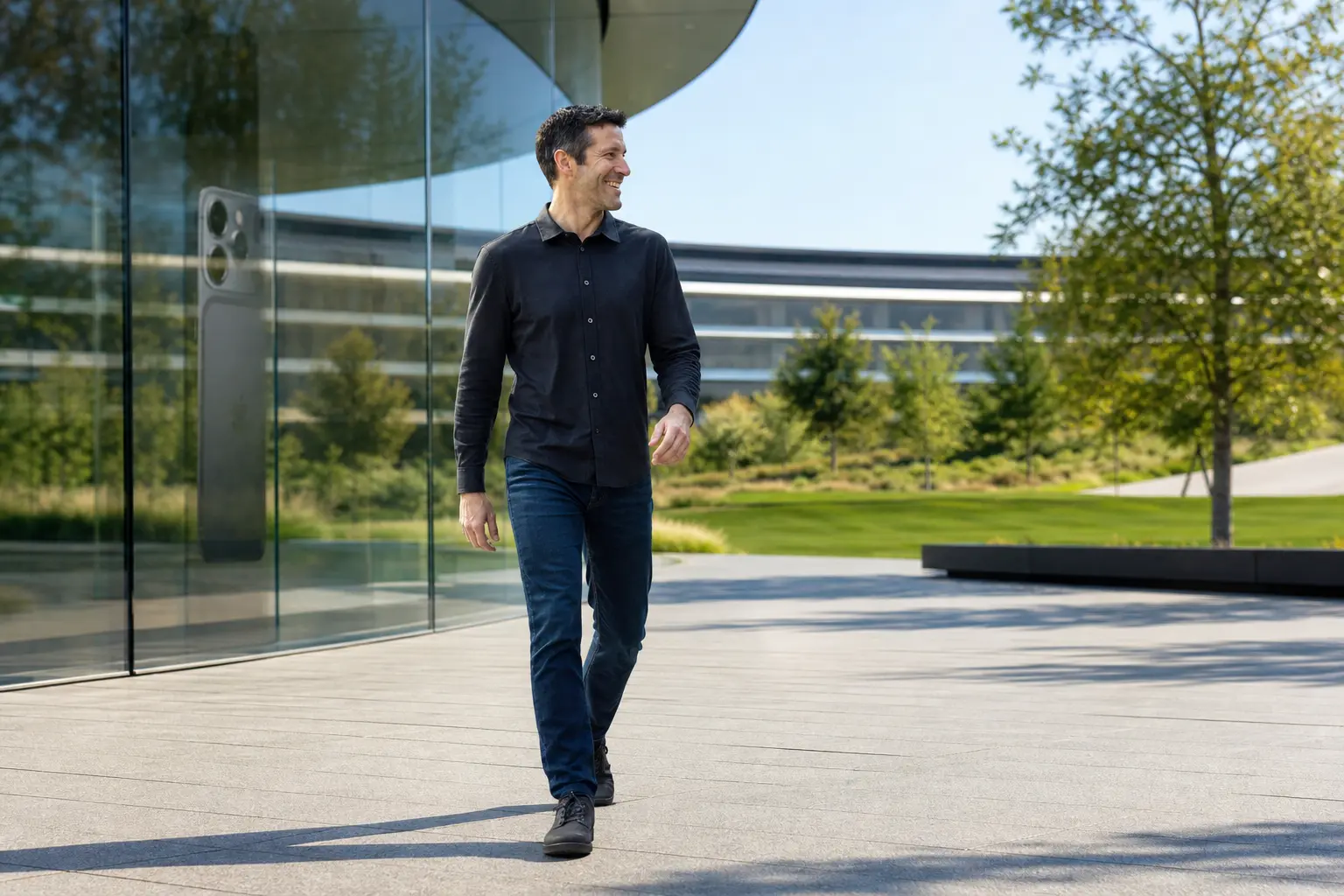
John Ternus takes over as CEO on September 1. Tim Cook moves to executive chairman of the board the same day. The September event will therefore be the first major product keynote under the new chief.
John Ternus has the mind of an engineer, the soul of an innovator, and the heart to lead with integrity and with honor. He is a visionary whose contributions to Apple over 25 years are already too numerous to count.
Tim Cook said that in the April transition announcement. Ternus, longtime senior vice president of Hardware Engineering, replied that he was “filled with optimism about what we can achieve in the years to come.”
The official handoff is already public: John Ternus becomes CEO on September 1. Holding the iPhone event eight days later puts the new leader on stage with the company’s most watched hardware in years, including the foldable that many see as the clearest test of continued hardware ambition.
Apple’s valuation backdrop remains strong. The same period that produced the CEO transition also saw Apple’s climb past five trillion dollars, giving Ternus a high bar and a full product pipeline.
Eight days separate the legal handoff from the public hardware debut. That gap is short enough that the September keynote effectively becomes Ternus’s opening statement on product direction. A career spent running Hardware Engineering makes the foldable and the 2 nm Pro pair a natural first showcase rather than a remote software event.
How the Fall Split Reshapes the Upgrade Year
Moving the standard iPhone 18, the iPhone 18e and the second-generation Air into spring 2027 does more than clear the September stage. It creates two distinct buying seasons inside a single twelve-month window.
Fall now concentrates the premium and experimental hardware. Spring absorbs the volume models that once shared the same keynote. The practical effect is a cleaner decision tree for different customer groups.
- Buyers chasing new silicon, cameras or a foldable form factor lock onto the September cycle
- Buyers waiting for non-Pro pricing and features shift their attention to the following spring
- The Watch and any AirPods that appear in fall remain the only cross-over accessories
Crowd discussion already treats the base-model absence as permanent calendar architecture rather than a one-year experiment. Once that dual-cycle rhythm settles, September stops being the universal iPhone launch and becomes the premium showcase instead.
The foldable’s presence inside that premium window further cements the split. A first book-style device belongs with the Pro models on process and ambition, not with the volume phones that follow months later.
Pre-Order and Shelf Dates That Follow the Pattern
Past calendars supply the rest of the timeline once the event locks. A September 9 keynote has historically opened pre-orders later that week or the next Friday, with retail launch the following Friday.
| Scenario | Event | Pre-orders | Launch |
|---|---|---|---|
| Most likely | Wed Sept 9 | Fri Sept 11 or Sat Sept 12 | Fri Sept 18 |
| Later alternative | Tue Sept 15 | Fri Sept 18 | Fri Sept 25 |
In 2015, when Labor Day also fell on September 7 and the event landed on September 9, pre-orders opened on a Saturday rather than the more common Friday. That 9/11-adjacent choice could repeat, though Apple has grown less rigid about the exact weekday.
Either path keeps the phones in customers’ hands before the end of September. The foldable is expected to share the stage but could see tighter initial supply than the Pro models.
The 2015 precedent remains the closest calendar match. Same Labor Day date, same Wednesday event slot, and a Saturday pre-order open that absorbed the holiday weekend. Nothing in the current signals forces a different rhythm this year.
Tighter foldable supply would simply stretch the early fulfillment window without changing the public launch Friday. Pro models still set the headline availability date that most buyers watch.
Why the Signals Leave Little Room to Move
Three independent threads now point at the same pair of dates. The staff lottery fixed the event inside the first half of September. Labor Day math then favored Wednesday the 9th over Tuesday the 8th. Four years of exact fourteen-day notice mapped that event date straight back to an August 26 invite.
- Staff lottery memo: first-half September language and Apple Park staffing
- Labor Day placement: Monday September 7 pushes media travel to Wednesday September 9
- Fourteen-day habit: September 9 event requires August 26 invitation
Any break would need to snap at least two of those threads at once. An August 25 invite would violate the fourteen-day streak for the first time since it stabilized. A later event date would contradict the first-half window already given to retail staff. Neither move has supporting evidence.
The same week therefore carries dual weight. It introduces both a new CEO’s first flagship lineup and Apple’s first foldable phone while locking in the permanent split of the annual iPhone cycle.
Until the invite arrives, every signal still points the same direction. The staff lottery, the Labor Day calendar math, and four years of identical 14-day notice converge on August 26 for the announcement and September 9 for the show. That single week will introduce both a new CEO’s first flagship lineup and Apple’s first foldable phone while permanently splitting the annual iPhone cycle.
 Sandisk Beats Big but Rally Leaves No Room for Soft Guide
  Galaxy Z Fold 8 Pre-Orders Top Every Samsung Record
  SpaceX AI Bill Crowns Nvidia as Stock and AMD Take the Hit
  Hotel WiFi Hacks Hit Travelers Harder Than Hotspot Tips Admit
  iOS 27 Messages One-Tap Suggestions Quietly Build Task Pipelines
  Cyclospora Wave Hits 15 States as Lettuce Recall Leaves Cases Climbing