
LIFESTYLE
Glasgow Fair Fortnight: What the Holiday Was and What Remains
Glasgow Fair Fortnight grew from a one-day market break into the coast holiday Glasgow remembers, and a bed at Rothesay depended on what you could pay.

Glasgow Fair Fortnight is the name that stuck to the city’s old summer holiday, the break when works shut and families headed for the Clyde. If you know it from a grandparent or a beach photograph, here is the short answer. It grew out of a medieval market, became Glasgow’s main holiday, and only late on lasted a full two weeks.
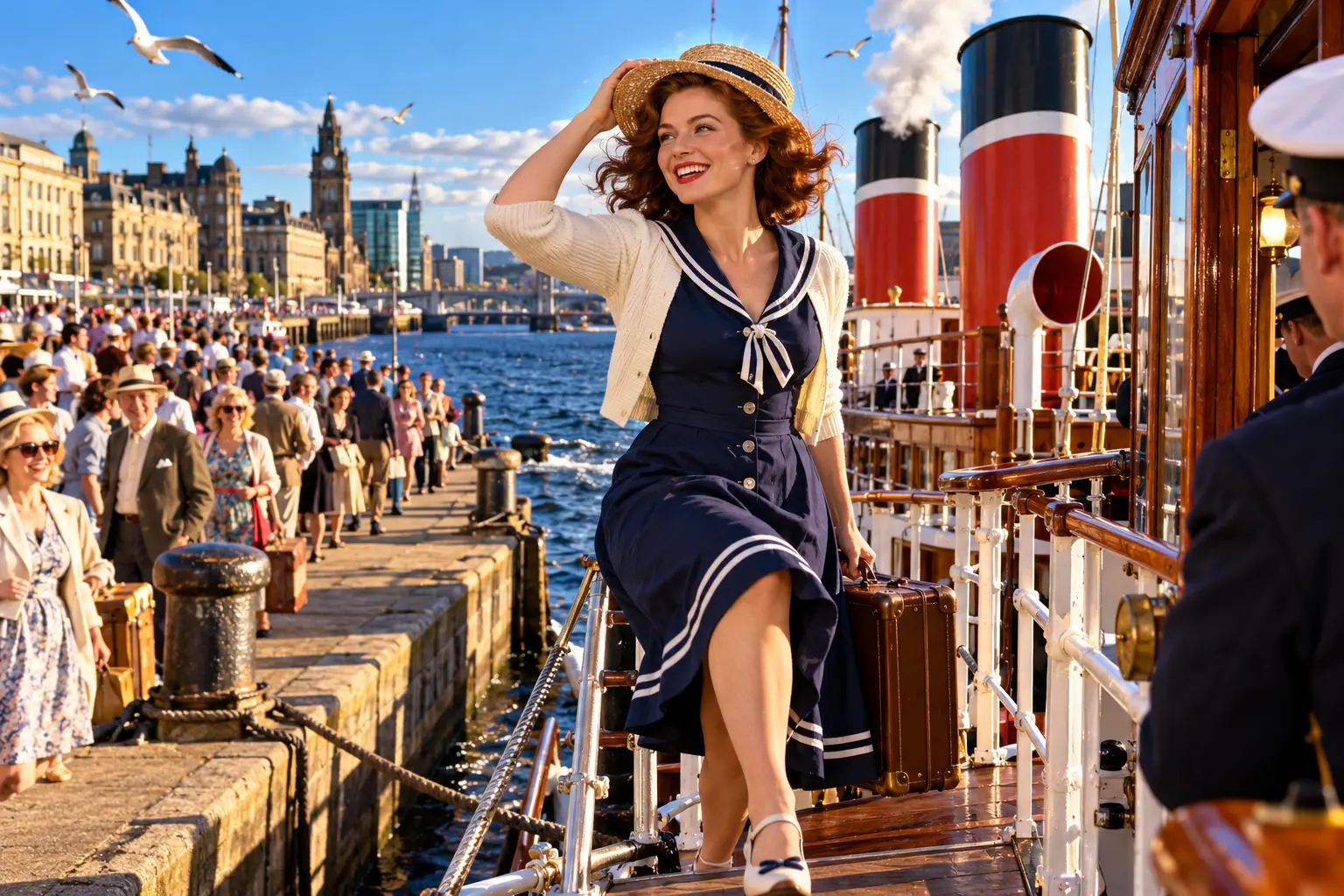
The pictures usually show two different trips. One is the shows, first on Glasgow Green and later in Camlachie. The other is the sail doon the watter to Dunoon, Rothesay and towns along the coast. A villa kept for weeks and a shared room for a few nights were not the same holiday, even when both parties used the same pier.
The name on a modern diary is a shorter thing than that memory. Glasgow still keeps a local holiday in the second half of July, and the exact day depends on which official list you open. What follows is how the break grew, where the shows stood, who slept where, and which day the name points at now.
How Glasgow’s Main Summer Holiday Grew
New Year already had its own noise, and the Fair was still the main holiday of the year. Through the nineteenth century the time off grew in steps, from a single Saturday, to two or three days, and then to a week or ten days. It started on the second Monday of July.
That stretch of a week or ten days is as far as John R. Burnett’s essay on Glasgow holidays takes the break. The two-week shutdown in family stories came later. For many workers it became a fortnight after the First World War, and shipyards and factories were still closing for those two weeks in the 1950s and 1960s.
The root is older than the holiday. In the 1190s Bishop Jocelin of Glasgow was granted the right to hold an annual eight-day fair in July by King William the Lion. People came to trade horses, cattle and farm goods at markets by Glasgow Cathedral, free of tolls and under the king’s protection.
THE GROWTH OF THE BREAK
- The 1190s: Bishop Jocelin receives the right to an eight-day July fair from King William the Lion.
- The nineteenth century: Time off moves from a Saturday to two or three days, then to a week or ten days, starting on the second Monday of July.
- 1840: The Glasgow and Greenock Railway opens, and sailing to Dunoon and Rothesay becomes central to the Fair.
- 1871: The shows leave the foot of the Saltmarket for Camlachie.
- After 1918: Many workers get a full fortnight, a closure still familiar in the 1950s and 1960s.
A child in the 1950s really did get two weeks, and a worker in the 1880s was inside a shorter break, even when the shows and the steamers were already running. Once that time off was long enough to leave the city, the Fair split into two trips that sat side by side: the shows, and the sail.
Where the Shows Stood From the Saltmarket to Camlachie
Until 1870 the Fair stood on the Green at the foot of the Saltmarket, opposite the High Court. Berry sellers, pickpockets and shows shared one crush of pushing, shouting and whistling. In 1871 the Fair moved to Camlachie.
By the 1840s one temporary theatre on the Green could hold 3,000 people, so the shows had become a reason to come rather than a stall beside the cattle. City fathers then sent the carnival and the circus off that ground, first to Crownpoint and then to Vinegarhill, as the Camlachie history of Vinegarhill traces.
Vinegarhill on the Gallowgate
Crownpoint did not last. Showpeople left Rowchester Street in 1893, when the Corporation built a tram depot there, and Vinegarhill at Camlachie became the main ground. The shows sat on the north side of the Gallowgate, on both the east and west sides of Vinegarhill Street.
A map of 1896 shows a switchback railway on the east side of that street, and by 1912 two switchbacks stood inside the walled ground to the west. In 1930 the Corporation took East Vinegarhill for a children’s playground and a football pitch, while West Vinegarhill stayed with the Green family of showpeople.
- The battle: One account links the name Vinegarhill to the Battle of Vinegar Hill, fought on 21 June 1798 in County Wexford.
- The works: Another links it to D. King & Co., who made vinegar at Camlachie from 1837 to 1860.
Neither account is settled, so the name is safer as a place than as a story. What the ground was like on a Fair day is less in doubt, because a writer walked it and wrote the noise down.
Inside a Penny Booth in 1885
What a noise! the yelling, howling, swearing, laughing, thieving and devilry. What a combination of brass bands, steam whistles and organs! Here every human contrivance is put into operation in order to draw the hard-earned copper from the pockets from the artizan.
The Detective, 16 July 1885, kept in the Parkhead history of Vinegarhill
That penny bought a circus turn, a ghost show, a boxing booth or a short play, and the crowd ran from a man in spats to a child in a ragged jacket. The next year, 1886, one tent on the same ground was kept for a religious service on the Sunday, because the showpeople were mostly strangers in the city. The Green did not lose the shows for good: in the twentieth century they were back on Flesher’s Haugh.
Doon the Watter and the Clyde Coast
By the 1840s the steamers were large enough, and there were enough of them, for large numbers of people to go doon the watter. The phrase is already the one used for those steamer trips, so it fits a Victorian sailing as well as a photograph from the 1950s. Many of the boats left from the Broomielaw, the quay that turns up packed solid in Fair pictures.
The trip a lot of families remember did not even start on the river. In 1840 the Glasgow and Greenock Railway opened, and Glasgow passengers could join a boat at Greenock. From that year, sailing to Dunoon and Rothesay sat at the centre of the Fair.
Later photographs also put Fair crowds in Largs, Millport, Gourock, Ayr, Saltcoats and Troon. Some families went farther than the Clyde, and Blackpool turns up in the same memories, a longer journey taken in the same shutdown. The pier was only the start. The question that decided the week was the bed at the other end.
A Bed on the Clyde Coast During the Fair
The Victorian villas at Dunoon, and the ones that stretch around Rothesay Bay, were built for business and professional families who could spend a few weeks by the sea. Working people could only go down the firth for a few days, and houses were not built for a crowd that stayed so briefly.
They were crushed into rooms, sometimes with two or three families sleeping in one room, and many slept in the open air. The Rothesay Advertiser, quoted in Burnett’s essay, asks how you get more people into a Rothesay pub at the Fair, and answers: take off the wallpaper.
| Who travelled | Where they stayed | How long they had |
|---|---|---|
| Business and professional families | Villas at Dunoon and around Rothesay Bay | A few weeks |
| Working people | Shared rooms, sometimes two or three families in one room, or a night in the open | A few days |
The pub joke only lands if the town was already full. A pier photograph cannot tell you which of these two holidays you are looking at, because both groups used the same steamers. The length of the stay, and where everyone slept, is what separates them. Those were the years the old pictures come from. The name on a calendar now points at a thinner set of days.
Glasgow Fair Monday and the Days That Close
Through the nineteenth century the holiday started on the second Monday of July. In 2026 that Monday fell on 13 July. The day many workplaces now treat as Glasgow Fair Monday is a week later, and the council’s own named day is not that Monday either.
TWO DAYS IN JULY 2026
- The council Saturday: Glasgow City Council’s public holiday list, last modified on 14 January 2026, names the Glasgow Fair as the Saturday before the third Monday, which in 2026 is 18 July, and it separates those public general holidays from the holidays of council staff.
- The Monday off: the Chamber of Commerce holiday list names Monday 20 July 2026 as Glasgow Fair and states that the council sets the city’s holidays.
- The surgery: NHS Greater Glasgow and Clyde’s Fair notice says GP practices and many pharmacies are closed on Monday 20 July 2026, and asks patients to arrange repeat medicines before that Monday.
- The Friday as well: Some offices close on Friday 17 July 2026 as well as on the Monday, so Fair Friday that year is the 17th, the opening day of the long weekend rather than a second festival.
Read the Saturday and the Monday as two entries, not as one date written twice. If you need a GP, the closed day in that 2026 notice is the Monday. If you are checking the council’s public general holiday, the named day is the Saturday. None of these is a bank holiday for the whole of the UK, and the city does not empty the way it did when the yards closed together.
The Glasgow Fair Fortnight After the Shutdown Ended
You will not get the old fortnight by booking the right Monday. Workplaces no longer shut in one block, leave is spread through the year, and the Gallowgate is not a second city of canvas for two weeks. What kept the name is the local holiday, plus the habit of telling the story when July comes round.
You can still make the sail. PS Waverley, the last seagoing paddle steamer, was launched on 2 October 1946, and her operator has marked the 80th anniversary of that launch during the 2026 season. The ship’s own note sets out the Clyde cruises, including the ones it still bills as doon the watter.
WAVERLEY 2026 TIMETABLES – BOOKINGS NOW OPEN FOR:
🚢 Glasgow & Clyde Coast Spring – 8th to 10th May
🚢 Oban & the Inner Hebrides – 13th to 19th May
🚢 Northern Ireland (Warrenpoint) – 23rd & 24th June
🚢 PSPS Scottish Branch Evening Cruises – July 28th & August 19th
— Paddle Steamer Waverley (@PS_Waverley) February 9, 2026
The last sailing of that 2026 season is Sunday 18 October. A ticket is one day on the water. It does not include a week in a room behind the front at Rothesay, and it does not mean your office is closed because a yard once was.
HOW TO PLACE A FAIR PHOTOGRAPH
- The pier: A crush at the Broomielaw, or a queue for a train out of the city, belongs to the years when workplaces closed on the same days.
- The villa: A house facing Rothesay Bay or the Dunoon shore was built for a family who could stay for weeks.
- The room: Two or three families in one room, or a night outside, matches the working trip, measured in a few days.
- The shows: Berry sellers, a wooden theatre and the Saltmarket place the scene on the Green before the 1871 move, while canvas and a switchback on the Gallowgate are Vinegarhill.
A Saltmarket theatre and a Gallowgate switchback are both Fair shows, and they are not the same ground. Use the bed and the backdrop before you decide that everyone in a family album had the same kind of week.
Frequently Asked Questions
Is the Glasgow Fair a Bank Holiday Across the UK?
No. The Glasgow Fair is a Glasgow holiday, not a bank holiday for the whole of the UK, so a firm in another city does not have to close and a Glasgow employer can stay open. If you need a GP or a pharmacy that week, use the health board’s notice for the Monday rather than a national bank-holiday list.
What Is Fair Friday?
Fair Friday is the Friday at the start of that long weekend, the day works used to send people away together. It is not a second fair with a charter of its own. Ask your workplace whether it closes on the Friday, the Monday, or both, because the practice is not the same in every office.
Why Did the Glasgow Fair Once Begin on 7 July?
An older reckoning fixed the start on 7 July, before the holiday was tied to Fair Monday. A diary that names the 7th is using that older start, not the Monday a Glasgow office uses now. The nineteenth-century Monday was the second one in July, and the day workplaces mark now sits later in the month.
Were Servants Hired at the Glasgow Fair?
Yes, while it was still a market. Horses, cattle and farm goods were the trade everyone mentions, and servants were engaged there too, on a ground the king had taken under his protection. That hiring day faded long before the steamers did, which is why it almost never appears in a holiday photograph.
Can You Still Sail Doon the Watter From Glasgow?
You can still make the trip, though not as a city on holiday for two weeks. PS Waverley, the last seagoing paddle steamer, sails Clyde routes from Glasgow, and you buy a ticket for one sailing rather than taking a room for the fortnight. Check the operator for the season you mean, because a poster from an old Fair will not match the current board.
The second Monday of July, the old start of the holiday, fell on 13 July in 2026, and neither the council’s Saturday nor the Monday the surgeries used falls on that older day. If a family story says the Fair always began on the same Monday it does now, the two calendars do not agree. Match the story to the length of the stay and the bed, then check which list your own workplace is using.

New Audi Q3 Skips Cameras a Mahindra XUV 3XO Includes

Scotland’s £65m Universities Fund Bets on Later Rounds

Suzuki Access 125 Adds Paint as Jupiter Takes Share

Scotland Face Argentina at Twickenham With Rankings at Stake

Motorola’s Android 17 List Trails the Real Rollout

Volkswagen Sells the Osnabruck Plant to Clear a Board Fight

Apple’s Foldable iPhone Hinges on Samsung Display Supply

Saksham Gaur Finds He Is His Own Company’s Client

Tata Motors’ Iveco Tender Opens as Holders Still Decide

What Is SD on Amazon Prime?
-
 AUTO3 months ago
Volkswagen Sells the Osnabruck Plant to Clear a Board Fight
-
 NEWS3 months ago
Apple’s Foldable iPhone Hinges on Samsung Display Supply
-
 BUSINESS3 months ago
Saksham Gaur Finds He Is His Own Company’s Client
-
 AUTO3 months ago
Tata Motors’ Iveco Tender Opens as Holders Still Decide
-
 TECHNOLOGY3 years ago
What Is SD on Amazon Prime?
-

 BUSINESS3 months ago
Hyderabad 22-Carat Gold Jumps After a False Bargain
-

 GAMING3 months ago
Onimusha Way of the Sword Preload Hits a Windows 11 Wall
-

 ENTERTAINMENT2 years ago
Andy Scott’s Steel Loon Repeats the Kelpies Regeneration Bet