
NEWS
Scotland’s Ambulance Chair Stayed in Post After His Wife Died
Gillian Steele died in Coatbridge after a VQ4 student arrived first. Her husband still chairs the Scottish Ambulance Service, and his term has been extended.

Gillian Steele, 69, died on 7 February 2024 after a student ambulance technician reached her collapse in Coatbridge as the first 999 responder. A qualified paramedic had left the student alone to go to a meeting, and a backup crew from Livingston in West Lothian arrived too late.
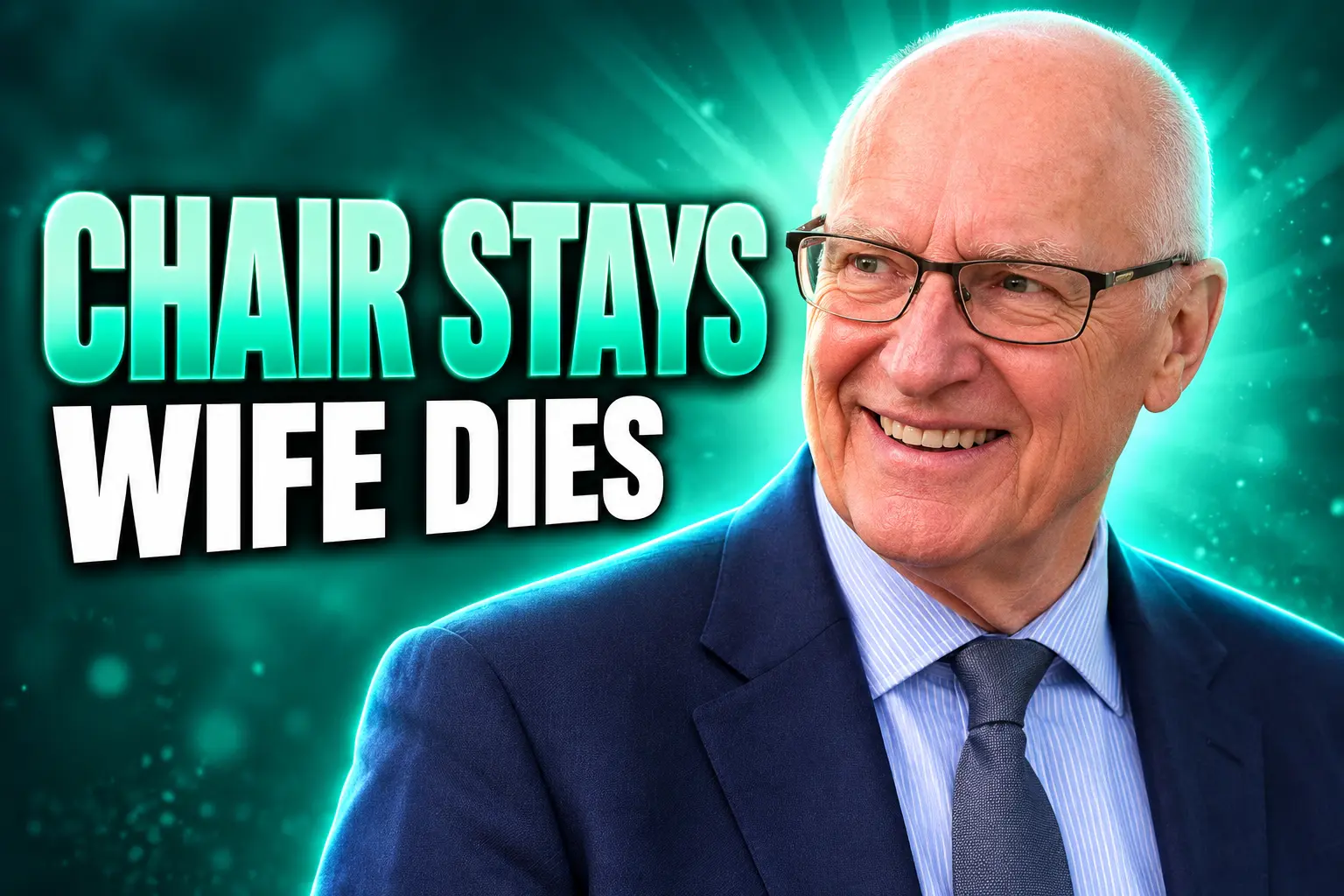
She was the wife of Tom Steele, chair of the Scottish Ambulance Service since 1 June 2018. In February 2026 the health secretary extended that chairmanship to 31 December 2026. No public finding has been issued on why a VQ4 student was sent to a suspected cardiac arrest.
A Student Technician Arrived First in Coatbridge
Gillian Steele lived in Lanark. The emergency that killed her was in Coatbridge, in North Lanarkshire, on 7 February 2024. An ambulance was called after she collapsed. The first resource that reached her was not a paramedic.
The student had been crewed earlier that day with a qualified paramedic. When that paramedic left for a meeting, the student was left as a solo first responder. Control sent the student to a call that, on the insider account that followed, had been treated as a paramedic job for a collapsed patient.
The woman needed a fully qualified paramedic but she didn’t get one. The only resource available was a student. We cannot understand why the control room sent a VQ4 student on a paramedic 999 call to someone who had collapsed.
An ambulance insider, March 2024
The same account said a large investigation was under way, and that the service had spent years claiming it was doing its best on recruitment. Gillian Steele died of a suspected cardiac arrest. The Scottish Ambulance Service said it does not comment on individual cases. A Scottish Government spokesman offered condolences to Tom and his family and said it would be inappropriate to comment on an individual case.
What a VQ4 Student Is Allowed to Do
A VQ4 student is not a paramedic. In the service’s own scope of practice, a Student Technician VQ4 may carry out the skills of a qualified technician, but those skills supervision of a qualified clinician is mandatory. That is the line the Coatbridge call crossed.
Qualified technicians already sit below paramedics. They answer 999 work and doctors’ urgent calls, treat and transport patients, and can see, treat and refer on set pathways, with support from a senior colleague or a remote clinician. A VQ4 is still in training for that grade. The document does not give them a solo ticket.
THE VQ4 SUPERVISION RULES
- The grade: A VQ4 student may use qualified technician skills only while a qualified clinician is supervising.
- The VQ3 bar: A student technician at level 3 should be crewed with a qualified member of staff and should not be planned as a single-crew resource.
- Life-threatening calls: A level 3 student sent alone to an immediately life-threatening call is a first responder only, and must be backed up at once.
- On the road: Level 3 students should not be left unsupervised to care for patients on the way to hospital.
NHS Scotland’s careers service sets out how to become an ambulance technician as a 16-month internal programme with classroom time, a driving certificate, and a station placement under a mentor. That pathway is built around supervision. Sending the student to a collapsed patient after the paramedic had walked off a meeting is the opposite of that design.
The Qualified Paramedic Had Left for a Meeting
The most ordinary detail is the one that still has no public explanation. The qualified paramedic did not fail to exist. They had been on the crew. They left for a meeting, and the student was then the first person the control room could put on a collapsed woman in Coatbridge.
Backup was ordered from Livingston, in West Lothian, on the other side of the M8 from North Lanarkshire. For a suspected cardiac arrest, minutes are the treatment. A second crew coming from another board area is already an admission that the local skill mix had gone.
Jackie Baillie, then Scottish Labour’s health spokeswoman, sent condolences to Mr Steele and tied the death to a wider gap.
I wish to offer my sincere condolences to Mr Steele for the untimely loss of his wife. It just shows that staffing problems and delays in the ambulance service affect everybody and we need to do more to make sure the service is given adequate resources so they can attend in time.
Jackie Baillie, Scottish Labour health spokeswoman, March 2024
Derek Thomson, Scottish secretary for Unite, said the union had been calling a national emergency in health services for years, with hospital transfer delays leaving fewer ambulances free for 999 work. Unite members in the Scottish Ambulance Service, he said, were fatigued from being understaffed and working excessive hours, and that burnout then pulled still more people off the roster.
None of those statements names the meeting, the control-room decision, or the student. Those names have stayed inside the service.
Neil Gray Extended Tom Steele’s Term
Tom Steele was appointed chair of the Scottish Ambulance Service Board on 1 June 2018, after four years as a non-executive at NHS Lanarkshire and as a member of the South Lanarkshire Integration Joint Board. His earlier career was in IT and management consultancy. He also co-chairs the NHS Scotland Innovation Design Authority.
On 19 February 2026, Neil Gray, Cabinet Secretary for Health and Social Care, announced a seven-month extension to December 2026. The extra term runs from 1 June 2026 to 31 December 2026. It is part-time, three days a week, and is paid at £56,472 a year on a pro rata basis. The Ethical Standards Commissioner regulates the appointment. Steele declared no political activity in the past five years and holds no other public appointments.
THE CHAIR’S RECORD IN OFFICE
- Start date: 1 June 2018, still in post through the Coatbridge death and the 2026 extension.
- End date: 31 December 2026, unless ministers make a further decision.
- Pay on the extension: £56,472 a year for three days a week, pro rata.
- On the death: The board has issued no public finding in his wife’s case.
The chair does not staff the control room or drive the vehicle. He does hold the board that is supposed to oversee clinical governance, workforce, and risk. Gillian Steele died on that watch. The government then lengthened the watch.
Single-Crewed Shifts Reached Their Highest Share Since 2019
The Coatbridge call was a student left unsupervised after a meeting. The wider pattern is crews going out one person down. In 2008, Nicola Sturgeon, then health secretary, told MSPs that government policy was that traditional accident and emergency ambulances should be double-crewed, with at least one paramedic, except in exceptional cases.
A Scottish Labour freedom of information request later found 2,847 single-crewed ambulance shifts in the first 10 months of 2025. That was 1.87 per cent of all shifts, against 1.7 per cent in 2024 and 1.57 per cent in 2023, the highest share since 2019. Nearly 20,000 single-crewed shifts have been logged since 2019. The Scottish Ambulance Service published single-crewed shifts by region covering 1 January 2019 to 31 October 2025, and said it does not routinely roster staff alone on a double-crewed vehicle, with solo shifts arising from short-notice absence when cover cannot be found.
SINGLE-CREWED SHARE OF SHIFTS
| Period | Single-crewed shifts | Share of all shifts |
|---|---|---|
| 2023 | Not published in the Labour summary | 1.57% |
| 2024 | Not published in the Labour summary | 1.7% |
| January to October 2025 | 2,847 | 1.87% |
| 2019 to 2025 | Nearly 20,000 | Highest share since 2019 |
In December 2025 Jackie Baillie said it had been 17 years since the SNP promised to put an end to single-crewed ambulances, and that things were getting worse. The service has called solo crews invaluable for some immediately life-threatening work when backup is allocated. That is the same logic that put a VQ4 student on Gillian Steele and then reached for Livingston.
Why No Public Finding Has Been Issued
March 2024 was supposed to be the start of a serious look at a control-room decision, a meeting that stripped a crew, and a student sent to a suspected cardiac arrest. By October 2026 there is still no published fatal accident inquiry determination in Gillian Steele’s name, and no public significant-event review that the family, the staff, or the board can be read against.
WHAT WE KNOW
- The date: Gillian Steele died on 7 February 2024 after collapsing in Coatbridge.
- The first resource: A VQ4 student technician, left alone after a paramedic went to a meeting.
- The backup: A crew from Livingston, which did not arrive in time.
- The board: Tom Steele remains chair, with a term now running to 31 December 2026.
WHAT IS UNCONFIRMED
- The meeting: What it was, who called it, and whether the student should have been stood down.
- The control room: Why a supervised-only grade was assigned to a collapsed patient.
- The investigation: Whether it finished, what it found, and whether any policy changed.
- The student: Identity, station, and what support they were given after the call.
The student was put in a job the scope of practice says they cannot hold. Gillian Steele did not get a paramedic. Her husband still chairs the service that made that call, and ministers have already set the date his present term ends.

The BMW iX4 Undercuts Mercedes and Trails Its Twin

Scotland’s Ten Big Supermarkets Already Hold the Weekly Shop

Scotland EMS Faces a State Probe After a Wagram Death

Meritz Signs Ripple to Race Korea’s 2027 Token Rules

Pocognoli’s First Camp Leaves Scotland Third and Exposed

Volkswagen Sells the Osnabruck Plant to Clear a Board Fight

Tata Motors’ Iveco Tender Opens as Holders Still Decide

Saksham Gaur Finds He Is His Own Company’s Client

Onimusha Way of the Sword Preload Hits a Windows 11 Wall

Apple’s Foldable iPhone Hinges on Samsung Display Supply
-
 AUTO1 month ago
Volkswagen Sells the Osnabruck Plant to Clear a Board Fight
-
 AUTO1 month ago
Tata Motors’ Iveco Tender Opens as Holders Still Decide
-
 BUSINESS1 month ago
Saksham Gaur Finds He Is His Own Company’s Client
-
 GAMING1 month ago
Onimusha Way of the Sword Preload Hits a Windows 11 Wall
-
 NEWS1 month ago
Apple’s Foldable iPhone Hinges on Samsung Display Supply
-

 NEWS1 month ago
The Frame Pro’s $1,200 Labor Day Cut Needs a Soundbar
-

 BUSINESS1 month ago
SEBI Reopens How F&O Settles After the Closing Auction
-

 BUSINESS1 month ago
The Rs 4.66 Lakh Crore IPO Queue Is Mostly Paper