
 Ishan Crawford
 Flipkart’s quick-commerce arm, Flipkart Minutes, said Wednesday it has crossed 1,000 micro-fulfilment centers across India, less than two years after the service launched in August 2024. The Walmart-owned company plans to scale the network to 1,500 centers by the end of 2026, with new hubs opening at a rate of close to 100 a month. Order volumes on the platform have grown 5X since the build-out accelerated, Flipkart said, driven by a rapid push into Tier 2 and Tier 3 cities.
Amazon Now, Flipkart’s main rival service, is operating in more than 15 cities with more than 500 micro-fulfilment centers, and has earmarked ₹2,800 crore (about $300 million) of fresh investment to scale to 100 cities with 1,000-plus centers, Amazon India said in April. India’s wider quick-commerce market, tracked by US-based research firm Bernstein, has more than 5,500 dark stores today, and the research firm expects that figure to rise to about 7,500 by 2030. Jefferies, the investment bank, said Flipkart could become India’s second-largest quick-commerce network by store count once the 1,500 target lands, behind Blinkit, which operates 2,243 dark stores. Flipkart said the build-out is being driven by a rapid push into Tier 2 and Tier 3 cities, where the company added 90 new markets in the past year. Tier 2 and Tier 3 cities have recorded 42X growth year-on-year, the company said, and Gen Z shoppers now account for 40% or more of the customer base.
Flipkart Crosses 1,000 Micro-Fulfilment Centers in Under Two Years
Flipkart Minutes said on Wednesday it had scaled to 1,000 micro-fulfilment centers across 130-plus cities and 8,000-plus postal codes, a milestone reached in under two years since the service launched in August 2024. The company said the network is on track to reach 1,500 centers by the end of 2026, with Hemant Badri, Flipkart Group’s senior vice-president and head of supply chain, telling Business Standard the company is adding close to 100 dark stores a month. Flipkart’s June 24 announcement on the 1,000-hub milestone frames the build-out as a national retail play, with the network now reaching small markets that quick commerce was not designed to serve when it started as a metro convenience.
“Reaching 1,000 micro fulfilment centres is an important milestone in our journey, but more importantly, it reflects how consumer adoption of quick commerce is evolving across India,” Badri said in the announcement. Over the past year, Flipkart Minutes expanded into 90-plus new cities, including Ambala, Arrah, Bokaro, Darbhanga, Jorhat, Ongole, Purnia, Saharsa and Tenali, the company said. The platform works with close to 500 direct-to-consumer brands and counts more than 3,000 farmers in its Samarth Krishi programme, which connects producers directly to consumers. Flipkart’s electric-vehicle fleet doubled in a year, with EVs now powering more than 10% of deliveries, the company added.
The Tier 2 and Tier 3 Numbers Behind the Build-Out
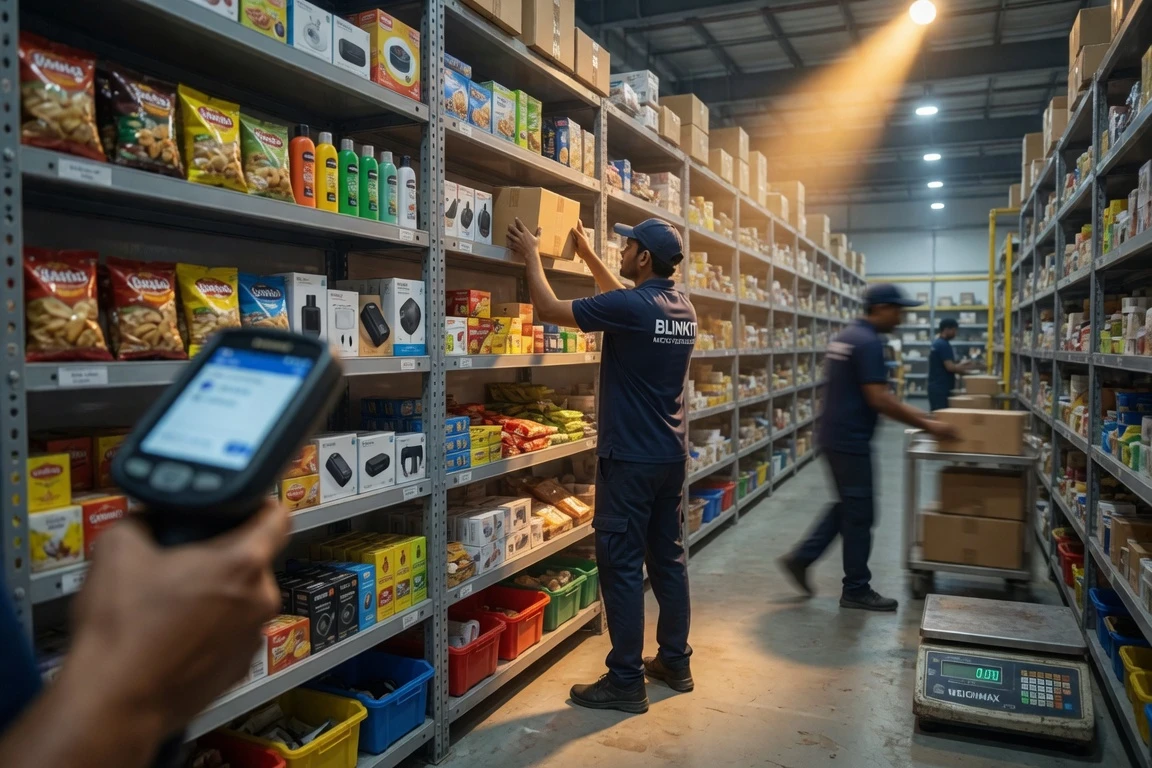
The build-out has been fastest outside the metros. Business in Tier 2 and Tier 3 cities has grown 42X compared to a year earlier, Flipkart said, and 90 new cities have joined the network over the past 12 months.
The new city list stretches across smaller markets in northern, eastern and southern India: Ambala, Arrah, Bokaro, Darbhanga, Jorhat, Ongole, Purnia, Saharsa and Tenali, among others. Flipkart said the expansion has taken the service into 8,000-plus postal codes, with the cities added in batches over the past year. The build-out accelerated through the second half of 2025 and into 2026, the company said, with the service now available in more than 130 cities in total.
A second pattern is the customer behind those orders. Gen Z shoppers make up 40% or more of the Flipkart Minutes base, the company said, and are its fastest-growing cohort. The audience is buying across daily essentials, beauty, electronics, wellness and lifestyle, as well as groceries. The shift has changed what quick commerce looks like at the basket level.
Tier 2 and Tier 3 growth and the Gen Z tilt together point in the same direction: quick commerce is moving past the metropolitan stage it started in. The data Flipkart is reporting tracks with the new city list and the categories now showing up in orders on the platform.
Amazon’s Counter-Move Targets 100 Cities and 1,000 Hubs
Amazon Now, Flipkart’s main rival service, is operating in more than 15 cities with more than 500 micro-fulfilment centers. The retailer has earmarked ₹2,800 crore (about $300 million) of fresh investment to scale the service to 100 cities with 1,000-plus micro-fulfilment centers, Amazon India said in April. Amazon Now launched in Bengaluru in June 2025 and has since expanded to Delhi and Mumbai.
The 100-city buildout will reach metros and non-metros including Pune, Hyderabad, Chennai, Kolkata, Jaipur, Lucknow, Kanpur, Chandigarh, Ahmedabad, Meerut, Mysore and Panipat, Amazon said. The service is also widening the categories on offer, with Amazon adding apparel, electronics and home products to its grocery-led assortment. The expansion is part of Amazon’s broader $35 billion India commitment through 2030, which targets $80 billion in cumulative exports from the country. Amazon’s push comes on top of an earlier ₹2,000 crore investment that added 17 new fulfilment centers, six sortation centers and 75 last-mile delivery stations across India, Inc42 reported.
“Encouraged by this success, we have further accelerated our expansion plans and will scale Amazon Now to 100 cities, fueled by a network of more than 1,000 micro-fulfillment centers.”
That was Harsh Goyal, vice-president of everyday essentials at Amazon India, in the company’s April statement. Goyal added that the expansion will connect more than 16,000 farmers to consumers through sellers on Amazon Now.
| Player | MFCs / dark stores | Cities | Order volumes |
|---|---|---|---|
| Blinkit | 2,243 | 200+ | 917M in FY26 |
| Swiggy Instamart | 1,143 | 129 | 412M in FY26 |
| Zepto | 1,139 | 66 | 640M in FY26 |
| Flipkart Minutes | 1,000 | 130+ | 5X year-on-year growth |
| Amazon Now | 500+ | 15+ | Not disclosed |
Sources: Jefferies (via Business Standard) for Blinkit, Swiggy Instamart and Zepto; Flipkart official release for Flipkart Minutes; Tech in Asia (citing TechCrunch) for Amazon Now.
Blinkit’s 2,243 Dark Stores Top the Field
The milestone announcement frames Flipkart Minutes as a serious challenger. The Jefferies data, reported by Business Standard, frames the field differently. Blinkit, the market leader, operated 2,243 dark stores across more than 200 cities in FY26 and processed 917 million orders in the year. Zepto ran 1,139 dark stores in 66 cities and processed 640 million orders. Instamart ran 1,143 dark stores across 129 cities and processed 412 million orders, leaving Blinkit with a substantial lead on footprint and order count.
Zepto and Instamart both run slightly more dark stores than Flipkart, but with smaller city footprints. Amazon Now, the most recent entrant, has fewer hubs but a defined 100-city target. Jefferies said Flipkart could become India’s second-largest quick-commerce network by micro-fulfilment center count, behind Blinkit’s 2,243 centers, based on current store counts and announced expansion plans.
From Groceries to Gadgets as Quick-Commerce Broadens
The expansion is changing what the baskets look like. Demand on Flipkart Minutes is no longer coming from groceries alone.
Average order values for fruits and vegetables rose 30% year-on-year, the company said, and repeat purchases increased by more than 20%. Customers are now buying across 120-plus additional categories, including electronics, beauty and wellness. The shift is visible in the way Flipkart describes its own pitch, with the company saying the platform is moving beyond its original “fulfil everyday essentials” framing. The basket shift has come in parallel with the network’s expansion into 90-plus new cities over the past year.
“What began as a way to fulfil everyday essentials has evolved into a fundamentally new shopping habit for millions of Indians.”
That was Kunal Gupta, SVP and head of Flipkart Minutes, in the company’s June 24 statement. Gupta said demand is spreading well beyond grocery into electronics, beauty, wellness and lifestyle categories. Order volumes on the platform have grown 5X since the build-out accelerated, with Gen Z accounting for 40% or more of the customer base, the company said.
- 30% rise in average order value for fruits and vegetables year-on-year
- 20%+ rise in repeat purchases on the platform
- 5X growth in order volumes since the network build-out accelerated
- 40%+ of the Flipkart Minutes customer base is Gen Z
Bernstein’s Warning on Metro Saturation
The build-out is happening in a market Bernstein says is already showing strain at the metro level. India has more than 5,500 dark stores today, the research firm estimates, with another batch of stores expected to come online by 2030. Bernstein expects that figure to reach about 7,500 by 2030, as companies push into smaller cities and widen their product offerings. The base is reaching further into the population: Bernstein’s note says quick commerce serves about 230 million people, or 17% of India’s population, across 2,600 postal codes as of April 2026.
“QC (quick commerce) is a way of life in (India’s) top-four cities already. (But) customer behaviour has changed,” Bernstein said in its April 2026 note, as quoted by Business Standard. The note flagged saturation in metros and said dark-store network consolidation or rationalisation would be needed to improve profitability. Bernstein said the next phase of growth sits in Tier 1 and Tier 2 cities, while flagging structural challenges including lower population density, awareness and spending power in those markets.
Frequently Asked Questions
What is Flipkart Minutes?
Flipkart Minutes is the quick-commerce service run by Flipkart, the Walmart-owned Indian e-commerce marketplace, and uses small, strategically located warehouses called micro-fulfilment centers to deliver orders within minutes. The service launched in August 2024 and now covers more than 130 cities and 8,000 postal codes.
How does Flipkart’s network compare with Blinkit and Amazon?
By store count, Flipkart Minutes trails Blinkit and is roughly even with Zepto and Swiggy Instamart. Jefferies data shows Blinkit operated 2,243 dark stores in FY26, against Flipkart’s 1,000, with Zepto at 1,139 and Instamart at 1,143. Amazon Now, the most recent entrant, runs more than 500 micro-fulfilment centers in 15 cities and is targeting 100.
Why is Amazon expanding quick commerce in India?
Amazon has committed $35 billion in India through 2030, with $80 billion in cumulative exports as a stated target, and quick commerce is one of the categories it is building out. The company said in April that scaling Amazon Now to 100 cities with 1,000-plus micro-fulfilment centers is part of a ₹2,800 crore (about $300 million) investment it had just announced.
How large is India’s quick commerce market?
Bernstein estimated in April 2026 that India has more than 5,500 dark stores today, serving about 230 million people, or 17% of the population, across 2,600 postal codes. The research firm expects the count to reach about 7,500 by 2030. Inc42 reported the market is projected to become a $40 billion opportunity by 2030.
 One UI 9’s Privacy Display Fix Reaches Just One Galaxy Phone
  Samsung Drops Its Own Exynos Chip for the Galaxy Watch9 and Ultra 2
  Marathon’s Vault Breaker Arrives as Bungie’s Bigger Bet Keeps Faltering
  Sony’s PlayStation Disc Cutoff Erases the Last Proof of Ownership
  Tesla’s Summer Update Hands Grok the Keys, and Musk’s Empire More Reach
  Apple’s $634 Million Masimo Payment Is Final After Appeal Denial