
 Ishan Crawford
 U.S. District Judge James V. Selna shut off Apple’s last exit from a $634 million patent bill late Monday. He denied the company’s bids for a new trial and for judgment overturning the jury’s verdict. The payment now flows to Danaher, the life sciences conglomerate that closed its purchase of Masimo just 40 days earlier.
Danaher did not file the lawsuit, try the case, or argue a single motion across six years of litigation. It bought the plaintiff on June 10, and became the payee 40 days later.
Selna Denies Apple’s Last Two Motions
Apple asked for two things after the November 2025 verdict: a judgment overturning the jury’s finding, and, failing that, a new trial. Selna refused both, according to Law360’s report on the ruling.
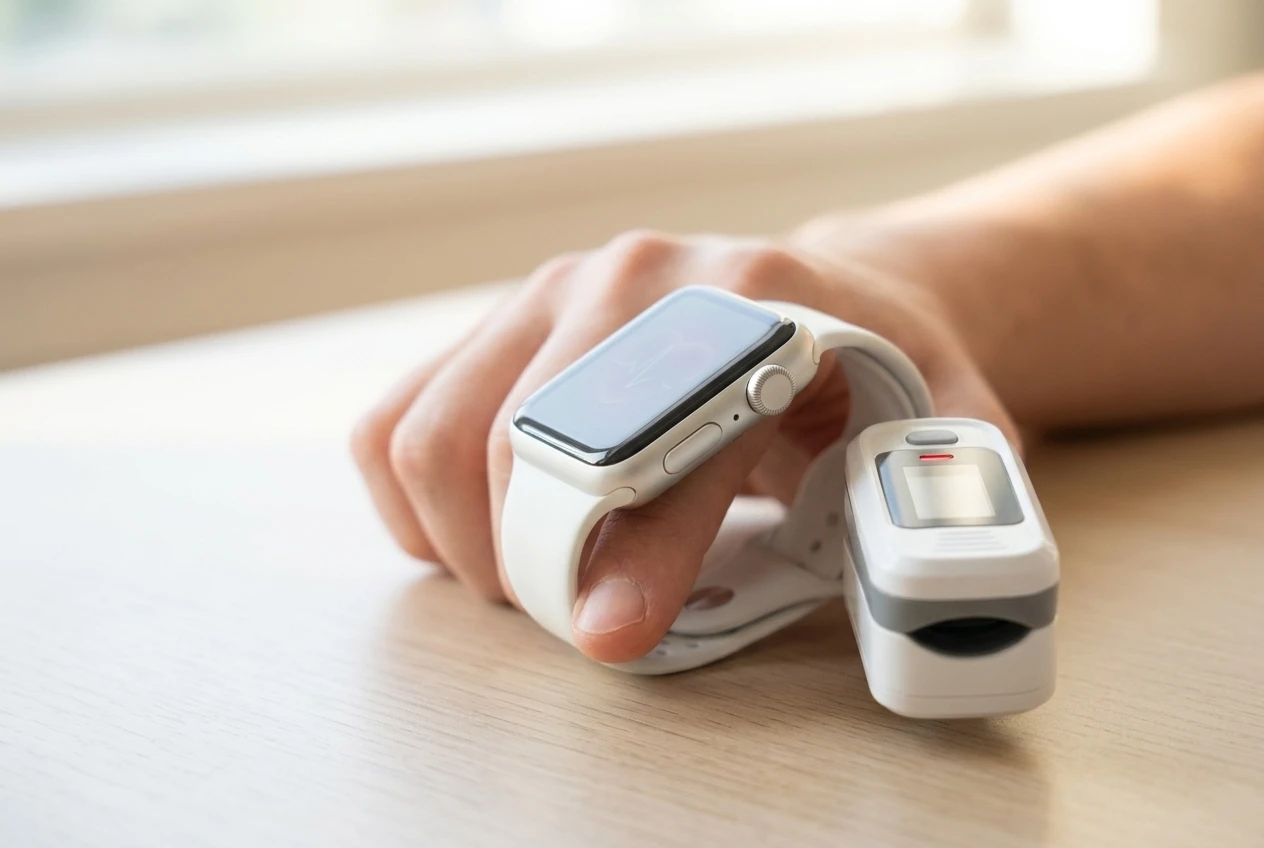
The dispute turned on one phrase: whether an Apple Watch counts as a “patient monitor” under Masimo’s patent. Apple’s lawyers argued the term should apply only to equipment built for continuous clinical monitoring. Selna disagreed. He sided with the jury’s broader reading, finding the patent’s everyday meaning could reasonably stretch to cover a consumer smartwatch.
Apple also challenged the jury instructions and the court’s decision to exclude testimony from one of its own experts. Selna found no error serious enough to justify a retrial. The district court’s docket on this phase of the case is now closed.
The Buyer Who Never Filed a Complaint
Danaher completed its acquisition of Masimo on June 10, paying $180 a share in cash for a company it did not need a lawsuit to want. The enterprise value came to roughly $9.9 billion, and Masimo’s stock stopped trading on Nasdaq the same day, folding into Danaher’s Diagnostics segment as a standalone unit.
Four groups have real stakes in a fight most of them didn’t start:
- Danaher’s shareholders now hold a claim on $634 million they had no hand in litigating, on top of the EBITDA Danaher expects Masimo to generate in 2027.
- Masimo’s former shareholders already cashed out at $180 a share in June, months before Selna’s ruling made the payment certain.
- Apple Watch owners keep the blood oxygen feature exactly as it works today, since no sales ban survived this round of appeals.
- Knobbe Martens, the law firm that tried the case for Masimo, banked its win in November 2025 regardless of who owns the client now.
Katie Szyman, Masimo’s chief executive officer, framed the sale as a growth story rather than a legal exit.
We thank our shareholders for their strong support of this important milestone for Masimo. The Merger delivers compelling value and positions Masimo for continued global growth as an independent operating company within Danaher’s Diagnostics segment.
Szyman said that in the statement marking Masimo shareholders’ May vote to approve the deal. She took over the company in February 2025, five years after Masimo first sued Apple, and had nothing to do with starting the fight she ultimately helped sell.
Danaher’s Masimo Math
Danaher signed the acquisition three months after the jury’s verdict, not before it. Rainer Blair, Danaher’s president and chief executive, called Masimo “a strong strategic fit” when the deal was announced in February, and the numbers behind that statement already treated the Apple litigation as a known variable rather than a surprise.
| Deal Metric | Figure | Context |
|---|---|---|
| Price per share | $180.00 cash | Announced February 17, 2026 |
| Enterprise value | About $9.9 billion | Includes assumed debt, net of cash |
| 2027 EBITDA forecast | More than $530 million | Danaher’s own guidance for Masimo |
| Valuation multiple | 18x EBITDA, 15x with synergies | Per the merger announcement |
| Projected synergies | $125 million cost, $50 million revenue | Expected by year five |
| Pro forma leverage | About 3.2x EBITDA, up from 2.0x | Estimated after closing |
| Apple’s patent payment | $634,313,913 | Now payable to Danaher |
Those figures did not depend on Selna’s ruling going Danaher’s way. The deal pencils out either way. The verdict just adds to the upside.
A Six-Year Fight Across Three Courts
The case that ends with Danaher holding a check began under a different Masimo entirely, in front of the same judge the whole way through.
- January 9, 2020: Masimo sues Apple in the Central District of California, alleging stolen trade secrets and infringement tied to pulse oximetry.
- Late 2023: The International Trade Commission (ITC) issues a limited exclusion order banning imports of Apple Watch models with blood oxygen monitoring enabled.
- January 2024: U.S. Customs approves an Apple redesign that restores the feature by shifting the calculation onto a paired iPhone.
- October 2024: A Delaware jury hands Apple a rare win, awarding it $250, the legal minimum, over older Masimo watch designs.
- November 14, 2025: A California jury awards Masimo $634,313,913, finding Apple infringed all four patents at issue.
- February 17, 2026: Danaher agrees to buy Masimo for $180 a share, about $9.9 billion in enterprise value.
- June 10, 2026: Danaher completes the purchase, and Masimo stock stops trading.
- July 20, 2026: Selna denies Apple’s post-trial motions, finalizing the $634 million judgment.
Steve Jensen, a Knobbe Martens partner who worked the trial for Masimo, said the November 2025 verdict “validates Masimo’s persistence in protecting its intellectual property on its life-saving technology.” A related trade secrets claim followed its own, separate track. Court filings show a bench trial that began in November 2024 produced findings that were not made public until December 2025.
The Fine Print Behind the Big Number
The patent verdict was not Masimo’s only outcome in this case, and it was not a clean sweep. Selna’s final judgment mostly sided with Apple on the older trade secrets claims, finding Apple had misappropriated two of the fourteen trade secrets Masimo still pursued rather than the broader haul Masimo wanted.
Danaher’s win comes with a bill of its own, too. Buying Masimo pushed pro forma net debt toward $24 billion and lifted leverage from roughly 2.0 times EBITDA to about 3.2 times, a sharp move for a company built on conservative balance sheets. An analysis from TIKR flagged the pending Apple litigation itself as a source of headline risk for Danaher’s stock months before Selna’s ruling removed the uncertainty.
What Happens to Masimo’s Patents Now?
The patents covering Apple Watch’s blood oxygen feature are not permanent leverage for either side. The remaining patents in the case expire in 2028 and 2029, which closes the window for new licensing disputes over this specific technology no matter what Apple does next.
No device ban survived this fight. Apple’s blood oxygen feature works today exactly as it has since the 2024 redesign, calculating readings on a paired iPhone rather than the watch itself. Danaher walks away with money and a patent portfolio that is already running out the clock. Apple walks away $634 million poorer and keeps selling watches exactly as before.
The $634 million verdict that started as a jury’s math problem in November 2025 ends as a line item on Danaher’s balance sheet.
Frequently Asked Questions
Can Apple still appeal the Masimo verdict any further?
A further appeal would go to the U.S. Court of Appeals for the Federal Circuit, which handles patent cases exclusively nationwide and typically defers to a jury’s factual findings. Apple has not said whether it will pursue that option, and Selna’s denial of its trial court motions already closed the more direct routes to overturning the award.
Is the Apple Watch blood oxygen feature still available in the United States?
Yes. Since the January 2024 redesign approved by U.S. Customs, Apple Watch calculates blood oxygen readings on a paired iPhone rather than on the watch itself, with results shown in the Health app. That workaround, not this verdict, is what keeps the feature on sale.
Why did Danaher agree to buy Masimo while the Apple lawsuit was still unresolved?
Danaher signed the deal in February 2026, three months after the jury’s verdict, when the litigation risk was already public. Masimo’s board initially pushed for $194 a share through its advisers, but Danaher held firm at $180 a share, according to Masimo’s own securities filings, suggesting it had already priced the pending appeal into its offer.
Did Masimo’s shareholders benefit from the Apple verdict before the Danaher sale closed?
They cashed out at $180 a share when the deal closed on June 10, months before Selna’s ruling made the $634 million payment certain. Masimo had a market capitalization of about $7 billion in mid-February, before Danaher’s offer valued the company at roughly $9.9 billion in enterprise value.
What does Masimo actually make, outside of the Apple lawsuit?
Masimo built its business on pulse oximetry and patient monitoring equipment for hospitals, generating roughly $1.5 billion in revenue in 2025. It sold its Sound United audio business, home to Denon and Marantz, to Harman for $350 million in 2025 to focus entirely on healthcare technology before Danaher’s offer arrived.
 ONGC licence frees Venezuela cash and operatorship talks
  Anthropic Hits $65 Billion Run Rate and Flips the AI Cash Test
  Supreme Court grounds the fare free-for-all with three-week clock
  Gold Nears $4400 as Soft Data Meets Oil Inflation Risk
  Nifty Slips as Zaggle Circuits and Dhoot Debuts Big
  Diesel Crack Tops $100 as Iran Rhetoric Lifts Crude