
 Ishan Crawford
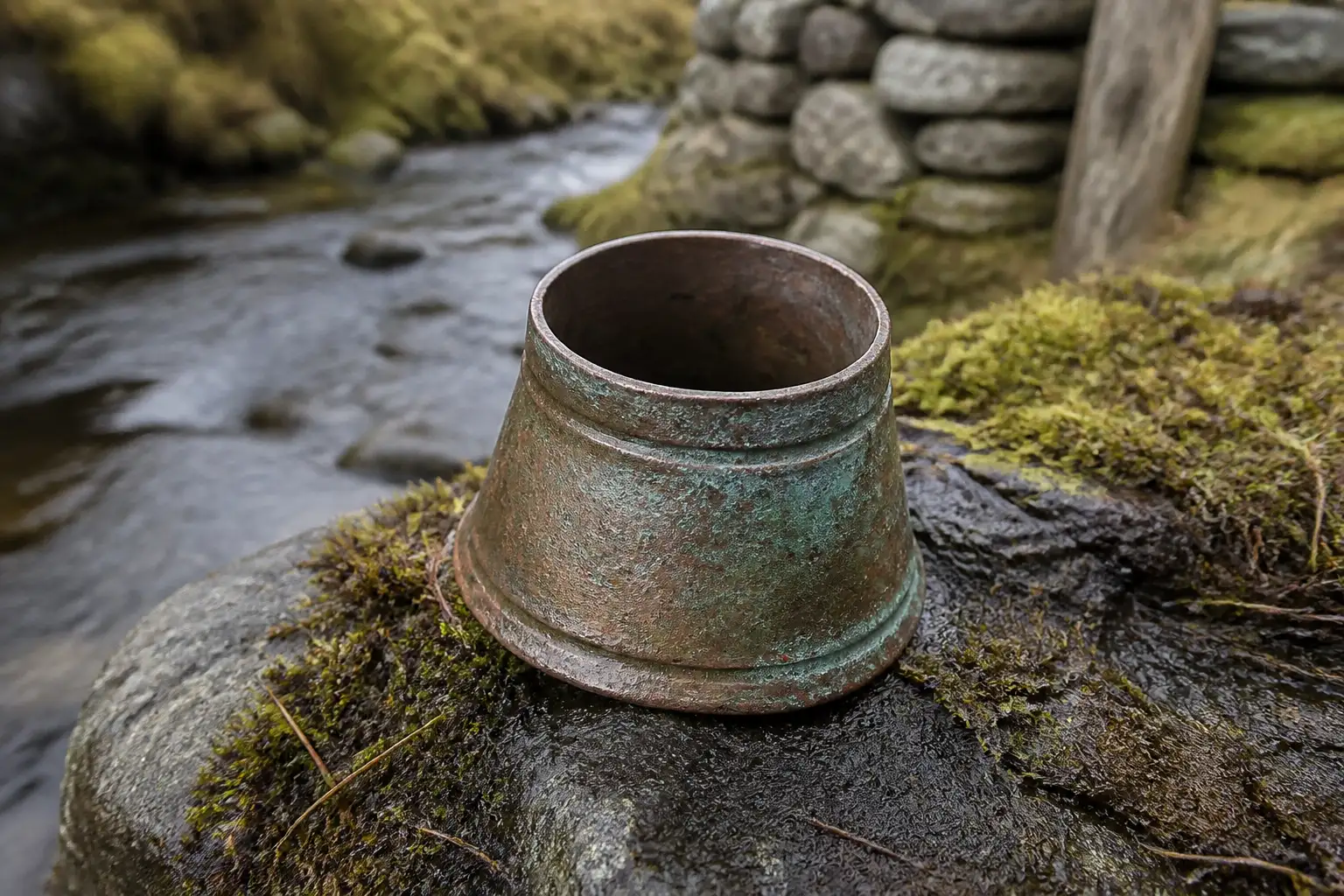
 Archaeologists on Ben Lawers National Nature Reserve recovered a tapered copper alloy collar from a stone bothy in early May 2026, the first piece of actual still equipment found with five known illicit whisky sites on the reserve. The collar, known in Gaelic as An Gearradan, connected the head of a small still to its lyne arm and dates the operation to more than 200 years ago.
The discovery belongs to the National Trust for Scotland’s Pioneering Spirit project with The Glenlivet. It fits a clear historical pattern: late-18th-century taxes pushed Highland distillers into remote glens, creating a golden age of smuggling whose sites and skills later fed the licensed industry.
A Copper Collar in a Burn Gulley
The team targeted a previously unexplored site in the headwaters of the Lawers Burn near Lochan nan Cat. Earlier survey work had flagged the stone structure as a possible illicit still bothy. Excavation confirmed it.
Features matched purpose-built distilling shelters:
- A well-constructed hearth with clear burning evidence
- A substantial stone-capped drain running beneath the internal floor
- A timber roof-support post buried when the walls collapsed
- The copper collar itself, left on site
Together those four elements form a working floor plan. The hearth held the fire under the pot. The drain carried away cooling water and waste. The post held the roof. The collar joined the still head to the lyne arm so vapour could reach a condenser outside.
Derek Alexander, the Trust’s Head of Archaeology, noted the location’s care. The bothy sits nestled in a burn gulley with a slight bend that shields it from both upstream and downstream views. Distillers could spot approaching excisemen early and dismantle fast.
That speed explains the find. Alexander said the piece of a copper still recovered was likely forgotten when the setup was whisked away. If officers had seized the still, they would have destroyed it. The collar’s survival is rare proof the operation escaped detection.
Why Distillers Chose the Lawers Burn
Ben Lawers offered flowing water, isolation, and open sightlines. Those three factors defined the Highland smuggling map. Small bothies appeared near burns and glens across the Trust’s land, from Torridon to Mar Lodge Estate and Ben Lomond.
Bothies alone were common shelters for shepherds and gamekeepers. The copper changed the reading. Five illicit bothies are now known on the reserve; only this one yielded still metal. The collar matches an early-20th-century Gaelic dictionary illustration of A Phoit-dhubh, the black pot still, with its parts labelled.
Crowd reaction on X treated the survival of the piece as the real story. One widely shared summary noted that tax officers would have destroyed the evidence if they had found the site first. The collar stands as accidental testimony from people who left almost nothing behind.
Distillers of illicit whisky would’ve travelled light and left little trace of their activity, and so a find like this is especially rare and exciting. It gives us a glimpse into an activity that was once rife in the hills of Ben Lawers and which was seen by many as an act of community resistance.
Derek Alexander, Head of Archaeology at the National Trust for Scotland, said those words after the dig.
The 1780s Laws That Drove Production Underground
Unlicensed private distillation had been normal farm work for centuries. Many Highland tenants relied on it. The 1780s changed the rules.
- 1644: Scottish Parliament levies the first duty on whisky.
- 1780s: Acts require licences and ban small household stills; the Lowland Licence Act of 1788 hits exporters hard with notice rules and duties.
- Late 1700s-early 1800s: Illegal production booms in remote uplands as legal distilleries struggle or close.
- 1822-1823: Illicit Distillation Act tightens punishments; then 1823 the Excise Act was passed, offering a £10 licence and manageable duty per gallon for stills over 40 gallons.
- 1824 onward: Smuggling fades within a decade; many modern distilleries occupy former smuggler sites.
The pattern is consistent across sources. Harsh rules did not end the craft. They moved it into the hills and turned it into a running battle of wits with excisemen. Highland whisky kept its reputation for quality ingredients while some Lowland houses switched to coarser grain to dodge malt taxes.
Each step on that timeline narrowed the legal path and widened the illicit one. By the time the 1823 Act offered a workable licence, a generation of distillers already knew every gulley and burn that could hide a pot.
Thirty Sites and Counting
Pioneering Spirit began in 2020. It has already mapped 30 sites of illicit distilling across National Trust for Scotland landscapes. The team won Current Archaeology’s Archaeological Research Project of the Year in 2025. Artefacts include an exciseman’s padlock and everyday items such as clay pipes.
| Location | Status | Notes |
|---|---|---|
| Ben Lawers NNR | 5 bothies known | First copper still part found here |
| Mar Lodge Estate | Surveyed and excavated | Early project focus |
| Torridon / Kintail | Identified | Upland concealment sites |
| Ben Lomond | Identified | Part of wider Highland pattern |
| Glenlivet old site | Excavated | Licensed origins also examined |
Earlier chance finds fit the same map. Forestry workers uncovered foundations in Glen Affric in 2008; that site later gained national monument status. In 2019 two ruined farmsteads in Loch Lomond and the Trossachs were confirmed as illicit sites. The Ben Lawers collar is simply the clearest metal link yet.
The padlock and clay pipes fill in the human scale. One object belonged to the pursuer. The others belonged to people who waited by the fire. Together with the collar they show both sides of the same contest.
From Black Pot to Licensed Still
The Glenlivet’s own origin story sits inside the same pattern. Founder George Smith learned the craft in the hills, making illicit spirit before the law shifted. After the 1823 Act he rode to Elgin, paid the licence, and became the first legal distiller in the parish of Glenlivet in 1824. Rivals threatened to burn him out. He carried flintlock pistols for years.
That poacher-to-gamekeeper path is common. Legal Scotch did not appear from nowhere. It absorbed the knowledge, water sources, and even some physical sites of the smuggling years. A complete copper still from Cortachy, now displayed at House of Dun, shows the kind of portable equipment that once sat in brick stoves or bothies.
The partnership that funds the digs therefore closes a circle: a brand born of the illicit phase now pays to recover the bothies its founder once hid in.
Community Resistance in the Hills
Alexander’s phrase “act of community resistance” is not romantic gloss. For many tenants the still was cash income and a refusal of distant tax rules that favoured large operators. The golden age of whisky smuggling was also a local economy that left almost no paper trail and very little metal.
That scarcity makes every confirmed bothy valuable. The Lawers Burn site shows how the pattern worked on the ground: choose a gulley with water and cover, build a drained hearth bothy, run light, dismantle on sight of trouble, and leave almost nothing. One forgotten collar is enough to reopen the whole story.
Today the same landscapes draw walkers and whisky tourists. Highlands tourism drawing visitors north already sells the scenery; the archaeology adds the hidden chapter of how that scenery once sheltered stills.
How the Collar Joined Head to Arm
An Gearradan was never the largest piece on a black pot. It was the junction. Vapour rose from the boiling wash into the still head, passed through the tapered collar, and entered the lyne arm on its way to the condenser. Without that copper link the run stopped.
The Gaelic dictionary illustration of A Phoit-dhubh labels each part in sequence. The Ben Lawers collar matches that drawing. Its tapered form tells the scale of the operation: small enough to carry, large enough to produce a commercial batch for the local market.
Portable kit of this kind explains the bothy’s design. Distillers could break the still into pieces, hide or carry them, and reassemble at the next safe burn. The Cortachy still now at House of Dun shows a complete set of the same family of equipment. The Lawers find is one vital joint from an otherwise vanished set.
Why So Little Metal Ever Turns Up
Thirty mapped sites and only one copper component underline the core problem of this archaeology. Operators travelled light. Copper had value. A seized still was destroyed. What remains is almost always stone and ash.
The survival conditions at Lawers Burn were narrow:
- The still was dismantled in haste, not seized
- One small collar was overlooked in the scramble
- The bothy walls later collapsed and buried the floor
- No later scavenger recovered the piece
That chain is why the find matters beyond a single gulley. It converts a pattern of empty bothies into proof of working kit. Hearth, drain, post and collar now read as one interrupted night’s work more than two centuries ago.
Stats from the digs
- 30+ illicit sites identified by Pioneering Spirit so far
- 5 bothies confirmed on Ben Lawers alone
- 1 copper still component found in situ with a bothy
- 200+ years since the likely last firing of this still
The collar will not restart production. It does something quieter and more lasting. It pins a named piece of equipment to a named gulley and to the tax laws that forced the craft into the hills. That is how the historical pattern becomes visible again: not as myth, but as a drain, a hearth, a buried post, and one copper link left behind in the rush.
Frequently Asked Questions
What is An Gearradan on a whisky still?
An Gearradan is the Gaelic name for the tapered connecting collar between the head of a small pot still and the lyne arm that carries vapour to the condenser. The Ben Lawers piece matches an early-20th-century illustrated Gaelic dictionary entry for the parts of A Phoit-dhubh, the black pot.
When did small private stills become illegal in Scotland?
Unlicensed private distillation was outlawed in the 1780s through a series of acts that required licences and banned household-scale stills; the Lowland Licence Act of 1788 added heavy export restrictions that pushed many producers underground.
How many illicit distilling sites has the Pioneering Spirit project found?
The project has identified 30 sites across National Trust for Scotland properties so far and expects more; nine have been excavated at locations including Mar Lodge, Torridon, Ben Lomond and Ben Lawers.
Why was the copper collar left behind at the bothy?
Archaeologists believe the still was dismantled in a hurry when distillers spotted or feared excise officers; the collar was simply forgotten in the scramble, which is why it survived when a seized still would have been destroyed.
What changed after the 1823 Excise Act?
The Act set a £10 annual licence and a fixed duty per gallon for stills of 40 gallons or more, making legal production viable; smuggling largely ended within a decade and many of today’s distilleries stand on former illicit sites.
 ONGC licence frees Venezuela cash and operatorship talks
  Anthropic Hits $65 Billion Run Rate and Flips the AI Cash Test
  Supreme Court grounds the fare free-for-all with three-week clock
  Gold Nears $4400 as Soft Data Meets Oil Inflation Risk
  Nifty Slips as Zaggle Circuits and Dhoot Debuts Big
  Diesel Crack Tops $100 as Iran Rhetoric Lifts Crude