
 Ishan Crawford
 Adani Ports and Special Economic Zone is evaluating a potential bid for a controlling stake in Associated British Ports, the UK’s largest port operator, in a transaction that could value the business above £10 billion. People familiar with the matter told Moneycontrol and The Economic Times the talks remain early and may not produce a formal offer.
APSEZ, already India’s biggest private port group, would gain its largest overseas platform yet. The Canadian pension funds that hold the bulk of the equity have been preparing an exit since early 2026.
What ABP Owns
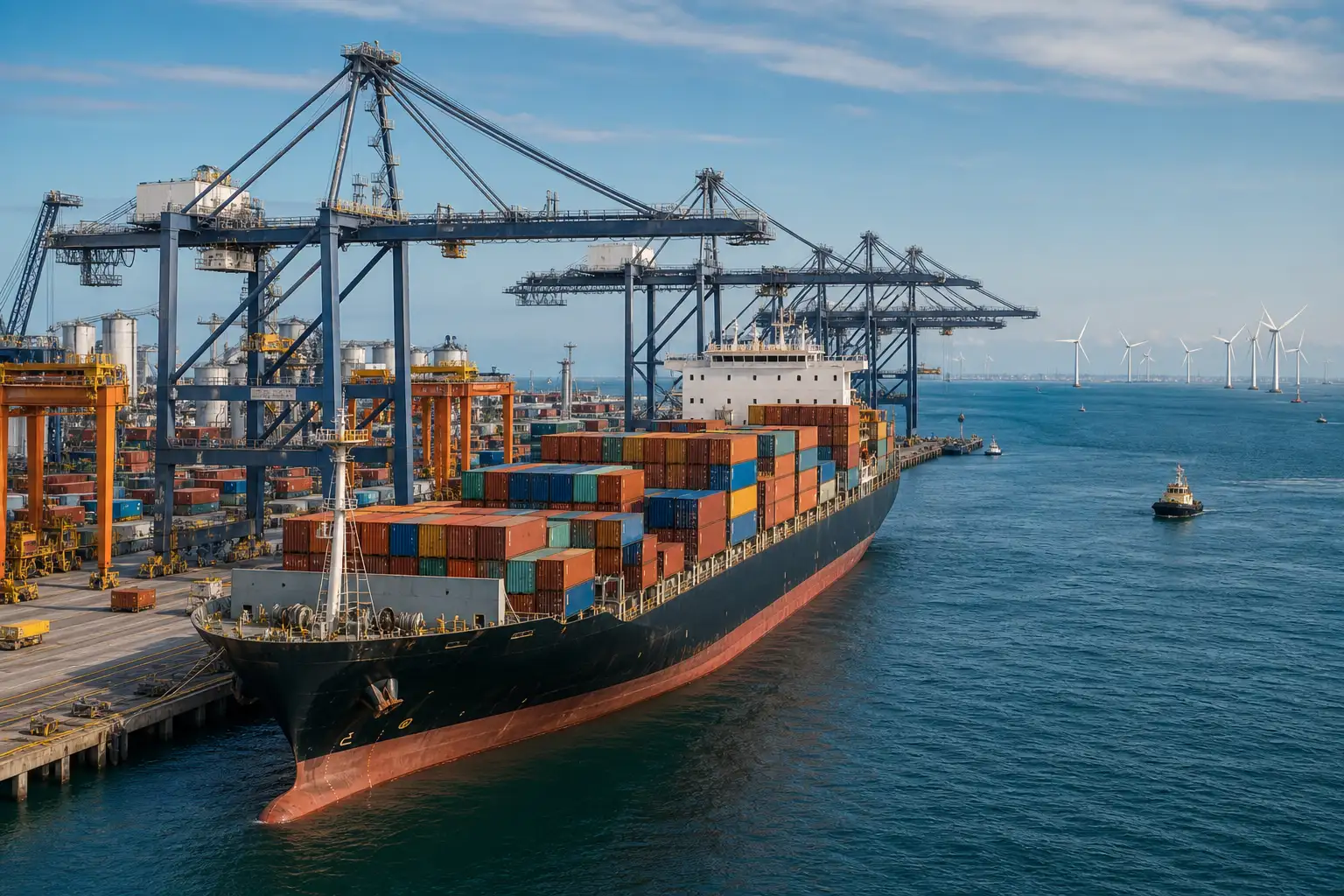
Associated British Ports runs a network of 21 strategically located ports across England, Scotland and Wales. The portfolio includes Immingham, the UK’s largest port by tonnage, and Southampton, the country’s top export gateway that moves about £40 billion of exports a year. ABP handles roughly a quarter of UK seaborne trade.
Operations cover containers, automobiles, dry and liquid bulk, cruise vessels and industrial real estate. The company also serves as statutory harbour and river authority at most sites, generating pilotage and conservancy income that sits largely outside pure cargo volumes.
- Immingham: critical energy and bulk hub, among the UK’s highest-tonnage facilities
- Southampton: number-one export port, leading automotive terminal and major cruise turnaround
- Humber cluster (Hull, Grimsby, Goole): timber, offshore wind, automotive and inland links
- South Wales and Scottish ports: steel, agribulk, project cargo and regional energy support
ABP is a major partner to the offshore wind industry, providing operations and maintenance support for more than half of UK sector activity. That role sits at the centre of the group’s “Keeping Britain Trading” and “Enabling the Energy Transition” missions.
Canadian Funds Have Already Started the Clock
Canada Pension Plan Investment Board and Ontario Municipal Employees Retirement System together control about 63.9 percent. Recent reporting puts CPPIB at 30 percent and OMERS at 33.88 percent. Both have hired Morgan Stanley to explore a sale. Earlier coverage in February put the stakes nearer 34 percent and 33 percent and flagged a possible deal in the second half of 2026.
Other holders include Singapore’s GIC at around 20 percent, Wren House Infrastructure (Kuwait Investment Authority) at 10 percent and Hermes Infrastructure via Anchorage Ports. Hermes has been mentioned as a possible co-seller of its roughly 6 percent stake. OMERS declined comment; CPPIB and ABP had not responded by publication time on the latest reports.
A Bloomberg story in April noted preliminary interest from KKR, BlackRock-owned Global Infrastructure Partners, Brookfield and Dubai’s DP World. No formal bids had been lodged then, and the process stayed early-stage.
What We Know / What’s Unconfirmed
- What we know: Canadian funds control the majority stake and have appointed bankers; ABP runs 21 ports handling ~25% of UK seaborne trade; valuation talk starts above £10 billion; APSEZ has issued a standard no-comment on speculation.
- What’s unconfirmed: Whether Adani submits a formal bid, any partnership structure, final equity percentage available, competing bid timeline, or regulatory and national-security clearances required.
An APSEZ spokesperson said: “As a matter of policy, we do not comment on market speculation or rumours. We continuously evaluate opportunities that align with our long-term strategy and create sustainable value for all stakeholders.”
The Scale Gap Adani Wants to Close
APSEZ operates 15 ports and terminals in India plus four international assets: Haifa Port in Israel (70 percent stake with Gadot Group, acquired for around $1.18 billion), Colombo West International Terminal in Sri Lanka, Container Terminal 2 at Dar es Salaam in Tanzania, and the North Queensland Export Terminal in Australia. Domestic capacity sits near 633 million tonnes per annum; the company commands about 28 percent of India’s port volumes.
In FY26 the group crossed 500 million tonnes cargo in FY26, specifically 500.8 million tonnes, up 11 percent year on year. International volumes grew sharply. The stated target is one billion tonnes of annual handling capacity by 2030, with 850 million tonnes throughput. Marine services (tugs and offshore support) are also slated to expand past 200 vessels from 136.
Gautam Adani, chairman of the Adani Group, framed the 500-million-tonne milestone as proof of long-term confidence in India’s growth story and an integrated transport platform of ports, rail, roads, warehouses and marine assets. Strategic M&A sits outside the core five-year domestic-heavy capex plan of up to Rs 1 lakh crore.
At end-March APSEZ held cash and equivalents of Rs 12,193 crore against gross debt of Rs 55,103 crore. An ABP deal would dwarf prior overseas moves and test balance-sheet capacity even if structured with partners.
ABP’s Own 2025 Scorecard
Official company figures for the year ended 31 December 2025 show steady contract-driven growth despite softer bulk volumes.
| Metric | 2025 | 2024 | Change |
|---|---|---|---|
| Bulk cargo tonnage | 42.5 million tonnes | 43.8 million tonnes | -3.0% |
| Unitised cargo | 3.1 million units | 3.1 million units | flat |
| Revenue | £792.5 million | £756.6 million | +4.8% |
| Pre-tax profit | £528.8 million | £499.3 million | higher |
| Cash from operations | £401.6 million | £400.8 million | stable |
| Passenger volumes (cruise) | 3.82 million | 3.82 million | +0.1% |
News coverage has also cited group-level revenue near £819.8 million and operating profit of £586.5 million for the same period. Minimum-volume guarantees and inflation-linked contracts cushioned lower liquid bulk and steel flows. Capital expenditure ran about £170 million. Net assets stood at £3.64 billion. Full ABP 2025 financial statements and reports detail the landlord-tenant model and property rental contribution.
ABP has committed to a multi-year “Ready for Tomorrow” programme allocating roughly £2 billion to low-carbon and energy-resilient infrastructure, targeting net-zero operations by 2040 while helping customers decarbonise.
Why the Second Layer Matters More Than Tonnes
Cargo volumes alone understate the prize. Statutory harbour authority status brings pilotage and conservancy revenue that is relatively sticky. Southampton’s export and automotive leadership plus the Humber’s energy role give direct exposure to UK goods trade and power-generation supply chains.
The offshore-wind O&M footprint covering more than 50 percent of UK activity would place Adani inside the country’s energy transition. That aligns with broader Adani interest in power and infrastructure, including Adani group’s wider nuclear and AI capex plans. It also parallels other UK renewable infrastructure stories such as Scotland’s tidal energy infrastructure record.
For Adani the deal would accelerate the stated ambition to become a top global transport utility by the early 2030s. Marine services, logistics parks and hinterland connectivity already form part of the Indian model; a UK platform would extend that “shore-to-door” logic into Europe’s largest trading economy.
Crowd discussion on X framed the sale as a shift from passive pension capital to active operator capital. Canadian funds recycle mature infrastructure into higher-return opportunities while Asian port specialists seek developed-market scale. That reading fits the early interest from both pure financial sponsors and fellow operators such as DP World.
Competition, Debt and Political Reality
Adani would not walk in alone. Infrastructure funds and rival port groups have already circled. Any controlling bid would face UK national-security and competition reviews for critical trade infrastructure. Political sensitivity around foreign ownership of ports has risen across Europe; a high-profile Indian industrial group would draw extra scrutiny.
APSEZ’s existing debt load and the absolute size of a £10 billion-plus enterprise value imply partners, phased equity or significant new financing. The company has said strategic M&A sits outside its core domestic capex envelope. Cash of roughly Rs 12,200 crore provides flexibility but not a blank cheque.
On the positive side, ABP’s high contracted revenue share, inflation linkage and diversified cargo mix offer defensive cash flows. The energy-transition upside and pilotage base give earnings quality that pure bulk ports often lack.
What the Next Months Will Test
Bankers are already engaged. Formal processes typically move from preliminary indications to binding offers over several quarters. Adani’s internal evaluation, possible consortium talks and UK regulatory mapping will decide whether a bid materialises. Other interested parties can still accelerate.
If completed, the transaction would mark Adani Ports’ biggest overseas step and give the group a permanent operating base in northern Europe. If it stalls, the company still holds growing international terminals and a domestic engine that just cleared 500 million tonnes. Either outcome leaves the larger pattern intact: global port assets are migrating toward operators who can combine cargo handling with logistics, marine services and energy support.
For now the only confirmed facts are the evaluation itself, the size of the prize and the quiet exit of two large Canadian pensions from one of Britain’s most strategic infrastructure holdings.
 ONGC licence frees Venezuela cash and operatorship talks
  Anthropic Hits $65 Billion Run Rate and Flips the AI Cash Test
  Supreme Court grounds the fare free-for-all with three-week clock
  Gold Nears $4400 as Soft Data Meets Oil Inflation Risk
  Nifty Slips as Zaggle Circuits and Dhoot Debuts Big
  Diesel Crack Tops $100 as Iran Rhetoric Lifts Crude