
 Ishan Crawford
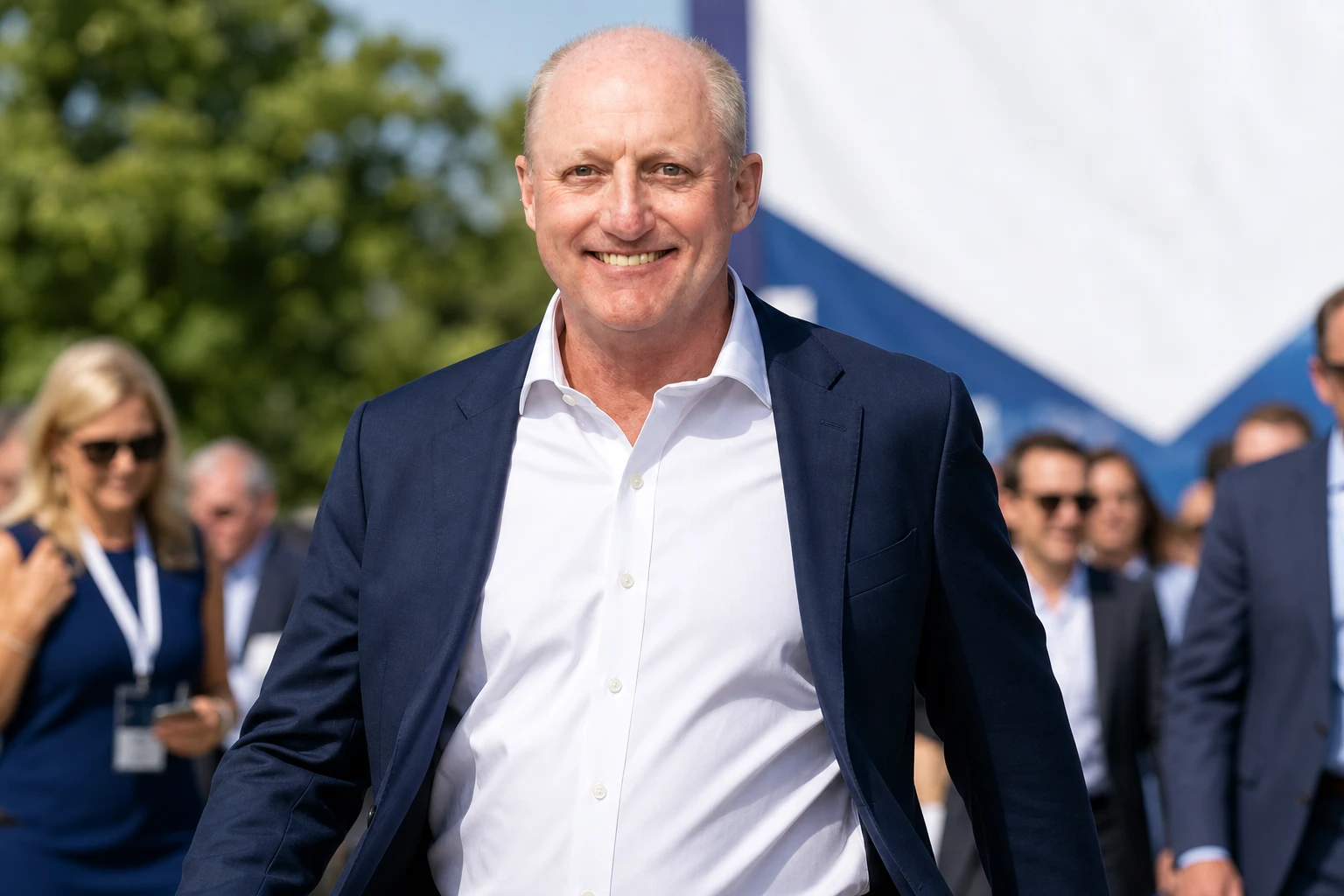
 Berkshire Hathaway’s cash pile fell to $365.5 billion at the end of June, an 8% drop from the record $397.4 billion three months earlier, as new CEO Greg Abel put capital to work in his second quarter at the helm. Share buybacks hit $4.5 billion and the conglomerate flipped to a net buyer of equities for the first time in 14 quarters.
The moves mark more than a simple spend-down of Warren Buffett’s long-built hoard. They signal that Abel intends to run Berkshire as an active allocator while the fortress balance sheet remains intact, a shift investors are already pricing into the stock’s recovery.
Cash Drop Hits After Years of Buildup
Saturday’s report for the quarter ended June 30 showed the cash decline as the first significant retreat since early 2022. Excluding BNSF cash and adjusting for unpaid Treasury bill purchases, the favored metric dropped 3.8% to $359.2 billion.
The June 30 balance sheet cash and equivalents still dwarf most corporate treasuries. Insurance and other cash stood near $35 billion, short-term U.S. Treasury bills near $325 billion, and railroad cash about $5.5 billion.
- $365.5 billion total cash on hand at quarter end
- $4.5 billion spent on Berkshire share buybacks in Q2
- $20 billion approximate net equity purchases
- $12.98 billion operating earnings, up 16%
Net earnings attributable to shareholders more than doubled to $25.67 billion, lifted by investment gains. Abel has kept the traditional $30 billion cash floor well clear.
The composition of the pile matters as much as the headline total. Nearly all of the liquidity sits in short-term Treasuries, which can be converted quickly when a deal or repurchase window opens. That flexibility is what allowed the quarter’s simultaneous buybacks, equity purchases, and acquisition funding without threatening the floor Abel has left untouched.
Buybacks Accelerate Under New Leadership
Berkshire repurchased about $4.5 billion of its own shares in the second quarter, up sharply from $235 million in the first quarter and the first meaningful activity since 2024. That total included 478 Class A shares and 8.6 million Class B shares, paid at roughly 1.45 times the prior quarter’s book value.
Year-to-date buybacks reached nearly $4.8 billion. Barron’s later estimated another $3.4 billion may have been spent in July by comparing share counts in the Q2 report to those outstanding on July 29. Most of that likely occurred before the late-month rally in the stock.
| Period | Buyback Amount | Notes |
|---|---|---|
| Q1 2026 | $235 million | Minimal activity |
| Q2 2026 | $4.5 billion | 478 Class A, 8.6 million Class B |
| First half 2026 | Nearly $4.8 billion | Combined total |
| July estimate | $3.4 billion | Barron’s share-count comparison |
CFRA Research’s Cathy Seifert told Bloomberg the buybacks will encourage people and represent “Greg’s way of taking the helm and asserting himself.” Gabelli Funds portfolio manager Macrae Sykes told CNBC that material repurchases “provide confidence for shareholders that some of the best corporate capital allocators see current value.”
The pace came in below some pre-report forecasts that ranged as high as $8.5 billion to $11 billion, yet it still ranked among the larger quarterly outlays of recent years. Pricing at 1.45 times book kept the program inside the valuation band Berkshire has long treated as a signal of clear value.
Equity Portfolio Flips to Net Buyer
Berkshire bought more equities than it sold for a net increase of roughly $20 billion. Purchases totaled about $23.5 billion against sales of $3.7 billion. That ended a 14-quarter stretch as a net seller.
The figure includes the $10 billion private placement in Alphabet shares announced in June. Berkshire took $5 billion of Class A stock at $351.81 per share and $5 billion of Class C at $348.20, helping fund Alphabet’s AI compute buildout as part of a larger $80 billion capital raise. The prices sat 5.5% to 6.5% below then-market levels.
The full portfolio snapshot arrives in the coming week’s 13F-style disclosure. Morningstar analysis pointed to additional purchases among Japanese trading houses known as sogo shosha as well.
On the acquisition side, Berkshire completed the $6.8 billion Taylor Morrison purchase on July 24. The all-cash deal for the homebuilder valued equity at $72.50 per share, a 24% premium, and carried an enterprise value near $8.5 billion. It expands Berkshire’s housing footprint alongside Clayton Homes.
Together the Alphabet stake and the homebuilder close show two distinct channels at work in the same quarter: a discounted private placement into a technology growth story, and a full acquisition that deepens an existing industrial vertical. Both were funded from the same cash reservoir without forcing a choice between them.
Operating Earnings Climb on Energy and Manufacturing
Operating earnings rose 16% to $12.98 billion. Strength came from Berkshire Hathaway Energy, up 27% to $891 million, BNSF railroad up 6% to $1.56 billion, and the manufacturing, service and retail group up 24% to $4.47 billion.
| Segment | Q2 2026 ($M) | Q2 2025 ($M) | Change |
|---|---|---|---|
| Insurance underwriting | 1,731 | 1,992 | -13% |
| Insurance investment income | 3,059 | 3,367 | -9% |
| BNSF | 1,558 | 1,466 | +6% |
| Berkshire Hathaway Energy | 891 | 702 | +27% |
| Manufacturing, service, retail | 4,470 | 3,601 | +24% |
| Other | 1,274 | 32 | n/m |
| Total operating | 12,983 | 11,160 | +16% |
Insurance lagged. Underwriting profits fell 13% and investment income dropped 9%. GEICO underwriting profits sank 45%. Sykes still saw the overall picture as positive: “Despite more difficult insurance industry back-drop, the company continues to build shareholder net worth in Greg Abel’s first year as CEO.”
Book value per share rose 12.5% year over year. Total revenues climbed about 10% to $101.8 billion.
The operating beat matters for capital allocation because it replenishes the cash that buybacks and deals draw down. Energy and manufacturing gains more than offset the insurance soft patch, leaving Abel with fresh earnings power even as he put tens of billions to work.
DaVita Trim Follows Old Agreement
Berkshire trimmed its DaVita stake by fewer than 183,000 shares under a 2024 agreement that caps its holding at 45%. DaVita’s own buybacks reduced outstanding shares by about 400,000 in the quarter, triggering the automatic sale. Berkshire received $36.5 million at the volume-weighted average price of DaVita’s public repurchases, just under $200 per share.
The dialysis provider’s stock later fell sharply after its own earnings, but the Berkshire sale had no link to that move. The remaining 28.7 million shares were still valued near $5.3 billion and equaled exactly 45%. Even after the drop DaVita shares remained up nearly 62% for the year.
- January 2, 2026, Berkshire closes OxyChem acquisition for about $9.4 billion cash.
- May 31, 2026, Agreement announced to buy Taylor Morrison for $72.50 per share.
- June 1, 2026, $10 billion Alphabet private placement disclosed.
- June 30, 2026, Quarter ends with cash at $365.5 billion and $4.5 billion buybacks completed.
- July 24, 2026, Taylor Morrison acquisition closes.
- July 29, 2026, Share count used for Barron’s July buyback estimate.
What the Market Sees in Abel’s First Real Test
On X and in analyst notes the reaction clustered around the same observation: this is Abel’s opening statement. One widely shared breakdown noted the flip from 14 quarters of net selling, the Alphabet stake, the homebuilder deal and the buybacks, then asked whether the remaining $365 billion still constitutes dry powder for a larger opportunity.
Crowd takes absorbed into the numbers show investors treating the quarter as proof that the cash will not sit idle forever, yet the pile’s size means Abel can stay selective. Buybacks at 1.45 times book echo earlier Buffett-era levels when management saw clear value. The Alphabet discount purchase and housing bet add modern growth exposure without abandoning the classic portfolio.
Material repurchases provide confidence for shareholders that some of the best corporate capital allocators see current value.
Macrae Sykes of Gabelli Funds made that point directly to CNBC. Cathy Seifert framed the buybacks as Abel asserting control. Both views fit the second-order reading: the absolute dollars matter less than the message that Berkshire under Abel will keep returning capital when the stock is attractive and will take concentrated equity positions when the odds look favorable.
Berkshire Class B shares traded near $522 with a trailing P/E around 15.5 and a market value above $1.12 trillion in early August data. Cash still equals nearly 30% of the firm’s size. That combination of liquidity and fresh deployment is what separates the quarter from a routine earnings print.
The 13F due shortly will reveal the rest of the equity moves. Until then the picture is already clear enough. Abel has begun to put the cash to work. Shareholders are watching how far and how fast the next steps go.
The Cash Pile Still Funds Larger Opportunities
Even after the quarter’s outflows, $365.5 billion leaves Abel with ample capacity. The adjusted $359.2 billion figure still stands more than ten times the long-standing $30 billion floor.
Simple arithmetic from the reported moves shows why the fortress label still applies:
- Roughly $20 billion net equity purchases
- $4.5 billion in Q2 share buybacks
- $6.8 billion Taylor Morrison equity value
- $10 billion Alphabet private placement (already inside the equity total)
Those deployments, layered on the earlier $9.4 billion OxyChem close, reduced the pile without changing its character. Short-term Treasuries near $325 billion remain the dominant holding. That structure lets Abel fund another deal of Taylor Morrison’s scale, or another private placement the size of Alphabet’s, and still keep cash well above any historical comfort threshold.
Investors pricing the stock near $522 with a market value above $1.12 trillion are therefore reacting to a dual signal: capital is moving, and the dry powder for a still-larger opportunity has not been spent down.
How Operating Gains Support the New Pace
The 16% rise in operating earnings to $12.98 billion supplies the recurring cash that makes sustained allocation possible. Energy’s 27% jump and the manufacturing group’s 24% gain generated the bulk of the improvement, while BNSF added a steadier 6%.
Insurance softness, including the 45% drop in GEICO underwriting profits, did not reverse the overall climb. Net earnings more than doubled to $25.67 billion once investment gains were included, and book value per share advanced 12.5% year over year.
That earnings base is what separates a one-quarter spend from a durable shift in style. Buybacks, equity purchases, and acquisitions can continue at a meaningful pace as long as the operating engine keeps replenishing the Treasury stack. Abel’s second quarter showed both sides of that loop working at once: stronger results from the businesses, and a clear willingness to put the resulting cash to work.
Frequently Asked Questions
How much did Berkshire’s cash fall in Q2 2026?
Cash and equivalents declined to $365.5 billion from the $397.4 billion record at March 31, an 8% drop and the first meaningful decline since early 2022. The adjusted figure excluding BNSF cash and unpaid T-bill purchases fell 3.8% to $359.2 billion.
What was the size of Berkshire’s Q2 share buybacks?
Berkshire spent approximately $4.5 billion repurchasing its own shares in the second quarter, consisting of 478 Class A shares and 8.6 million Class B shares. That brought the first-half total to about $4.8 billion after only $235 million in Q1.
When did Berkshire become a net buyer of stocks again?
In Q2 2026 Berkshire ended a 14-quarter streak as a net seller by purchasing roughly $23.5 billion of equities while selling $3.7 billion, for a net addition near $20 billion. The total included the $10 billion Alphabet private placement.
What drove the 16% rise in operating earnings?
Berkshire Hathaway Energy earnings rose 27%, manufacturing/service/retail climbed 24% to $4.47 billion, and BNSF gained 6%. Insurance underwriting and investment income both declined, with GEICO underwriting profits down 45%.
When did the Taylor Morrison deal close and at what price?
Berkshire completed the acquisition on July 24, 2026, paying $72.50 per share in cash for an equity value of about $6.8 billion and an enterprise value near $8.5 billion. The price represented a 24% premium to the pre-announcement close.
 ONGC licence frees Venezuela cash and operatorship talks
  Anthropic Hits $65 Billion Run Rate and Flips the AI Cash Test
  Supreme Court grounds the fare free-for-all with three-week clock
  Gold Nears $4400 as Soft Data Meets Oil Inflation Risk
  Nifty Slips as Zaggle Circuits and Dhoot Debuts Big
  Diesel Crack Tops $100 as Iran Rhetoric Lifts Crude