
 Ishan Crawford
 National Galleries Scotland will close its main Edinburgh venues on four days this August after PCS members in visitor-facing roles begin 24-hour strikes over working practices. The walkouts start at 7pm on 7 August and collide with the opening of a major photography show and the height of the city’s festival season.
Around 190 PCS members voted 81% in favour of action. Management says staffing is up and no jobs have gone. The union says minimum levels create health and safety risks and force room closures.
Four Walkouts Hit Peak Festival Weeks
The first stoppage runs from 7pm on Friday 7 August through Saturday 8 August. Further 24-hour actions begin at 7pm on 11, 16 and 19 August. Staff will also refuse to wear NGS uniforms on non-strike days.
NGS has already posted the knock-on effect. The National, Modern and Portrait galleries, shops and cafés shut on Saturday 8 August. Full or near-full closures hit again on 12, 16 and 20 August. Grounds at Modern One and Two stay open.
| Date | Venues closed | Notes |
|---|---|---|
| Sat 8 Aug | National, Modern, Portrait (shops/cafés) | Opie show opens at RSA |
| Wed 12 Aug | National, Modern, Portrait, RSA | Full shutdown |
| Sun 16 Aug | National, Modern, Portrait upper floors, RSA | Portrait market open |
| Thu 20 Aug | National, Modern, Portrait, RSA | Full shutdown |
The gallery closure days in August sit squarely inside the Edinburgh Festival Fringe running 7 to 31 August, when the city roughly doubles in population and cultural venues normally pull peak traffic.
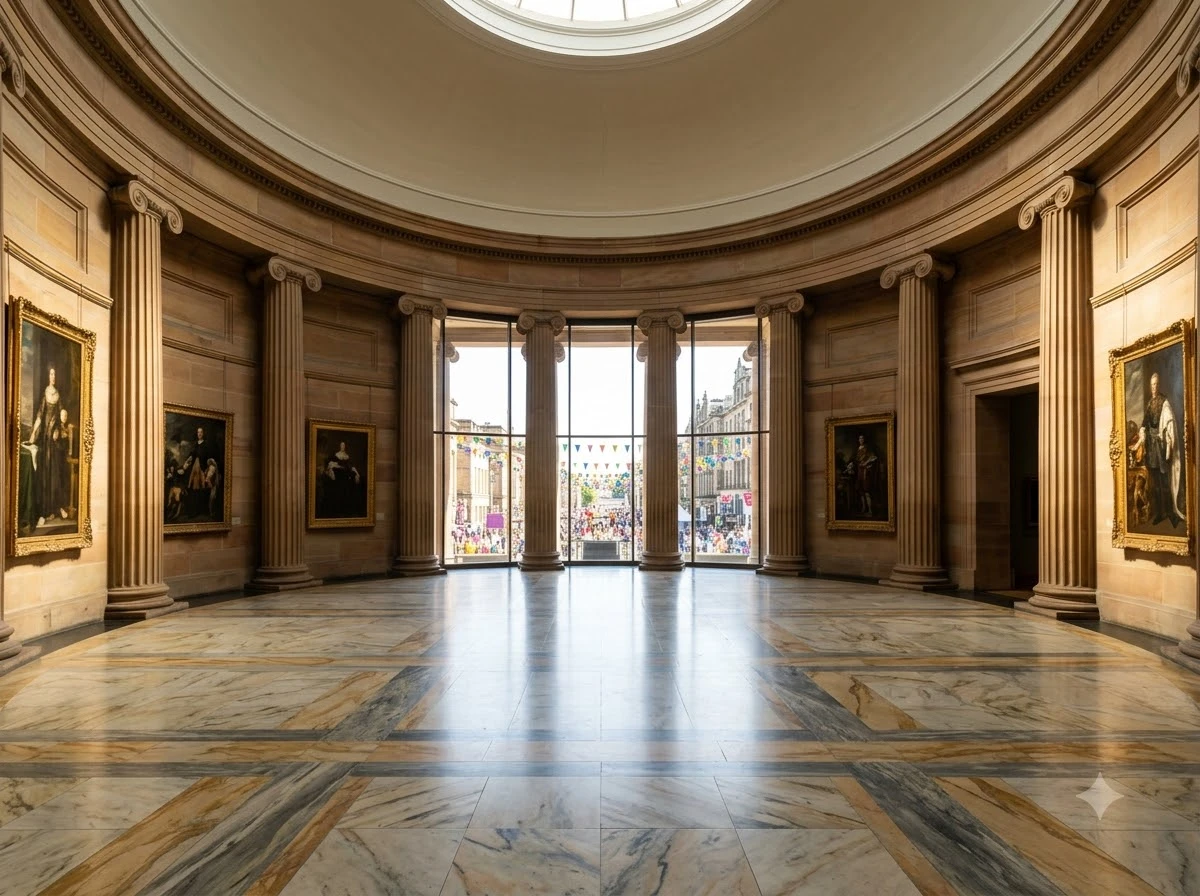
What Each Side Says About Staffing
PCS Scotland national officer Ruby Gibson says expectations on gallery attendants have risen. More patrols, more rooms, and reports that some staff must contact supervisors simply to use the toilet. She calls that “incredibly embarrassing”, especially for colleagues with disabilities or reasonable adjustments.
The union argues the new minimum staffing levels make solo cover of large collections the norm, raise health and safety risks, and make frequent room and floor closures inevitable. Front-of-house staff have also been asked to cover security shifts without full training, according to members.
- Union claim: Imposed changes cut effective cover and threaten visitor experience and safety.
- NGS reply: Staffing in security and visitor engagement is 16% higher than 2023/24 and 2025/26 averages.
- Jobs: No one has lost a job; five vacant posts left unfilled under 2023 agreed vacancy management.
- New hires: 52 extra colleagues brought in for summer exhibitions.
An NGS spokesperson said: “This is not the outcome any of us wanted after months of meetings and discussions with colleagues and PCS. Throughout this process, we have been open and transparent… Colleagues, visitors and the art in our care remain our highest priorities.”
They insist the operational structure matches the one consulted with PCS in 2023 and that service delivery is unaffected outside the strike days.
The Opie Show Opens Anyway
The first strike night coincides with the launch of the Catherine Opie To Be Seen exhibition at the Royal Scottish Academy on The Mound. It is the first major UK museum show of the American photographer’s work and her first solo outing in Scotland. Nearly 80 portraits sit alongside pieces from the national collection.
NGS confirmed the exhibition still opens on Saturday 8 August from 10am to 5pm even while the adjacent National, Modern and Portrait buildings stay shut. It will close again on the later strike-related dates of 12, 16 and 20 August. Existing ticket holders are being contacted.
The timing is pure leverage. Festival crowds want the new show. Staff choose the busiest window to press their case. Management keeps the headline exhibition running while absorbing the cost of overtime and partial shut-downs.
Empty Rooms and Festival Crowds
Edinburgh’s galleries sit at the heart of the city’s free cultural offer. In 2024/25 they drew 2.63 million visitors and generated an estimated £254 million in associated tourism, jobs and cultural activity. After Covid they had already climbed back above pre-pandemic levels, recording over 2.18 million visits in 2023-24.
Closing four days inside Fringe month therefore lands on more than local regulars. International visitors who planned gallery days around shows now face last-minute changes. Shops and cafés lose trade. The free entry model that underpins the economic numbers becomes less reliable precisely when the city markets itself hardest.
PCS has used the high-profile window deliberately. Gibson said the four days “will cause significant disruption during a high-profile time of the year” and accused management of spending “taxpayers’ money to pay overtime in an effort to undermine a strike.” She called it the latest misstep from a team that needs to consult rather than impose.
It is ironic that while the Scottish Government is attempting to save money for the public purse by cutting budgets and talking about worker led reforms, employers are disregarding their workers’ views and wasting money on overtime.
Ruby Gibson, PCS Scotland national officer, made the point in statements carried across several outlets and in a BBC Radio Scotland interview shared by the union account.
Numbers That Climbed After Covid
Visitor recovery is real. The 2023-24 trustees’ report noted a return to pre-Covid levels boosted by big summer shows. The later BiGGAR Economics figures put 2024/25 even higher. NGS has used those numbers to argue it is investing in people: 52 temporary or seasonal hires for the current summer programme and overall visitor-facing headcount 16% above recent averages.
The union sees a different arithmetic. Leaving five posts vacant, even under a prior agreement, plus new minimum-level rotas, still reduces cover on the floor. Attendants end up responsible for more space. Comfort breaks become logistical problems. Reasonable adjustments grow harder to honour. That is the lived experience members describe, regardless of the headcount spreadsheet.
Similar tension has appeared before. PCS members at the galleries staged action in 2023 that closed multiple buildings. The current dispute is framed as the latest round of the same pressure: evolving operational needs versus frontline capacity and dignity at work.
Overtime Bills and Unresolved Talks
Both sides say they met for months. NGS calls the process open and transparent. PCS says changes were imposed and complaints ignored. The Scottish Government, which funds NGS but treats it as operationally independent, has limited itself to a short statement encouraging everyone “to get round the table to resolve this and prevent any reduction in service to the public.”
The overtime question sits at the centre of the irony. Management wants to keep as many rooms open as possible during peak season. That means paying extra to cover striking colleagues. The union says that spend undercuts any claim of tight vacancy management and public-money discipline. Visitors simply see closed doors on days they expected free access to Scotland’s national collection.
Staff concerns go beyond numbers. Solo responsibility for valuable collections raises safety questions for both artworks and people. Being unable to leave a floor without a supervisor’s say-so lands hardest on those who already need adjustments. These are the details that turn a rota change into a ballot result of more than 80%.
Visitors Left Checking Daily Updates
For the next fortnight the practical advice is simple. Check the NGS temporary closures page before travelling. The Opie exhibition has its own schedule of open and closed days. Grounds at the Modern galleries remain usable even when buildings shut. Ticket holders for closed days are being rebooked or refunded.
The deeper collision is structural. A national cultural body that has just posted strong visitor and economic figures finds itself unable to keep its doors open on four busy summer days because its own visitor staff will not accept the new cover levels. The union that wants better conditions for the people who look after the art ends up denying the public access to that art at the moment of highest demand.
Neither outcome was the one either side says it sought. The closures are already published. The talks that failed to prevent them remain the only route to ending them early. In the meantime Edinburgh’s festival visitors will discover that free national galleries are free only on the days the staffing dispute allows.
The same pressures have appeared at another Scottish national cultural institution under public scrutiny in recent months, a reminder that operational and reputational strains often travel together across the sector.
 ONGC licence frees Venezuela cash and operatorship talks
  Anthropic Hits $65 Billion Run Rate and Flips the AI Cash Test
  Supreme Court grounds the fare free-for-all with three-week clock
  Gold Nears $4400 as Soft Data Meets Oil Inflation Risk
  Nifty Slips as Zaggle Circuits and Dhoot Debuts Big
  Diesel Crack Tops $100 as Iran Rhetoric Lifts Crude