
 Ishan Crawford
 The Indian rupee opened the week marginally stronger on Monday, June 1, rising three paise to 94.97 against the US dollar from Friday’s close of 95.00, even as most Asian currencies slipped and the greenback held firm across the region. The move was small, but the direction set it apart from nearly every neighbour on the board.
That direction is welcome news for importers and policymakers. It also rests on a barrel of crude oil and a US-Iran peace deal that has yet to be signed, which is why a quiet three-paise gain deserves more attention than the size of the number suggests.
Why the Rupee Bucked a Weaker Asian Open
On the day, dollar strength showed up almost everywhere in Asia. The South Korean won was the biggest loser, sliding 0.611%, with the Indonesian rupiah down 0.196% and the Thai baht off 0.187%. Smaller losses ran through the Philippine peso, the Japanese yen, the Singapore dollar and the Malaysian ringgit. The Taiwan dollar was effectively flat.
| Asian currency | Move vs US dollar, June 1 |
|---|---|
| South Korean won | -0.611% |
| Indonesian rupiah | -0.196% |
| Thai baht | -0.187% |
| Philippine peso | -0.151% |
| Japanese yen | -0.125% |
| Singapore dollar | -0.086% |
| Malaysian ringgit | -0.013% |
| Taiwan dollar | -0.010% |
| Chinese renminbi | +0.140% |
Only the Chinese renminbi managed a gain in the basket, firming 0.140%. The rupee’s small advance put it in that thin company, which is the part worth noting. When a regional sell-off leaves just two currencies green, the ones that hold are telling you something about local positioning rather than the global tape.
The backdrop helped. The dollar held steady after a losing week, with traders awaiting the outcome of Middle East talks and fresh signals on the timing of major central bank moves. You can track the official benchmark on the Reserve Bank of India reference rate archive, which sets the daily fixing the market trades around.
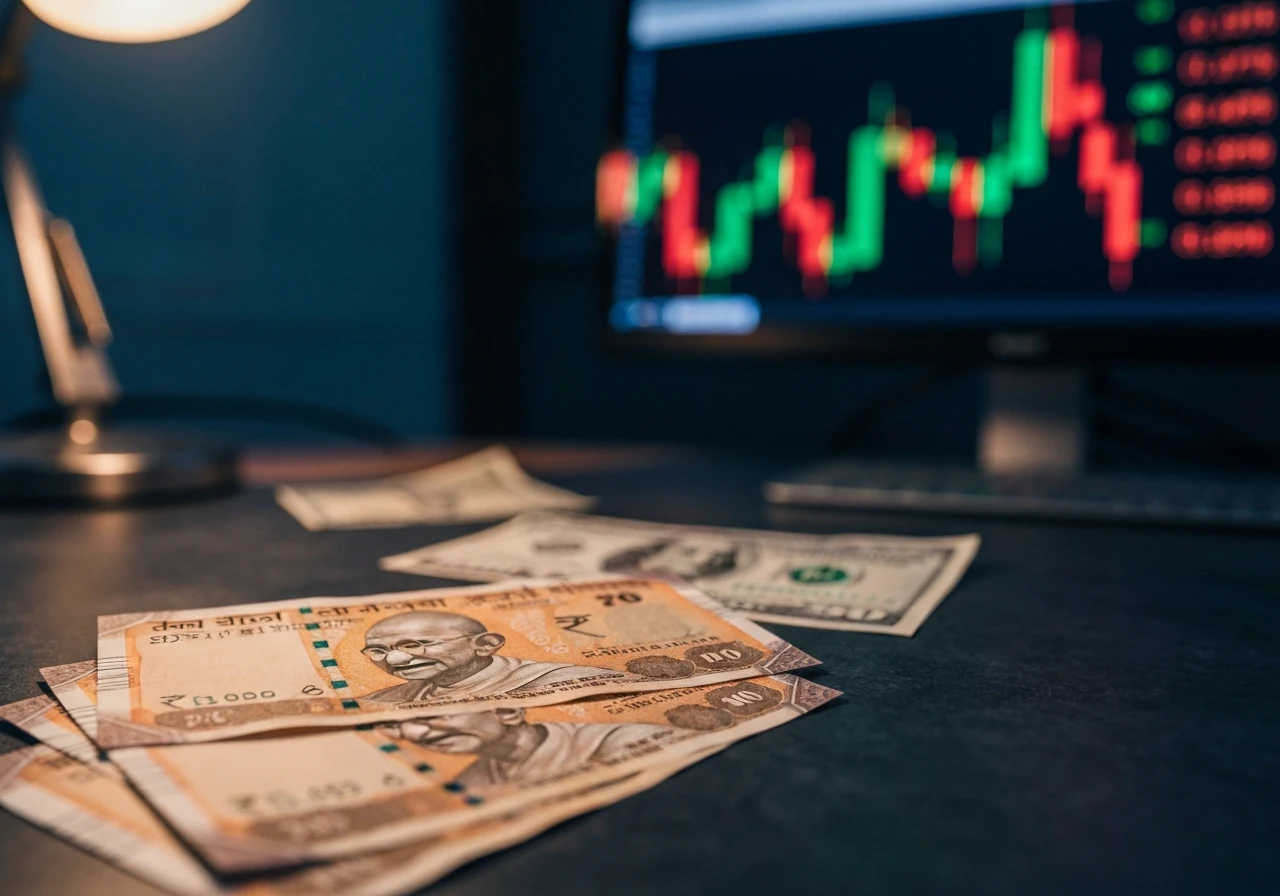
The Record-Low Scare That Came Before
To see why a flat-to-firmer open feels like relief, rewind two weeks. In May the rupee was setting fresh all-time lows almost daily, sliding past 96 to the dollar and printing its ninth record of the year near 96.89, a stretch we covered as the rupee’s record low against the dollar.
The trigger was an oil shock tied to conflict in the Gulf, which forced policymakers in Delhi to lean on the currency from several directions at once. We traced that pressure when the unit cracked 96.20 during the Iran war oil spike.
From that low near 96.89 back to roughly 95 is a meaningful retracement in a matter of weeks. The June 1 open did not start that recovery; it confirmed that the bounce off the worst levels of the year is still intact, at least for now.
Oil and the Iran Deal Are Doing the Heavy Lifting
India imports the bulk of the crude it burns, so the rupee tends to move on the oil price more than almost any other single input. The recent easing in energy markets has done more for the currency than any domestic data point.
- $97.94 a barrel was the level for Brent July futures in the latest session, down roughly 9% from a month earlier.
- May 23 was when US and Iranian negotiators approved a draft peace deal and sent it to leaders on both sides for final sign-off.
- One-third higher is where Brent still sits compared with prices before the conflict began, a reminder the risk premium has not fully drained.
The market read is straightforward. If diplomacy keeps disruption away from the Strait of Hormuz, the oil-import bill stays contained and the rupee gets room to breathe. The catch is that the draft is not a signed treaty, and leaders on both sides have been told not to rush. You can follow the underlying crude trend through the US Energy Information Administration petroleum data hub, which publishes the price and supply figures that flow straight into India’s import math.
The Outflow Problem Hasn’t Gone Away
Cheaper oil fixes one side of the ledger. It does nothing about the steady exit of foreign money from Indian assets, which has been the heavier weight on the currency all year.
Foreign portfolio investors (FPIs, overseas funds that buy listed Indian stocks and bonds) have pulled out roughly Rs 2.25 trillion from equities in 2026 so far, already above the Rs 1.66 trillion they withdrew across the whole of 2025. The selling does not look finished:
- FPIs were net sellers of close to Rs 33,000 crore of equities in May alone, with a weaker rupee feeding the exit.
- Analysts tie the trend to global growth worries, geopolitical risk, crude volatility and a firm dollar.
- Capital being diverted toward artificial-intelligence plays in other markets has pulled more money away from Indian screens.
When foreigners sell stocks and convert proceeds out of rupees, that selling lands directly on the currency. As long as the outflow runs, every oil-driven recovery has to fight a constant headwind.
Where Traders See the Rupee Going
Desk views frame the next move around two clear levels. The zone between 95.50 and 95.75 on the dollar-rupee pair is being treated as strong resistance, the line that has to break before the currency weakens sharply again.
As long as crude oil prices remain under control and global risk sentiment continues improving, the rupee could gradually appreciate towards the 94.00 to 94.50 region in the near term.
That outlook came from CR Forex Advisors, a Mumbai-based currency consultancy, in its June 1 note. Read together, the levels sketch a narrow corridor: a contained oil price points the rupee toward the mid-94s, while any fresh energy spike or risk-off shock sends it back to test 95.75 and beyond. The whole range hangs on the same two variables driving the open.
What the RBI Meeting Could Change
The next domestic catalyst lands almost immediately. The Reserve Bank of India’s rate-setting Monetary Policy Committee (MPC, the six-member panel that sets the benchmark rate) meets from June 3 to 5, and the bond market broadly expects the repo rate to hold at 5.25%, a meeting we previewed in detail on the central bank’s inflation and growth call amid a sliding rupee.
What the rupee will watch is the tone rather than the rate. Any signal on how hard the central bank intends to defend the currency, or how it reads imported inflation if oil turns back up, can move the pair more than the decision itself.
For now the setup is balanced on a single hinge. If the US-Iran draft holds and crude stays near current levels, the rupee has a path toward the mid-94s that traders are already pricing. If the talks stall and oil jumps, the same record-low script from May is one headline away from returning.
Frequently Asked Questions
Where did the Indian rupee open on June 1, 2026?
The rupee opened three paise stronger at 94.97 per US dollar, up from Friday’s close of 95.00, making it one of only two Asian currencies to gain against the dollar that morning.
Why is the rupee recovering after hitting record lows in May?
Falling crude oil prices are the main driver. Brent eased to about $97.94 a barrel after US and Iranian negotiators approved a draft peace deal on May 23, cutting the risk of supply disruption and easing India’s import bill.
What level could the rupee reach next?
CR Forex Advisors sees the 95.50 to 95.75 zone as strong resistance and expects the rupee to drift toward 94.00 to 94.50 if crude stays contained and global risk sentiment keeps improving.
How are foreign outflows affecting the rupee?
Foreign portfolio investors have withdrawn roughly Rs 2.25 trillion from Indian equities in 2026, already above all of 2025. That selling converts out of rupees and acts as a persistent drag, working against the oil-driven recovery.
When is the next RBI policy decision?
The Reserve Bank of India’s Monetary Policy Committee meets from June 3 to 5, 2026. Markets widely expect the repo rate to stay at 5.25%, with the policy tone on the currency and inflation likely to matter more than the rate itself.
Disclaimer: This article is for informational purposes only and is not investment or foreign-exchange trading advice. Currency markets carry significant risk and can move sharply against published levels. Readers should consult a qualified financial professional before acting on any figure here. All rates and data are accurate as of publication on June 1, 2026.
 FPIs Pull Rs 2.25 Lakh Crore From India as Asia’s AI Rally Wins
  China’s Oil Stockpile Is Cushioning It Through the Iran War
  Why RBI Is Reviving the Plastic Banknote Plan It Once Shelved
  Gold Stays Flat as Fed Rate-Hike Bets Outweigh Iran War Risk
  Godrej Properties Wins ₹7,000 Crore Greater Noida Land Bid
  HCLTech Loses Xerox BPM Contract as Work Shifts to Philippines