
 Ishan Crawford
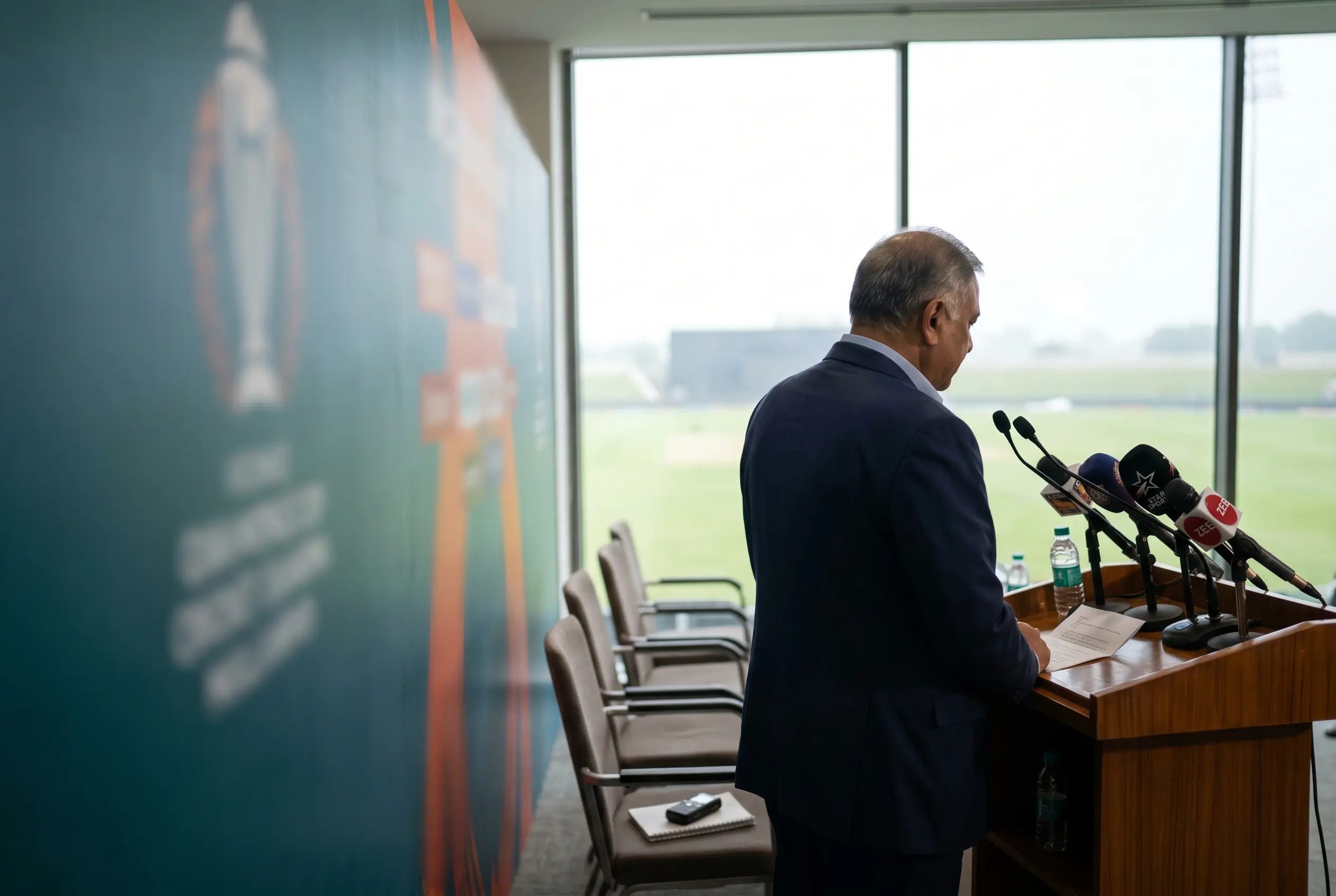
 Two men at the top of Indian cricket administration have spent May saying different things about the same tournament. BCCI secretary Devajit Saikia put a seven-page advisory in front of all ten Indian Premier League (IPL) franchise CEOs warning of honey-trap risk, hotel breaches and sexual-misconduct exposure. IPL governing council chairman Arun Dhumal, sitting in Mullanpur ahead of the playoffs, told TimesofIndia.com that no such honey-trap issue had actually surfaced. Both statements are now part of the public record for IPL 2026.
The gap between them is the story. Dhumal’s verdict on the season was “phenomenal” and the qualification race did run to the last league night, with Royal Challengers Bengaluru, Gujarat Titans, Sunrisers Hyderabad and Rajasthan Royals filling the playoff slots. But the same week his anti-corruption arm filed an internal report flagging unauthorised people inside dugouts, team buses and player hotels, and the directive that followed was the most detailed conduct memo the league has issued in years.
The Two-Track Message From Cricket House
Dhumal’s intervention came in an exclusive interview with TimesofIndia.com in Mullanpur. Asked specifically about the term Saikia had used, the IPL chairman pushed back without contradicting his colleague. “There has been no issue as such with regard to honey-trapping or things like that, to my knowledge. This is a very clean tournament,” he said. He added that he had not heard the secretary’s full comment and was “not privy to any such information either”.
That is a careful sentence. It does not deny Saikia’s directive, nor the Anti-Corruption and Security Unit (ACSU, the BCCI’s internal integrity arm) report that triggered it. It denies only that any specific case has reached the chairman’s desk. The distinction matters, because the BCCI’s advisory was framed around risk and pattern, not around a single named incident.
Saikia’s letter, by contrast, opened with a blunt assessment. “It has come to the attention of the BCCI that certain incidents of misconduct and protocol violation have occurred involving players, support staff, and team officials during the course of the current IPL season,” he wrote to the franchise CEOs. Left unaddressed, he warned, those incidents “carry the potential to cause significant reputational harm to the tournament, the franchise concerned, and the BCCI as the governing body”.
What Saikia’s Seven-Page Letter Actually Said
The directive, sent in the second week of May, ran to seven pages and reached every chief executive in the league. Reporters who have read it describe a document closer to a corporate compliance memo than a cricketing circular, with a defined sanctions ladder running from show-cause notice to suspension or disqualification from the current or subsequent season.
The advisory grouped its concerns into five operational buckets:
- Hotel-room access: any outsider seeking entry into a player’s or support-staff room now requires prior written approval from the Team Manager.
- Irregular-hour movement: players and staff cannot leave the team hotel at odd hours without informing the Security Liaison Officer (SLO) and Team Integrity Officer (TIO).
- Dugout and bus access: only personnel cleared under the Players and Match Officials Area protocol can enter dugouts, buses or restricted zones, with the WAGs (wives and girlfriends) category specifically flagged as a loophole.
- Owner conduct: the letter cited repeated instances of franchise owners trying to communicate with, approach, hug or otherwise physically interact with players during live match situations, and warned that hospitality-box contact during play is now actionable.
- Prohibited substances and devices: vaping and mobile-phone use inside restricted zones are explicitly listed as breaches that will be acted on, not warned about.
Saikia did not stop at protocol. The advisory also cautioned franchises against situations that could expose individuals and teams to “serious legal allegations, including those related to sexual misconduct”, language that has not appeared in an IPL conduct memo before this season. That phrase, more than the honey-trap headline, is what set the tone of the document.
The framing was deliberate. The BCCI is not telling franchises a specific player is in trouble; it is telling franchise boards they will share liability if one ends up there.
Why the ACSU Flagged Anomalies First
The directive did not arrive in a vacuum. Earlier in May, the IPL’s anti-corruption arm submitted an internal report on what Dhumal himself, in an earlier press interaction, called “anomalies” observed during the season. The unit had logged unauthorised individuals inside areas where the league’s Standard Operating Procedures (SOPs) restrict entry to accredited personnel only.
Among the items ACSU officers flagged:
- Three restricted zones breached repeatedly: dugouts, team buses and the player floors of host hotels.
- Owner-side mingling in PMOA areas where contact with players is supposed to be controlled.
- WAGs-category misuse by some younger players, with unidentified women allowed into restricted team travel and hotel spaces.
- Mobile devices turning up in dressing rooms during play windows when handsets are meant to be deposited with team integrity staff.
None of that is fixing. The ACSU did not allege match manipulation in any of the public summaries shared so far. The concern is upstream: each of those breaches is the kind of access that bookmakers, fixers or hostile actors would historically have needed to engineer the next stage. The unit’s job is to close that distance before it gets crossed, which is the case for the directive landing now rather than in the off-season.
The Riyan Parag Incident Dhumal Conceded
The one breach Dhumal volunteered without prompting was the Rajasthan Royals captain’s vaping case from the Punjab Kings match in New Chandigarh. “Yes, there have been some issues. For example, the Riyan Parag incident, which we could have avoided. Barring that, I don’t think there was any such incident,” he told TimesofIndia.com.
The facts of that one are settled. Match referee Amit Sharma fined the player 25% of his match fee and added one demerit point after he was caught using a vape inside the dressing room. The charge was Article 2.21 of the IPL Code of Conduct, the catch-all clause covering conduct that brings the game into disrepute. Parag admitted the offence and accepted the sanction on the spot.
The detail Dhumal did not mention is that the BCCI’s own follow-up note said it was “exploring other options to initiate proceedings for stringent action” against the team, its officials and player concerned. That suggests Cricket House sees the vaping case less as a one-off and more as the visible end of the same protocol slippage the ACSU report was about.
Breach Types and Sanctions at a Glance
The advisory is easier to read as a matrix than as prose. The table below maps the categories Saikia listed against the sanction band each carries and whether the trigger has already been observed in IPL 2026.
| Breach Category | Specific Trigger | Sanction Band | Observed This Season |
|---|---|---|---|
| Hotel-room access | Unauthorised visitor without Team Manager clearance | Show-cause to financial penalty | Flagged by ACSU, not named publicly |
| Irregular movement | Player leaves hotel without SLO/TIO notice | Financial penalty, demerit points | Flagged by ACSU, not named publicly |
| PMOA breach | Unaccredited person in dugout, bus or restricted zone | Financial penalty to suspension | Yes, per ACSU report |
| Owner contact during play | Approaching dugout or hugging players mid-match | Financial penalty to franchise sanction | Yes, multiple instances |
| Prohibited substance | Vaping in dressing room or restricted zone | Match-fee fine plus demerit point | Yes, Riyan Parag, PBKS vs RR |
| Communication device | Mobile phone in restricted area during play | Match-fee fine, possible suspension | One LSG personnel case, no breach found |
The top of the sanction ladder is the part franchises will read closest. Suspension or disqualification from the current or subsequent season is a sanction the IPL has rarely needed to use, and it sits in the directive precisely because Cricket House wants the threat priced in before the playoffs end. Most categories in the table also carry a possible franchise-level penalty, not just a player-level one, which is the shift in posture from prior seasons.
Echoes of 2013 the BCCI Wants To Avoid
The reason this language is heavier than usual is institutional memory. The last time bookmakers were physically inside player hotel rooms during an IPL season, the league lost two franchises and spent the next decade rebuilding its integrity architecture.
The 2013 Spot-Fixing Template
The 2013 case began with Delhi Police arresting three Rajasthan Royals players, S. Sreesanth, Ajit Chandila and Ankeet Chavan, on spot-fixing charges, and widened to include arrests linked to Chennai Super Kings principal Gurunath Meiyappan and questioning of Royals co-owner Raj Kundra over alleged betting. The Supreme Court eventually appointed a three-member committee led by Justice Mukul Mudgal that submitted its report in February 2014 and reshaped the BCCI’s governance.
The line in the police charge sheet that has aged most uncomfortably was that bookmakers had been staying in players’ hotel rooms. That is exactly the access route Saikia’s new directive on hotel-room access and irregular-hour movement is built to close. The 2013 episode is also why the WAGs-category loophole the ACSU flagged this season carries an outsized institutional anxiety; it was an unauthorised hotel guest profile that opened the original door.
What Changed After Mudgal
Two structural changes followed Mudgal. The first was the creation of a permanent ACSU with embedded officers at every IPL venue, the unit that filed the May 2026 anomalies report. The second was the introduction of the Players and Match Officials Area protocol that the current directive enforces. Both exist because the post-2013 settlement assumed protocol breaches are leading indicators of integrity failure, not separate problems.
Why the Honey-Trap Word Triggered the Cycle
Saikia’s use of the term in a media interaction did three things at once. It alerted franchises, it spooked fans who began harassing cricketers’ partners on social media, and it created the perception of an active scandal where the BCCI’s own chairman says none has surfaced. Dhumal’s pushback is partly the league trying to put the second and third effects back in the bottle without disowning the first. Whether that holds depends on what, if anything, the ACSU finds in the playoffs window.
The IPL 2026 final is at the Narendra Modi Stadium in Ahmedabad on May 31, with Royal Challengers Bengaluru already in their fifth title decider. If the playoffs close without a named incident, Dhumal’s “clean tournament” line ages well and Saikia’s advisory reads as preventive housekeeping; if any of the categories in the matrix above produces a public case in the next four days, the same two statements will be read as the league’s left and right hands working on different problems. The IPL governing council’s own remit page says the chairman speaks for the tournament; this week, the secretary did.
 Leeds Botox Botulism Cases Reopen Britain’s Cosmetic Jab Gap
  Pragg Beats Carlsen at Norway Chess as Firouzja Holds Three-Point Lead
  Vivo X300 Ultra vs iPhone 17 Pro: The Camera Hardware Gap Is Real
  McCullum Bets Refined Bazball Can Survive a Home Summer Reckoning
  India 0, Jamaica 2: 24-Year English Wait Ends in a Familiar Loss
  India NCD Deaths Hit 60% as Heart Disease Drives One in Three