
 Ishan Crawford
 Two more people in Leeds have turned up at NHS services with signs of botulism after cosmetic injections, the UK Health Security Agency (UKHSA, Britain’s public-health watchdog) said last week, reopening a public-safety question that the 41-case outbreak of summer 2025 was supposed to settle. The agency’s regional team is now working with hospital clinicians and local authorities to trace the products used and the practitioners who administered them.
The pattern matches what doctors saw last year: muscle weakness, slurred speech, drooping eyelids days or weeks after a beauty jab, and a paper trail leading back to unlicensed product. A national licensing scheme has been promised since the Health and Care Act 2022 passed in parliament. It is not in force yet.
The Leeds Cluster That Reopened the Question
The agency confirmed the new cases in a public notice circulated to clinicians and posted on its regional channels. The patients had each received aesthetic botulinum toxin treatment in the weeks before symptoms appeared, and both presented at NHS services around Leeds within a few days of one another. Investigators have not yet named the practitioners involved or the brands of product used, citing the live nature of the inquiry.
That last detail matters. Last year’s outbreak, which centred on the North East, was tracked back to a small group of operators sourcing toxin outside the UK’s licensed supply chain. When the Medicines and Healthcare products Regulatory Agency (MHRA, the medicines watchdog) seized the unlicensed batch in question, lab tests showed it carried 370 units per vial against a label claim of 200, an 85% overstrength on a product that any clinician would dose against the labelled number.
Dr Gauri Godbole, a consultant medical microbiologist at UKHSA, told clinicians earlier this year that botulism tied to aesthetic procedures is rare but can be serious. Anyone with breathing problems, double vision or swallowing difficulty after a recent jab should call NHS 111 the same day, she said. Hospitals across Yorkshire and Humber have been told to keep botulism in the differential when patients arrive with unexplained muscle weakness after cosmetic work, even when the procedure itself was weeks ago.
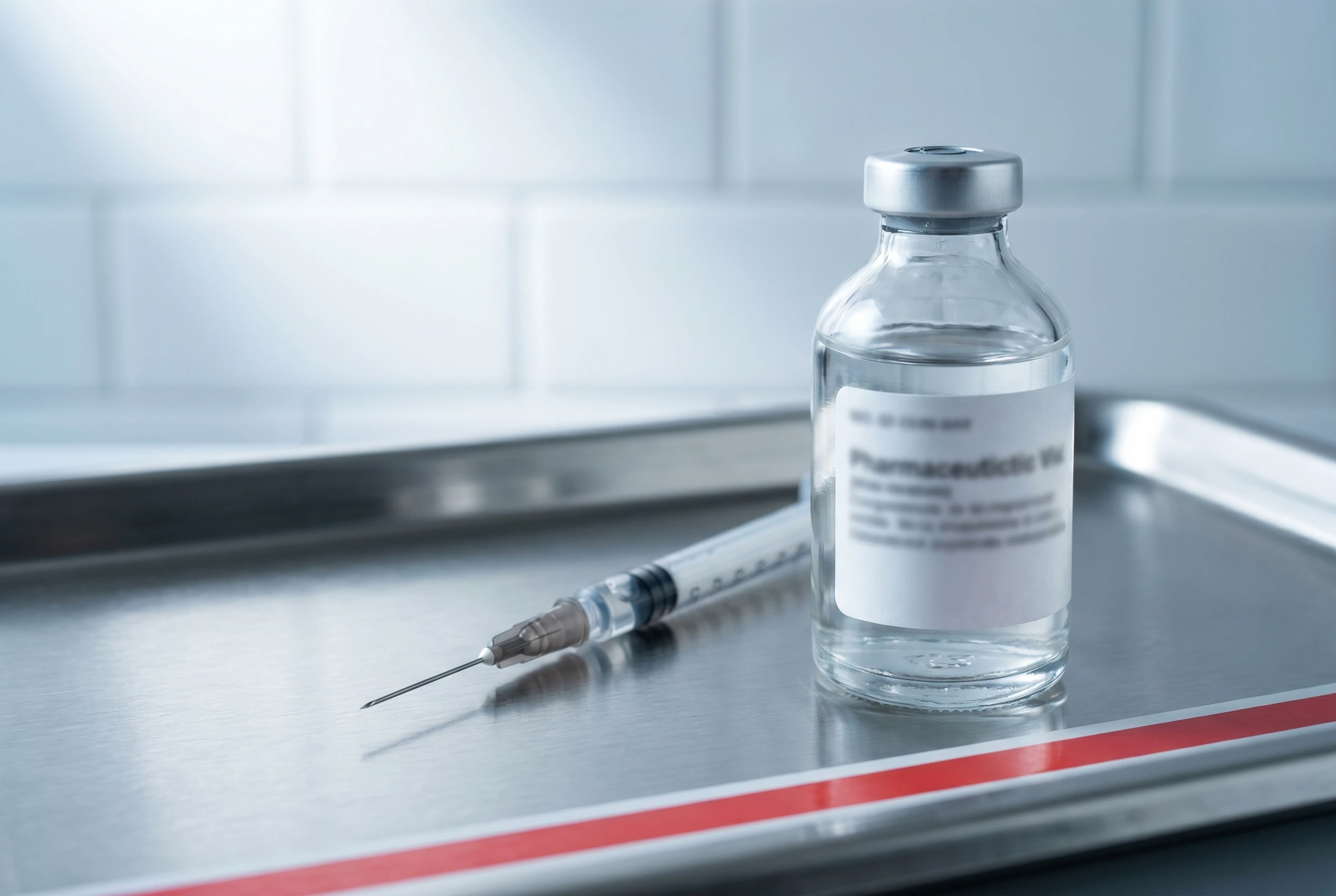
How Botulinum Toxin Crosses From Medicine to Poison
Botulinum toxin is produced by the bacterium Clostridium botulinum, and it works by blocking the nerve signals that tell muscles to contract. In a clinical dose measured in tens of units spread across the forehead and crow’s feet, the effect stays local. The frozen muscle smooths the skin above it for three to four months, then the body breaks the toxin down and the lines return.
Iatrogenic botulism (the medical term for toxin-related illness caused by a medical or cosmetic procedure) is what happens when that local effect spreads. A dose that is too high, a vial that is contaminated, or a needle that lands in a vessel can move the toxin into the bloodstream. From there it travels along nerve fibres throughout the body and stops the small muscles that handle eyelids, speech, swallowing and ultimately breathing.
The clinical timeline is the part that catches patients out. Symptoms can take several hours to appear, but in last year’s English cluster many cases reported a gap of four to ten days between injection and the first signs, and a smaller number presented up to four weeks later. That delay is why people dismiss early weakness as a side effect of the procedure itself, when in fact it is the toxin moving through nerves.
Severe presentations need hospital admission and, in the worst cases, ventilator support while the body clears the toxin. Antitoxin is most effective when given early in the course of illness. Recovery can take weeks. Most patients do recover, but the disruption to work, eating and daily life during the acute phase is substantial, and the early hours after symptom onset are the window where outcomes are decided.
The Forty-One-Case Pattern From Last Summer
Between 4 June and 6 August 2025, public-health investigators logged 41 clinically confirmed iatrogenic botulism cases across five English regions. Yorkshire and Humber, the North East, the East Midlands, the East of England and the North West all featured. Durham’s A&E saw five patients arrive in a single night that June. Peterborough recorded a separate spike within days. The peer-reviewed clinical study of the outbreak set the picture out in detail in October.
The product trail led to a wholesaler distributing an unlicensed botulinum toxin (referenced in the published study as “Product X”) to a network of non-medical practitioners. MHRA inspectors and Border Force officers have intercepted more than 4,700 vials of unlicensed toxin since May 2023, much of it routed in from South Korea under brand names that carry no UK marketing authorisation.
| Attribute | Licensed UK Botulinum Toxin | Seized Product X (2025) |
|---|---|---|
| Label potency | Stated unit count matches actual content | 200 units per vial on label |
| Tested potency | Within regulator-approved tolerance | 370 units per vial in lab assay |
| Supply route | UK wholesaler, full prescription chain | Unlicensed import, no UK authorisation |
| Typical practitioner | Doctor, dentist, nurse prescriber, pharmacist prescriber | Mix including non-medical operators |
A vial almost twice as strong as labelled means a practitioner following normal dose maths is delivering up to 85% more toxin than intended, on a product that was never assessed for safety, sterility or composition by the UK regulator in the first place. That is the mechanism that turned a beauty appointment into A&E.
Where Britain’s Regulation Gap Sits
The Prescription-Only Rule That Doesn’t Reach the Needle
Botulinum toxin is a prescription-only medicine in the UK, the same legal class as antibiotics or strong painkillers. The catch is the gap between who can prescribe it and who can inject it. A doctor, dentist, nurse prescriber or pharmacist prescriber must write the prescription, but the actual injection can be performed by someone with no medical background as long as a prescriber has signed off on a Patient Specific Direction (PSD, a written instruction tied to a named patient).
In January 2025 the Nursing and Midwifery Council tightened that route by requiring a face-to-face consultation before any nurse prescriber issues a botulinum toxin prescription. Remote consultations over video or chat, which had become routine in parts of the cosmetic industry, no longer satisfy the rule. The General Medical Council and General Dental Council apply the same standard to their registrants.
What the Licensing Scheme Will Eventually Do
The Health and Care Act 2022 created the legal basis for a mandatory licensing scheme covering non-surgical cosmetic procedures in England. The Department of Health and Social Care has set out a traffic-light system that would split procedures into low, medium and high-risk tiers, with botulinum toxin sitting in the upper band and requiring premises licensing plus practitioner registration. The scheme has not been switched on at the time of publication, almost four years after the Act passed.
The Criminal Penalties Now in Play
Enforcement powers, on the other hand, are already live. Under the Human Medicines Regulations 2012, anyone caught selling or supplying unlicensed botulinum toxin faces up to two years in prison and unlimited fines.
Criminals are exploiting the popularity of cosmetic treatments by peddling dangerous, unlicensed products.
That was Andy Morling, head of the MHRA’s Criminal Enforcement Unit, in the August 2025 enforcement statement announcing a sweep against illegal suppliers. Health minister Stephen Kinnock added that the government was determined to crack down on cosmetic cowboys who exploit vulnerable consumers. Enforcement is now running ahead of licensing, an inversion of the usual order in UK health regulation.
Red Flags Before You Sit in the Chair
The official UKHSA outbreak notice spells out the practical position: book through a clinician you can verify, ask to see the product, and walk out if anything feels off. The five checks below match what the regulator and the Joint Council for Cosmetic Practitioners have published, and they read as the minimum a buyer should run through before paying a deposit.
- Prescriber credentials, every time. The person prescribing should be a registered doctor, dentist, nurse prescriber or pharmacist prescriber, and you should be able to look them up on the relevant professional register before booking. A beautician injecting under their own authority is operating outside the law.
- Ask to see the box. Licensed product carries a UK marketing authorisation, a recognised brand name (Botox, Bocouture, Azzalure, Alluzience, Letybo, Nuceiva), a batch number and an in-date expiry. Korean brand names such as Botulax, Innotox or Toxpia are not authorised for UK use and are a red flag.
- Price discipline. Heavily discounted “Botox party” pricing, hotel-room appointments and bulk-deal offers on social platforms are the formats that drove the 2025 cluster. A jab priced well below the local clinical average is funding the corner that was cut elsewhere.
- Face-to-face consultation, not a chat thread. A real consultation covers medical history, allergies, medications, expected outcome and aftercare. If a prescription is offered after a DM exchange or a video call alone, the prescribing rule has been bypassed.
- Know the early-warning symptoms. Drooping eyelids beyond the treatment area, slurred speech, swallowing trouble, double vision or breathing difficulty in the days or weeks after a treatment is a medical emergency. Call NHS 111, or 999 for breathing or swallowing problems.
Frequently Asked Questions
Is Botox Still Safe to Get in the UK?
Yes, when the product is licensed and the prescriber is properly qualified. Last summer’s outbreak and the new Leeds cases both involved unlicensed product supplied outside the regulated chain. Treatments performed by registered medical professionals using UK-licensed brands have not been linked to the cluster.
How Long After a Botox Jab Could Botulism Symptoms Appear?
Onset typically falls between several hours and four weeks after injection. The English outbreak saw many cases present four to ten days post-treatment, and a smaller number up to four weeks later. Late onset is one reason patients miss the link back to their procedure.
What Should I Do If I Have Symptoms After a Recent Treatment?
Contact NHS 111 immediately for muscle weakness, drooping eyelids, slurred speech, swallowing trouble or double vision. Call 999 if you have breathing difficulty. Mention the recent cosmetic procedure so clinicians can consider iatrogenic botulism early in the workup.
Can a Beautician Legally Inject Botox in the UK?
A non-medical injector can administer the toxin only when a registered prescriber has issued a Patient Specific Direction after a face-to-face consultation with the patient. The prescriber holds clinical responsibility. The licensing scheme due under the Health and Care Act 2022 will layer premises and practitioner licences on top of that route once activated.
What Are the Penalties for Selling Unlicensed Botox?
The Human Medicines Regulations 2012 allow for up to two years in prison and unlimited fines for selling or supplying unlicensed botulinum toxin. The regulator’s Criminal Enforcement Unit has seized more than 4,700 vials of unlicensed product since May 2023.
Are South Korean Botox Brands Banned in the UK?
South Korean botulinum toxin brands such as Botulax, Innotox, reNTox and Toxpia are not authorised for sale in the UK. Importing or supplying them outside the licensed channel is unlawful, even though several of the same products are approved in their home market.
The Leeds patients are now in clinical care, and the agency’s tracing work continues. If the licensing scheme finally goes live during the second half of this year, the buyer-side checks above will sit inside a regulated frame for the first time. If it slips again, the next cluster will not be a surprise to anyone reading this; it will be a question of where the next vial of Product X lands.
Disclaimer: This article is for general informational purposes only and does not constitute medical advice. Cosmetic procedures involving botulinum toxin carry individual clinical risks, and readers should consult a qualified medical professional before undergoing or continuing any treatment. Case counts, regulatory positions and figures are accurate as of the date of publication.
 ONGC licence frees Venezuela cash and operatorship talks
  Anthropic Hits $65 Billion Run Rate and Flips the AI Cash Test
  Supreme Court grounds the fare free-for-all with three-week clock
  Gold Nears $4400 as Soft Data Meets Oil Inflation Risk
  Nifty Slips as Zaggle Circuits and Dhoot Debuts Big
  Diesel Crack Tops $100 as Iran Rhetoric Lifts Crude