
 Ishan Crawford
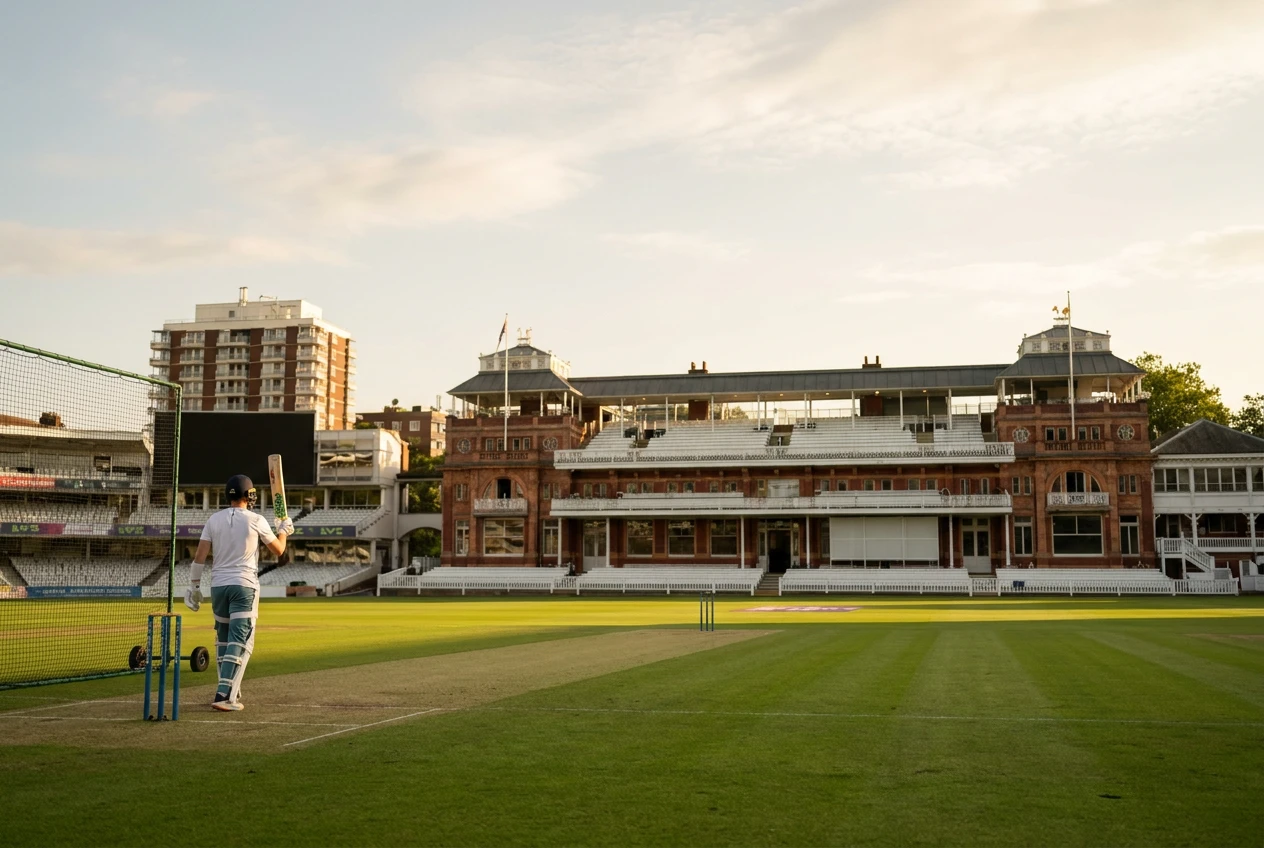
 Brendon McCullum walked back into the England Test setup this week with seven days until the first match against New Zealand at Lord’s, telling a training camp squad that his side’s strongest years still sit in front of them. The 44-year-old head coach is pitching what he calls a refined version of the attacking philosophy that has carried his name since 2022, after a winter Ashes tour that ended 4-1 in Australia.
The argument lands with a ledger he has to own. In three years under McCullum and captain Ben Stokes, England have not won a Test series against either Australia or India, home or away. The home summer that begins June 4 at Lord’s, and runs through three Tests against Pakistan in August and September, is the proving ground for the version of Bazball he says is ready to take shape.
The Pitch for Refinement at Lord’s
McCullum’s framing in his interview with the England and Wales Cricket Board (ECB, the sport’s domestic governing body) was deliberately calibrated. He kept the doctrine intact. He sanded the edges.
“You will see a lot of the stuff you’ve seen already, but with a bit of refinement,” he said. “Positive and smart cricket can live together. We will try to step towards that.”
Then came the line he clearly arrived ready to deliver: “I’d like to see us become a team not only feared for our knockout punch but our jab too. If we can box smart we can achieve success and we’re all fiercely driven to do that.”
The boxing metaphor matters because it accepts something the coach has been reluctant to concede in public before. Attacking intent on its own has not been enough at the top of the format. Australia knew the punches were coming, slipped them, and counter-hit. India, the previous summer, did the same thing on slower English pitches. The promise of a “jab” reads as a tactical hedge: rotate strike harder, defend smarter on attritional days, pick the moment to chase rather than chase every moment.
McCullum also flagged a tighter grip on the dressing room. “There’s some finessing and up-skilling to do,” he said, “and maybe a firmer grip on things rather than expecting guys to work it out for themselves.” Translated, that is an admission that the player-led culture under the Stokes-McCullum group has at times tipped over into drift, and a senior voice now wants the steering back.
The Ledger Behind the Optimism
The new tone exists because the old one ran out of road in Australia. England arrived at the start of the winter as the side that had drawn the previous home Ashes 2-2 and won eight of their last ten home Tests. They left having lost four of five matches, with the urn retained by the host before the New Year.
What the Numbers Recorded
Australia’s 4-1 series victory was the heaviest Ashes defeat for an England touring side since 2013-14. Mitchell Starc’s left-arm seam took 27 wickets across the rubber, and Travis Head averaged 71 with the bat. Wisden, the sport’s annual book of record, used three words to describe the tourists: “feckless, reckless and legless.” The phrase has followed McCullum into the home summer and was put to him directly at the training camp.
Where the Wheel Stopped Turning
Ben Stokes still holds the second-highest winning percentage of any England Test captain with more than 10 matches in charge, at 60.9 percent, behind only WG Grace in the nineteenth century. The qualifier in that statistic is the one McCullum cannot dodge. The wins have stacked up against New Zealand, South Africa twice, Pakistan in 2022, the West Indies, and a stand-alone Ireland Test. Against the two sides the format ranks above all others, the column reads zero series won. That is the spine of the case for refinement and the reason the head coach is using the word at all.
A Squad Half-Rebuilt for Lord’s
Words about jabs are one thing. The 15-player group named for the first Test is the policy. England’s selectors moved harder than many expected, dropping Zak Crawley after eight years as the first-choice opener and handing three maiden caps.
Three Uncapped Names
Emilio Gay, the Northamptonshire left-handed opener, has been confirmed to take Crawley’s place at the top of the order. Sonny Baker, the right-arm quick who broke through with Hampshire and the Lions, is in the seam-bowling group. James Rew, the Somerset wicketkeeper-batter, comes in as a back-up gloveman behind Jamie Smith. All three earned their places through county runs and wickets rather than white-ball reputations, a small signal that the selection panel has rebalanced toward red-ball production.
The Returnees and the Casualty
Ollie Robinson, Matthew Fisher and Rehan Ahmed are recalled, deepening the bowling options on a Lord’s pitch that has trended slower in recent Junes. Crawley is the headline casualty. The opener averaged 31.6 across the Ashes, with a top score of 76, and his footwork against Starc became the running argument of the series. Dropping him is a Stokes-McCullum signal as well: under Bazball’s player-loyalty culture, the captain has historically gone to bat publicly for out-of-form openers. The fact that he did not this time is itself a piece of evidence that the “firmer grip” McCullum talked about is being applied to selection, not only training.
The full squad: Ben Stokes (captain), Rehan Ahmed, Gus Atkinson, Sonny Baker, Shoaib Bashir, Jacob Bethell, Harry Brook, Ben Duckett, Matthew Fisher, Emilio Gay, James Rew, Ollie Robinson, Joe Root, Jamie Smith, Josh Tongue.
Stokes and McCullum on the Same Wheel
Speculation through April that the captain-coach axis had cracked under Ashes pressure was put to McCullum head on at the camp. His answer was unusually pointed for a man who normally lets press conferences drift on his charm.
Stokesey and I have always got on well. We challenge each other which is what you want and there will always be differences of opinion. That’s healthy. The best leaders bounce off each other, but we’re crystal clear on the direction we want this team to take and you’ll continue to see us work together. We’re absolutely fine and we’ve got each other’s backs. There have been no ‘clear the air’ talks because there’s no air to clear.
McCullum, speaking to the ECB at the camp, framed the winter post-mortems as forward-facing rather than blame-finding. Stokes, in his own ECB sit-down a fortnight ago, said the same thing in fewer words. Whether the unity reads as genuine or rehearsed will be measured by something visible: how the field is set in the first Lord’s session, who bowls the eleventh over, whether the captain accepts a defensive ring on day three. Those are the small tells that show whether the partnership has shifted in any concrete way, or whether the language is just sanded.
The Home Summer at a Glance
England’s red-ball calendar through September runs six Tests across six venues, with one ground (Lord’s) hosting twice. The compression is deliberate. The ECB wanted the marquee fixture and the closer of the Pakistan series in London, with the New Zealand opener also in St John’s Wood, to feed the gate-revenue model that has carried English summers since 2019.
| Date | Match | Venue |
|---|---|---|
| June 4 | 1st Test v New Zealand | Lord’s, London |
| June 17 | 2nd Test v New Zealand | The Kia Oval, London |
| June 25 | 3rd Test v New Zealand | Trent Bridge, Nottingham |
| August 19 | 1st Test v Pakistan | Headingley, Leeds |
| August 27 | 2nd Test v Pakistan | Lord’s, London |
| September 9 | 3rd Test v Pakistan | Edgbaston, Birmingham |
Pakistan’s red-ball tour is their first in England since 2020, a six-year gap that has covered an entire generational change in their seam attack. New Zealand arrive on the back of a home season in which they beat Australia in Wellington and lost narrowly in Hyderabad to India. Neither tourist will be a soft assignment, and the schedule offers McCullum no early run-out match to bed in new caps.
Why McCullum Was Late Back
The coach also addressed why he had spent an extended stretch in New Zealand rather than at county grounds across April and early May. Part of it, he said, was decompression after a punishing winter. Part of it was clinical.
“I’ve been on the road for 25 years so I’m not unaccustomed to the demands of touring,” he said, “but it is important at times to take your breaks, refresh a bit and get ready for an exciting summer ahead.”
He then added a detail rarely volunteered at this level of the sport. “I’m not after pity but there were a couple of operations I had to have back home which have been booked in for a long time, so it’s nice to tidy that up.” The point doubles as a quiet rebuke to commentary that framed his absence as detachment. Rob Key, the ECB’s managing director of men’s cricket, structured the all-format role he offered McCullum in 2024 with a caveat that the New Zealander would need windows at home for family and for himself. The surgeries fell into one of those windows.
If the Lord’s first Test goes the way McCullum is selling it, the refinement language will read as foresight, the new caps as bold selection, and the winter as a chapter closed. If England lose the opener on a green June pitch with three debutants and a recalled 32-year-old seamer, the same words will read as cover. The home summer is the test of which version is true, and the first answer arrives in eight days.
 Windows 11 KB5095093 Lands With Point-in-Time Restore and 35-Day Pause
  Meta Cuts Smart Glasses to $299 to Outflank Snap and Apple
  Messi Leads the 2026 World Cup Golden Boot Race After Two Matches
  Australia March On as Athapaththu Ton Lights Up T20 World Cup
  Galaxy Z Fold 8 Leak Reveals Colors, Storage, and a New Ultra Variant
  Ronaldo’s Six-World-Cup Record Leads a Matchday Full of Milestones