
 Ishan Crawford
 Iga Swiatek closed her French Open Day 4 assignment in 94 minutes, beating Czech opponent Sara Bejlek 6-2, 6-3 under a midday Court Philippe-Chatrier sun on Wednesday and clearing the most-watched test on the day’s women’s schedule at Roland Garros. The third seed, four times the singles champion in Paris, looked closer to the player who has owned this surface than the one who arrived this fortnight with the patchiest clay résumé of her career.
Sit with that result alone and you miss the quieter story breaking on Court Suzanne-Lenglen, where 36-year-old Sorana Cirstea is playing the second round of what she has confirmed is her final French Open campaign, carrying the strongest season of her career into a goodbye lap that has gone largely unmarked.
Swiatek Closed Bejlek in 94 Minutes on Chatrier
The third seed eased through her sternest pre-week-two test in just over an hour and a half, keeping Bejlek away from extended rallies and pulling the Czech left-hander into the corners off the forehand wing. Bejlek hits a flat left-handed ball that has rewarded her on slower courts earlier in the spring, but Swiatek is the wrong opponent for that style on this surface; the heavy topspin to the backhand pushed Bejlek into defensive positions she could not turn.
Bejlek arrived in Paris off a confident first-round dismissal of Sloane Stephens, the 2017 US Open champion, and as one of the better one-week-out clay storylines among any unseeded player in the draw. The world No. 35 Czech had built a small reputation for hitting through opponents at WTA-tour clay events earlier this spring. Against a four-time Roland Garros champion finding her serve again on Chatrier, that was not enough. The WTA’s official match summary recorded a straightforward two-break first set and a similarly settled second.
Stats snapshot of the day’s opening Chatrier match:
- 94 minutes on court for the third seed’s second-round dispatch, her quickest of the fortnight
- 6-2, 6-3 final scoreline, with two service breaks across two sets
- No. 35 Bejlek’s WTA ranking entering the match, the highest-ranked unseeded opponent the Pole faces in the first week
- 4 career Roland Garros singles titles for the Polish star, won in 2020, 2022, 2023 and 2024
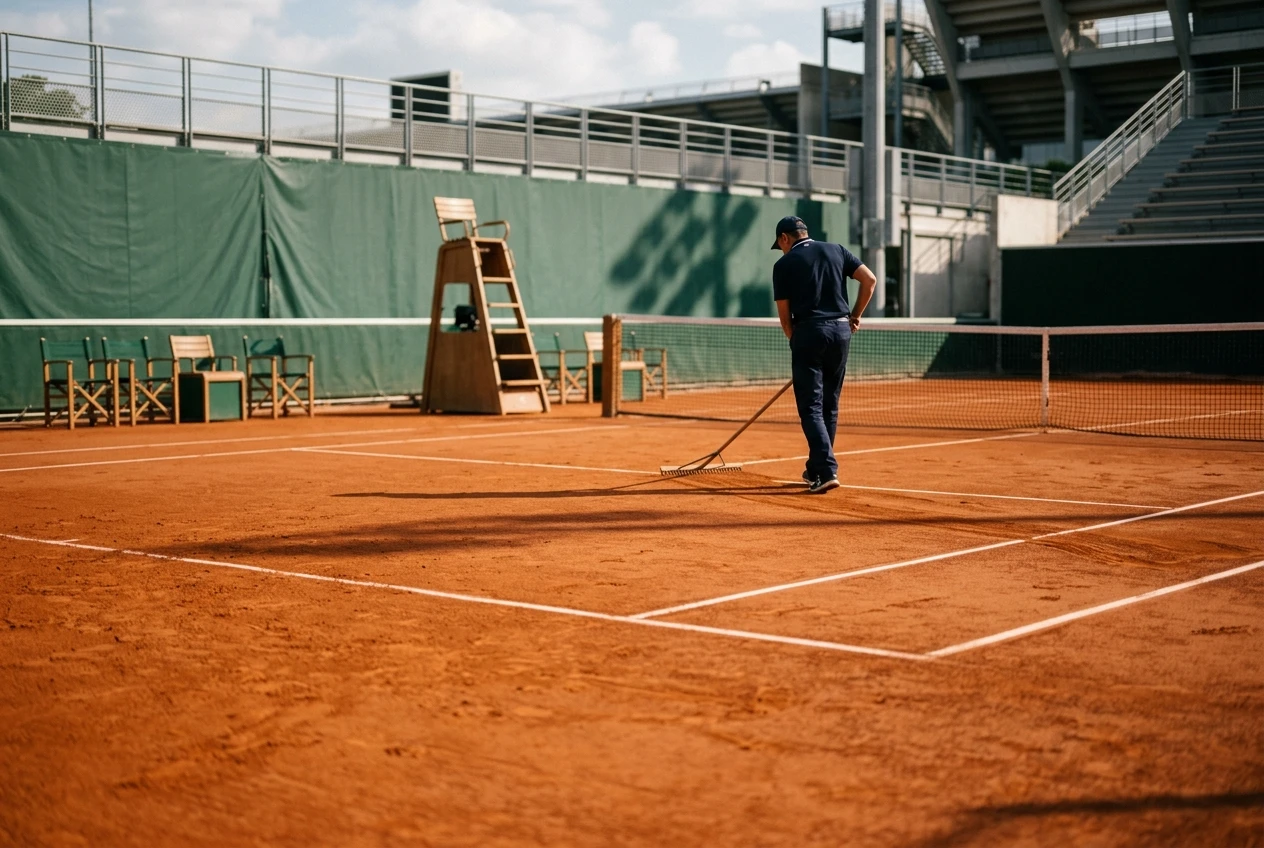
Cirstea’s Final Paris Is the Day’s Quiet Headline
The Numbers Behind the Farewell Year
Through the first five months of her last season on tour, Cirstea sits at 27 wins to 8 losses, the best winning percentage of her 19-year professional career. She arrived at Roland Garros off a Rome semifinal run, her deepest result ever at the Foro Italico, that included a stunning win over Aryna Sabalenka and gave the Romanian her first career victory over a world No. 1. The WTA’s by-the-numbers breakdown of the Rome run placed her among the oldest semifinalists in any 1000-level women’s event of the past decade.
The shape of her year, in milestones:
- A 27-8 win-loss record entering Paris, her highest first-five-month total ever
- A first Rome semifinal at age 36, including a first career win over the world No. 1
- A six-place jump in the WTA rankings off the Foro Italico run, into a career-best zone
- Seeded 18 at Roland Garros, her highest French Open seeding in over a decade
What She Said Would Change Her Mind
After Rome, Cirstea told reporters she would reconsider walking away only if she won a tour event before the end of the year. The Italian Open final loss to Aryna Sabalenka left that bar still in place. A deep Paris run would not technically meet her stated condition, but a quarterfinal or better in this draw would change the calendar pressure on her final North American summer and might pull her into the kind of farewell-tour victory lap that Andy Murray and Rafael Nadal each negotiated in their last seasons.
The Lys Match in Front of Her
The Romanian opens against Germany’s Eva Lys, who beat Petra Marcinko 6-3, 6-0 in the first round and has the kind of compact baseline game that does not naturally bother an experienced pattern player. Cirstea holds the deeper Roland Garros pedigree, with three prior third-round appearances, and won their only previous meeting in three sets at the 2026 Australian Open. Predictive models give her a 74% chance to advance, the heaviest favorite line on any second-round match involving a player ranked outside the top 15.
Bouzkova vs Jones Is the Day’s Live Coin Flip
Marie Bouzkova arrived in Paris off a Copa Colsanitas title earlier in the season, her third career WTA singles trophy, and lost only four games dispatching her first-round opponent. The 27th seed has reached the third round in Paris two years running and now has a clay title on her short list of recent confidence builders. None of which makes Wednesday’s match against Francesca Jones a procession.
Jones, the British No. 3, came from a set down to beat Beatriz Haddad Maia in the first round, the largest single result of her main-draw career at Roland Garros. The Briton plays a variety-heavy game built around drop shots and short angles, which on slow clay against an opponent more comfortable in long exchanges should tip the contest toward a tactical rally war that runs longer than the projected straight-set scoreline.
Bouzkova is the chalk pick at 75% across the major prediction models. Jones has yet to beat a top-50 player on clay in her career; if that line breaks Wednesday afternoon on Court 13, the day’s tightest competitive thread comes from this outer-court fixture rather than from the show courts. The Czech’s bigger picture is also on the line. A third straight Roland Garros third round would match her best Grand Slam streak.
Stearns Closed Snigur in Straight Sets
American Peyton Stearns required less than 80 minutes to put away Ukrainian Daria Snigur on an outer court Wednesday morning, taking the first set on a single break and the second 6-0 as Snigur’s first-set resistance fell off after the opening exchange. The final 6-4, 6-0 was the most decisive women’s second-round result on any court without a roof.
Stearns came into the match ranked No. 78, with Snigur at No. 93 and carrying a three-set first-round comeback against Clara Tauson that ran over two hours. The fatigue showed across the back half of the match. Stearns hit through Snigur’s forehand return and turned a near-even baseline exchange in the first set into a one-sided second once the Ukrainian’s movement dipped.
The American advances to a likely third-round meeting with Marta Kostyuk, pending the Ukrainian seed’s own Wednesday match. Stearns reached the third round in her main-draw debut here in 2023, and has not been past round three at any Grand Slam since. The Kostyuk fixture, if it materialises Friday, becomes the harder ask of her fortnight.
Rybakina, Andreeva and Svitolina Hold the Bottom Half
Rybakina Through Starodubtseva on Form
Elena Rybakina, the 2022 Wimbledon champion, opened her second round on Wednesday against Ukrainian qualifier Yuliia Starodubtseva, the kind of opening-week fixture that decides whether a top-half seed reaches the second week with momentum or with a tired forehand. Predictive models gave Rybakina an 89% probability of advancing, the heaviest favorite line in any women’s second-round match on Wednesday’s schedule. The Kazakhstani arrived at Roland Garros off a quiet clay swing, with one quarterfinal and one round-of-16 loss across three tournaments.
Andreeva’s Roland Garros Return
The eighth seed Mirra Andreeva, who reached the Roland Garros semifinals at age 17 in 2024, plays Spanish qualifier Marina Bassols Ribera on Court Simonne-Mathieu in the late afternoon. The 19-year-old Russian is the highest-ranked player in the bottom half of the women’s draw and the consensus pick to reach the quarterfinal. The tournament’s official top-10 second-round preview placed her match outside its featured list, an acknowledgment that the headline story sits with her potential third-round opponent.
Svitolina Made the Run-Through Look Easy
Elina Svitolina dispatched Spanish qualifier Kaitlin Quevedo 6-0, 6-4 in roughly 80 minutes, advancing to a third-round match against Germany’s Tamara Korpatsch. The Ukrainian arrived in Paris off an Italian Open title that included wins over the world’s top two players and is the most in-form unseeded woman remaining in the draw. Her quarter of the bracket has thinned considerably across the first two rounds.
The day’s women’s second-round fixtures, set against status, court and seeding:
| Match | Seed | Court | Status |
|---|---|---|---|
| Swiatek vs Bejlek | 3 vs unseeded | Philippe-Chatrier | Swiatek won 6-2, 6-3 |
| Andreeva vs Bassols Ribera | 8 vs qualifier | Simonne-Mathieu | Late session |
| Rybakina vs Starodubtseva | Seeded vs qualifier | Suzanne-Lenglen | In progress |
| Cirstea vs Lys | 18 vs unseeded | Suzanne-Lenglen | To follow |
| Bouzkova vs Jones | 27 vs unseeded | Court 13 | Late afternoon |
| Svitolina vs Quevedo | Unseeded vs qualifier | Philippe-Chatrier | Svitolina won 6-0, 6-4 |
| Snigur vs Stearns | Unseeded vs unseeded | Outer court | Stearns won 6-4, 6-0 |
Friday’s Third Round Lines Up Behind the Bottom Half
If Cirstea, Andreeva and Bouzkova all advance Wednesday, Friday’s third-round bracket clusters three of the most-watched bottom-half story arcs into a single afternoon: Andreeva’s quarterfinal push, Cirstea’s farewell campaign, and Bouzkova’s bid to match her best-ever Roland Garros run. None of those three is favored to lose Wednesday, yet each faces an opponent capable of dragging the match to three sets.
The top half of the women’s draw moves on Thursday for the second round, where world No. 1 Aryna Sabalenka faces Switzerland’s Jil Teichmann and American Coco Gauff plays Tereza Valentova. The Pole’s quarter, the third quarter from the top, leans toward an early-week-two collision course with the winner of Daria Kasatkina against Jelena Ostapenko if both clear Friday. The complete Roland Garros women’s draw shows the design holding through the first weekend if the bottom-half seeds survive the next 48 hours.
If Wednesday’s chalk holds across the bottom half, Saturday’s third round delivers the first measure of whether the fortnight breaks open early or holds to the seedings deeper into the second week. If the chalk cracks, the loudest crack comes from Court 13, where Bouzkova and Jones meet at the day’s tightest seed-versus-unseeded margin.
 Leeds Botox Botulism Cases Reopen Britain’s Cosmetic Jab Gap
  Pragg Beats Carlsen at Norway Chess as Firouzja Holds Three-Point Lead
  Vivo X300 Ultra vs iPhone 17 Pro: The Camera Hardware Gap Is Real
  McCullum Bets Refined Bazball Can Survive a Home Summer Reckoning
  India 0, Jamaica 2: 24-Year English Wait Ends in a Familiar Loss
  India NCD Deaths Hit 60% as Heart Disease Drives One in Three