
 Ishan Crawford
 WorldTempus editor argues on 26 August 2026 that vintage watches alone escape the limits that bind fashion, cars and music, and fresh market numbers back the claim while revealing a deeper industry shift.
The secondary market’s measurable sales reached $16.7 billion in measurable secondary sales in 2025, up 36.4 percent, while primary retail hovered near $50 billion and contracted for many makers. That gap is forcing brands to own their past through certified pre-owned programmes and heritage reissues even as non-Big Five pieces keep the easy, affordable entry the letter promises.
What the Editor Sees in Old Watches
The letter opens with a simple observation. Watches of the past impose no real barriers to daily wear or fresh inspiration. Fabric ages badly. Cars demand deep knowledge, time and money. New music almost always carries a contemporary twist.
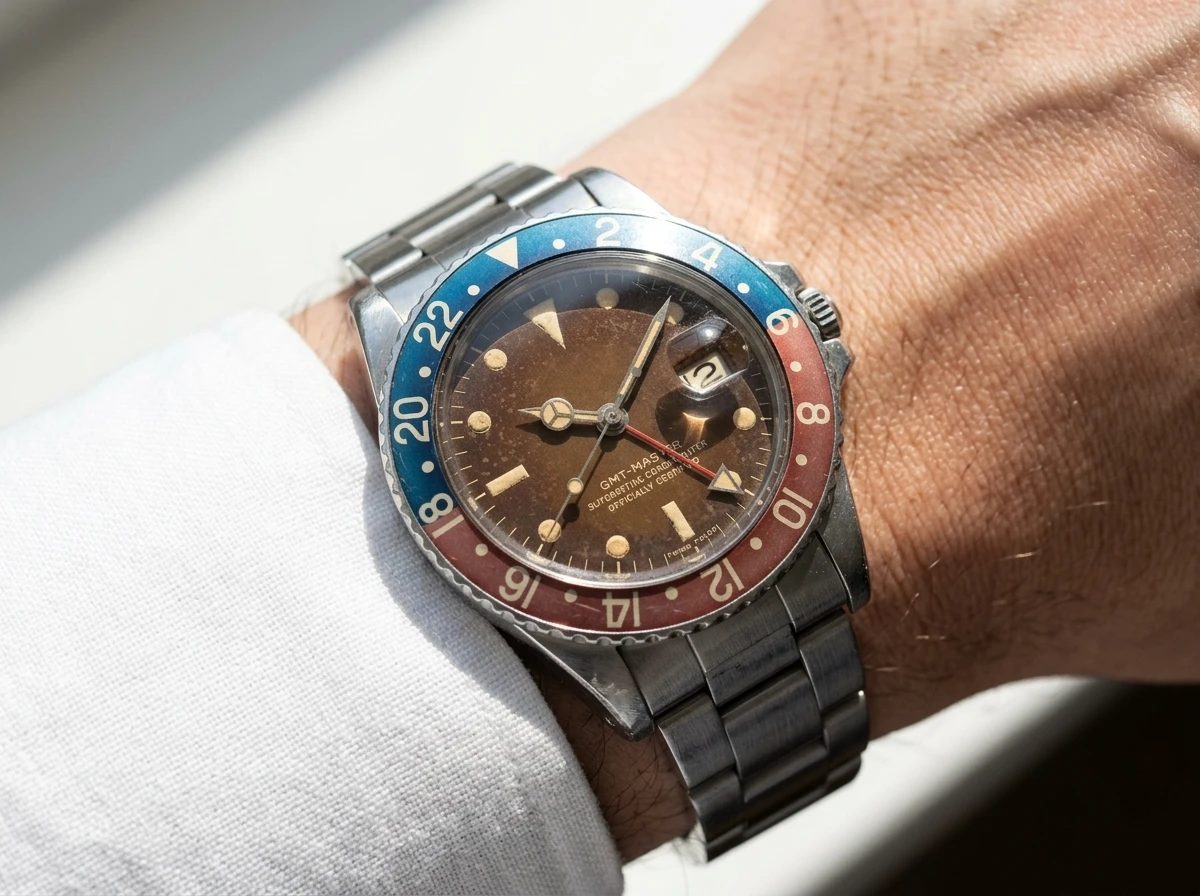
“It is easy to wear timepieces of the past,” the editor writes. “The secondary market outperforms the primary market in monetary value. The longevity of watches is unique.” A bit of wear and tear only adds character. Watchmakers face no stigma for relaunching old designs or taking aesthetic cues from decades ago while fitting modern movements and materials.
Last comes the practical claim. Vintage remains an affordable door into watchmaking so long as buyers skip the Big Five of Patek Philippe, Rolex, Audemars Piguet, Cartier and Richard Mille. The result, the editor says, is stylish, environmental, sustainable, personal and potentially a strong investment.
Those five qualities travel together. Style and personal taste draw the buyer in. Longevity and the secondary market’s scale keep the piece useful and liquid. The environmental case then arrives as a byproduct of use rather than a marketing claim stamped on a new box.
Fashion Cycles on a Twenty-Year Clock
The letter cites a Northwestern University study that put the familiar 20-year fashion rule on mathematical footing. Researchers analysed roughly 37,000 images of women’s clothing spanning 1869 to the present, measuring hemlines, necklines and waistlines from sewing-pattern archives and runway shots.
To our knowledge, this is the first time that someone developed such an extensive and precise database of fashion measures across more than a century.
Emma Zajdela, lead author, American Physical Society Global Physics Summit
Lead author Emma Zajdela and adviser Daniel Abrams found styles rise, saturate, fall and return on a roughly 20-year wave. The hemline record alone sketches the loop in plain sequence:
- 1920s – hemlines shortened.
- 1950s – hemlines lengthened.
- Late 1960s – hemlines shortened again.
The model rests on a psychological tension: people want to stand out yet still fit in, so designers swing away from the recent past without going so far the clothes become unusable.
From the 1980s onward the pattern fragmented. Multiple skirt lengths appeared at once. Watches never faced that fabric constraint or the same pressure to discard the old. A 1960s automatic can still run after a standard service. That difference is why the past stays permanently available on the wrist.
Cars and music, the letter’s other foils, share fashion’s disposal problem in different forms. A classic car needs storage, parts hunting and specialist labour before it is roadworthy. A vintage recording often arrives remastered or playlisted beside newer work, so the original context thins. A serviced watch from the same era simply tells the time.
Secondary Sales Now Rival the New-Watch Engine
EveryWatch’s 2025 report, covered by WatchPro in February 2026, put hard numbers under the editor’s claim. Measurable secondary transactions hit $16.7 billion, a 36.4 percent jump. Including private and messaging-app deals, the total may have approached $25 billion, or half of estimated new-watch retail.
| Brand | 2025 Secondary Sales |
|---|---|
| Rolex | $5.7 billion |
| Patek Philippe | $2.2 billion |
| Audemars Piguet | $1.6 billion |
| Omega | $697 million |
| Richard Mille | $672 million |
Rolex’s Datejust and Daytona families each cleared roughly $1.27 billion. The Royal Oak sat third at $949 million. The same report called 2025 a structural shift: primary and secondary are now fully interdependent. Manufacturers that ignore the used market risk being overtaken by it.
Set beside primary retail near $50 billion, the measurable secondary slice is already large enough to move brand strategy. The wider estimate near $25 billion makes the used channel a second engine, not a side lot.
Momentum continued into mid-2026. Chrono24’s ChronoPulse index of about 140 references across 13 brands sat ChronoPulse index up 5.5 percent over six months through June, with every tracked brand positive. Cartier led the June reading at +5.9 percent.
Big Five Premiums and the Quiet Affordable Lane
Value retention against retail still favours the very names the letter flags as expensive. Morgan Stanley’s Q2 2026 WatchCharts snapshot showed Patek Philippe at +15.4 percent above retail, Rolex +9.8 percent and Audemars Piguet +3.0 percent. Most other brands remained 25 to 38 percent below list, though every name improved from January readings.
- Rolex Certified Pre-Owned sales reached $590 million in 2025 and jumped another 101 percent in the first half of 2026 to $385 million.
- Independent brands as a group grew secondary volume 89 percent in H1 2026, led by F.P. Journe nearly tripling to $201.6 million.
- Vintage listings (pre-2000) on one large tracker averaged $16,086 versus $27,844 for modern pieces, spanning more brands at lower entry points.
| Segment | Average listing |
|---|---|
| Vintage (pre-2000) | $16,086 |
| Modern pieces | $27,844 |
The letter’s affordability point holds outside the Big Five. Tudor, older Omegas, Longines, Seiko and lesser-known dress pieces from the 1940s-70s still trade in four-figure or low five-figure territory. Crowds on X note that a 1960s or 1970s Rolex or Omega can still undercut today’s boutique prices while carrying original character. The counter-view is equally loud: service costs, weaker water resistance and acrylic crystals make some vintage pieces practical compromises. Buyers who want daily durability often split the difference with modern heritage models or well-serviced mid-tier classics.
The premium gap and the listing gap describe two lanes on the same road. One lane prices scarcity and name recognition above retail. The other keeps entry open across more brands and older references. Both lanes grew in the same reporting window.
Circular Logic Beats New Production
Sustainability is the quietest and most durable argument in the letter. A restored vintage watch requires no new mining of steel, gold, sapphires or rubies. One German specialist restorer puts the avoided footprint plainly: every piece returned to circulation is a factory run that never happened. Manufacturing a mechanical watch can involve more than 200 components and global supply chains. Scope-3 emissions dominate the sector’s carbon account.
Longevity multiplies the advantage. A well-maintained automatic can run 50 to 100 years. That divides the original energy and material cost across decades of wear. New “eco” quartz or solar pieces may look greener on paper, yet many leave the market after a decade. The greenest watch, several analysts conclude, is the one already made.
The same arithmetic supports the editor’s investment note without turning every purchase into a trade. A piece that stays in service for half a century or more has already spread its embodied cost. Resale then becomes an option rather than the only exit.
Brands Answer With Reissues and Certified Stock
The second-order consequence is visible on every brand’s website. Rolex built the largest certified pre-owned network; its RCPO volume now rivals some primary channels and links trade-ins to new allocations. Other houses have followed the heritage path.
- Blancpain marked 70 years of the Bathyscaphe with a 300-piece 37.4 mm 1968 Bathyscaphe reissue that kept original sizing and added modern lume and a 100-hour calibre.
- Tudor revived the 1957 Advisor alarm watch in contemporary 42 mm titanium and steel.
- Corum, Breguet and others keep rolling out Coin watches, Tradition models and Golden Book pieces that trade directly on archive DNA.
These are not vintage. They are the market’s response to the demand the letter describes. Collectors get the look and modern reliability; brands keep control of their history and capture some of the secondary premium. The original pieces, especially non-hype references, remain the pure expression of the editor’s case.
Certified stock and archive reissues pull in the same direction. One channel recaptures used value under a brand warranty. The other sells new product that borrows the silhouette buyers already chase on the secondary market. Together they show how primary makers absorb pressure from the $16.7 billion measurable used channel rather than cede it.
Buyers Have Already Moved On From the Hype Cycle
Post-2022 correction data and live conversation point the same way. Sports-model premiums that once hit 300 percent of retail have cooled. Datejusts, dress watches and smaller cases gained share. Chrono24’s 2025 recap noted elegance and wearable sizes as the new growth drivers. Younger buyers in particular spread spending across more brands and classic shapes.
On X the practical consensus is clear. Liquidity and personal taste beat speculation. A steel sports watch is no longer a retirement plan. A well-chosen vintage or mid-tier piece that the owner actually wears still delivers the style, story and potential hold-value the letter lists. Serviceability remains a real filter; pieces with available parts and known makers win. The hangover from the 2021-23 boom has left a quieter market that rewards exactly the qualities WorldTempus celebrated: longevity, character and the freedom to wear the past without apology.
Interdependence Rewrites How Brands Sell Time
The EveryWatch finding that primary and secondary are fully interdependent now reads as an operating brief. Rolex Certified Pre-Owned sales at $590 million in 2025, then $385 million in the first half of 2026 after a 101 percent jump, show one house turning trade-ins into a controlled channel. Independent brands growing secondary volume 89 percent in the same half-year show the effect is not limited to the biggest names.
Reissues complete the loop. A limited Bathyscaphe that keeps 1968 sizing, or an Advisor revived in titanium and steel, lets a brand meet archive demand without surrendering the sale to a private dealer. The ChronoPulse reading, up 5.5 percent across roughly 140 references and positive for every tracked brand through June 2026, suggests that demand is broad enough to support both original vintage and brand-managed alternatives.
None of that erases the letter’s affordable lane. Average vintage listings near $16,086 still sit well below average modern listings near $27,844. Buyers who skip the Big Five continue to find Tudor, older Omegas, Longines, Seiko and mid-century dress watches in four-figure or low five-figure range. The industry can professionalise the used market and still leave that door open.
Why the Past Stays on the Wrist
Fashion’s 20-year wave, measured across roughly 37,000 images from 1869 onward, assumes garments wear out and taste must swing. Watches break that assumption at the movement. A standard service returns a 1960s automatic to daily use. The case and dial keep their character; they do not need a new season to stay legitimate.
That mechanical fact underwrites the rest of the story. Secondary volume can rival half of new retail when private deals are counted because the objects remain functional. Brands can reissue 1957 or 1968 designs because the originals never left circulation. Sustainability arguments hold because a piece that runs 50 to 100 years amortises more than 200 components across a lifetime instead of a product cycle.
Cars still demand deep knowledge, time and money. Fabric still ages badly. New music still arrives with a contemporary twist. The watch on a wrist from decades ago needs none of those disclaimers once it has been serviced. That is the opening the editor described, and the market figures from 2025 into mid-2026 show buyers and brands walking through it.
That freedom is the second-order fact. Secondary volume, certified programmes and archive reissues all flow from it. The editor asked what is not to love. The data answers that the love is already rewriting how the entire industry prices, designs and sells time.
 Scotland’s Facial Recognition Push Sparks Mask Ban Call
  Galaxy Z Flip 8 Hits $799 Only If Your Trade-In Qualifies
  If England Had Kept Water Public Like Scotland
  Samsung Smart Switch Now Moves Passwords and eSIM From iPhone
  Old Firm Spend Pulls Clear as Premiership Rivals Patch Squads
  Chinese Studios Quietly Seize the Gamescom Stage