
 Ishan Crawford
 The Singapore International Commercial Court on 26 August 2026 dismissed every challenge brought by Tata Power to a $490.32 million arbitration award won by Kleros Capital Partners. Interest running since November 2020 has already pushed the payable total past $640 million, and the meter continues at roughly $71,600 a day.
Tata Power said it will appeal to the Singapore Court of Appeal within the 28-day window. Shares fell as much as 4.7 percent the next session.
Court Rejects Bias Claims and Natural Justice Arguments
Justice S Mohan, writing for the three-judge bench, held that the majority arbitral tribunal had not breached natural justice or the fair hearing rule. Tata’s complaints about causation, remoteness and mitigation were treated as an attempt to reopen the merits under a procedural label.
The court also rejected apparent-bias objections aimed at two majority arbitrators. Those objections rested on the arbitrators’ separate involvement in unrelated cases funded by Omni Bridgeway, which also funded Kleros, and on professional links between Professor Lawrence Boo and an Omni Bridgeway investment-committee member. The judges found no material relationship that would cause a fair-minded observer to doubt impartiality.
Tata’s objections [were] those of a party that was unduly sensitive or suspicious and seeking any means to overturn the quantum award.
Justice S Mohan, Singapore International Commercial Court
All three applications were dismissed with costs still to be assessed. The awards remain final and binding pending any successful appeal. Full texts of recent Singapore International Commercial Court judgments are posted by the judiciary.
In practical terms the ruling closed the last procedural door at first instance. Causation, remoteness and mitigation had already been argued before the tribunal; restating them as natural-justice defects did not convert a merits dispute into a set-aside ground. The bias allegations received the same treatment: funding links that were public, separate and unrelated did not, on the court’s test, create a material relationship.
That left Tata with a live award, mounting interest and a short appeal window rather than a cleaned slate.
A Decade-Old NDA Over Kamchatka Coal
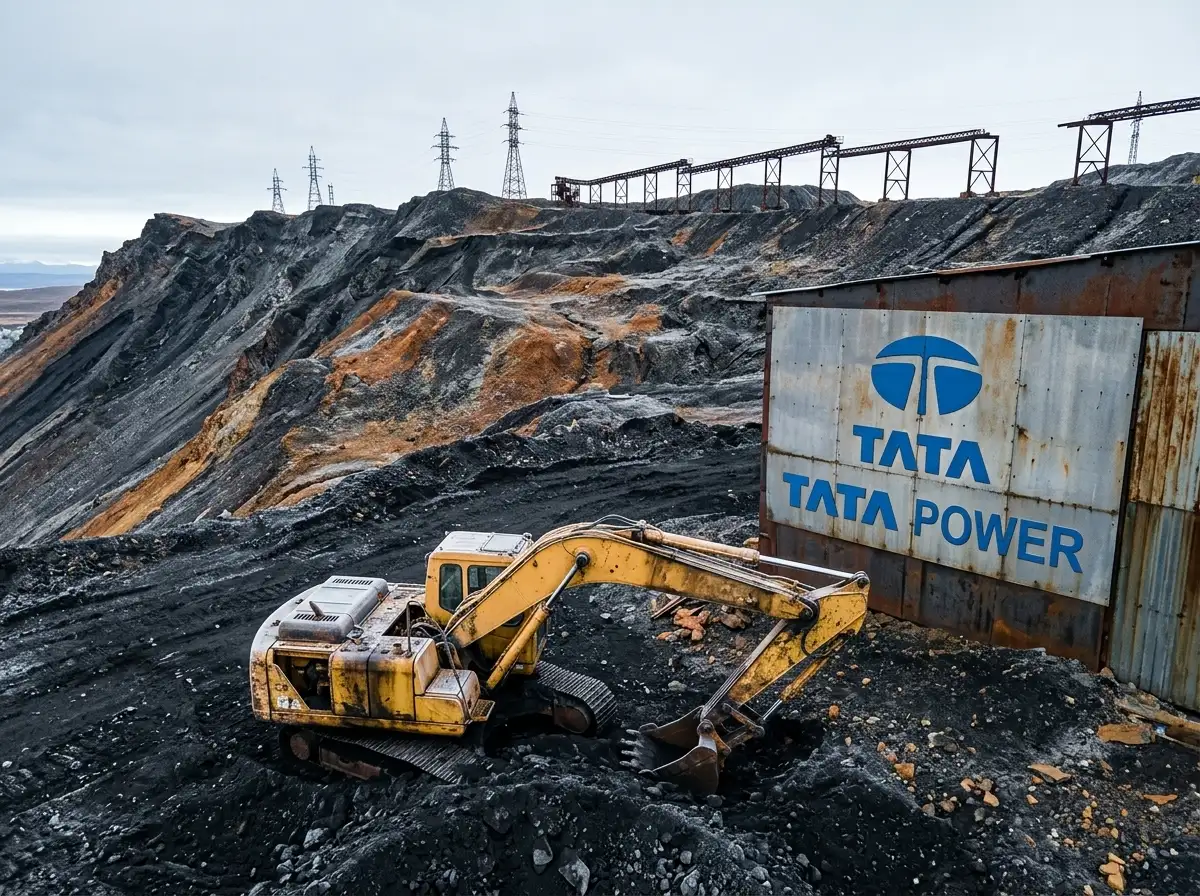
The dispute began in 2013 when British Virgin Islands-incorporated Kleros approached Tata Power about a joint bid for the Krutogorovo (Krutogorovskoye) coal deposit in Russia’s Kamchatka peninsula. Kleros estimated reserves at roughly 1.1 billion tonnes. The remote site needed heavy infrastructure and government support.
The parties signed non-disclosure agreements that required confidentiality, good faith and a promise not to circumvent Kleros’s economic interest. Relations soured in 2015 over ownership. Kleros sought a stake between 26 and 60 percent; Tata would go no higher than 10 percent. The relationship ended in 2016.
Kleros did not bid in the December 2017 federal auction and later wound down its Russia operations. After the NDA expired in September 2017, Tata’s Russian subsidiary Far Eastern Natural Resources (FENR) bid, won a 25-year licence in January 2018, began exploration and then surrendered the licence after concluding the project was not viable.
- September 2013, NDAs take effect for four years.
- 2015-2016, Ownership and leadership disagreements end the partnership.
- December 2017, Federal auction; Kleros stays out.
- January 2018, FENR wins the mining licence.
- Later, Tata surrenders the licence as unviable.
- 30 November 2020, Kleros starts SIAC arbitration.
- 26 September 2023, Unanimous liability award against Tata.
- 1 July 2025, Majority quantum award of $490.32 million.
- 26 August 2026, SICC dismisses all challenges.
Kleros claimed Tata misused confidential information, acted in bad faith and excluded it from the project.
The chronology matters because the NDAs still bound the parties when ownership talks collapsed, yet the federal auction came after the confidentiality term expired. Kleros’s case turned on whether earlier misuse and circumvention, not the bare fact of a later bid by FENR, caused the lost chance. The tribunal’s liability findings accepted that chain. The mine’s later surrender as unviable did not erase the opportunity valuation fixed at the quantum stage.
Majority Values Lost Chance at 60 Percent
The three-member SIAC tribunal (Professor Lawrence Boo presiding, Stuart Isaacs KC and Amal K. Ganguli) first found liability unanimously. On quantum the panel split.
| Component | Amount | Notes |
|---|---|---|
| Principal damages (majority) | $490.32 million | Project valued ~$1.02 billion; 60% loss-of-chance |
| Dissent (Ganguli) | $13.5 million | Negotiating damages only; no causation of lost bid |
| Interest | 5.33% simple p.a. | From 30 November 2020 until payment (~$71,600/day) |
| Legal costs (earlier order) | S$8.29 million | Plus further arbitration costs ~S$3 million |
| Total claimed now due | Exceeds $640 million | Per Kleros after SICC ruling |
Counsel for Kleros later described the victory as securing US$490.32 million in damages plus interest and costs under SIAC rules.
The majority treated the award as compensation for the lost opportunity to participate. The dissent held that Tata’s breaches had not stopped Kleros from bidding or pursuing the project on its own.
Sixty percent of a project valued at roughly $1.02 billion produces the $490.32 million principal. That single methodological choice, loss of chance rather than negotiating damages, accounts for nearly the entire gap between the majority figure and the $13.5 million dissent. Interest at 5.33 percent simple from 30 November 2020 then layered a second, time-driven component that now dominates the headline total.
What the Tribunal Found Tata Did
In the September 2023 liability award the tribunal held that Tata Power had:
- Misused confidential information disclosed under the NDAs
- Deliberately circumvented Kleros
- Made misleading statements
- Concealed material facts in order to pursue Krutogorovo for its own benefit
- Breached contractual duties of good faith and confidence
Those findings stood. The SICC refused to revisit them as procedural defects.
Because liability was unanimous, the later quantum split did not reopen whether breaches occurred. It only divided the panel on what those breaches were worth. The SICC’s refusal to treat causation and remoteness arguments as natural-justice errors kept that liability core intact for any appeal.
How Interest and Costs Stack on the Principal
The payable sum Kleros now cites above $640 million is not a single line item. It is the majority principal plus years of simple interest plus assessed and further costs. Each piece rests on a different procedural footing, yet all travel together once enforcement begins.
| Layer | Figure | Driver |
|---|---|---|
| Majority principal | $490.32 million | 60% of ~$1.02 billion project value |
| Dissent alternative | $13.5 million | Negotiating damages only |
| Interest rate | 5.33% simple p.a. | Runs from 30 November 2020 |
| Daily accrual | ~$71,600 | Continues until payment or stay |
| Legal costs ordered | S$8.29 million | Earlier costs order |
| Further arbitration costs | ~S$3 million | Additional tribunal-related sums |
Simple interest means the daily charge does not itself bear interest, but the calendar still works against the debtor. From the November 2020 start date through the July 2025 quantum award and on past the August 2026 SICC dismissal, the meter has been running without pause. Kleros’s post-ruling statement that more than $640 million is immediately due simply adds those layers as they stood after the challenges failed.
Costs already ordered in Singapore dollars sit beside the dollar principal. They are smaller in absolute terms than either the principal or the accrued interest, yet they form part of the same enforcement package under SIAC rules. A successful appeal would need to disturb more than one of these layers to shrink the headline exposure in a material way.
Until payment or a stay, the $71,600 daily figure remains the most visible moving part of the bill.
The Bill Already Tops a Year’s Profit
Kleros stated after the SICC ruling that Tata is required immediately to pay a sum now exceeding USD 640 million. That figure combines the principal, accrued interest and costs.
- Principal: $490.32 million (roughly Rs 4,200-4,700 crore depending on the exchange rate used)
- Daily interest: about $71,600 and still compounding until payment or successful stay
- Comparable scale: approaches or exceeds Tata Power’s reported FY26 adjusted PAT in some analyst summaries
- No provision: Tata had not booked a provision in its FY26 statements while the challenges remained live
Investors immediately priced in the cash-flow risk. The stock’s sharp drop reflected concern that a large cash outflow or provision could constrain leverage metrics and renewable capital expenditure just as the company is scaling green capacity.
On the ground the mine itself never produced commercial coal under Tata. Exploration work began; the licence was later handed back. The “lost chance” that generated the half-billion award therefore never became a producing asset for either party.
The absence of a FY26 provision meant the SICC outcome arrived as a clean surprise to the reported accounts. A sum that approaches or exceeds adjusted PAT in some analyst summaries cannot be absorbed quietly. Leverage metrics and the funding envelope for solar and wind are the natural pressure points once a cash outflow or a late provision lands.
Why the Lost Chance Outlived the Mine
Two facts sit side by side without contradiction under the awards. First, FENR won the licence, explored and then surrendered it as unviable, so neither side ever operated a producing Kamchatka coal mine. Second, the majority still valued Kleros’s lost chance at 60 percent of a roughly $1.02 billion project and awarded $490.32 million.
The tribunal’s logic, left undisturbed by the SICC, treated the chance to participate as the compensable asset. Later commercial failure of the licence did not retroactively prove that the chance itself had been worthless at the moment it was lost. The dissent’s $13.5 million negotiating-damages figure would have tied relief far more tightly to a narrower causal path; the majority path did not.
- Reserves had been estimated at roughly 1.1 billion tonnes when the parties first talked.
- Ownership talks broke on a 10 percent versus 26-to-60 percent gap.
- Kleros stayed out of the December 2017 auction after winding down Russia operations.
- FENR’s later surrender confirmed unviability in Tata’s hands, not the absence of an earlier opportunity.
Public reaction on X seized on that mismatch: a mine that produced no coal still produces a seven-figure rupee daily interest charge. The legal structure of loss-of-chance damages explains how that result follows from the findings the SICC refused to reopen.
Appeal Clock and Enforcement Reality
Tata Power told exchanges it has 28 days from 26 August 2026 to file with the Court of Appeal and that it will do so. An appeal does not automatically stay enforcement. SIAC awards are globally enforceable under the New York Convention, and Kleros has already characterised the sums as immediately due.
Crowd reaction on X focused less on legal niceties than on the cash arithmetic: a project no one developed still generates a daily seven-figure rupee interest bill, and the company that walked away from the coal now carries the liability while it funds solar and wind. That framing tracks the numbers the court left untouched.
Whether the Court of Appeal reopens any ground remains open. Until then the interest clock continues, the award stands, and Tata Power’s Russian coal chapter that produced no power still extracts a measurable price from its Indian balance sheet.
The final concrete fact is the daily accrual. Every day without payment or a stay adds another $71,600 to a liability that already exceeds $640 million for a mine that neither side ever operated.
 Hyderabad Gold Dip Freezes Buying as Duty Talk Hits Wedding Season
  India Pushes Japan CEPA Review After 15 Years of One-Way Gains
  HDFC Bank’s US Class Action Turns Deposit Scheme Into Securities Reckoning
  Gold Holds Above $4600 as Treasury Buybacks Fuel Debasement Bid
  Scotland’s Prevention Push Leaves Community Groups Squeezed
  Amazon Locks Three Million Nvidia GPUs Even as Trainium Grows