
 Ishan Crawford
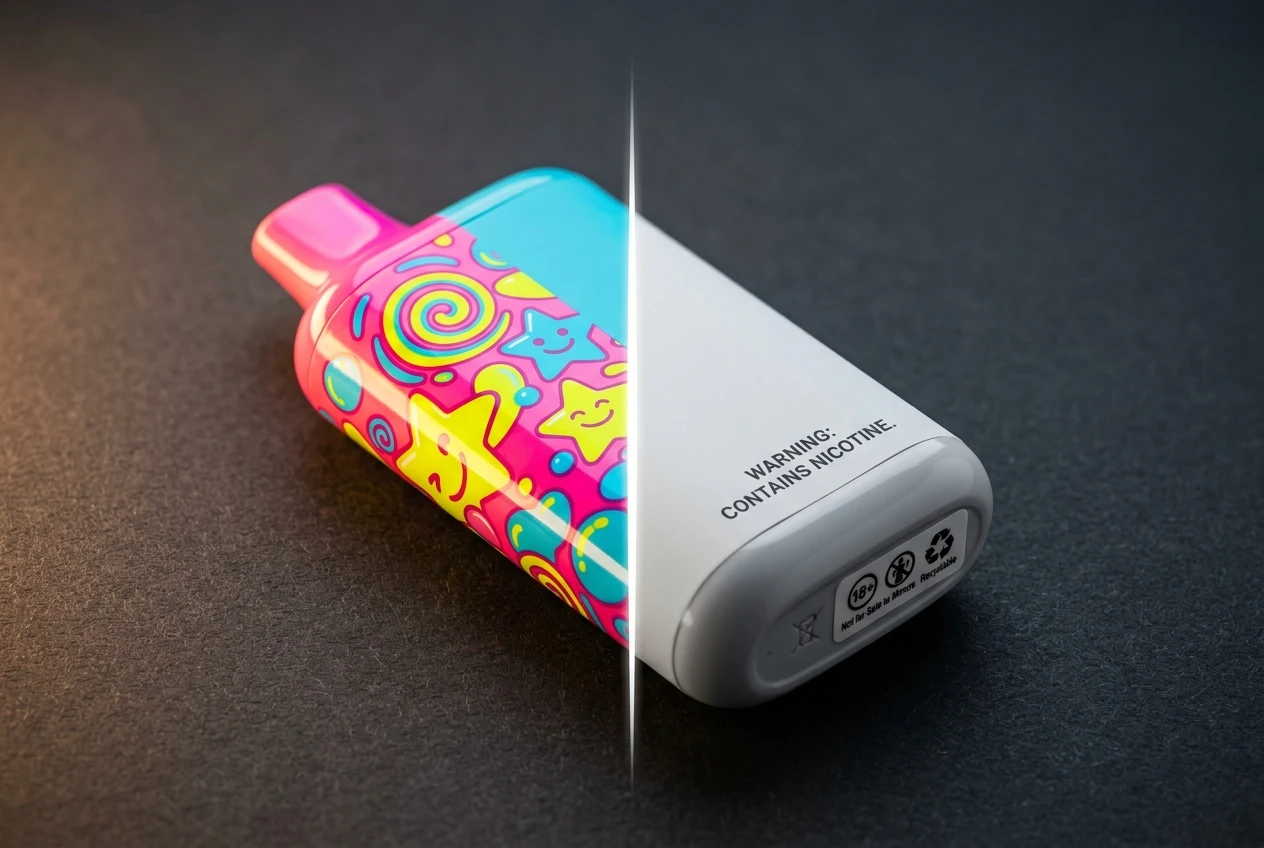
 Scotland has opened a 12-week consultation on stripping the colour, branding and shelf appeal from tobacco, vape and nicotine packaging, aimed squarely at the almost one in five children who say they have tried vaping. The proposals would push vapes toward plain white packs, drab device casings and shelves hidden from view.
But the same fix that could make vaping unappealing to a 14 year old carries a separate risk: making it look as harmful as smoking to the adult who is trying to quit cigarettes by switching to it, a tension public health officials, researchers and vaping trade groups are all wrestling with at once.
Plain White Packs and Shelves Out of Sight
The Scottish Government opened its consultation on 10 July, seeking views on how tobacco, vaping and nicotine products look, how they are packaged and how they are displayed in shops. Public Health Minister Maree Todd said colourful packaging and displays are used as an enticement to children and young people, and that ministers are consulting on options to address it.
Chief Medical Officer Gregor Smith called it a vital step to protect public health and support Scotland’s aim of a tobacco-free generation by 2034, pointing to the Tobacco and Vapes Act 2026 as the legal basis for the move. The consultation fulfils a 100 day Scottish Government commitment and builds on last year’s ban on single-use vapes.
Under the wider UK-wide plans this consultation sits alongside, the specifics on the table are blunt. Proposed restrictions include:
- Plain, standardised packaging in white with limited branding, colour or imagery
- Devices restricted to white, black or grey casings, with no cosmetic lighting
- Screens limited to basic information such as battery level, nothing decorative
- Flavour names cut back to simple descriptors, dropping links to sweets, desserts or alcohol
Dr Garth Reid, a consultant in public health at Public Health Scotland, said the agency welcomes the Four Nations consultation and called the proposals a timely and evidence informed extension of existing tobacco control measures.
Why Almost One in Five Kids Have Tried Vaping
Almost one in five children in Great Britain, 19%, say they have tried vaping, and 6% currently vape either regularly or occasionally, according to ASH’s 2026 youth survey of 11 to 17 year olds. That current use rate has almost doubled since 2021, a rise researchers link to cheap disposable devices and marketing that made flavoured vapes look like sweets.
Scotland’s own data tells a similar story at a more local level. The Growing Up in Scotland survey found 7% of 12 year olds had tried an e-cigarette in 2019, rising to 21.5% by age 14 three years later. The Health and Wellbeing Census found regular vaping among 15 year olds climbed from 3% in 2018 to 10.1% by 2021 and 2022.
| Measure | Figure | Source |
|---|---|---|
| Ever tried vaping, ages 11 to 17 (GB) | 19% | ASH youth survey, 2026 |
| Currently vape, ages 11 to 17 (GB) | 6% | ASH youth survey, 2026 |
| Regular vaping, 15 year olds in Scotland (S4) | 10.1%, up from 3% in 2018 | Health and Wellbeing Census vs SALSUS 2018 |
| Shops selling vapes to underage test buyers | 1 in 5 | Trading Standards Scotland |
| Shops selling cigarettes to underage test buyers | 1 in 7 | Trading Standards Scotland |
Researchers at Stirling University reported this year that vaping and nicotine pouches are affecting attendance and behaviour in Scottish schools, with staff describing pupils leaving lessons to vape and some showing signs of nicotine addiction.
A Lancet Study Tested Plain Vape Packs on Teenagers
The strongest evidence behind the plan comes from a study published in The Lancet Regional Health, run by researchers at UCL and King’s College London with Action on Smoking and Health (ASH, a public health charity) and Brighton and Sussex Medical School. It surveyed 2,770 young people aged 11 to 18 and 3,947 adults across Great Britain, showing each group either fully branded or standardised vape pod packaging.
The results were stark among young respondents. Fifty three percent said their peers would be interested in trying vapes shown in normal branded packaging. That fell to 38% when the same products appeared in plain white packs with black lettering. Interest among adult respondents barely moved either way.
Ann McNeill, professor of tobacco addiction at King’s College London, said the research builds on earlier evidence that stripping out colourful and jazzy branding reduces appeal to kids but not to adults. She added it should let adults keep using vapes to quit smoking while discouraging kids who do not smoke from starting.
The Adult Smokers Caught in the Middle
That is the finding ministers lean on. But it sits next to an uncomfortable number: 61% of smokers in the UK already wrongly believe vaping is as harmful, or more harmful, than smoking cigarettes, according to ASH data cited by retail trade press. Critics argue packaging that makes vapes look like tobacco could deepen that misunderstanding rather than fix it.
The proposals are billed as making vapes less attractive to children, but that is just a smokescreen.
Martin Cullip of the New Nicotine Alliance UK, a vaping consumer advocacy group, made that argument after the plans were announced, warning the changes would deter smokers from switching to a less harmful product. A separate poll for the Swedish Snus Users Association found 58% of Swedish adults opposed plain packaging for nicotine pouches, rising to 80% among people who actually use them, a pattern industry groups point to as a warning sign.
Where the disagreement actually lands:
- ASH Scotland – chief executive Sheila Duffy says brightly coloured, flavoured vapes enrich the nicotine industry at children’s expense and wants faster action, including plain packaging and hidden displays.
- New Nicotine Alliance UK – argues the same rules risk scaring off adult smokers who might otherwise switch away from cigarettes.
- Public Health Scotland – backs the proposals as a timely, evidence based extension of existing tobacco control work, without downplaying the switching concern.
Some in the vaping trade have floated a middle path: ban cartoon style imagery and child focused branding specifically, while leaving adult recognisable colours and logos intact, an approach already written into parts of the sector’s own conduct codes.
Key Dates on the Road to 2034
This consultation is one piece of a longer legislative rollout that started with the Tobacco and Vapes Act receiving royal assent in April. Scotland’s health prevention push now runs alongside other public health efforts, including proposed targeted cuts to red meat consumption to prevent diabetes cases under the same Population Health Framework.
- 10 July 2026: Scotland’s packaging and display consultation opens, running for 12 weeks.
- 29 October 2026: A ban on free nicotine product samples begins, alongside a minimum age of sale of 18 for all consumer nicotine products, including pouches and zero nicotine vapes.
- 1 January 2027: The generational tobacco sales ban takes effect, barring sales to anyone born on or after 1 January 2009.
- 1 June 2027: A UK-wide ban on advertising and sponsorship of vaping and nicotine products begins.
- 2034: Scotland’s target date for a tobacco-free generation, defined as population smoking prevalence below 5%.
ASH, which has tracked the Act’s rollout closely, notes several powers, including the packaging rules this consultation covers, still need further consultation before ministers can actually use them.
Retailers Face a Licensing Regime They’ve Never Had
Unlike alcohol, no licence is currently required in the UK to sell tobacco, something the Act aims to change with a new licensing scheme and a product registration system overhauling existing vape notification rules. Enforcement will fall largely to Trading Standards, whose test purchases already found the underage sale failures cited above.
Scotland’s government has run a similar public consultation model this year on other fronts too, including its consultation on the future of offshore wind zones, part of a broader pattern of asking the public before locking in new rules.
Legal advisers tracking the Act have flagged that Trading Standards offices are already stretched thin, raising questions about how briskly new packaging and display rules could actually be policed once they clear consultation and become law.
Frequently Asked Questions
What Counts as a Nicotine Product Under the New Rules?
The consultation and the wider Act cover more than vapes. Nicotine pouches, zero nicotine vapes, heated tobacco devices and herbal cigarettes all fall inside the definitions being tightened, meaning packaging and display rules could eventually reach products well beyond the disposable vapes most associated with youth use.
When Does the Scotland Consultation Close?
Running for 12 weeks from its 10 July opening, the consultation window stretches into early October 2026. Responses feed into a parallel UK-wide process covering England, Wales and Northern Ireland, meaning any final rules are likely to be coordinated across all four nations rather than Scotland acting alone.
Has Any Country Already Introduced Plain Packaging Like This?
Australia introduced standardised cigarette packaging in 2012, with the UK following for cigarettes in 2017. Applying the same approach to vapes specifically, rather than combustible tobacco, would be a newer step, one that has fuelled criticism that regulators are treating a reduced risk product the same as the one it was designed to replace.
Would Vaping Devices Themselves Change, Not Just the Boxes?
Yes. The proposals extend to the hardware itself, limiting devices to white, black or grey casings, banning cosmetic lighting effects, and restricting on-device screens to functional information like battery level rather than decorative displays or animations.
Could This Push Smokers Back Toward Cigarettes Instead of Vapes?
It is the central worry raised by critics. Because 61% of smokers already wrongly think vaping is as harmful as smoking, packaging that visually equates the two products risks reinforcing that belief at the exact moment public health policy is trying to correct it and encourage switching.
 Scotland’s Facial Recognition Push Sparks Mask Ban Call
  Galaxy Z Flip 8 Hits $799 Only If Your Trade-In Qualifies
  If England Had Kept Water Public Like Scotland
  Samsung Smart Switch Now Moves Passwords and eSIM From iPhone
  Old Firm Spend Pulls Clear as Premiership Rivals Patch Squads
  Chinese Studios Quietly Seize the Gamescom Stage