
 Dayna Bass
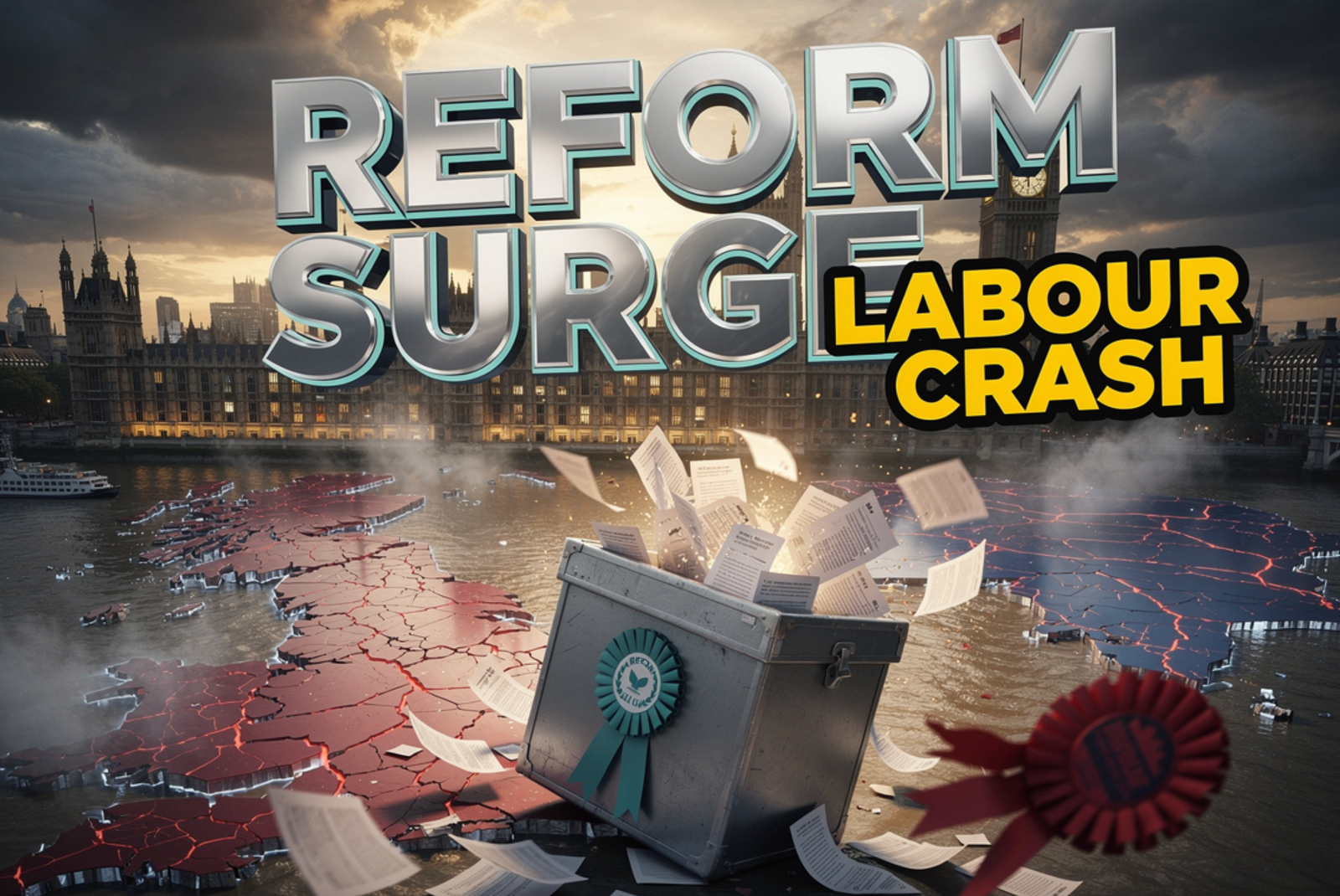
 Britain woke up to a redrawn political map this weekend. Reform UK swept up more than 1,200 council seats, Labour lost over 1,000, and Wales dumped its century-long ruling party. Keir Starmer says he will not quit. His own MPs are not so sure. The numbers behind this seismic night tell a story far bigger than a mid-term protest.
Reform UK Turns Anger Into Power Across England
Nigel Farage stood in front of cameras on Friday and called it a “truly historic shift in British politics.” The figures backed him up.
Reform UK gained 1,244 councillors and took outright control of 114 councils, including Essex, Suffolk, Sunderland, Havering and Newcastle-under-Lyme. The party swept through the Midlands, the north east and parts of outer London that pollsters had marked as long shots only weeks ago.
Hartlepool fell early on Friday morning, setting the tone. By breakfast time, councillors in Dudley were watching seats they had held for decades flip on swings of 20 points or more.
- Reform UK: +1,244 councillors, 114 councils gained
- Labour: 1,022 councillors lost, 31 councils lost
- Conservatives: 417 councillors lost, 8 councils lost
- Greens: +297 councillors, 4 councils gained
- Liberal Democrats: +151 councillors, 3 councils gained
The story Reform wanted to tell was simple. Voters angry over immigration, the cost of living and a Westminster they no longer trust had finally found a home.
Labour Bleeds From Both Sides at Once
Inside Labour HQ, the mood was bleak before a single ballot was counted. By Saturday morning it was worse than any internal forecast.
Manchester delivered what one local organiser called “the worst Labour result in 60 years.” The Greens picked up wards across Sheffield, Bristol and inner London. In Hackney, the Greens pulled off something nobody had managed before in the borough’s history.
“The results are tough, they are very tough, and there’s no sugarcoating it.” Keir Starmer, Downing Street, 8 May 2026
In Blackburn, Birmingham Hodge Hill and parts of east London, independent candidates campaigning on Gaza and local services tore chunks out of Labour majorities that had stood for a generation. The party was squeezed by Reform on its right, the Greens on its left and independents on its conscience.
Louise Haigh, the former transport secretary, said publicly that Starmer “cannot lead us into another election” without urgent change. Backbencher Connor Naismith went further. “With regret, it is clear to me that we need new leadership,” he posted on Friday afternoon.
Wales Ends a Century of Labour Rule
The Senedd result will be studied for years. Plaid Cymru topped the poll. Reform UK came second. Welsh Labour came third with a single-figure tally, the worst showing for the party in Wales since before the First World War.
| Party | Senedd Seats 2026 |
|---|---|
| Plaid Cymru | 43 |
| Reform UK | 34 |
| Labour | 9 |
| Welsh Conservatives | 7 |
| Greens | 2 |
| Liberal Democrats | 1 |
Rhun ap Iorwerth, the Plaid Cymru leader, told supporters in Bangor his party “stands ready to take the necessary steps to form the next Government of Wales.” He fell six seats short of a majority and now faces talks with smaller parties.
For Welsh communities that backed Labour through Thatcher, Blair, austerity and Brexit, the rupture is emotional as much as political. Whole valleys voted Reform. Coastal towns swung Plaid. The old map is gone.
Scotland Splinters Into a Six-Party Parliament
North of the border, Holyrood produced its most fragmented result in the history of the Scottish Parliament. For the first time, six parties cleared double-digit seat counts.
The SNP held on as the largest party with 58 MSPs, but lost ground. Labour and Reform UK tied on 17 seats each. The Scottish Greens climbed to 15, the Conservatives collapsed to 12, and the Liberal Democrats picked up 10.
Starmer had built much of his pitch on rebuilding Labour in Scotland. Friday’s count tore that argument apart. Anas Sarwar’s team held key central belt seats but watched Reform pour into post-industrial communities once seen as untouchable for the right.
Key takeaways from the Scottish vote:
- SNP remains in pole position despite losing five seats
- Reform UK enters Holyrood with 17 MSPs from a standing start
- Conservatives lose 19 seats in their worst Scottish result in a decade
- Greens grow influence as kingmakers in any future coalition
Starmer Digs In as Rivals Circle
The Prime Minister gave a tight, measured statement on the steps of Downing Street on Friday afternoon. He admitted voters were “clearly unhappy about the pace of change” and accepted personal responsibility. He also made clear he is not going anywhere.
Walking away now, he argued, would “plunge the country into chaos.” Privately, allies say he wants 12 months to reset the government’s approach on housing, NHS waiting lists and small boats. Critics inside the parliamentary party give him far less.
Names already being whispered in tea rooms include Health Secretary Wes Streeting, former Deputy Prime Minister Angela Rayner and Greater Manchester mayor Andy Burnham. None has publicly moved. None needs to yet.
Farage, meanwhile, used Friday night to tell a packed hall in Clacton that Reform is now “the real opposition in Britain.” On current trends, that claim is harder to dismiss than it was 24 hours earlier.
For ordinary voters watching from kitchens in Sunderland, Swansea and Stirling, the message of these elections feels personal. People wanted change in 2024. Many feel they did not get it. On Thursday, they said so loudly, in numbers nobody in Westminster can ignore. Whatever happens to Keir Starmer in the coming weeks, British politics has just turned a corner that cannot be quietly walked back. What do you make of the results in your area, and where do you think the country goes from here? Drop your thoughts in the comments and share this story using #ElectionResults2026 on X and Instagram.
 ONGC licence frees Venezuela cash and operatorship talks
  Anthropic Hits $65 Billion Run Rate and Flips the AI Cash Test
  Supreme Court grounds the fare free-for-all with three-week clock
  Gold Nears $4400 as Soft Data Meets Oil Inflation Risk
  Nifty Slips as Zaggle Circuits and Dhoot Debuts Big
  Diesel Crack Tops $100 as Iran Rhetoric Lifts Crude