
 Ishan Crawford
 nubia unveiled the Neo 5 GT Special Edition on July 8 with what it calls the first and only liquid and air dual active cooling system in its class, a thermal architecture the company has branded AquaCore. The device rolls out globally this July, starting in Southeast Asia, and arrives in Surge Black and Glacial Silver.
The Special Edition sits on top of the Neo 5 GT that nubia launched in March at MWC Barcelona, and it inherits the same 6.8-inch 1.5K AMOLED panel, the same MediaTek Dimensity 7400 chipset, and the same shoulder-trigger layout. What changes is the cooling stack, and on that stack the new model stakes its claim. The full launch details are in the complete AquaCore launch announcement.
AquaCore and the Liquid Plus Air Pitch
The AquaCore Cooling System pairs the existing built-in active cooling fan with a closed liquid loop, a combination nubia is calling a dual active thermal architecture. The liquid side uses what the company describes as an AI Server-Grade Coolant, a non-conductive fluid driven by a piezoelectric micropump through a three-layer cooling film in a clockwise flow that moves heat away from core components toward cooler areas of the chassis. The pitch is engineering that pulls from two separate worlds rather than a single thermal plate.
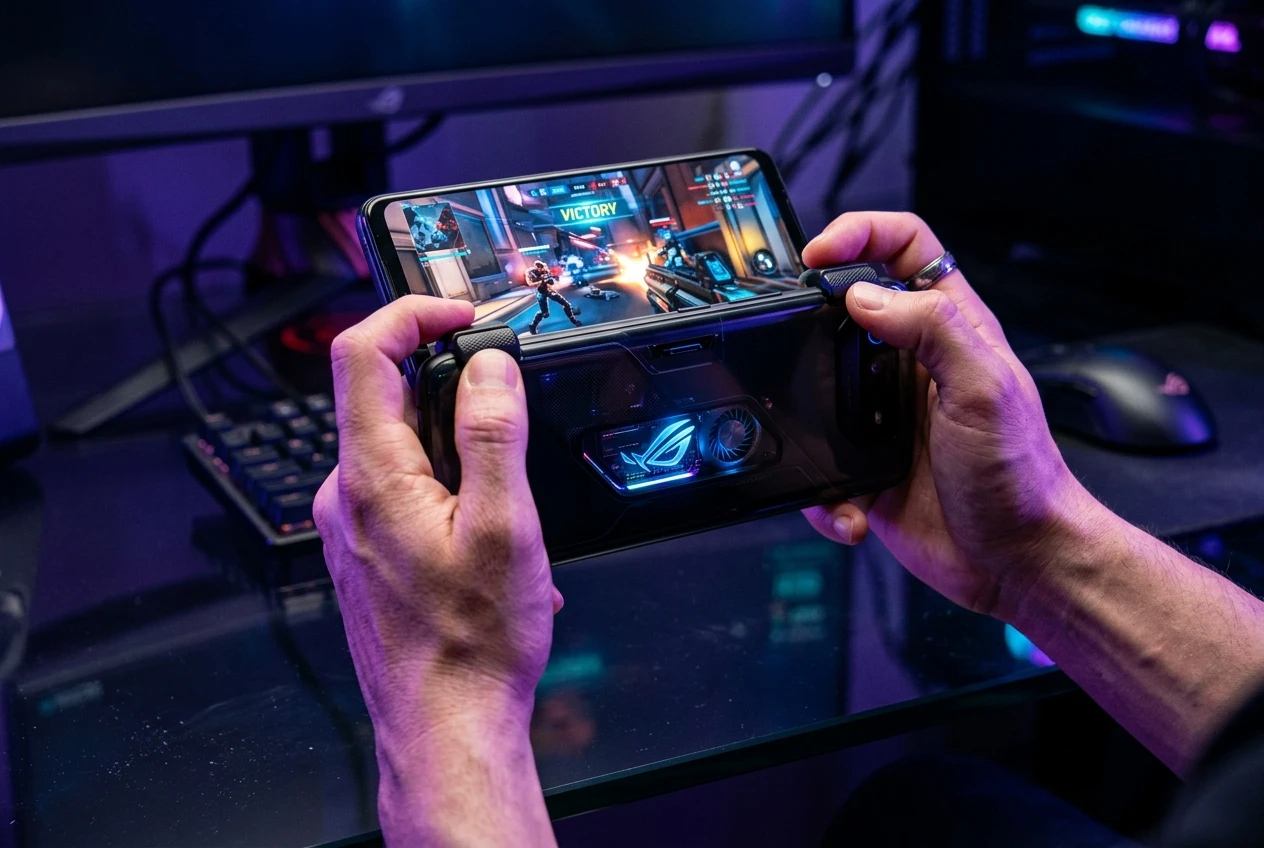
A transparent window in the back panel reveals the coolant moving in real time, a flourish the company frames as part of the device’s identity rather than a hidden engineering detail. The fan side uses the Through-Flow Duct Design introduced on the base Neo 5 GT, guiding air over the CPU and battery. Together, the two systems feed a total heat dissipation area of 33,652 mm², combining vapor chamber, graphite, and liquid cooling in a single thermal plate that is 14 percent larger than the 29,508 mm² chamber that shipped in March.
Sustained performance matters most and the cooling management is what decides it.
That line came from Bai Keke, Vice President of ZTE, in the launch statement. She tied the air loop to esports PC design and the liquid loop to AI server thermal management, calling the combination a thermal-first ecosystem the company is building around young gamers. The fan, she noted, was first shown at MWC Barcelona 2026; the liquid loop lands four months later on the Special Edition.
- AI Server-Grade Coolant, non-conductive, built for long-term reliability
- Piezoelectric micropump driving a three-layer cooling film in a clockwise path
- Transparent back-panel window showing the coolant in real time
- Through-Flow Duct Design fan path, carried over from the base Neo 5 GT
- 33,652 mm² total heat dissipation area combining VC, graphite, and liquid
The Trigger Hardware and the Display Itself
Cooling is the headline, but the Special Edition keeps the touch hardware that defined the base model. The 550Hz Neo Triggers 5.0 sit on the shoulder frame, paired with a 3049Hz Instant Touch Rate and the Magic Touch 3.0 algorithm. nubia rates the end-to-end latency at sub-5.5ms, a figure the company repeats verbatim from the March launch and describes as industry-leading in its class.
The 6.8-inch AMOLED panel runs at 1.5K resolution with a 144Hz refresh rate and a local peak brightness of 4,500 nits. Stereo dual speakers with DTS:X Ultra sit on either side, with an X-axis linear motor providing haptic feedback. The back of the phone is completely flat, the only one in its class according to nubia, with rounded corners and a 90-degree charging cable shipped in the box to keep the cord out of the way during landscape play.
The Cold-Core Trinity and the Battery Behind It
Under the hood, the Special Edition runs the same MediaTek Dimensity 7400 on a 4nm process that powered the March model, paired with up to 24GB of Dynamic RAM (12GB physical plus 12GB virtual) and nubia’s NeoTurbo Engine for frame-rate stability. The combination is what nubia markets as the Cold-Core Trinity, and it is what the new cooling stack is sized to keep thermally headroom-rich under sustained load.
Battery capacity holds at 6,210mAh across a dual-cell layout. Wired charging tops out at 80W globally and 45W over USB Power Delivery in the EU market. Bypass Charging routes power directly to the motherboard during play so the cells stay cooler, and a 5% Extreme Mode squeezes up to 30 minutes of additional gaming or 27 hours of standby out of the last few percentage points.
The base Neo 5 GT was already certified for 120FPS gameplay on Garena Free Fire and MLBB at launch and promised a 90FPS experience on the graphically intense Delta Force. Those certifications carry over to the Special Edition on the same chipset, which is why the thermal upgrade matters more than the silicon story.
| Feature | nubia Neo 5 GT (March 2026) | nubia Neo 5 GT Special Edition (July 2026) |
|---|---|---|
| Cooling | Built-in fan, Through-Flow Duct, 29,508 mm² | AquaCore liquid + air dual active, 33,652 mm² |
| Dynamic RAM | Up to 12GB + 12GB | Up to 24GB (12GB + 12GB) |
| Storage | 256GB / 512GB | 256GB / 512GB |
| Display | 6.8″ 1.5K AMOLED, 144Hz, 4,500 nits | 6.8″ 1.5K AMOLED, 144Hz, 4,500 nits |
| Battery | 6,210mAh, 80W (45W PD EU) | 6,210mAh, 80W (45W PD EU) |
| Software support | Not stated at launch | Five-year software update commitment |
AI Copilot Demi 2.0 and the Sensory Layer
Beyond the thermal and touch hardware, the Special Edition carries nubia’s AI Copilot Demi 2.0 with three named features aimed at gameplay. Gaming Coach offers real-time guidance during play, Gaming Chatbot is built for communication without breaking focus, and Demi Auto-Chat handles responses on the player’s behalf. The pitch is that the AI layer adapts to how young users already play, rather than asking them to learn a new interface.
AI Game Space 5.0, carried over from the base model, collects performance settings and game management into one screen. DTS:X Ultra and the X-axis linear motor round out the sensory layer. Together, these features frame the Special Edition as a software-and-thermal package rather than a pure hardware bump.
The transparent coolant window is the one visual cue the Special Edition adds to the base model’s gamer-chic look, and it will be visible from the rear in both Surge Black and Glacial Silver finishes.
Launch Footprint and the Five-Year Promise
Rollout begins in July in Southeast Asia, with other markets to follow. Two configurations are listed: 24GB Dynamic RAM with 256GB of storage, and 24GB with 512GB. Pricing was not disclosed in the launch statement, a gap that mirrors the March debut, when ZTE confirmed a starting price of €399 for the base Neo 5 GT and €299 for the standard Neo 5.
The new commitment that did not exist on the March spec sheet is software support. nubia is backing the Special Edition with a five-year software update promise, a stance aimed at the same long-tail audience that buys mid-range phones and expects them to last. The lineup’s budget framing is laid out in ZTE’s pricing case against the iPhone 17E and Pixel 10A.
How the Special Edition Sits in nubia’s 2026 Lineup
The Special Edition arrives after the base Neo 5 GT’s MWC Barcelona debut on March 3, where nubia first put a built-in cooling fan inside a phone in its price band. It also follows ZTE’s MWC Shanghai 2026 showcase on June 25, where the company showed the same device alongside the larger 7.5-inch Neo 5 Max and a wider NeoVerse ecosystem of controllers, earbuds, speakers, and a separate cooling fan.
The strategic shape is consistent across both trade shows. nubia keeps the mid-range Neo line as its volume play, pushes the thermal story as the differentiator, and reserves the RedMagic sub-brand for the premium tier. The Special Edition’s liquid plus air pitch, set against premium rivals that already market their own thermal stacks, is the clearest signal yet that nubia intends to compete on thermal architecture in this segment.
What stays unanswered in the launch statement is price. The base Neo 5 GT arrived at €399, the standard Neo 5 at €299, and the larger Neo 5 Max was reported around €350. The Special Edition’s added liquid loop, transparent window, and five-year software commitment will likely push it above the base GT, though nubia has not confirmed a number.
Bai Keke framed the long-term direction as a thermal-first ecosystem built around young gamers, from the MWC Barcelona fan to today’s liquid loop. The July rollout will be the first test of whether a mid-range buyer pays a premium for a coolant window on the back of their phone.
Frequently Asked Questions
When and where does the nubia Neo 5 GT Special Edition launch?
nubia says the device rolls out globally this July, with Southeast Asia as the first region. Other markets were not named in the July 8 launch statement.
How is the Special Edition different from the standard Neo 5 GT?
The Special Edition adds the AquaCore liquid cooling loop alongside the existing fan, lifting the total heat dissipation area to 33,652 mm², and pairs that with a five-year software update promise. The display, chipset, and battery capacity match the March model.
What is AquaCore Cooling, in plain terms?
AquaCore combines a built-in fan with a closed liquid loop. A piezoelectric micropump circulates a non-conductive coolant through a three-layer cooling film in a clockwise path, drawing heat away from the chipset, while the fan expels that heat through the chassis duct.
How long will nubia support the device with updates?
The launch statement commits nubia to five years of software updates for the Special Edition. The base Neo 5 GT, which shipped in March, did not carry the same commitment at launch.
 moto g77 POWER Launches in India at Rs 23,999 With 7,000mAh Battery
  Beats Power Pink Woven Cables: Specs, Price, and Color Match Play
  Redmi Note 17 Series Confirmed for July 14 China Launch
  Meta’s Glasses Update Guards the Camera, Not the Bystander
  India’s Retail GCC Hub Now Outscales Five Peers Combined
  Dundee to Host First Scotland StreetCar Festival Alongside Eco Rally