
 Ishan Crawford
 Dozens of parking meters in North Berwick have been hit with super glue and expanding foam since early 2026, racking up tens of thousands in damage before the machines took a single payment. The seaside town’s mystery saboteur is still at work months after charges went live, and almost nobody is talking.
Officials call it unacceptable. Many locals quietly call it inevitable.
Meters Sprout and the Night Raids Begin
East Lothian Council installed around 40 new ticket machines and more than 140 signage poles ahead of a town-centre parking scheme. The machines appeared on Beach Road, High Street, Westend Place and other spots in the affluent golf-coast town of about 8,000 people.
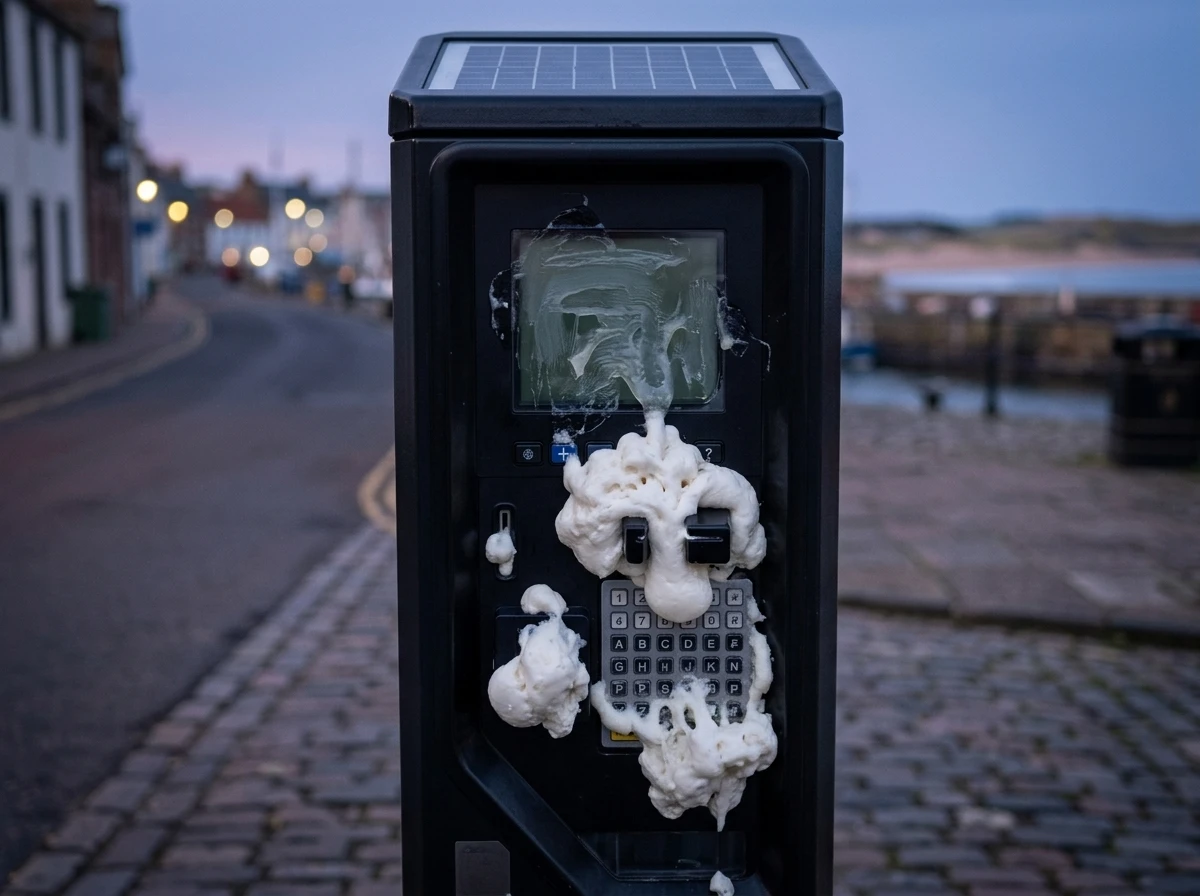
By February the attacks started. Screens were scratched. Keypads and card readers were blocked. Stickers saying “Resist!” appeared on poles and machines.
- Expanding foam sprayed into payment slots and over keypads
- Super glue sealing coin and card readers
- Chewing gum packed into mechanisms
- A 2p coin jammed into a High Street card slot after charges began
- Graffiti and black sticky ooze on seafront units
IPS UK, the installer, called the volume “totally extraordinary” and “completely unprecedented” after commissioning thousands of meters across the UK. Managing director Freddie Jones said the firm had never seen damage on this scale for a project of this type.
Police Scotland labelled the attacks unacceptable and vowed those responsible would be held accountable. Council leader Norman Hampshire said North Berwick is a small town and some people will know who is doing it.
What Drivers Pay Now
The scheme created three Controlled Parking Zones and charges that took effect on 1 June 2026 after earlier delays. Free parking remains outside the zones, including at Recreation Park on Dunbar Road.
On the High Street, drivers get up to 45 minutes free. Then it is £1 for up to 75 minutes and £2 for a maximum 90 minutes. Other zones and car parks run different tariffs, often £0.50 per 30 minutes with daily caps. Residents can buy permits for their zone and visitor day permits. Campervans are directed to specific car parks only.
Hampshire has said the income is needed because the council budget cannot fund traffic wardens any other way. The money is meant to pay for two enforcement officers in the town, improve turnover of scarce spaces, and support active travel.
The £38,000 Bill Before Any Revenue
Before a single charge was collected, 30 of the 40 meters had been defaced. The repair bill stood at about £38,000. A second wave hit eight more machines between 8 and 14 June, days after the scheme went live. Super glue and a jammed coin disabled the unit outside St Andrew Blackadder Church on the High Street.
| Stage | Detail | Cost or Number |
|---|---|---|
| Pre-launch (early 2026) | Meters and signs attacked with foam, glue, gum, graffiti | 30 of 40 meters; ~£38,000 repairs |
| Charges start | 1 June 2026 | Advisory notices first |
| Post-start vandalism | 8 meters hit 8-14 June | Additional repairs from public budgets |
| Enforcement begins | PCNs from 26 June | 167 fines by 9 July (~dozen £100 notices per day) |
The council said later vandalism costs would come from existing budgets that would otherwise support vital public services. It condemned the attacks while insisting the scheme would continue.
Traders Watch Footfall Drop
Business owners reported immediate pain. Conservative councillors walked the High Street in June and heard the same story shop after shop.
- 20% to 60% drop in takings versus the same period in prior years
- One long-standing family business down around £1,000 a day on a five-year average
- Local trade “almost disappeared” from fear of fines rather than the fee itself
- Three shops said they were close to closing; others cut staff shifts
Councillor Jeremy Findlay said the vibe and buzz had gone. Locals were snatch-shopping instead of browsing. Alana Anderson, owner of Madame Butterfly, said she was still terrified after 18 years in the town and saw people online vowing never to return. Carol Smith called the meters unnecessary outside peak summer weeks and said the vandalism would only cost more money to fix.
A motion to pause the charges for a review was defeated. Hampshire’s Labour group argued the scheme needed time to bed in and pointed to early evidence of higher turnover in limited spaces. An August report was promised. Local SNP councillor Liz Allan was later suspended by her group for backing the pause call.
Fines Arrive and the Hunt Goes On
After weeks of advisory notices, the council began issuing Penalty Charge Notices from 26 June. By 9 July it had handed out 167 fixed penalty notices, averaging about a dozen £100 fines a day. Some may still be cancelled or challenged.
The council estimates the North Berwick scheme could eventually bring in more than £1 million a year once setup costs are covered. Similar controlled zones are planned for Musselburgh, Haddington, Dunbar and Tranent. Calls to delay those until North Berwick’s impact is clearer have been rejected so far.
Police continue to investigate the vandalism. The Wall Street Journal reported in early August that officials are still hunting the person or people who go out at night with glue and foam cans. Hampshire has repeatedly said some residents know who is responsible. With Police Scotland officer numbers at a two-year low, the resource pressure is real.
Nobody Talks in a Town That Knows
North Berwick is the kind of place where a stranger stands out. Visitors come for the harbour, beaches and historic golf courses. About a quarter of residents are over 65. The silence around the saboteur is striking.
Anyone who does that here, I would give them a medal.
Resident James Campbell told the BBC he feared the charges would kill footfall. Community councillor John Wellwood condemned the vandalism but said the strength of feeling was massive and everything the community tried had been blocked by the council. A woman who asked not to be named said middle-class people vandalising machines set a terrible example for young people and that owners of big cars should just pay.
Dr Geraldine Prince, a critic of the charges, called the early attacks “interventions” expressing the view that the meters had no democratic mandate. A petition against the wider East Lothian plans gathered thousands of signatures; residents say a 7,000-name effort was dismissed on a technicality. An initial consultation drew hundreds of objections. A fractious December council meeting saw car horns outside and a man ejected for shouting “shame.”
The WSJ piece noted that in a town fed up with parking enforcers, nobody is talking. That wall of silence is the saboteur’s best cover and the council’s biggest headache.
Both Sides Dig In
Hampshire remains firm: the charges will stay, the machines will be repaired, and the people damaging public assets will face action. Traders want a pause and clearer signage. Some residents still see the glue as the only language the council understood. Others just want the High Street busy again.
The mystery avenger has not stopped the meters. The meters have not stopped the quiet resentment. North Berwick is left absorbing the repair bills, the fines, the quieter shops and the knowledge that the next East Lothian town on the list is watching every move.
 Hyderabad Gold Dip Freezes Buying as Duty Talk Hits Wedding Season
  India Pushes Japan CEPA Review After 15 Years of One-Way Gains
  HDFC Bank’s US Class Action Turns Deposit Scheme Into Securities Reckoning
  Gold Holds Above $4600 as Treasury Buybacks Fuel Debasement Bid
  Scotland’s Prevention Push Leaves Community Groups Squeezed
  Amazon Locks Three Million Nvidia GPUs Even as Trainium Grows