
 Ishan Crawford
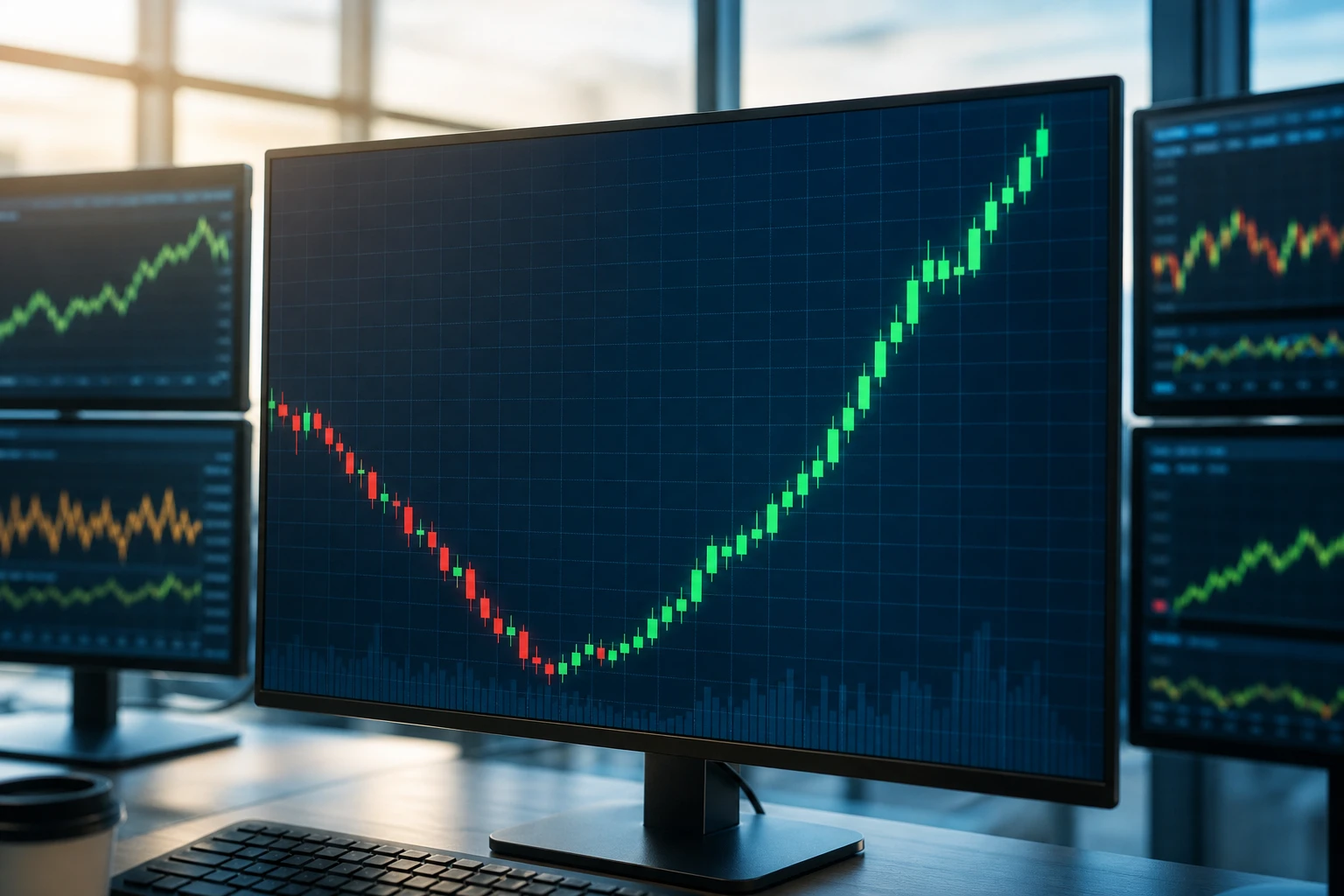
 The Nifty IT index rose nearly 19 percent in July 2026, its biggest monthly gain in six years, after bottoming at a 52-week low of 25,699 on July 1 and climbing more than 21 percent from that trough. The rebound followed a roughly 31 percent slide in the first half, the sector’s worst H1 stretch in 18 years, and left the index near 31,195 by the July 30 close.
Investors rotated out of crowded semiconductor and AI hardware names into software and Indian IT services, valuations looked stretched lower, and early AI revenue numbers from the majors eased pure disruption fears. The speed of the move still leaves the harder questions about demand and durability open.
What changed in thirty days was less a sudden boom in client budgets than a pile-up of relief: cheaper entry multiples, a cooler AI hardware trade, and quarterly prints that did not confirm the worst disruption case. That combination was enough to reverse flows. It was not enough, on its own, to settle the longer growth debate.
How Far and How Fast the Index Climbed
One-month return stood at 18.61 percent through July 30, with the index closing at 31,194.55 after opening the month near the lows. The 52-week high remains 40,301.40, so the recovery has closed only part of the longer drawdown.
The advance was broad. Large caps participated while midcaps delivered sharper percentage lifts off depressed bases.
| Stock / Group | Move from 52-week low | Role in rally |
|---|---|---|
| Oracle Financial Services | 78% | Midcap leader |
| Subex / Ramco Systems | 75% each | Midcap |
| Coforge | 71% | Midcap standout |
| CE Info Systems / Sonata | 50% each | Midcap |
| HCLTech | 31% | Large-cap leader |
| Tech Mahindra | 28% | Large-cap |
| TCS | 23% | Large-cap |
| Infosys | 16% | Large-cap |
| Wipro | 10% | Large-cap |
Persistent Systems, Sagility and Vakrangee rose around 30 percent each from their lows. Hexaware and Newgen gained about 40 percent. The Nifty IT index methodology and top constituents keep the basket to the ten largest free-float IT names, so the breadth across both large and mid names outside the strict index mattered for overall sentiment.
- Index 1M return: 18.61 percent to July 30 close of 31,194.55
- Rebound from July 1 low: more than 21 percent
- H1 2026 drop: around 31 percent, worst in 18 years
- Valuation at low: roughly 18 times earnings versus five-year median near 27 times
Global peers Accenture and Cognizant each rose around 20 percent in July, underscoring the wider software rotation. The Indian move was therefore not an isolated local squeeze. It tracked a broader preference for services and software over crowded hardware exposure once the first-half damage had already been done.
Even after the bounce, the index remained a long way from the 40,301.40 peak. That gap is the simplest reminder that July repaired sentiment more than it restored the prior cycle high.
Money Left Chips and Found Indian Software
A selloff in semiconductor stocks accelerated on signs of progress in China’s advanced chipmaking and fresh doubts over how long the AI infrastructure boom could run at prior intensity. South Korea’s Kospi and Japan’s Nikkei weakened as funds cut chip-heavy exposure. That capital looked for relatively cheaper technology exposure and landed in IT services.
Three drivers stacked at once:
- Weaker-than-expected US jobs data and downward payroll revisions pushed back Federal Reserve rate-hike odds, supporting emerging-market inflows and client spending outlooks.
- Jefferies lifted Indian IT from Underweight to Neutral, added Infosys to its India model portfolio and raised Coforge weight after meetings with more than 50 FPIs. The firm noted the Nifty IT had already fallen hard from its December 2024 peak and traded near 16.1 times one-year forward earnings, about one standard deviation below its 10-year average of 21.3 times.
- Q1 FY27 results proved more resilient than feared on margins, currency and cost control even as some full-year guidance was trimmed.
Jefferies also flagged that MSCI Korea had dropped around 30 percent from its June peak on memory-chip weakness and that AI token prices had declined roughly 25 percent from peaks, while hyperscaler bond spreads widened. FPIs put a net $3 billion into Indian equities over five weeks after $29 billion of prior outflows. The same shift that hurt pure AI hardware names supported the view of Indian IT as a safer technology play.
That rotation sits against the earlier Nifty IT crash on AI disruption fears that had dominated the first half. The narrative flipped from victim to potential beneficiary inside a single month.
The sequence mattered as much as any single catalyst. Hardware fatigue freed capital, softer US labour data eased rate fears, and a visible broker upgrade gave institutions a cleaner framework to re-enter. Without the prior derating to roughly 18 times earnings against a five-year median near 27 times, the same news flow would likely have produced a smaller bounce.
Midcaps Took the Bigger Percentage Lift
Large caps anchored earnings and index weight. Midcaps supplied the sharper rebounds. Independent market expert Ajay Bagga noted that IT mid-caps are winning a disproportionate share of AI-native and cloud-modernisation deals through more agile execution, which is pulling fund flows back into that segment. Large caps provided the earnings-led base; midcaps bounced harder off lower bases.
Oracle Financial Services, Coforge, Sonata, Mastek, Hexaware and Newgen illustrated the pattern. Investors who had crowded into semiconductors found these names trading at discounts that looked extreme once the AI-victim story lost force. The prior prior three-session Nifty IT rebound had already shown how quickly sentiment can snap higher when the rupee or wage headlines turn supportive; July simply scaled that dynamic across the whole month.
The split in roles is straightforward. Index-heavy names such as TCS, Infosys, HCLTech, Tech Mahindra and Wipro set the tone for institutional comfort and benchmark performance. Smaller names supplied the torque once forced selling eased and buyers hunted percentage upside from depressed bases.
- Large-cap function: earnings anchor, index weight, slower percentage repair
- Midcap function: sharper rebounds, AI-native and cloud-modernisation deal share, flow magnet after the derating
- Shared backdrop: discounts that looked extreme only after the pure disruption narrative lost force
Early AI Revenue Numbers Shifted the Story
The earnings season supplied concrete figures that undercut the pure disruption thesis. TCS reported its AI business had reached an annual run rate of about $2.6 billion. Infosys said AI-led services contributed 8.2 percent of revenue. HCLTech reported a 62 percent year-on-year jump in AI services revenue in its HCLTech Q1 FY27 investor release details. Mphasis said 63 percent of new deal wins were AI-led.
| Company | AI-related marker |
|---|---|
| TCS | About $2.6 billion AI annual run rate; $9.5 billion total deals booked |
| Infosys | 8.2 percent of revenue from AI-led services |
| HCLTech | 62 percent year-on-year jump in AI services revenue |
| Mphasis | 63 percent of new deal wins AI-led |
Deal pipelines improved and companies spoke of higher hiring and upskilling. TCS booked $9.5 billion in deals including a flagship AI-led transformation. Revenue growth for the majors stayed in the low-to-mid teens year-on-year in places, not a boom, yet the AI mix was no longer theoretical.
Investors began treating Indian IT as a way to participate in AI adoption rather than a casualty of it. That reframing mattered as much as the absolute dollars.
The figures did not prove that traditional services pricing and headcount face no pressure over several years. They did show that AI work is already visible in run rates, revenue mix and new-deal composition, which is a different starting point from the first-half fear that the sector had little to offer in the new stack.
The Recovery Has Only Closed Part of the Gap
July’s nearly 19 percent surge and the more than 21 percent lift from the July 1 low of 25,699 look dramatic in isolation. Set beside the path from the 40,301.40 fifty-two-week high and the roughly 31 percent first-half slide, they read as partial repair.
Valuation tells the same story in different units. At the low the group traded at roughly 18 times earnings against a five-year median near 27 times. Jefferies marked forward earnings near 16.1 times, about one standard deviation below the 10-year average of 21.3 times, after the fall from the December 2024 peak. Mean reversion from those levels can be powerful without implying that demand has already turned.
- December 2024 peak zone: starting point for the long derating Jefferies later cited
- First half of 2026: around 31 percent decline, worst H1 stretch in 18 years
- July 1, 2026: 52-week low at 25,699
- Through July 30: close at 31,194.55, still well below 40,301.40
Accenture and Cognizant’s roughly 20 percent July gains show peers were healing in parallel. Indian IT was catching a global software bid as much as inventing a local one. The open gap to its own peak remains the measure of how much work is left.
Analysts Still Call It a Measured Recovery
Shashank Udupa, a SEBI-registered analyst, said expectations have reset while earnings have not, so the market still needs earnings to catch up for a bigger move. He sees many DIIs loading IT positions for a lower cost of acquisition.
On sustainability, our view is measured. The rally so far is a valuation normalisation after an extreme derating, not a demand-led upcycle. The structural questions around AI disruption to the services model and weak discretionary spending remain unresolved. The index faces technical resistance in the 31,800 to 32,000 zone, and a decisive move beyond it will require confirmation of a demand recovery in FY27 guidance commentary. We would treat this as a tradeable recovery with improving risk-reward in select large caps rather than a broad re-entry signal.
Sonam Srivastava, founder of Wright Research, delivered that assessment. Bagga added that the real test is not July’s rally but whether September-quarter deal wins prove the move is structural rather than a bounce from oversold levels.
Crowd commentary on X captured the same tension: short sellers were “destroyed,” all ten index stocks turned green together, and the most hated sector became the best performer in one month. Other voices noted IT had still lagged the broader Nifty’s multi-year range and that a single open could reverse daily gains when chips bounced. The speed of the hated-to-hero flip itself became a caution flag.
The common thread across the measured camp is timing. Valuation normalisation and flow reversal can arrive months before discretionary spend and full-year guidance confirm a true upcycle. That is why DIIs can accumulate for a lower acquisition cost while analysts still withhold a broad re-entry call.
Currency and Cost Support Cannot Carry Every Quarter
Q1 FY27 resilience rested partly on margins, currency and cost control even as some full-year guidance was trimmed. Those props helped rewrite the near-term narrative. They are also finite.
Currency gains can fade if the rupee path changes. Cost programmes eventually meet a floor once the easier savings are taken. Deal wins and AI-led mix then have to do more of the lifting if investors are to treat the July move as a base rather than a relief spike.
That is the bridge between the strong print and the still-open FY27 debate. Healthy bookings, including TCS’s $9.5 billion total and the AI-heavy win shares reported elsewhere, matter more if they show up again in September-quarter TCV and in guidance that no longer needs to be trimmed.
Foreign flows add another layer of conditionality. FPIs turned net buyers by about $3 billion over five weeks after $29 billion of earlier outflows, but that money stays sensitive to US demand data and to evidence that AI returns justify continued client budgets. DIIs can cushion dips. They cannot alone rewrite the global risk tape.
Where the Index Meets Resistance and Open Questions
Technical resistance sits in the 31,800 to 32,000 zone. A clean break would need fresh evidence that client discretionary spend is stabilising and that AI work is expanding beyond the early run-rate numbers already reported.
What we know
- July delivered the largest monthly Nifty IT gain in six years on rotation, valuation mean-reversion and better-than-feared Q1 prints.
- AI revenue contributions are now quantified at several large firms and midcaps are capturing AI-native work.
- Jefferies and FPI flows have turned more constructive after the AI hardware trade cooled.
What remains unconfirmed
- Whether September-quarter deal TCV and FY27 guidance confirm a demand recovery rather than a one-month bounce.
- How far AI disrupts traditional services pricing and headcount over the next several years.
- Whether the 31,800-32,000 resistance gives way without another leg of global risk-off in tech.
Some companies already trimmed full-year outlooks even while reporting healthy deal wins. Currency gains and cost programmes supported margins this quarter; those levers are not infinite. DIIs have been accumulating on the dip, which can cushion downside, yet foreign flows remain sensitive to the next data on US demand and AI returns.
The July surge fixed the extreme undervaluation and rewrote the short-term AI story. It did not close the longer argument about structural growth. The next set of deal announcements will decide whether the bounce becomes a base or merely a vigorous dead-cat recovery from the H1 wreckage.
 Scotland’s Facial Recognition Push Sparks Mask Ban Call
  Galaxy Z Flip 8 Hits $799 Only If Your Trade-In Qualifies
  If England Had Kept Water Public Like Scotland
  Samsung Smart Switch Now Moves Passwords and eSIM From iPhone
  Old Firm Spend Pulls Clear as Premiership Rivals Patch Squads
  Chinese Studios Quietly Seize the Gamescom Stage