
 Ishan Crawford
 Three of India’s biggest listed fast-moving consumer goods companies, Dabur India, Godrej Consumer Products and Marico, each told stock exchanges on Friday, July 3, 2026, that their revenue for the quarter ended June 30 will grow faster than they had planned for the full year. Marico expects consolidated revenue to rise in the early twenties. GCPL’s high-teens Q1 FY27 revenue guidance is materially above the company’s own double-digit full-year plan. Dabur’s double-digit Q1 FY27 guidance covers both revenue and profit after tax.
The synchronization is the sleeper. Three different companies, in three different geographies and price tiers, beat their own full-year plans in the same first-quarter window. They did so with input costs only just starting to ease, not yet easy, and with an El Nino risk hanging over the rural markets that drive much of their volume.
Three Growth Bands, One Direction
The Q1 FY27 trading updates move the three companies in different bands, but each band sits above the company’s own full-year starting point. Marico’s early twenties guidance for the quarter came with the caveat that the band refers to growth, not to absolute revenue. The company did not provide an absolute Q1 FY27 number in the update. Marico’s Q1 FY27 growth outlook ties that band to broad-based performance across core, digital and international businesses.
Godrej Consumer Products filed the cleanest comparison against its full-year plan. Its quarterly update to the BSE and NSE on Friday said “At a Consolidated level, we expect to deliver high-teens revenue growth in Q1 FY27, meaningfully ahead of our full-year guidance of double-digit revenue growth, backed by strong high single-digit UVG.” The phrase “meaningfully ahead” is the line a smart reader should linger on. The same update guided to mid-teens revenue growth for Indonesia with double-digit volume, and “another extremely strong” double-digit quarter for the Godrej Africa, USA and Middle East (GAUM) cluster, where volume growth ran in the teens.
Dabur expects double-digit growth in both consolidated revenue and profit after tax for the quarter. Its domestic FMCG business registered near double-digit growth, with the home and personal care segment running at a near-teen rate; hair oils and shampoos are tracking high-teen growth; oral care is at near double-digit; and the foods business is at high double-digit, led by a high-teen print from the Badshah brand. The international business, which Dabur said contributes “nearly a quarter of consolidated revenue,” is expected to deliver high-teen growth in rupee terms.
The first table captures how different each company’s growth band is, and how each one stacks against the company’s own annual plan. No columns sum or compare across companies. Each is what the source filing or report stated.
| Company | Q1 FY27 consolidated guidance | India / standalone detail | International detail | Reporting date |
|---|---|---|---|---|
| Marico | “Early twenties” | Double-digit India underlying volume growth; Parachute “highest volume growth in several quarters”; Value Added Hair Oils “continued to grow in the twenties” | “Mid-teen constant currency growth, driven by Vietnam and the Middle East and North Africa” | July 3, 2026 update |
| GCPL | High-teens (ahead of own double-digit FY27 guide) | Standalone double-digit, high-single-digit UVG, broad-based across categories | Indonesia “mid-teens” with double-digit volume; GAUM “extremely strong double-digit,” volume “in the teens” | July 3, 2026 update |
| Dabur | Double-digit revenue and PAT | Near double-digit overall; home & personal care near-teen; hair oils & shampoos high-teen; oral care near double-digit; foods high double-digit with Badshah high-teen | High-teen in rupee terms; “nearly a quarter of consolidated revenue” | July 3, 2026 update |
Where the Quarter’s Strength Actually Came From
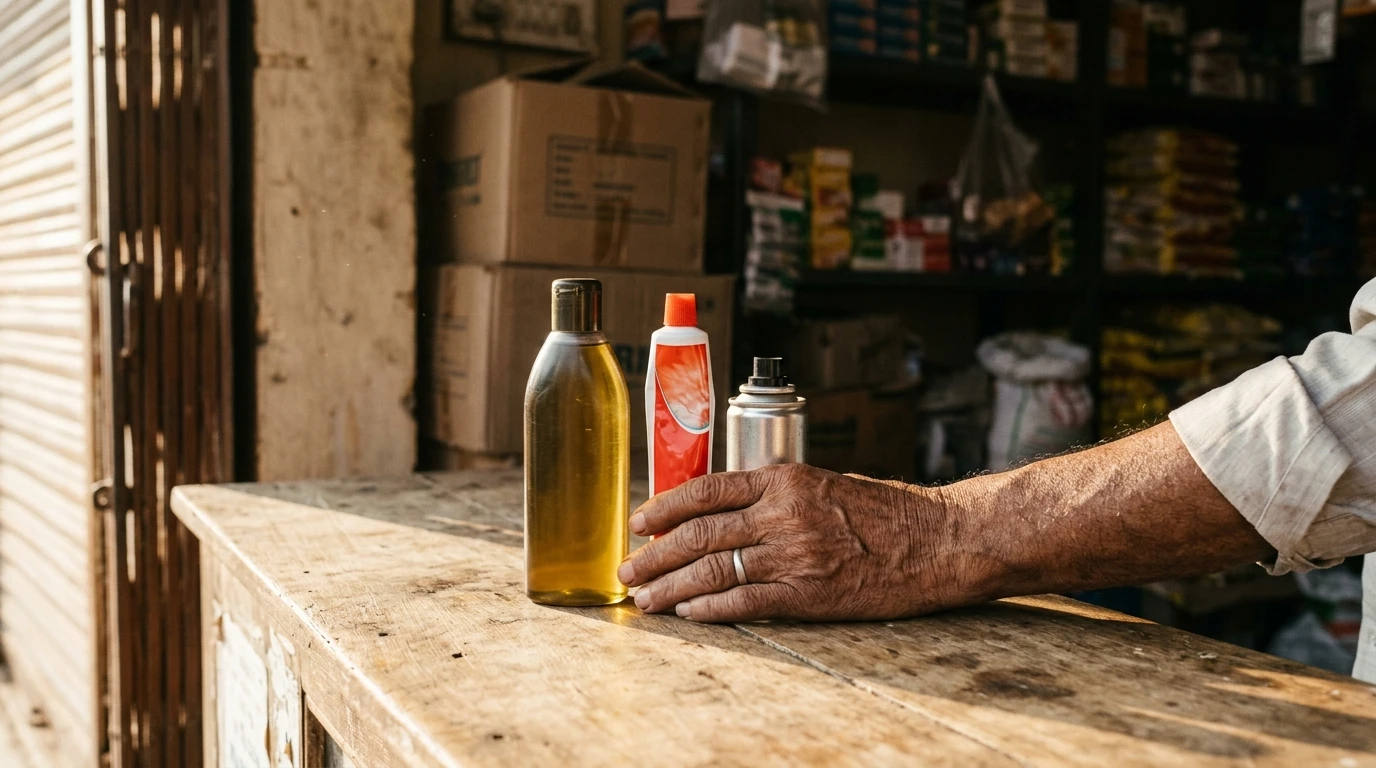
Volumes did the lifting, not price. Marico’s update says its India business “accelerated further, delivering double-digit underlying volume growth, led by a strong performance from its flagship Parachute coconut oil franchise, which posted its highest volume growth in several quarters.” The Value Added Hair Oils portfolio continued to grow in the twenties, driven by premiumisation and the wider direct reach from Project SETU. Foods and the Premium Personal Care portfolio kept scaling.
GCPL’s “high single-digit UVG” line is the cleanest read of the topline. Underlying volume growth of that magnitude, paired with high-teens revenue, means price and mix contributed the rest. The geographical spread of the beat matters too. India, Indonesia and the GAUM cluster each delivered double-digit or better, and the company said the FMCG industry as a whole “witnessed an acceleration in value growth during the quarter.” Dabur framed the channels differently. E-commerce, quick commerce and modern trade posted strong double-digit growth. General trade improved sequentially across both urban and rural markets.
For the domestic business, rural and urban markets are sustaining their growth trend with the rural segment continuing to outpace urban.
The next paragraph carries the speaker and venue, as the rules require. The speaker is Dabur India, via its quarterly business update filed with the BSE on July 3, 2026, and quoted by CNBC TV18 and the Press Trust of India.
What Each Quarter Is Costing These Companies
The cost line is the only consistent drag across all three updates, and it is still being dragged. GCPL said “input costs remained elevated through most of Q1… Encouragingly, costs have begun to ease in the closing weeks of the quarter.” The same update warned that consolidated EBITDA margins are “likely to be lower due to exceptional cost pressures,” even as EBITDA growth lands ahead of double-digit guidance. The standalone India business delivered double-digit revenue growth, but with margins compressed, the company is leaning on calibrated price actions, cost-savings programmes and media optimisation to recover margin through the year.
Dabur absorbed the same cost pulse differently. The company said elevated input costs were the quarter’s biggest constraint and that it had “managed the impact through calibrated price hikes across select categories.” The domestic FMCG business maintained upward momentum even at near double-digit growth, and rural demand outpaced urban, but margin recovery is the bridge to the rest of FY27. The foods business printed high double-digit growth and Badshah hit high-teen growth, which is the kind of mix a company points to when it wants to argue that brand investment is paying off even under cost pressure.
Margin recovery is what all three are now promising, with GCPL’s commentary the most specific. The company wrote to exchanges:
With revenue growth tracking ahead of our original expectations and input costs beginning to ease, we enter the remainder of FY27 with increased confidence. We remain firmly on track to deliver our guidance for the full year with the strong likelihood to exceed the same in select metrics.
The next paragraph carries the speaker and venue, as the rules require. The speaker is Godrej Consumer Products Ltd, in its quarterly update to stock exchanges dated July 3, 2026, as carried by Business Standard and the Press Trust of India. Marico’s framing sits in the same direction. Marico said it expects “strong operating profit growth, supported by robust business growth and a softening in copra prices.” Copra is the single biggest raw material pressure on Marico’s India portfolio, and its easing (alongside a softer crude bill for GCPL) is the joint cost narrative that bridges Q1 into the rest of the fiscal.
The El Nino Question Hanging Over Rural India
Rural demand is what these three companies are betting on for the rest of FY27, and rural demand is what El Nino threatens. The India Meteorological Department has said weak El Nino conditions are currently prevailing over the equatorial Pacific. IMD’s 92%-of-LPA monsoon forecast for 2026 places the season in the below-normal band, with Skymet close behind at 94% of the long-period average. Both agencies see the risk concentrated in the back half of the season, with July and August the most exposed months.
The same companies that beat their full-year plans on Friday spent parts of the same updates on this weather risk. Marico said it remains “optimistic about consumption trends, while closely monitoring the evolving inflationary conditions and the impact of El Nino on the monsoon.” GCPL said El Nino “could heighten weather volatility across its key markets, potentially disrupting agricultural output and rural demand.” Dabur said rural India had outpaced urban India in the just-ended quarter and that “with the West Asia situation expected to ease,” its international markets should improve through the year.
Why all three called the risk manageable rather than disruptive comes down to geography and pricing power. GCPL pointed to “geographically diversified sourcing and portfolio” as the buffer and said it does “not foresee any major impact.” Dabur used calibrated pricing to protect margins. Marico’s response is more product-mix than geographic: Foods and Premium Personal Care continued to scale, and the international business recorded mid-teen constant currency growth, which is the second engine if rural India slows.
The macro framing around these company-level comments is also worth keeping. India enters the 2026 monsoon with above-average reservoir levels at 44.6% of live capacity in early April, and food accounts for roughly 37% of the consumer price index. El Nino risk read against the FMCG bet on India consumption is the lens the industry is itself using: distribution and timing of rainfall over July and September will decide whether the threat becomes a margin event or stays a watchpoint.
A Confidence Vote Against the Full-Year Plan
Context sits in the most recent reported quarter, Q4 FY26. Dabur reported consolidated net profit of Rs 362 crore for the quarter ended March, up 15.8% year-on-year from Rs 312.7 crore, and revenue from operations of Q4 FY26 Rs 3,038 crore, up 7.4% from Rs 2,830.1 crore a year earlier.
Both numbers beat the CNBC-TV18 poll estimate of Rs 356 crore on profit and Rs 2,976 crore on revenue. That closing line is the cleanest read of how Q4 set up Q1. The same businesses that surprised on profit and revenue in the just-finished quarter are now guiding above their own annual plans for the next one.
The shape of that vote is what makes it worth registering. GCPL’s standalone India business delivered double-digit revenue with high-single-digit volume, while Indonesia stepped up to mid-teens with double-digit volume and GAUM ran at extremely strong double-digit with teen-volume growth. Marico’s update sent Parachute to a multi-quarter volume high while Value Added Hair Oils stayed in the twenties. Dabur’s home and personal care ran near-teen with hair oils and shampoos at high-teen, the foods business at high double-digit, and the international portfolio at high-teen in rupee terms. Rural demand outpacing urban is now the fourth consecutive quarter running that way at Dabur, per the company’s own framing. Kotak Mahindra Asset Management’s Shibani Kurian has said the actualization of the El Nino signal across July and August will shape whether that consumer bet holds.
Frequently Asked Questions
What is Marico’s Q1 FY27 revenue growth guidance?
Marico expects consolidated revenue to grow in the early twenties in Q1 FY27, with the company tying that range to broad-based performance across its core, digital and international businesses. Its India business accelerated during the quarter, delivering double-digit underlying volume growth, and the international business recorded mid-teen constant currency growth.
What did Godrej Consumer Products (GCPL) guide for Q1 FY27, and is it above its annual plan?
GCPL expects high-teens consolidated revenue growth in Q1 FY27, and the company’s own filing describes that band as “meaningfully ahead of our full-year guidance of double-digit revenue growth.” It also expects consolidated EBITDA to come in ahead of its double-digit annual guidance, although margins will be lower than the annual plan because of exceptional cost pressures.
What did Dabur guide for Q1 FY27?
Dabur expects double-digit growth in both consolidated revenue and profit after tax for Q1 FY27. Within India, the FMCG business grew near double-digit with home and personal care near-teen, hair oils and shampoos high-teen, oral care near double-digit, and foods high double-digit. International is guided to high-teen growth in rupee terms, contributing nearly a quarter of consolidated revenue. Rural demand outpaced urban in the quarter.
What does El Nino mean for Indian FMCG and rural demand in 2026?
The India Meteorological Department has said weak El Nino conditions are currently prevailing over the equatorial Pacific, and IMD’s first stage forecast places the 2026 monsoon at 92% of the long-period average, in the below-normal band. Three large FMCG companies have each said the impact, if any, would be manageable through diversified sourcing, calibrated pricing and the contribution of international businesses. The distribution and timing of rainfall across July and September are the variables being watched most closely.
 ONGC licence frees Venezuela cash and operatorship talks
  Anthropic Hits $65 Billion Run Rate and Flips the AI Cash Test
  Supreme Court grounds the fare free-for-all with three-week clock
  Gold Nears $4400 as Soft Data Meets Oil Inflation Risk
  Nifty Slips as Zaggle Circuits and Dhoot Debuts Big
  Diesel Crack Tops $100 as Iran Rhetoric Lifts Crude