
 Ishan Crawford
 Ten grams of 22-carat gold cost Rs 1,33,700 in Hyderabad on Monday morning, up Rs 850 from the previous count, while 24-carat gold slipped a token Rs 10 to Rs 1,44,920. Silver held at Rs 2,40,000 a kilogram. Those numbers, current as of 8am and subject to change through the day, are the ones every jewellery shopper in Punjagutta and Tolichowki checks first.
They are also the smallest part of the story. The bigger force moving what Hyderabad pays for gold this year is not the daily wiggle at all. It is a government decision five months ago to nearly triple the cost of bringing bullion into the country, made because gold itself has been on the best run of its modern history.
Hyderabad’s Morning Price Splits From the Live Market
The 22-carat and 24-carat rates do not always move together, and Monday was a case in point: one rose sharply, the other barely budged. Part of the reason is timing. Hyderabad’s published rate is a snapshot fixed near 8am, while gold and silver trade live on the Multi Commodity Exchange (MCX) all day.
By the time national futures were active Monday morning, 24-carat contracts had added about Rs 1,094, or 0.76%, to trade near Rs 1,44,200 per 10 grams, while silver held close to Rs 2,24,000 a kilogram, up roughly 1%. Hyderabad’s own 24-carat print, at Rs 1,44,920, was already close to that level and essentially flat for the day. Its silver quote told a different story: Rs 2,40,000 a kilogram is about 7% above the national exchange mark, a wider city-to-exchange gap than gold showed the same morning.
| Metal | Hyderabad Rate Today | Hyderabad Move | National MCX Level |
|---|---|---|---|
| 24-Carat Gold (10g) | Rs 1,44,920 | Down Rs 10 | ~Rs 1,44,200 (up ~0.76%) |
| Silver (1kg) | Rs 2,40,000 | Flat | ~Rs 2,24,000 (up ~1%) |
The city’s own tracker had logged a fall just three days earlier, on 24 July. Monday’s rise in the 22-carat rate is the first clear reversal since then.
Iran’s Ceasefire Pause Sets the Morning’s Tone
The move on the exchange traces to a specific event: a pause of more than two weeks in hostilities between the United States and Iran, with renegotiation chatter building over the weekend. That combination turned bearish for crude oil and bullish for gold and silver, lifting both metals in Monday’s MCX session.
It is a near mirror image of what happened when the conflict first broke out. Gold and silver had barely budged as the war escalated weeks earlier, when the initial shock briefly scrambled the usual link between crude, the rupee and bullion. Now the calm is doing the opposite: cooling oil, and giving gold and silver room to climb.
The Rally Behind the Rate
Zoom out further and Monday’s Rs 850 move looks small. Gold touched an all-time high near $5,589 an ounce on January 28, 2026, capping a run that saw the metal set more than 50 record highs the year before.
Three forces built that rally, and none of them are about to reverse quickly.
- Central bank buying: Central banks purchased more than 700 tonnes of gold in 2025, the largest net annual addition to reserves since 1967 and well above the 400 to 500 tonne pre-2022 average, with the People’s Bank of China and the Reserve Bank of India accounting for close to half of it, according to market trackers.
- A softer dollar: The US dollar index fell roughly 6% over 2025, a tailwind for a metal priced in dollars worldwide.
- Investment demand: Gold-backed ETF inflows and bar and coin buying pushed investment demand up an estimated 84% year on year.
Gold’s demand story in India is now shifting under the weight of that rally, according to the import tightening reshaping local buying patterns tracked by the World Gold Council. Records set on the way up have consequences on the way down to street level, and India felt them first through its currency.
New Delhi Triples the Price of Admission
India is the world’s second-largest gold consumer, and heavy overseas bullion buying was pressuring the rupee. The government’s answer, announced May 13, 2026, was to raise the effective import duty on gold and silver bullion to 15% from 6%, achieved through a 10% basic customs duty layered with additional surcharges and cess.
The timing was pointed. Days before the hike, Prime Minister Narendra Modi had urged citizens to curb bullion purchases for roughly a year to ease pressure on the currency, CNBC reported. A related notification also cut duty on gold and silver jewellery findings to 5%, a small offset for manufacturers even as the headline rate for raw bullion nearly tripled.
That is the irony sitting underneath Monday’s rate card. Gold’s rally made it a better investment than it had been in years, RBI included among the buyers. The same rally forced New Delhi to make it more expensive for everyone else to bring into the country, right as a Hyderabad family sits down to plan a wedding budget.
Wedding Season Meets a Costlier Counter
Hyderabad’s jewellery trade is concentrated in a handful of neighborhoods, and buyers there are absorbing both the bullion rally and the duty increase at once.
- Panjagutta and Mehdipatnam host some of the city’s busiest retail showroom clusters.
- Tolichowki is home to Jauhari Jewelers, one of the area’s established houses.
- Gulzar Houz, in the old city, anchors a dense strip of smaller family-run outlets.
- Citywide names shoppers compare rates against include Jagadamba Pearls, Krishna Pearls and Jewelers, Manepally Jewelers, More Jewelers, Tibarumal Jewels, Shree Jewelers, Shri Ram Jewelers and Mangatrai Pearls and Jewelers.
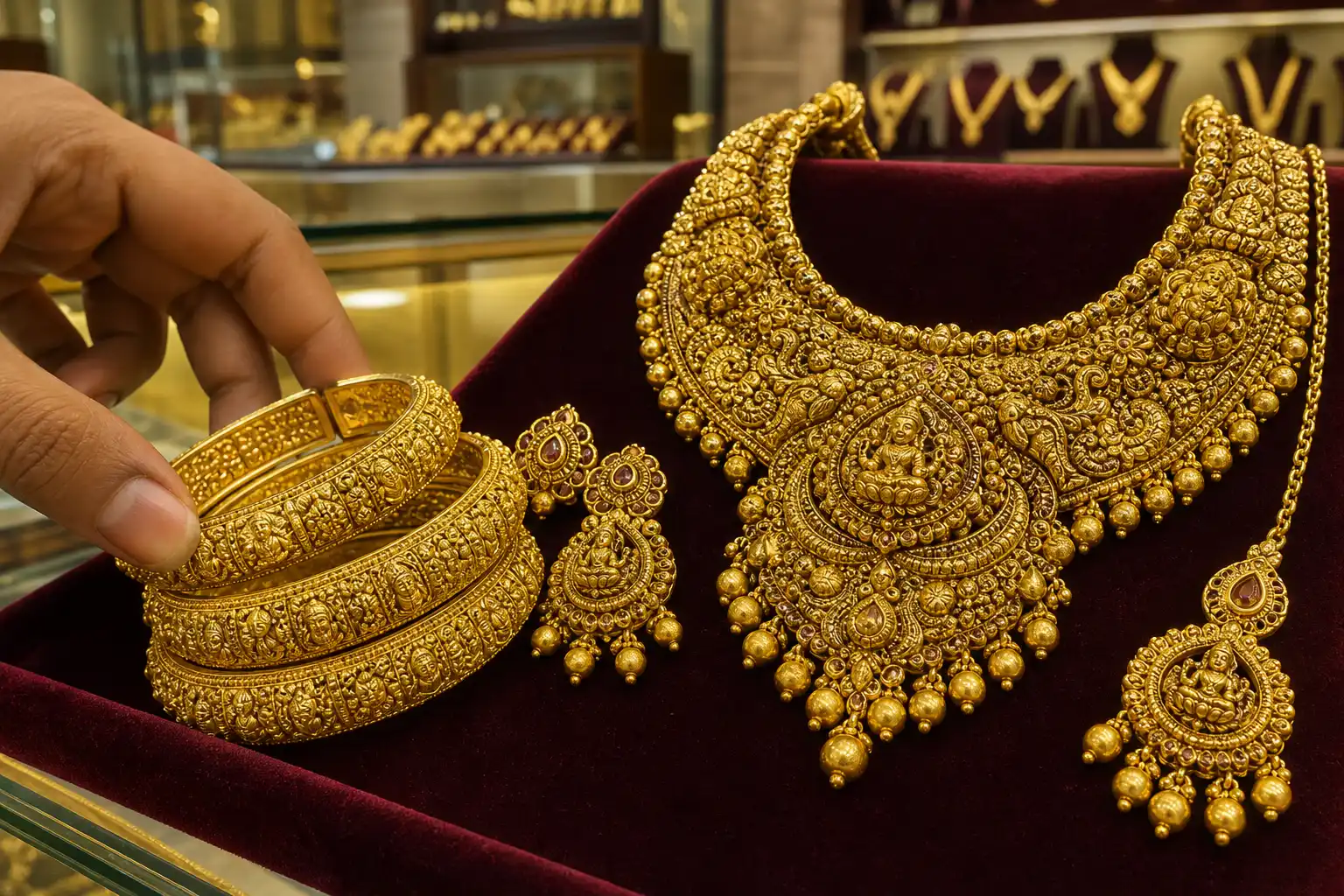
Gold in the city of pearls has always doubled as both ornament and investment; the source data itself notes buyers can sell holdings back for a reliable, guaranteed return. That dual role is precisely what makes a 15% duty and a rally-driven price sting more for Hyderabad than for a market where gold is bought only to wear.
Where Does Gold Go From Here?
Bank forecasts for the rest of 2026 range from a further rally past $6,000 an ounce to a decline back toward $4,000, and the split itself is the clearest signal that nobody has high conviction either way. The disagreement centers on one question: whether the US Federal Reserve cuts interest rates at all this year.
| Bank | 2026 Gold Call | Timeframe |
|---|---|---|
| J.P. Morgan | Averaging $6,000/oz | Q4 2026 |
| Morgan Stanley / UBS | $5,200/oz | 6 to 12 month view |
| Commerzbank | $5,000/oz (raised) | Year-end 2026 |
| Goldman Sachs | $4,900/oz (cut from $5,400) | Year-end 2026 |
| OCBC Bank | Expects decline | Through end of 2026 |
Goldman’s cut came after it stripped out any 2026 rate reduction from its Fed forecast, pushing expected easing to June 2027. J.P. Morgan’s own research still points toward $6,000 an ounce by the fourth quarter, arguing the central bank buying and de-dollarization trend has further to run. Morgan Stanley frames it similarly, describing a rally it expects to keep accelerating into 2026.
India has already lived through one Fed-driven wobble this year. Gold’s slide below Rs 1.5 lakh in June came on the back of shifting Fed-hike bets and softer oil, the same two levers now in play, in opposite directions, behind Monday’s move. Hyderabad’s rate card will keep answering to Washington and Tehran well before it answers to anything happening locally.
Frequently Asked Questions
Why did Hyderabad’s 22-carat gold rate rise while 24-carat gold fell on the same day?
The two are priced somewhat independently at the counter. Twenty-four-carat gold is close to pure (about 99.9% gold) and tracks the bullion market directly, while 22-carat gold is an alloy (about 91.6% gold mixed with metals like copper or zinc) that jewellers can reprice separately based on local demand and making-charge adjustments, which is why the two rates can diverge on a single morning even though they trend together over time.
What is the actual difference between 22-carat and 24-carat gold?
Twenty-four-carat gold is nearly pure and too soft for daily-wear jewellery, so it is mostly sold as coins, bars or investment-grade bullion. Twenty-two-carat gold is alloyed for strength and durability, making it the standard purity for the necklaces, bangles and wedding sets sold across Hyderabad’s showrooms.
Does the quoted Hyderabad gold rate include making charges and GST?
No. The published per-10-gram figure reflects only the metal’s value. Showrooms add making charges, which vary by design and by jeweller, plus applicable GST at the billing counter, so the final invoice runs higher than the quoted rate.
Will gold prices fall before Hyderabad’s next wedding season?
There is no consensus. OCBC Bank expects prices to keep declining through the rest of 2026, while J.P. Morgan and Morgan Stanley expect the rally to extend. Buyers timing a purchase around a season rather than a forecast are better served checking the live MCX rate than waiting for a dip that may not arrive on schedule.
How often do Hyderabad’s gold and silver rates update during the day?
The published rate reflects prices as of roughly 8am and can shift at any point afterward, since the underlying bullion market trades live throughout the day. Buyers planning a purchase should confirm the current rate at the counter rather than relying on the morning figure alone.
Disclaimer: Gold and silver rates cited here are sourced from local Hyderabad jewellers and national exchange data as of publication, are not a solicitation to buy or sell precious metals, and can change within hours; anyone transacting on these figures should verify live rates and consult a financial advisor first.
 ONGC licence frees Venezuela cash and operatorship talks
  Anthropic Hits $65 Billion Run Rate and Flips the AI Cash Test
  Supreme Court grounds the fare free-for-all with three-week clock
  Gold Nears $4400 as Soft Data Meets Oil Inflation Risk
  Nifty Slips as Zaggle Circuits and Dhoot Debuts Big
  Diesel Crack Tops $100 as Iran Rhetoric Lifts Crude