
 Ishan Crawford
 Hyundai Motor India reported a consolidated net profit of Rs 888.6 crore for the June quarter, down 35 percent from a year earlier, after a supplier fire and weaker West Asia exports cut volumes and margins. Revenue slipped just 0.5 percent to Rs 16,334.6 crore. Shares still climbed on the day and jumped further the next morning as management kept full-year targets and said production had already normalised.
The print looked ugly. Investors treated it as temporary.
The Numbers That Landed Hard
EBITDA fell 31 percent to Rs 1,511.7 crore. The margin compressed to 9.3 percent from 13.3 percent a year ago. PAT margin dropped to 5.4 percent from 8.3 percent. Total wholesales eased 1.3 percent to 178,082 units.
| Metric | Q1 FY27 | Q1 FY26 | Change |
|---|---|---|---|
| Revenue (Rs crore) | 16,334.6 | 16,412.9 | -0.5% |
| EBITDA (Rs crore) | 1,511.7 | 2,185.2 | -31% |
| EBITDA margin | 9.3% | 13.3% | -400 bps |
| Net profit (Rs crore) | 888.6 | 1,369.2 | -35% |
| Domestic units | 139,374 | 132,259 | +5.4% |
| Export units | 38,708 | 48,140 | -19.5% |
The official Q1 FY27 financial snapshot also shows sequential pressure from the March quarter. Discounts actually eased to 2.8 percent of sales from 3.4 percent, so the margin hit came from volume mix, higher input costs and fixed-cost absorption rather than heavy discounting.
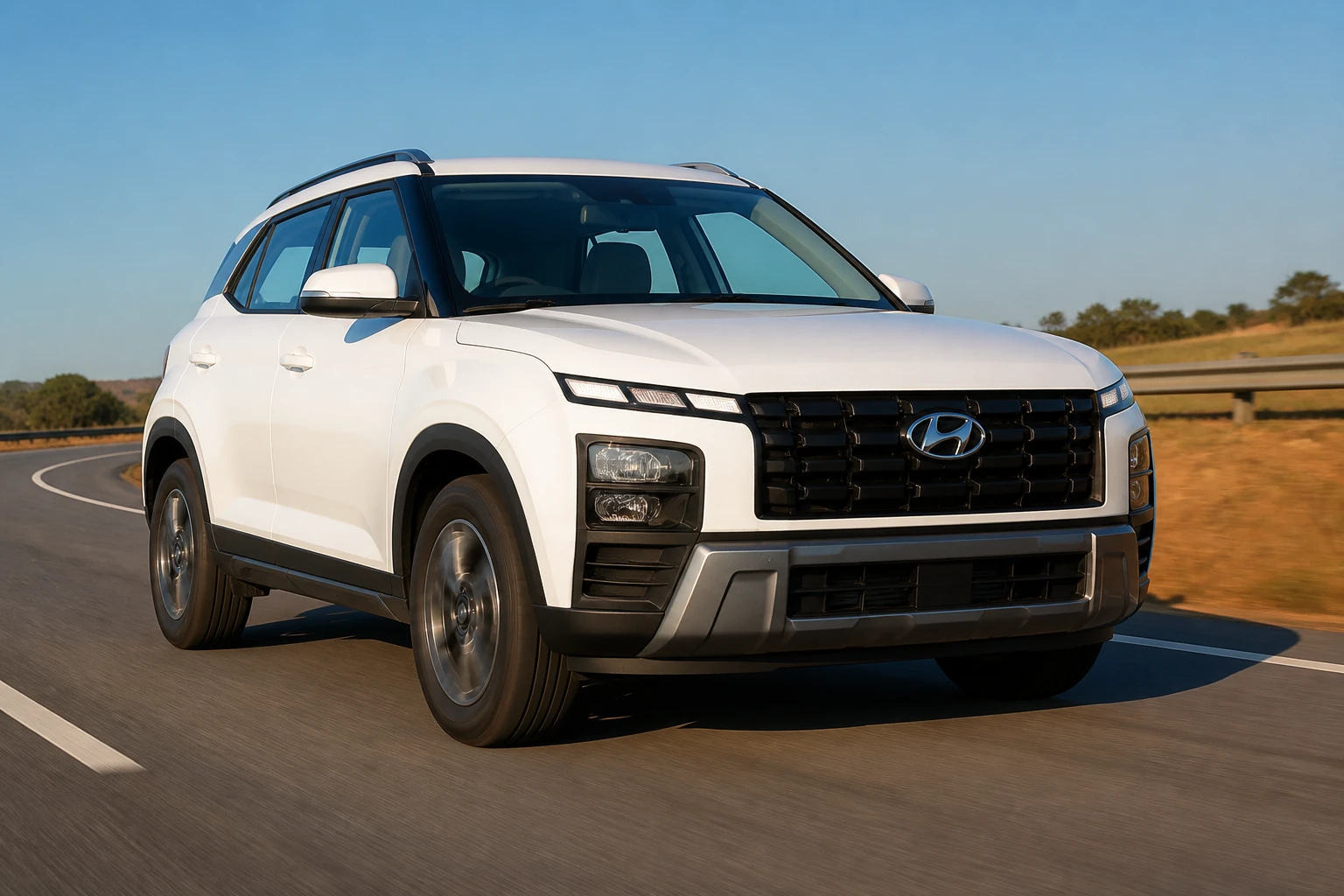
How a Supplier Fire Cost 13,900 Vehicles
A fire at Mobis India’s facility in early June knocked out supplies of audio components and other parts to Hyundai’s Chennai operations. Production loss reached about 13,900 units that month. Chennai recovered production pace by mid-June and returned to full normal operations from June 22. Pune and the second Chennai plant stayed largely unaffected.
- Early June 2026: Fire hits Mobis India supplier plant.
- Mid-June: Hyundai targets regain of production pace at the affected Chennai line.
- June 22: Full normalcy restored across facilities.
- July: Management says most of the lost volume already recovered inside the month.
Retail sales held up better than wholesales because dealer inventory covered the short gap. The episode still sliced high-margin models out of the mix for weeks and left fixed costs uncovered.
Exports Took the Heavier Blow
Exports fell 19.5 percent to 38,708 units. Management pointed to both the production halt and shipping plus geopolitical problems tied to the ongoing conflict in West Asia, a key destination. Industry-wide passenger vehicle exports still hit a record in the April-June quarter, up 8.8 percent, driven by Latin America. Hyundai’s mix left it more exposed to the Middle East corridor.
The company said it has already lifted shipments to other markets and carries a healthy order backlog. Left-hand-drive Exter dispatches have started. Venue is drawing strong export response. With plants running full, management expects the export rebound to show from July itself.
Domestic Demand Still Showed Its Teeth
Domestic wholesales rose 5.4 percent to 139,374 units even with the June disruption. April and May had grown 13 percent combined before the fire hit. SUVs stayed at about 70 percent of the mix. Rural contribution hit an all-time high near 26 percent. CNG reached a record 18.2 percent of domestic sales, with Aura and Exter posting their highest-ever CNG shares.
Venue posted its highest-ever quarterly domestic volume. That single model strength, plus rural and CNG traction, kept the domestic story intact while exports and one plant line struggled.
- Rural share: 25.9-26 percent, all-time high.
- CNG contribution: 18.2 percent, highest ever quarter.
- SUV mix: roughly 70 percent.
- Venue: record quarterly domestic sales.
Industry passenger vehicle dispatches rose more than 24 percent in June. Maruti, Mahindra and Tata posted strong double-digit gains that month while Hyundai’s domestic June number fell about 10 percent. The fire explains most of the lag. Peers such as the refreshed Maruti Brezza facelift competition kept pressure high in the compact SUV space Hyundai also fights hard.
Guidance Stays Put and the Pipeline Fills
Managing Director and CEO Tarun Garg called the quarter challenging yet repeated the full-year targets without change: 8-10 percent year-on-year volume growth in both domestic and export markets, and EBITDA margin of 11-14 percent.
Q1 FY27 was a challenging quarter affected by multiple headwinds impacting volumes and profitability. With 100 percent normalization of production, coupled with healthy demand environment and upcoming product pipeline, recovery is likely to gain pace from Q2 onwards across both domestic and export businesses.
Garg said that on the results call. He also noted that most of the June production loss had already been made good in July. Pune’s third shift now starts in October, two years earlier than the original mid-2028 plan, because Venue demand is strong at home and abroad. A new mid-size SUV arrives in the festive season. Hyundai’s first mass-market dedicated EV for India is due in the second half, with day-one PLI eligibility targeted through battery pack and power electronics localisation. Green-fuel models (CNG, hybrid, EV) are aimed at more than half of sales by 2030.
Three cumulative price increases of roughly 100 basis points have already been taken this year. Management prefers mix, cost control and disciplined discounts over further aggressive hikes. Commodity costs, especially precious metals and copper, remain a watch item. CAFE 2 compliance is expected to carry zero penalty through FY27 on internal assessment.
Why the Market Looked Past the Print
Shares of Hyundai Motor India ended 2.38 percent higher at Rs 2,040.30 on results day. The next session they rose another 7 percent-plus at the open as brokerages repeated Buy ratings and targets in the Rs 2,300-2,500 zone. The reaction mirrors how investors treated another major Indian Q1 earnings print that mixed near-term noise with longer structural stories: the market discounted the one-off and paid for the recovery path.
On X, the dominant take after the numbers landed was that the worst of the production hit was already behind the company and that festive launches plus export normalisation would drive the second half. Crowd commentary focused less on the 35 percent profit drop and more on the intact guidance and accelerated Pune capacity. That reading matches the official timeline of the fire at Mobis India facility and the July recovery claim.
Risks remain real. Export shipping lanes tied to West Asia can stay disrupted. Input costs could stay sticky. Industry growth may slow as base effects fade. A single-supplier event already showed how quickly volumes can vanish. Yet the same quarter that delivered the worst margin print also delivered record CNG and rural numbers, a Venue high, and concrete capacity and product dates that investors chose to own.
Production is back. The lost units are largely recovered. The next test is whether the festive mid-SUV and the mass EV convert that operational reset into the 8-10 percent volume growth and 11-14 percent margin Hyundai still promises for the full year.
 ONGC licence frees Venezuela cash and operatorship talks
  Anthropic Hits $65 Billion Run Rate and Flips the AI Cash Test
  Supreme Court grounds the fare free-for-all with three-week clock
  Gold Nears $4400 as Soft Data Meets Oil Inflation Risk
  Nifty Slips as Zaggle Circuits and Dhoot Debuts Big
  Diesel Crack Tops $100 as Iran Rhetoric Lifts Crude