
 Ishan Crawford
 Garmin’s first screen-free fitness band went on sale this week for a flat $199.99, no monthly bill attached, no app lockout waiting on the other side. The CIRQA Smart Band tracks heart rate, sleep, stress and more than 80 activities for ten days on a single charge, and Garmin is not asking anyone to keep paying after the purchase.
That single detail matters more than the spec sheet. CIRQA is the second major hardware launch in under three months built specifically to undercut the subscription model that Whoop turned into the defining feature of screen-free fitness bands. Google got there first with the Fitbit Air in May. Garmin just got there second, and bigger.
Garmin Cuts the Subscription Cord With a $199.99 Band
Garmin announced the CIRQA Smart Band on July 21 and opened sales the same week, with no preorder window in between. It costs $199.99 in the US, £179.99 in the UK and €199.99 in the EU, in both S-M and L-XL sizing.
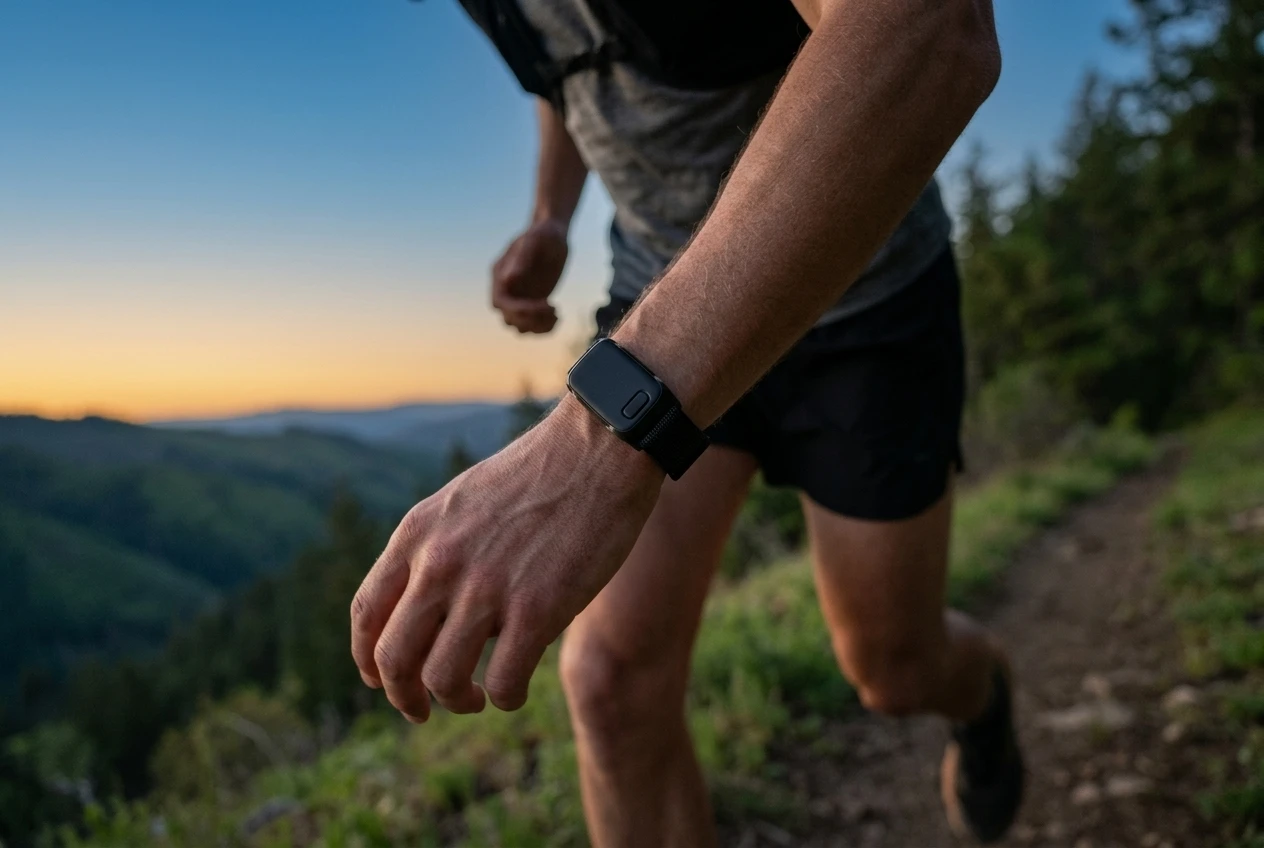
The band has no display, no onboard GPS chip and a single physical button on the side. Press it to start a favorite tracked activity; everything else, from heart rate to sleep stages, streams quietly to the Garmin Connect app over the day. It charges over USB-C and launches in Black, French Gray, Captain Blue and Mauve, worn on either the wrist or the upper arm.
Garmin is explicit that the core experience costs nothing beyond the hardware. An optional Connect+ subscription adds extras like guided Live Activity views, but sleep scoring, Body Battery energy tracking, stress monitoring, training readiness, HRV status and VO2 max all sit behind the free tier.
- Heart rate and Pulse Ox tracked continuously, day and night
- Body Battery energy monitoring carried over from Garmin’s watch lineup
- 80-plus activity profiles, detected automatically or started with the side button
- Live location sharing so friends or family can see where you are
- Menstrual and pregnancy tracking, including skin-temperature-based ovulation estimates
Connected GPS runs through a paired Android or iPhone, which is how CIRQA gets route data without carrying its own chip. It is the same trade Whoop and Fitbit both made with their own screen-free hardware, and it keeps the battery running for over a week instead of a day or two.
Whoop Built a Business on a Fee That Never Stops
Whoop never sold a fitness band the way Garmin just did. It sells a membership, and the hardware ships free inside it. Current pricing runs from $199 a year on the entry-level One plan up to $359 a year for Life, which bundles the medical-grade Whoop MG device, according to pricing breakdowns from tracking sites TrackerVS and RunnersPicks. The middle Peak tier, at $239 a year, is the plan most new members land on.
Stop paying and the band stops working. There is no offline mode: without an active membership, the device will not record or sync a single reading, and Whoop does not sell the hardware on its own at any price. That arrangement is the entire business model, and it is also the single biggest thing Garmin and Google are now selling against.
Whoop’s members found out exactly how firm that arrangement is in 2025, when the company launched the Whoop 5.0 and initially charged existing members a $49 to $79 upgrade fee, or a 12-month subscription extension, to get the new hardware. That contradicted an earlier promise of free upgrades after six months of membership, and members pushed back hard enough that Whoop reversed the policy within days.
Like any company, we from time to time update our commercial policies.
That was Whoop’s explanation to Bloomberg at the time, cited in TechCrunch’s reporting on the backlash. It is the kind of line that sticks around, and it is exactly the sentiment Garmin and Google are now pricing their own bands against.
The Three-Way Math on Price, Battery and Fine Print
Laid side by side, the three screen-free bands on the market right now split cleanly on the question that actually decides who buys them: does the meter keep running after checkout.
| Band | Upfront Price | Ongoing Cost | Battery Life | Subscription Required |
|---|---|---|---|---|
| Garmin CIRQA | $199.99 | None for core features | Up to 10 days | No |
| Whoop 5.0 | Bundled into membership | $199 to $359 per year | Up to 14 days | Yes, mandatory |
| Google Fitbit Air | $99.99 | $9.99 a month, optional | Up to 7 days | No |
Run the Whoop math forward and the gap widens fast. Even its cheapest tier, at $199 a year, adds up to $597 over three years. The more common Peak plan, at $239 a year, runs $717 over that same stretch. CIRQA’s total cost of ownership stops at $199.99, full stop, forever.
Whoop still wins on battery, at up to 14 days against CIRQA’s 10 and the Fitbit Air’s 7. It also still offers ECG and blood pressure features on its top-tier MG hardware that neither Garmin nor Google currently match. That is the actual remaining argument for paying the fee.
Google Got There First, by Ten Weeks
Garmin is not the first big name to make this exact bet this year. Google’s Fitbit Air went up for preorder on May 7 at $99.99, roughly ten weeks before CIRQA arrived, and it was built on the identical pitch: screen-free tracking, a week of battery, and no subscription required for the core features.
Google’s own announcement of the Fitbit Air bundled in a three-month trial of Google Health Premium with every purchase, a $9.99-a-month add-on that unlocks the Google Health Coach’s personalized training plans once the trial ends. According to Google’s official Fitbit Air product page, the core tracking, sleep and heart rate features work without ever touching that subscription.
Press coverage at the time openly called it a Whoop killer. Ten weeks later, Garmin priced CIRQA exactly where it needed to sit to make the same case to a different customer, one already living inside Garmin’s Connect ecosystem with an Edge computer or a Forerunner watch on the shelf.
What CIRQA Leaves Out
None of this makes CIRQA a straight upgrade over Whoop’s hardware. Garmin left real capability on the table to hit its price and battery targets, and buyers comparing spec sheets will notice.
- No display and no onboard GPS chip, so outdoor route data depends entirely on a paired phone
- Elevate Gen 4 optical sensor, one generation behind the newer Gen 5 pod Garmin already ships in its Index Sleep Monitor
- Upper-arm accessory bands launch in black only, with wider color choice reserved for the wrist strap
- Guided Live Activity views and some coaching tools sit behind the optional Connect+ plan
- No ECG or blood pressure sensing, features Whoop’s top-tier MG hardware already offers
Garmin has also teased additional strap colors, Citron Gray, Dark Olive and French Blue, beyond the four available at launch, suggesting a slower regional rollout rather than a full four-color lineup everywhere on day one.
Can a Screen-Free Band Track Your Period?
Yes. CIRQA tracks skin temperature overnight to estimate ovulation and predict menstrual cycles, and it syncs that data with Natural Cycles, an FDA-cleared birth control app, giving Garmin a genuine foothold in reproductive health tracking that neither Whoop nor the Fitbit Air currently advertises this directly.
It is a meaningful addition, and also a reminder that wrist-based sensors are estimating, not diagnosing. Wearable skin-temperature readings can shift with sleep quality, alcohol, illness or a warm room, all of which can throw off an ovulation estimate without the wearer knowing why. That is true of any band making this kind of claim, not just Garmin’s, and it is worth understanding what a smartwatch can and cannot verify about your health before treating any of it as a medical result rather than an estimate.
Garmin is leaning into the space anyway, and pairing with an already FDA-cleared app is a smarter route than claiming clearance itself. It also gives CIRQA a use case Whoop’s subscription pitch has never centered the way Garmin now has.
Whoop’s Next Move Is the Open Question
Whoop has not announced any pricing change in response to either launch. Its membership model still guarantees free hardware upgrades to active subscribers, still locks data behind a login, and still gives serious athletes the longest battery life and the only ECG and blood pressure sensing in this category.
What it no longer has is the argument that a subscription is simply how screen-free bands work. Two of the biggest names in wearables just shipped proof otherwise, ten weeks apart, at two very different price points. Whoop’s fee now has to justify itself on features alone.
Frequently Asked Questions
Is the Garmin CIRQA Smart Band Waterproof?
CIRQA carries a 5 ATM water resistance rating, putting it in line with Garmin’s watch lineup for swimming and showering, though Garmin does not market it as a dedicated swim tracker the way some dive-rated devices are.
What Happens to Whoop’s Data If You Stop Paying?
Historical data stays viewable for 30 days after a membership lapses, then gets locked entirely. Whoop’s terms also require canceled members to return the hardware itself, since the device was never sold outright.
Does the Garmin CIRQA Work With an iPhone?
Yes. CIRQA pairs with both Android and iPhone through the Garmin Connect app, and connected GPS works on either platform since the tracking itself relies on the paired phone’s location chip rather than one built into the band.
Will Garmin Sell the CIRQA in More Colors Later?
Garmin has already referenced Citron Gray, Dark Olive and French Blue alongside the four launch colors, Black, French Gray, Captain Blue and Mauve, suggesting a staggered rollout across regions or seasons rather than a single simultaneous release.
Does Google’s Fitbit Air Require a Subscription Too?
Core tracking, including sleep, heart rate and workout detection, works without paying anything. Google Health Premium, at $9.99 a month after an included three-month trial, only unlocks the Google Health Coach’s personalized plans, not the base metrics.
Disclaimer: This article is for informational purposes only. Wearable health and fertility tracking, including menstrual cycle and ovulation estimates, is not a substitute for medical advice or diagnosis; consult a healthcare provider before making contraceptive or health decisions based on device data. Pricing and figures are accurate as of publication.
 ONGC licence frees Venezuela cash and operatorship talks
  Anthropic Hits $65 Billion Run Rate and Flips the AI Cash Test
  Supreme Court grounds the fare free-for-all with three-week clock
  Gold Nears $4400 as Soft Data Meets Oil Inflation Risk
  Nifty Slips as Zaggle Circuits and Dhoot Debuts Big
  Diesel Crack Tops $100 as Iran Rhetoric Lifts Crude