

Edinburgh’s Filmhouse, long a cornerstone of the UK’s independent cinema scene, is set to reopen its doors later this month after a dramatic three-year closure—and it’s not coming back quietly.
Instead of chasing the digital future, the new Filmhouse is leaning into the past. With plans to screen 70mm versions of Oppenheimer and The Brutalist, the cinema’s new leadership is wagering on a rising wave of interest in celluloid—a medium once all but abandoned in an era of streaming and 4K projectors.
Film-on-Film: More Than Nostalgia
“There’s something unique about watching film on film,” said Andrew Simpson, the Filmhouse’s newly appointed executive director. “It’s not just nostalgia—it’s about colour, grain, warmth, and the material connection to cinema history.”
Simpson, previously with Newcastle’s Tyneside Cinema, believes the tactile experience of analogue projection can tap into the same cultural longing that revived vinyl records. The Filmhouse, he says, is one of the few venues in the UK that can genuinely deliver that experience.
Behind its revival lies a rare collection of heritage equipment: 70mm, 35mm, 16mm, and even 8mm projectors, alongside broadcast-standard Beta SP tape systems—an arsenal few surviving cinemas can rival. “We’re here to celebrate the full diversity of film,” Simpson added, “and being able to screen movies on their original formats is a crucial part of that.”
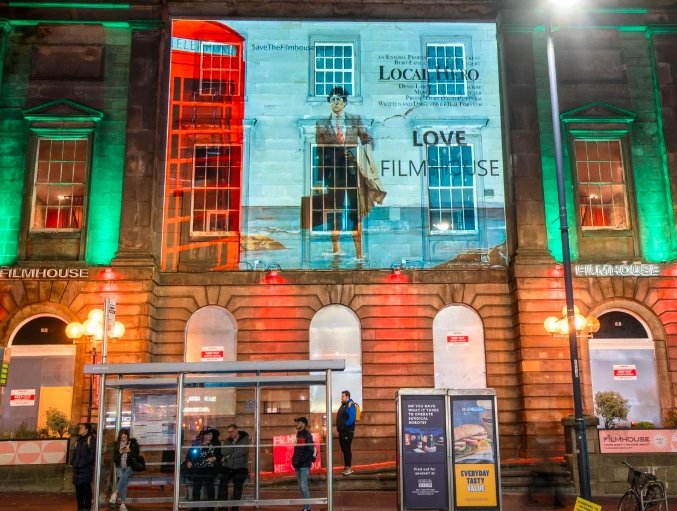
A Community Rises to the Challenge
The reopening marks the triumphant end of a grassroots campaign that began in despair. The Filmhouse closed abruptly in October 2022 when its then-parent organisation, the Centre for the Moving Image (CMI), collapsed financially, shuttering both the Edinburgh and Aberdeen cinemas and halting the Edinburgh International Film Festival.
The closure sent shockwaves through Scotland’s arts scene. But the response was swift and passionate.
The “Open the Doors” campaign raised more than £324,000 in community funding and attracted heavyweight backing—from actor Brian Cox and director Charlotte Wells to local MSPs and cultural agencies. A further £1.5 million in support came from the UK Government, Screen Scotland, and Creative Scotland.
Simpson calls the result “extraordinary,” and believes it offers a hopeful template for other grassroots cultural movements. “This should give real hope to communities fighting for the institutions they love,” he said.
Heritage Meets Modern Cinema
The refurbished venue will feature four screens, upgraded seating, and a fully reopened bar and restaurant. Though digital projectors remain, the analogue systems—some of which date back decades—are being positioned as the venue’s unique selling point.
Interest in these formats is more than theoretical. Simpson points to the Glasgow Film Theatre’s recent screening of The Brutalist in 70mm, which outperformed the film’s original digital release. “Audiences are responding,” he said. “They’re hungry for something tactile, authentic, and immersive.”
A Festival Home Once More
The return of the Filmhouse is expected to restore its role as a hub for festivals and film lovers alike. While the Edinburgh International Film Festival was rescued in 2023 and relaunched independently in 2024, the Filmhouse’s comeback adds critical infrastructure to the city’s cinema ecosystem.
Its sister venue, Aberdeen’s Belmont Cinema, has also reopened, bringing a full-circle moment to what was once seen as an irreversible decline.
As for the Filmhouse, the 25-year lease now secured from its landlord—pub chain Caledonian Heritable—means there’s room to dream big again.
“This is about more than movies,” Simpson reflected. “It’s about memory, community, and the joy of shared experiences. We’re not just reopening a cinema—we’re reigniting a cultural flame.”