
 Ishan Crawford
 The Delhi High Court has ordered the winding up of Paytm Payments Bank Limited and appointed former State Bank of India chief general manager Girikumar M Nair as official liquidator, acting on a Reserve Bank of India petition after the regulator cancelled the bank’s licence in April.
Justice Anish Dayal accepted the RBI’s plea under Sections 38 and 39 of the Banking Regulation Act, 1949. Nair has exercised the powers of the bank’s board since the July 8 order. A follow-up order on July 22 completed the framework. The RBI has confirmed the High Court winding-up orders and restated that the bank holds enough liquidity to repay every depositor in full.
Court Clears Liquidator and Legal Advisors
Nair will be paid ₹5.5 lakh a month from the bank’s assets. He must file a preliminary report with the court within two months of the winding-up order. On Tuesday the court also allowed him to retain AZB & Partners as legal advisor under Section 291 of the Companies Act, 2013. The firm had earlier advised the RBI on matters linked to the bank.
Paytm Payments Bank raised no objection to Nair’s appointment. Additional Solicitor General Raghav Shankar appeared for the RBI. Senior Advocate Dayan Krishnan led the bank’s counsel.
- Liquidator assumes full board powers from July 8, 2026
- Monthly remuneration fixed at ₹5.5 lakh drawn from bank assets
- Preliminary report due inside two months
- AZB & Partners cleared to advise on compliance and any fresh proceedings
The bank’s board had approved voluntary winding up in principle on April 25. Shareholders passed a special resolution. When the RBI petition first reached the High Court on May 29 the bank sought eight weeks to prepare a proposal for depositors. On June 14 the board resolved not to make any proposal. That decision reached the RBI on June 16. The court then allowed the petition.
“The prayer of the RBI seeking winding up of the company under Section 38 read with Section 39 of the Banking Regulation Act, 1949 is, therefore, accepted,” the July 8 order stated.
Licence Cancel Followed Years of Escalating Curbs
The RBI cancelled the banking licence on April 24, 2026, under Section 22(4) of the Banking Regulation Act. The bank was barred from all banking business from close of business that day. The regulator cited four grounds: affairs conducted detrimentally to the bank and depositors; management character prejudicial to depositors and public interest; no useful purpose in allowing it to continue; and failure to meet conditions of the payments bank licence.
- March 11, 2022, RBI bars new customer onboarding and orders an independent IT audit after KYC and AML findings.
- October 2023, RBI imposes a ₹5.39 crore penalty for persistent non-compliance.
- January 31 and February 16, 2024, Fresh Section 35A directions stop all new deposits, credits and top-ups in accounts, wallets and prepaid instruments, with phased effect into March 2024. Withdrawals of existing balances remain allowed.
- April 24, 2026, Licence cancelled; RBI announces it will seek winding up.
- July 8 and 22, 2026, Delhi High Court orders winding up and confirms liquidator powers.
Earlier audits had flagged multiple PAN cards linked to large numbers of accounts, delayed cyber reporting, end-of-day balance breaches and Video KYC connections from outside India. The bank launched in November 2017 after in-principle approval in 2015 and briefly held scheduled bank status in 2021. The compliance arc never fully closed.
Depositors Face Full Repayment, Not Haircuts
As of March 31, 2025 the bank held customer deposits of ₹1,395.22 crore across wallets, current and savings accounts, plus ₹33.13 crore in gift instruments. At its peak it served more than 31.5 million savings customers and wallets linked to roughly 350 million registered users, with about 50 million wallets still carrying balances when the 2024 deposit freeze began.
| Metric | Figure | Date / Context |
|---|---|---|
| Customer deposits | ₹1,395.22 crore | March 31, 2025 |
| Gift instruments | ₹33.13 crore | March 31, 2025 |
| Peak savings customers | Over 31.5 million | Earlier peak |
| Registered wallets (peak link) | ~350 million | Earlier peak |
| Active-balance wallets at freeze | ~50 million | Early 2024 |
The RBI has repeated that liquidity covers the entire deposit liability. Deposit Insurance and Credit Guarantee Corporation cover of ₹5 lakh per depositor sits as a backstop that may not be needed. Most active users had already shifted relationships after the 2024 freeze; roughly 90 percent of Paytm UPI users held accounts at other banks, and only about 15 million were exclusively dependent on PPBL. The @paytm UPI handle was migrated through NPCI partner banks so payments continued.
Repayment timeline now rests with the liquidator’s claims process under court supervision. Depositors should watch RBI releases and any notices from Nair’s office. No haircut is expected on the reported figures.
One97 Keeps the Brand and the App Running
One97 Communications, the listed parent that owns the Paytm brand, moved quickly to separate itself. In an April stock exchange filing that PPBL would cease to be an associate, the company said it had no exposure or material business link with the bank and that its investment had already been fully impaired as of March 31, 2024. Vijay Shekhar Sharma holds 51 percent of PPBL; One97 holds 49 percent.
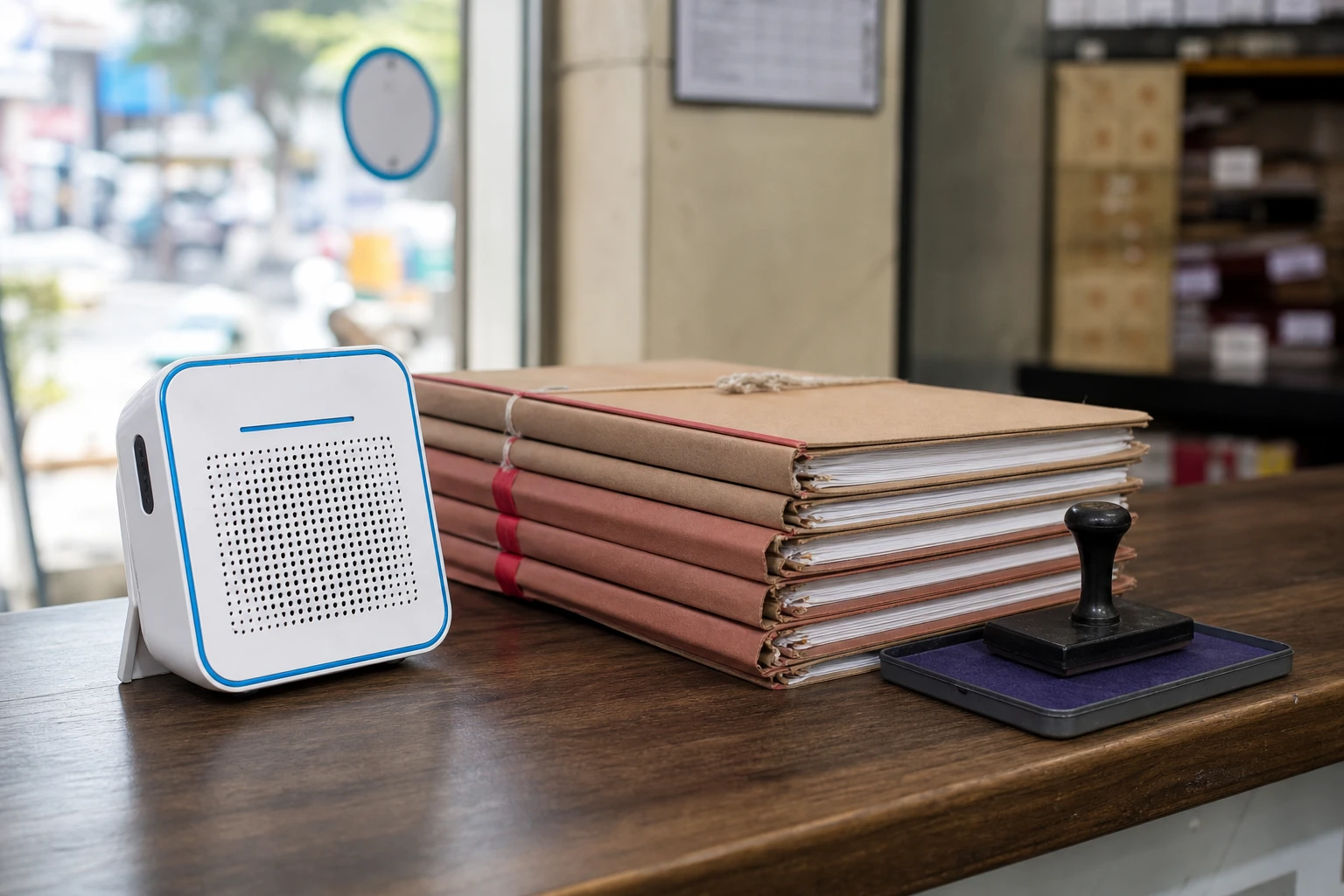
Core services never stopped. The Paytm app, UPI payments via partner banks, merchant QR codes, Soundbox devices, card machines and Paytm Gold continue. Merchant settlement had already shifted to Axis Bank and other partners after the 2024 curbs. One97 told investors the winding up would not materially affect its business, operations or financial condition.
Share-price damage from the earlier crackdown was real. The stock fell sharply in early 2024 and later recovered ground but remained below its 2021 IPO level into late July 2026. Revenue and UPI market share also contracted through the transition year. The ring-fence held on the product side.
Payments Bank Survivors Face the Same Constraints
Eleven in-principle licences were issued in 2015-16. Only a handful ever became operational. Aditya Birla Payments Bank and others exited years ago. With PPBL now in liquidation the active list is thinner still: Airtel Payments Bank, India Post Payments Bank, Fino Payments Bank, Jio Payments Bank and NSDL Payments Bank.
- Deposit cap remains ₹2 lakh per account
- No lending or credit-card powers
- 75 percent of deposits must sit in government securities
- UPI MDR has been zero for large volumes since 2020, starving fee income
- Government incentive schemes have covered only a fraction of actual costs
Analysts have long noted that high-volume, low-margin economics leave little room for heavy compliance investment. Fino has explored a small-finance-bank path. A modest MDR on large-merchant UPI remains under discussion with no firm timeline. The PPBL sequence shows the RBI will walk a non-compliant payments bank through every stage to extinction rather than settle for repeated fines.
Full Supervisory Ladder Now Has a Public Precedent
This is the first time the RBI has taken a major fintech-linked bank from customer-onboarding bans through deposit freezes, licence cancellation and court-ordered liquidation. Earlier episodes involving other banks or NBFCs stopped short of a complete wind-up of a high-profile digital player. The signal reaches every remaining payments bank and every fintech that holds or seeks a banking-adjacent licence.
Public conversation on X quickly mixed relief that the Paytm app still works with residual confusion between the bank entity and the brand. Political commentary appeared alongside dry notes that “an era” had closed. The sharper observation is simpler: users who treated the bank and the app as one thing discovered the legal separation only when the bank disappeared. That separation is exactly what One97 engineered after 2024.
The same regulator that has made other recent RBI enforcement referrals has now completed its longest-running payments-bank case. Depositors are protected by the liquidity buffer. The parent continues. The model that tried to serve hundreds of millions with thin economics and repeated KYC lapses has been closed by court order.
Nair’s preliminary report will set the administrative pace for claims. Until then the facts are fixed: the licence is gone, the liquidator is in control, and every reported rupee of deposits is covered.
Frequently Asked Questions
Will depositors of Paytm Payments Bank get their full money back?
Yes. The RBI has stated repeatedly that the bank holds sufficient liquidity to repay its entire deposit liability upon winding up. DICGC insurance of up to ₹5 lakh per depositor remains available as a statutory backstop but is not expected to be required given the liquidity assurance.
Does the winding-up order shut down the Paytm app or UPI payments?
No. One97 Communications has confirmed that the Paytm app, UPI services through partner banks, merchant QR codes, Soundbox devices, card machines and related products continue without interruption. The payments bank was a separate legal entity whose banking licence was cancelled.
What exactly is a payments bank under RBI rules?
A payments bank can accept deposits (subject to a per-account cap, currently ₹2 lakh), issue prepaid instruments and facilitate payments and remittances, but it cannot lend or issue credit cards. At least 75 percent of deposits must be invested in government securities.
Who is Girikumar M Nair and what powers does he hold?
He is a former chief general manager of State Bank of India. The Delhi High Court appointed him official liquidator with effect from July 8, 2026. He exercises all powers of the PPBL board under the Banking Regulation Act and applicable Companies Act provisions, and he will oversee asset realisation and depositor repayment under court supervision.
Which other payments banks are still operating in India?
After PPBL’s exit the main operational names include Airtel Payments Bank, India Post Payments Bank, Fino Payments Bank, Jio Payments Bank and NSDL Payments Bank. Several of the original eleven licencees never launched or have already exited.
 Scotland’s Facial Recognition Push Sparks Mask Ban Call
 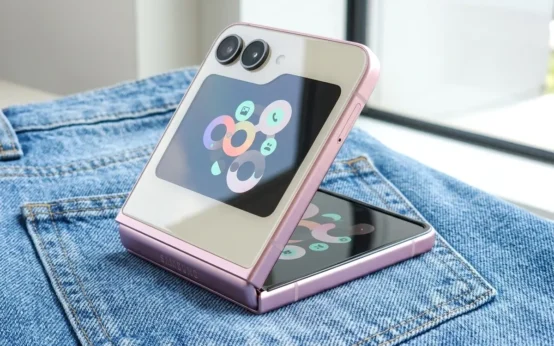 Galaxy Z Flip 8 Hits $799 Only If Your Trade-In Qualifies
  If England Had Kept Water Public Like Scotland
 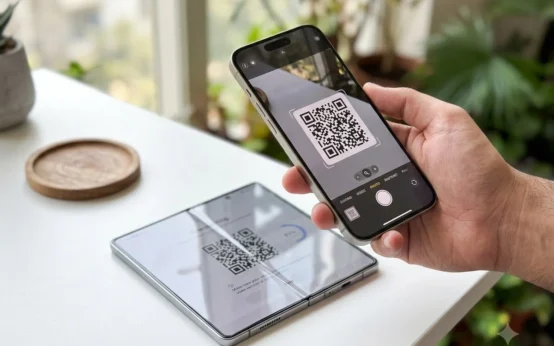 Samsung Smart Switch Now Moves Passwords and eSIM From iPhone
  Old Firm Spend Pulls Clear as Premiership Rivals Patch Squads
 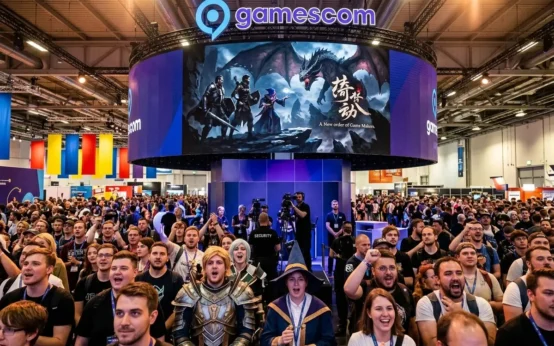 Chinese Studios Quietly Seize the Gamescom Stage