
 Ishan Crawford
 Big Walk holds a 94 Metascore on PC with 15 reviews, the highest of any 2026 release so far and tied only with the smaller shooter Sektori. The co-op adventure from House House, makers of Untitled Goose Game, launched August 4 on PC, PS5 and Nintendo Switch 2 for $20.
Critics call it a triumph of hangout design and communication puzzles. Bigger titles sit several points behind. The gap has held through the early wave of reviews, giving the small Melbourne team an unexpected perch at the top of the year.
Funny Little Guys and Speechless Puzzles
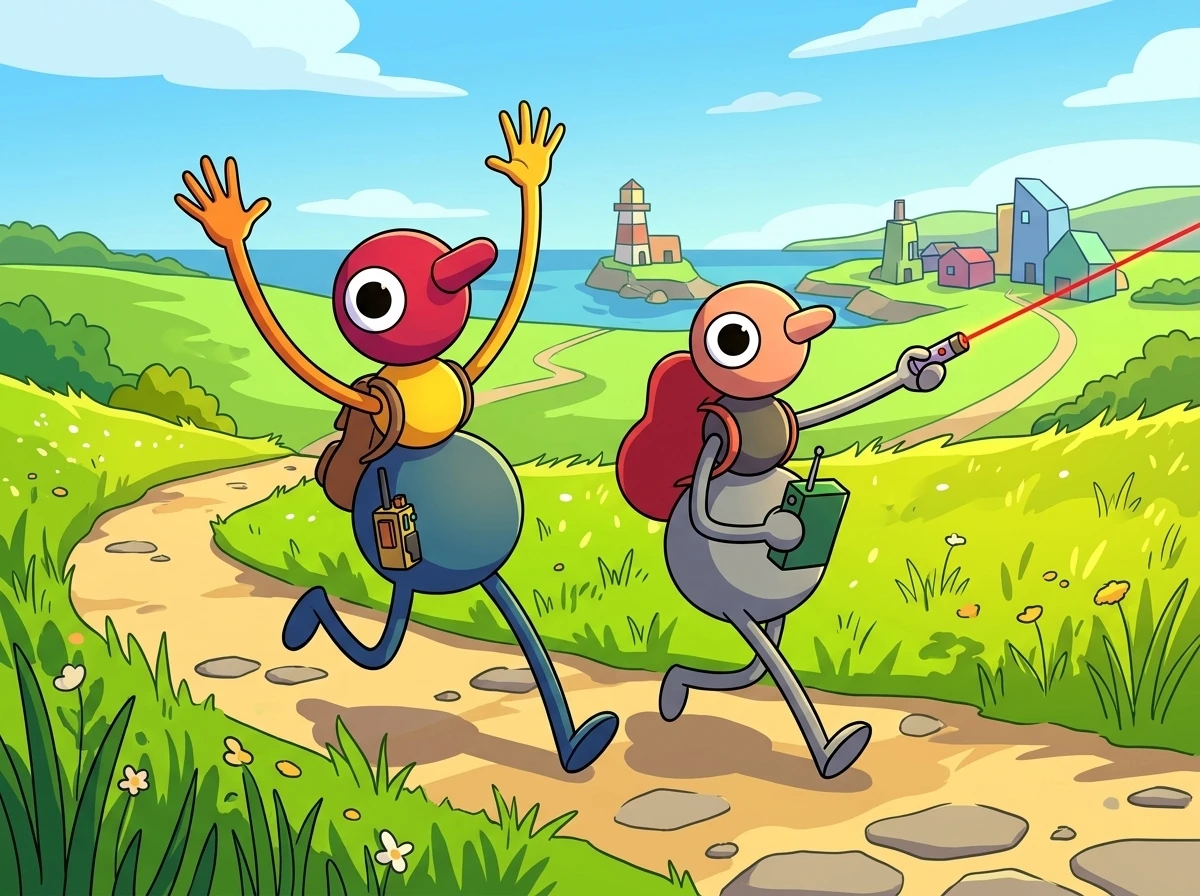
Big Walk is a cooperative multiplayer adventure about teamwork and talking. Players explore a wide-open island world full of challenges, puzzles and discoveries. Groups must stay in contact with tools and toys, then invent new ways to communicate when they suddenly go speechless.
The official pitch puts friendship first. Adventuring aside, there is plenty of time to hang out, watch a sunset or steal a friend’s binoculars and kick them into the ocean. Spending time with friends is the best part of a big walk, per the official press kit description and features.
It supports flexible counts from a focused two-player run up to a chaotic 12. Puzzles scale. Cross-play works across the available platforms. Proximity voice chat fades with distance, echoes in corridors and crackles through walkie-talkies. Arms let players point, wave or flail when words fail. Tools include laser pointers, megaphones, flares, whiteboards, cowbells and a big golden head.
- Proximity voice that reacts to space and walls
- Gesture system for speechless moments
- Hand-crafted start-to-finish adventure with an ending
- Open-world pacing at the group’s own speed
House House calls it a walker-talker. The tone stays light, funny and deliberate rather than competitive. That mix of open pacing and forced collaboration is what keeps sessions from collapsing into pure sightseeing.
How the 2026 Scoreboard Looks Right Now
Forbes and Metacritic’s current-year ranking put Big Walk at the top of the pile. Sektori matches the 94 but carries fewer reviews in the comparison that matters. Larger releases trail.
| Game | Metascore | Notes |
|---|---|---|
| Big Walk | 94 | PC, most reviews among leaders |
| Sektori | 94 | Twin-stick shooter |
| Forza Horizon 6 | 90 | Open-world racer |
| Mina the Hollower | 90 | Indie action |
| Doom: The Dark Ages, Revelations | 89 | Expansion |
| And Roger / Schrodinger’s Call / Pokemon Pokopia / Resident Evil Requiem | 89-90 | Various |
Crimson Desert, one of the year’s biggest surprise commercial stories, sits far lower around 77. Fans and critics split hard on that one. The pattern is clear: pure designed multiplayer and tight concepts are winning the critic column while sprawling single-player or service titles fight for second tier.
The spread between the two 94s and the cluster of 89-90 scores leaves little room for accident. Reviewers are sorting games by clarity of idea as much as by production scale.
House House Built This Reputation on Mischief
House House formed in Melbourne in 2014. The small team first shipped Push Me Pull You, then Untitled Goose Game in 2019. That goose title earned strong reviews, multiple Game of the Year awards at industry ceremonies, and more than a million copies sold by the end of its launch year. It topped Switch charts in several countries.
- 2014 House House forms in Melbourne
- Push Me Pull You becomes the studio’s first shipped title
- 2019 Untitled Goose Game launches, collects Game of the Year awards, passes a million copies by year end and tops Switch charts in several countries
- 2026 Big Walk arrives with Panic publishing again
Big Walk continues the streak of surprising, funny, friendly games that feel unlike anything else. The studio avoids repeating itself. Goose was solo chaos in a village. This is shared exploration and forced collaboration. Panic publishes again, the same partner that helped the goose reach a wide audience.
The leap makes sense once you play. Both games reward curiosity and light mischief. Both trust players to invent their own fun inside clear systems. Critics who loved the goose are now handing out 10s and 5/5s for the walk.
What the Perfect Scores Praise
Insider Gaming gave 10/10 and wrote that not since Astro Bot in 2024 had a game made so much of an impression, solidifying a friendship even when one partner’s brainless moments caused frustration. Eurogamer awarded 5/5 for a funny, exciting and deeply rewarding multiplayer adventure that mixes knockabout fun with surprisingly big ideas. PCGamesN called it a triumph and a wonderful exercise in hanging out with mates while working the grey cells in a quirky beautiful environment.
Big Walk is one of the best co-op games ever.
GameSpot’s Mark Delaney used that line while praising the hands-off world that lets friend groups carve their own adventure through shared learning. Checkpoint Gaming said it evolves the social game format until it feels almost unrecognisable, examining communication in ways rarely seen. Restart.run highlighted how the game massages the part of the brain that wants curiosity and interaction, with friends as the backdrop.
Polygon’s roundup noted the ending feels like a subtle twist that tests what players have come to understand about each other. The common thread is not graphics or content volume. It is the deliberate design that turns a walk into a memory machine. Reviewers keep circling the same point: the systems stay out of the way until the group needs them, then reward invention rather than mastery.
Twenty Dollars and Three Platforms
Base price is $19.99. Steam currently runs an introductory offer at $14.99 on Steam until mid-August. That is roughly $50 cheaper than most big 2026 releases. It lands on PC and Mac via Steam, PS5 (also as a PlayStation Plus monthly game in some regions) and Nintendo Switch 2. Xbox is skipped entirely.
That absence removes one console from the highest-scoring game conversation of the year. For owners of the other three platforms the barrier is low: cheap, cross-play, and scalable to whatever friend group you can assemble. Steam already shows Very Positive reviews, 89 percent of more than 2,400 English ratings after only a couple of days.
The price and scope also explain the critic love. No one expected a $20 House House game to outrank Forza Horizon 6 or the latest Resident Evil. It did it by staying small and focused. A finished campaign with a real ending at that cost undercuts the usual excuses for padded open worlds.
Users Are Split While Groups Stay Up Late
Critic consensus is universal acclaim. Early user score on Metacritic sits at a mixed 7.2 from a few dozen ratings. Some players bounce off the pace or call the world empty between set pieces. Others post that every session gets better and that the game is a masterpiece once the group clicks.
On X the dominant energy is groups treating it like a destination hangout. People share clips of familiar beats:
- teaching friends silly dances
- wandering past midnight
- realizing the “bad guy” was their own whimsical partner
- joking that you need friends to play it properly
One common observation is that the title rewards the social muscle more than mechanical skill. Jumping puzzles and gesture solutions feel secondary to the laughter.
That gap between polished critic scores and more varied user takes is familiar for social games. Solo reviewers can admire the systems. The full effect only appears with the right people in voice chat. Steam’s Very Positive tally suggests most buyers who bring friends are converting.
Proximity Chat Turns Distance Into Drama
The communication layer is the design’s quiet engine. Proximity voice fades with distance, echoes in corridors and crackles through walkie-talkies, so simply walking apart changes how a group sounds. When speech drops out entirely, arms and props take over.
The toy list is short on purpose. Laser pointers, megaphones, flares, whiteboards, cowbells and a big golden head give players just enough to point, summon, mark or distract. Gestures fill the rest: point, wave or flail until someone understands. Nothing here is a combat power. Every item exists to keep a scattered group loosely coordinated.
Because puzzles scale from two players up to twelve, the same toolset has to work for a quiet pair and a noisy crowd. Cross-play keeps that flexibility honest across PC, PS5 and Switch 2. The result is a session shape that depends more on who shows up than on any fixed difficulty curve.
The Quiet Shift Critics Keep Rewarding
Big Walk is not an isolated fluke. It Takes Two and Split Fiction proved expensive co-op narratives can sell. Astro Bot showed pure delight still lands. Untitled Goose Game proved a tiny studio could own a cultural moment. House House has now done it twice in different genres.
Meanwhile many big studios keep shipping open worlds and service titles that critics score in the mid-to-high 80s. Some chase live-service retention. Others lean on big studios chasing expansions instead of fresh smaller experiments. The Metacritic table for 2026 so far puts two small, focused games at 94 and leaves the expensive names looking at their backs.
The sleeper pattern is simple. When a game is built first around how people talk, gesture and invent solutions together, critics notice. When it is also funny, cheap and finished with a real ending, they hand it the year’s top score. Big Walk just made that preference impossible to ignore.
Friendship Design Leaves Bigger Budgets Behind
The 2026 table already shows the cost of ignoring that preference. Forza Horizon 6, Mina the Hollower and the latest Resident Evil sit in the 89-90 band. Doom’s expansion lands at 89. Crimson Desert, a major commercial surprise, hovers near 77 with fans and critics split. Two compact multiplayer games hold the 94 line.
House House did not outspend those projects. It out-focused them. A hand-crafted route with an ending, open pacing set by the group, and systems that punish silence more than failure produced a critic lead no open-world checklist has matched this year.
Groups already treat the island like summer camp. More reviews will come. The ranking may tighten. For now the funny little guys lead 2026, and the industry has fresh evidence that friendship systems still move the needle.
Frequently Asked Questions
Who developed and published Big Walk?
House House, the Melbourne studio behind Untitled Goose Game and Push Me Pull You, developed it. Panic published the game, the same partner that worked on the goose title.
What platforms is Big Walk available on?
It launched August 4, 2026 on PC and Mac via Steam, PlayStation 5 and Nintendo Switch 2. There is no Xbox version. Cross-play is supported across the three platforms.
How many players does Big Walk support?
Sessions work with as few as two players for a focused experience or as many as twelve for maximum chaos. Puzzles adjust to the group size.
How much does Big Walk cost?
The standard price is $19.99. Steam offered a 25 percent introductory discount to $14.99 shortly after launch. It has also appeared as a PlayStation Plus monthly game in some markets.
What is the main gameplay loop in Big Walk?
Players explore an open island, solve co-op puzzles and challenges, and stay connected through proximity voice chat plus tools and gestures. Long stretches exist purely for hanging out, watching sunsets or mild mischief between friends.
 Scotland’s Facial Recognition Push Sparks Mask Ban Call
  Galaxy Z Flip 8 Hits $799 Only If Your Trade-In Qualifies
  If England Had Kept Water Public Like Scotland
  Samsung Smart Switch Now Moves Passwords and eSIM From iPhone
  Old Firm Spend Pulls Clear as Premiership Rivals Patch Squads
  Chinese Studios Quietly Seize the Gamescom Stage