
 Ishan Crawford
 Asia stocks surged on Friday after U.S. President Donald Trump said a deal to end the war with Iran could be signed as soon as this weekend, reviving a risk-on mood that pulled the MSCI (Morgan Stanley Capital International) Asia-Pacific ex-Japan index up 3.8% in its sharpest rally of the month. The trigger was Trump’s claim, posted on June 11, that the U.S. had made a “great settlement” with Tehran and that a final agreement could come within days. South Korea’s Kospi led the region with an 8.15% surge. Japan’s Nikkei added 3.3%, Hong Kong’s Hang Seng rose 2%, and oil slipped to two-month lows on the prospect that the Strait of Hormuz would reopen as part of the deal.
The rally rests on a claim Trump has made before. Stocks had pulled back this week after Trump warned the Iran “clock is ticking.” The deal, if confirmed, would end a three-month-old war that has pushed Brent crude from roughly $70 a barrel in late February to $88.87 this week. It has also forced the European Central Bank to raise interest rates for the first time in nearly three years. With SpaceX’s $75 billion trading debut on Nasdaq due later in the U.S. session, Friday’s Asia open was less a celebration than a calculated bet that the ceasefire will hold.
Asia Markets Climb as Trump Floats a Weekend Deal
Investors across Asia woke to a wave of green. The MSCI gauge of Asia-Pacific shares outside Japan jumped 3.8%, its strongest single-session move since April, when the U.S. and Iran first agreed to a temporary ceasefire. South Korea’s Kospi rose 8.15% as the gauge narrowed losses from earlier this month tied to sell-offs of artificial intelligence shares. Japan’s Nikkei added 3.3%, and Hong Kong’s Hang Seng climbed 2%.
The rally spread across the region. Australia’s S&P/ASX 200 traded 1.9% higher at 8,798.10, Taiwan’s Taiex added 2.6%, and the Shanghai Composite gained 1.6% to 4,050.51. Singapore’s Straits Times Index rose 0.6% at the midday trading break after gaining as much as 1.1% in early trade. India’s Sensex added 1.2%, a quieter session in a year that has already seen roughly $23 billion of foreign portfolio outflows from Indian equities in 2026. The breadth of the move, from Seoul to Sydney, mirrored the overnight rally on Wall Street, where the S&P 500 gained 1.8% and the Nasdaq added 2.5%, as the full regional open played out across Asia.
The proximate cause was Trump’s statement that negotiations had advanced to the highest levels of Iran’s leadership and had been approved by a broad coalition of regional powers. He added that an extension of the shaky ceasefire could be finalized in “the next few days,” though few details were offered. Iranian media reported Tehran had made no final decision. The mixed messaging sat in the background while the price action filled the screens.
Asia’s Friday rally, by index
| Index | Move | Level |
|---|---|---|
| MSCI Asia-Pacific ex-Japan | +3.8% | n/a |
| South Korea Kospi | +8.15% | n/a |
| Japan Nikkei | +3.3% | n/a |
| Hong Kong Hang Seng | +2% | n/a |
| Australia S&P/ASX 200 | +1.9% | 8,798.10 |
| Taiwan Taiex | +2.6% | n/a |
| China Shanghai Composite | +1.6% | 4,050.51 |
| Singapore Straits Times | +0.6% | n/a |
| India Sensex | +1.2% | n/a |
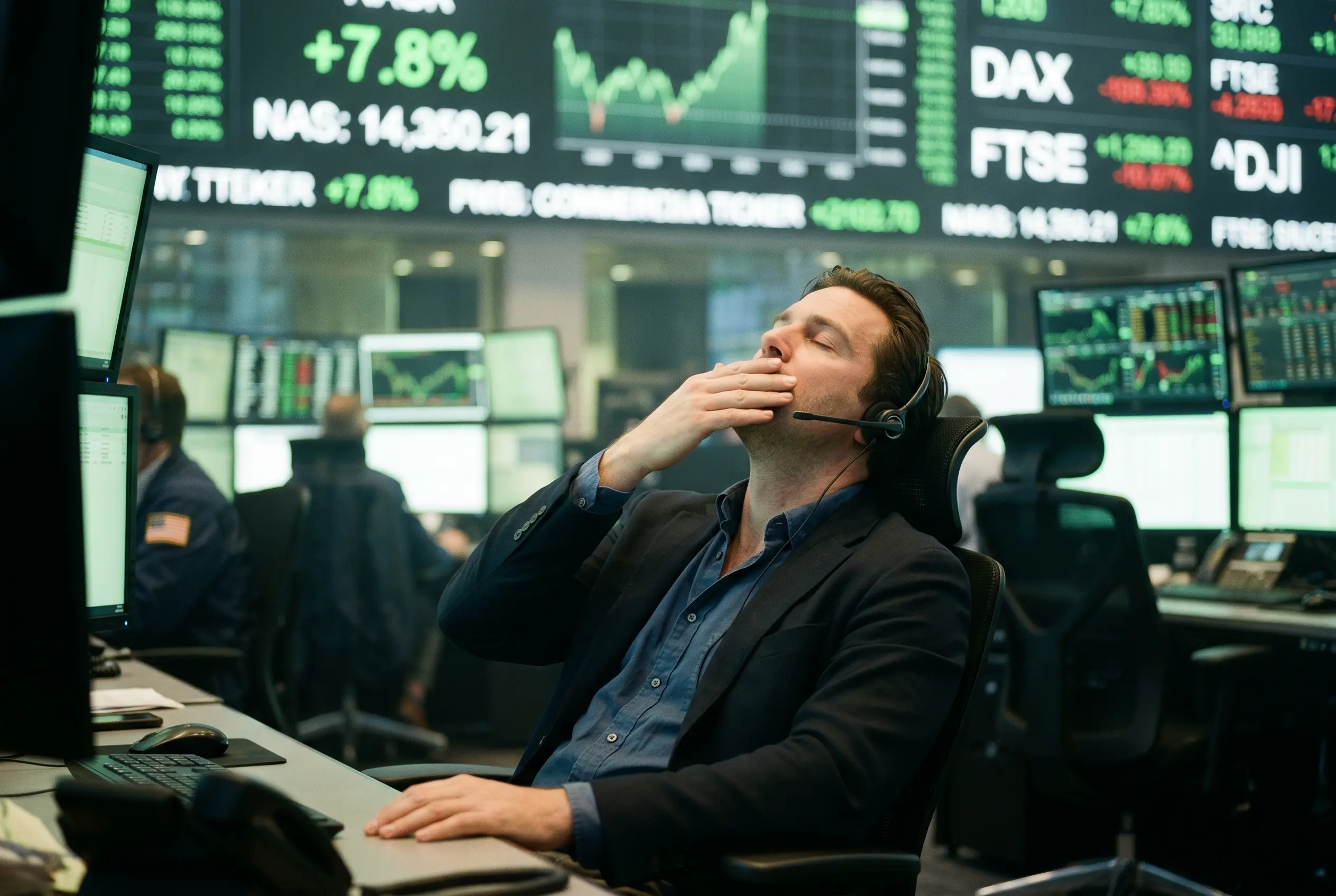
Chip and Tech Names Lead the Rebound
Chip and AI-linked stocks did the heavy lifting across the region, recouping most of the losses they absorbed over the past week when Iran-war anxiety and rising interest rates triggered a wave of profit-taking in the high-flying sector. Samsung Electronics, South Korea’s most valuable company, jumped 11.2%. SK Hynix, the country’s other chip heavyweight, rose 7.2%. Tokyo Electron, the Japanese chip equipment maker, added 10.3%. SoftBank Group, the AI-focused investment holding company, gained 2%.
The rebound had two drivers. The overnight Wall Street session, in which Marvell Technology climbed 11.1% on a strong day for U.S. chip names, gave Asian markets a lead. Trump’s deal claim then removed the biggest single overhang on the sector: an oil price that had re-energised inflation fears and put central banks back in tightening mode. With Brent crude down 1.7% to $88.87 a barrel and the U.S. dollar stabilising, the path of least resistance for AI-exposed names was up. The Kospi has roughly doubled over the past six months and hit a record close of 8,801.49 on June 2; Friday’s surge erased a week of selling in a single session. How Indian IT stocks rebounded earlier in June, with Infosys, TCS and HCL gaining between 4% and 6% in a single session.
SpaceX’s $75 Billion IPO Lands the Same Day
Elon Musk’s SpaceX priced its initial public offering at a fixed $135 a share late on June 11, a level that values the rocket company at $1.77 trillion and ranks the listing as the biggest IPO ever, more than triple the size of Alibaba’s 2014 New York debut. SpaceX plans to sell 555.6 million shares, raising $75 billion, with the underwriters holding an option on another 83.33 million shares worth $11.2 billion. Trading under the ticker SPCX was due to begin on the Nasdaq later in the U.S. session on June 12, per a regulatory disclosure SpaceX filed earlier in June.
Asia watched the debut for two reasons. Chip equipment names from Tokyo Electron to South Korean memory makers count SpaceX, its Starlink subsidiary, and Musk’s xAI unit as customers for high-bandwidth memory and advanced packaging. The other test is valuation gravity. Investors have spent months asking whether AI infrastructure names are in a bubble, and Oracle’s 8.5% drop on June 11 on worries over its high spending is a reminder that the bid can turn fast. A clean SpaceX open would tell the chip rally that public-market appetite for the AI complex is intact.
Goldman Sachs is the lead bank on the deal, with Morgan Stanley, Bank of America, Citigroup and JPMorgan Chase rounding out the syndicate. Musk will own over 82% voting control after the offering, and SpaceX merged with xAI in February in a deal that valued the combined entity at $1.25 trillion.
Alibaba Pitches $1.5 Billion for Chinese Grocer Pupu
Hong Kong-listed Alibaba Group rose 2% on Friday after Bloomberg reported the e-commerce company had offered about $1.5 billion to acquire Chinese grocery delivery platform Pupu, more than double a rival bid from Sun Art Retail. The offer, if accepted, would push Alibaba into the country’s crowded online grocery market and intensify its fight with Meituan, the dominant local player.
The bid matters beyond Pupu itself. China-exposed tech and internet names have been among the most volatile in the region over the past month as investors weigh whether consumer-facing platforms can grow into a slowing economy. A $1.5 billion deal would be a meaningful but not transformative use of Alibaba’s cash pile, and the company’s willingness to pay more than double the rival bid signals how serious the contest for the online grocery channel has become. The offer was first reported by Bloomberg.
Oil Slips and Central Banks Step Into View
The other half of the rally was a sharp drop in oil. Brent crude fell 1.7% to $88.87 a barrel early Friday, on top of a 2.6% overnight decline, after Trump said the Iran deal would include the immediate reopening of the Strait of Hormuz, through which roughly a fifth of the world’s oil and liquefied natural gas transit. West Texas Intermediate crude shed 1.6% to $86.33 a barrel, leaving both benchmarks at two-month lows but still well above the $70-a-barrel level that prevailed before the war began on February 28.
Lower oil changes the math for central banks. The European Central Bank raised interest rates for the first time in nearly three years during the conflict. The Reserve Bank of Australia is expected to keep rates on hold next week but to maintain a hawkish tilt after three straight hikes on sticky inflation. The Bank of Japan, by contrast, is increasingly expected to hike rates next week as energy-driven price pressures build. Markets will read both decisions for their signal on the oil outlook as much as for the rate path itself.
The U.S. dollar stabilised after overnight losses, ticking up 0.2% against the yen to 160.20. Traders are watching the 160 level as a likely trigger for Japanese intervention. Spot gold slipped 0.6% to $4,189 an ounce after a 3.5% jump overnight, and spot silver fell 0.6% to $66.93.
Why the Market Has Heard This Before
The market’s reaction is the easy part. Pricing in whether it lasts is the harder call. ING commodities analysts Warren Patterson and Ewa Manthey wrote on Friday that Trump “has said many times before that a deal is very close, only for hostilities to resume,” and warned that “we would be cautious about assuming that the extension of the ceasefire is a done deal.” The investment bank added that even if an extension is signed, “it could be fragile.”
This does look perhaps a bit more tangible than we have had. If we hear something from Iran that sounds positive, the odds are clearly going to flip quite dramatically.
Ray Attrill, head of FX strategy at the National Australia Bank, offered the bullish case in the Reuters dispatch from Sydney that framed the regional coverage. ING’s Patterson and Manthey issued the counter on the same day, with both views landing in Asian trading desks before the open.
Frequently Asked Questions
What did Trump say about a US-Iran deal on June 12?
On June 11, Trump said a deal with Iran could be finalised this weekend. He tied the announcement to a call-off of further strikes and said a broad coalition of regional powers had approved the framework, though Iranian state media reported no final decision in Tehran.
Why did Asian stocks rally on the news?
Friday’s MSCI Asia-Pacific ex-Japan gain of 3.8% was the strongest single-session move since the U.S. and Iran agreed to a temporary ceasefire in April. Samsung Electronics climbed 11.2% and SK Hynix rose 7.2% as chip and AI-linked names led the region higher, recouping losses from earlier this month.
How big is the SpaceX IPO?
SpaceX priced 555.6 million shares at $135 on June 11, raising $75 billion at a $1.77 trillion valuation. Trading under the ticker SPCX on the Nasdaq is the largest IPO in history, more than triple the size of Alibaba’s 2014 New York debut, and ranks SpaceX as the seventh-largest U.S. company by market cap.
What is the Strait of Hormuz, and why does it matter?
The Strait of Hormuz is a narrow waterway between Iran and Oman, the single most important oil and gas chokepoint in the world. Roughly a fifth of global oil and liquefied natural gas transits the strait, which has been largely closed to commercial traffic since the war began on February 28.
Disclaimer: This article is for informational purposes only and does not constitute financial advice. Markets carry risk, and prices can move against any position. Figures cited are accurate as of publication on June 12, 2026, and may have changed. Consult a qualified financial professional before making investment decisions.
 ONGC licence frees Venezuela cash and operatorship talks
  Anthropic Hits $65 Billion Run Rate and Flips the AI Cash Test
  Supreme Court grounds the fare free-for-all with three-week clock
  Gold Nears $4400 as Soft Data Meets Oil Inflation Risk
  Nifty Slips as Zaggle Circuits and Dhoot Debuts Big
  Diesel Crack Tops $100 as Iran Rhetoric Lifts Crude