
 Ishan Crawford
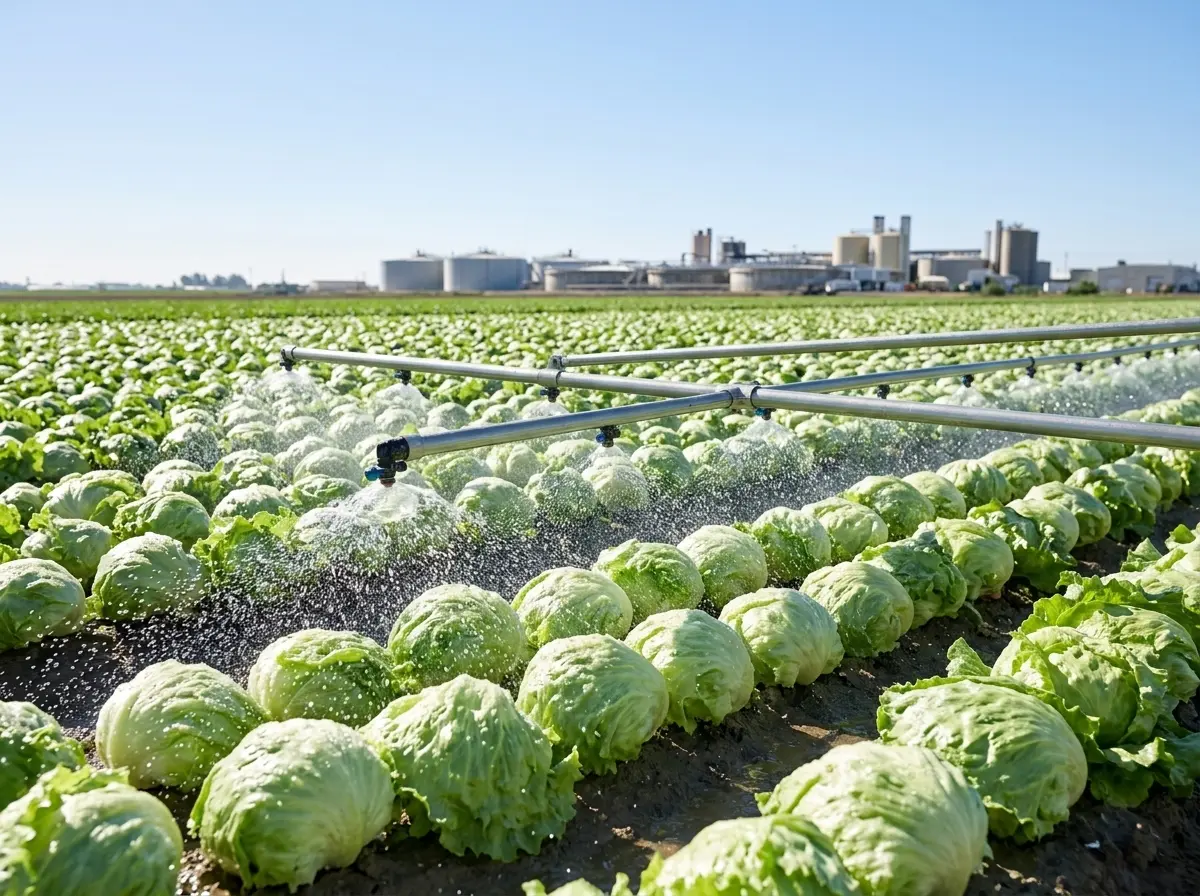
 The largest recorded U.S. cyclospora outbreak has reached 6,358 illnesses across 15 states, with 278 hospitalizations and two deaths in Michigan, all linked by traceback to iceberg lettuce from Taylor Farms de Mexico. A microbiologist who studies pathogens in sewage argues the parasite’s ability to slip through treatment plants in small numbers, then ride irrigation water onto crops, is among the most plausible routes.
Federal investigators still call the ultimate source open. The numbers and the biology already point past any single field.
Record Cases Trace to One Mexican Supplier
Illness onsets ran from June 22 through July 31. Confirmed cases sit in Arkansas, Iowa, Illinois, Indiana, Kansas, Kentucky, Michigan, Missouri, Nebraska, New Hampshire, North Carolina, Ohio, Oklahoma, Pennsylvania and West Virginia. Many patients reported eating at Taco Bell or consuming recalled Marketside shredded or salad packs sold at Walmart.
- 6,358 laboratory-confirmed illnesses
- 278 hospitalizations
- 2 deaths (both Michigan residents with underlying conditions)
- Last onset July 31, 2026
On July 17 Taylor Farms de Mexico announced it was removing all iceberg lettuce sourced from central Mexico and later voluntarily suspended central Mexico production. The company says it invests more than $200 million a year in food-safety protocols and notes that, as of August 5, FDA has reported no confirmed positive product samples. Epidemiologic interviews and traceback still converge on that supply.
| Metric | Value |
|---|---|
| Total illnesses | 6,358 |
| Hospitalizations | 278 |
| Deaths | 2 (Michigan) |
| States with cases | 15 |
| Distribution states (product) | 29+ |
True counts run higher. Many people recover without testing, and matching a case to the outbreak can take six weeks. CDC and FDA report only laboratory-confirmed illnesses. An earlier case climb after the lettuce recall already showed how quickly the tally can jump once interview data expand.
From Human Gut to Irrigation Line
Cyclospora cayetanensis has only one known host: humans. Infected people shed unsporulated oocysts in stool. Those oocysts need one to two weeks outside the body, at the right temperature and moisture, before they mature into the infectious form that can sicken the next person.
- Day 0: Oocysts leave an infected person in feces, still non-infectious.
- Days 7-14: Sporulation occurs in the environment; four sporozoites form inside each oocyst.
- Contact: Contaminated water, hands or soil reaches produce leaves or crevices.
- Ingestion: Consumer eats the produce; oocyst wall breaks in the small intestine.
- Illness: Watery diarrhea, cramps, fatigue begin after an incubation of roughly two days to two weeks.
Stanford’s David Relman, who helped develop the molecular tools now used for diagnosis, notes the parasite impairs the cells that absorb water and nutrients. Result: copious watery diarrhea that can last weeks and relapse. Treatment is a seven-to-ten-day course of trimethoprim-sulfamethoxazole for most patients.
Because the organism does not grow well in culture and resists many standard lab methods, detection lagged for years. Modern PCR panels now catch it faster, yet many clinics still send samples out.
Why Chlorine and Conventional Plants Miss It
Bacteria that regulators use as fecal indicators die quickly outdoors or under chlorine. Cyclospora oocysts do not. Studies have repeatedly found the parasite in both influent and effluent of wastewater plants. One Arizona survey detected it in 25 percent of influent samples and 13 percent of effluent. An Italian survey found DNA in 21 percent of treated water samples used for irrigation.
A Washington Post microbiologist who works with sewage pathogens put the mechanism plainly: Cyclospora and similar parasites can survive sewage treatment in small quantities, and crops are sometimes irrigated with that treated water. Johns Hopkins environmental health researchers add that the oocysts survives in soil and water for weeks or months and shrug off the chlorine washes common in packing houses. Heat near 160°F kills them, but salad greens are not cooked.
- Physical removal (settling, filtration) is only partial.
- Chlorine and many chemical sanitizers show little effect on oocysts.
- Indicator bacteria such as E. coli die off while protozoa remain viable.
- Warm summer temperatures accelerate sporulation once the oocysts reach fields.
Farmers and processors following current water-quality rules can therefore pass every required test and still move low levels of viable parasites onto leaves.
Workers, Patients and the Mixed Bag
Field workers without ready toilets or hand-washing stations can introduce fresh contamination. Leaky septic systems or overloaded plants after heavy rain send untreated or partially treated effluent into canals. Municipal biosolids (treated sewage sludge) applied as fertilizer on millions of acres face heavy-metal and some pathogen rules, yet testing for protozoan oocysts is not required.
Once the product enters centralized packing, lettuce from many fields is mixed, shredded and bagged. One contaminated lot reaches restaurants and grocery shelves across dozens of states. Immunocompromised people, the very young and the elderly face higher risk of severe dehydration and longer illness. Healthy adults still lose days or weeks of work.
Taco Bell and other chains dropped the supplier quickly. Retail packs carrying Best-if-Used-By dates through early August were pulled. Consumers who still hold recalled product are told to discard it and sanitize surfaces.
Earlier Outbreaks Showed the Same Gaps
Cyclospora first drew major U.S. attention in the mid-1990s with Guatemalan raspberries. Later clusters hit basil, cilantro, mesclun and bagged salads. Each time investigators eventually pointed to water or sanitation failures in growing regions where the parasite is more common in the human population. Domestic U.S. cases remain rare outside summer import windows, yet the 2026 tally already dwarfs prior years. By mid-July CDC had logged more than 1,600 confirmed domestic cases versus 249 at the same point in 2025; state reports pushed the broader picture far higher.
Detection improved with Relman’s PCR work, but surveillance capacity has frayed. FoodNet reporting for Cyclospora and several other pathogens became optional in 2025. State labs vary widely in speed and tools. Traceability rules that would force faster lot-level tracking are still rolling out.
- 1996-97: Guatemalan raspberries, multi-state
- 2000s-2010s: herbs and leafy greens from multiple countries
- Recent summers: recurring low-level clusters, mostly imported produce
- 2026: largest recorded, one supplier dominating the linked cluster
The industrial model that delivers cheap year-round salad also multiplies any single contamination event.
Standards Still Chase the Wrong Bugs
Current agricultural-water guidance leans on generic E. coli counts. That metric works for many bacterial risks. It fails for hardy protozoa. Surface water used for irrigation in major produce regions routinely tests positive for Cyclospora DNA at low prevalence; lined versus unlined canals show only modest differences. When sludge or effluent reaches fields, the same mismatch appears.
| Control Point | Typical Test | Gap for Cyclospora |
|---|---|---|
| Wastewater effluent | Indicator bacteria, some viruses | Oocysts detected after treatment |
| Irrigation canals | E. coli geometric mean | Protozoa persist longer |
| Biosolids/fertilizer | Heavy metals, fecal coliforms | No routine oocyst requirement |
| Produce wash | Chlorine residual | Limited kill on oocysts |
Experts including Kellogg Schwab at Johns Hopkins and food-safety specialists interviewed by Harvest Public Media keep returning to the same practical list: functioning toilets and hand-wash stations for workers, protected water sources, and faster national matching of cases so a cluster is spotted before it becomes a 6,000-case event. Self-regulation and voluntary recalls work until they do not.
CDC epidemiologic and traceback data continue to support the Taylor Farms de Mexico link while noting other unrelated cyclosporiasis clusters this season. FDA has increased border screening. Mexican authorities have disputed sole responsibility. The investigation remains open.
Until water and sludge rules catch up to the biology of the oocyst, the same pathway stays available every summer the temperature and the supply chain align.
 Hormuz Stalemate Masks Products Squeeze Toward $120 Oil
  Shiprocket IPO Heat Masks Float Risk and Adjusted Losses
  Oil Relief Meets Drone Tariffs as Nifty Turns Macro
  Scotland’s Drug Deaths Drop Then Rebound as Recovery Lags
  FPIs Exit 60% of IPO Anchors in a Year as Domestic Funds Hold Firmer
  Domestic Winners Outrun Tata PV Drag on Friday Focus List