
 Ishan Crawford
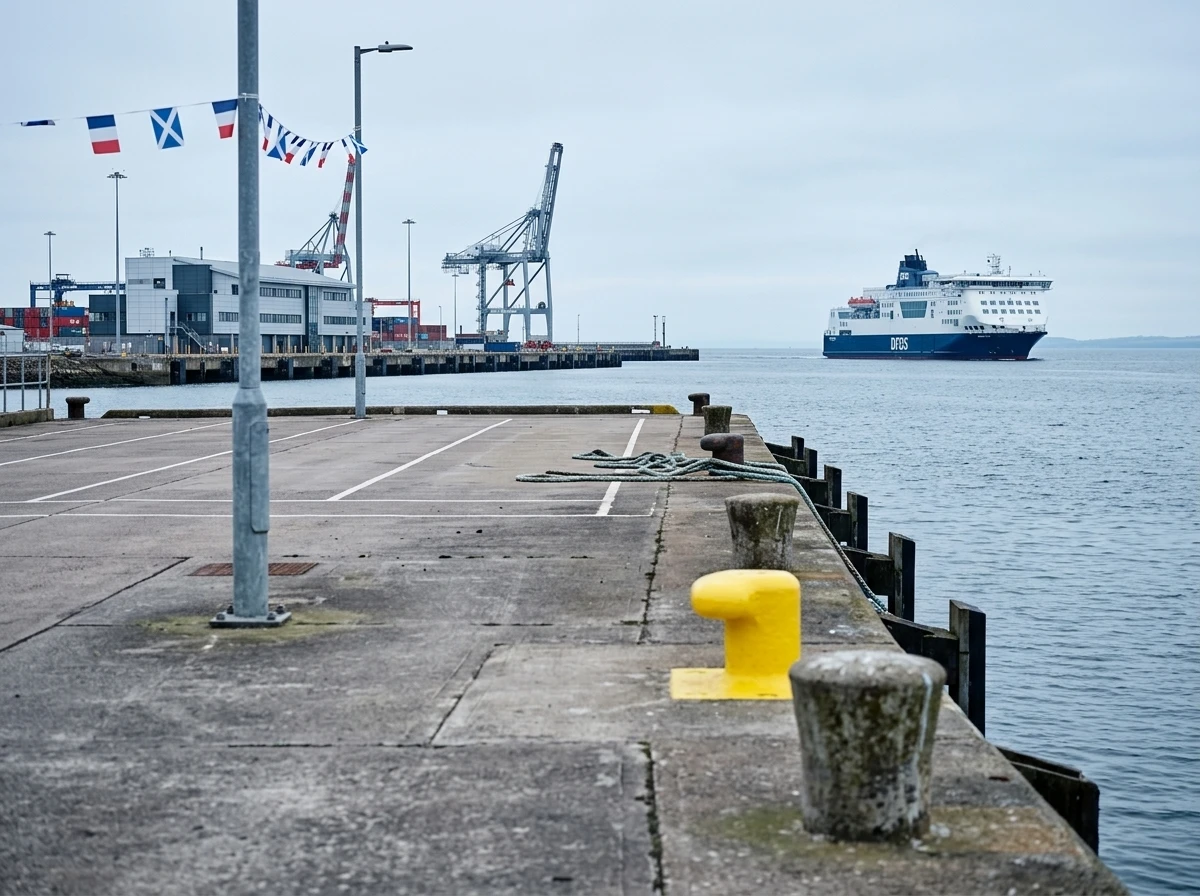
 Both the UK and Scottish governments have each pledged £3 million toward a direct passenger and freight ferry between Rosyth in Fife and Dunkirk in France, bringing the total public commitment to £6 million. The 20-hour service is still not expected this year.
A commercial deal between Forth Ports and an operator, plus border facilities, must land first. DFDS remains interested. The cash removes one barrier while older ones remain in plain view.
Twin Pledges Put Cash on the Table
The UK government announced its £3 million in March 2026 from the Growth Mission Fund. The money targets £3 million for Border Force and customs upgrades at Rosyth. It is conditional on a commercial agreement between Forth Ports and a ferry operator plus approval of their business case.
Scottish Secretary Douglas Alexander called it a boost for tourism, exports and jobs that would take freight off roads. Chancellor Rachel Reeves linked the spend to wider growth conditions. The Scottish government matched the sum as a 2026 manifesto pledge for the same infrastructure and enabling work.
Business minister Tom Arthur told the Scottish Parliament the interest from operators was welcome in the year of the tenth anniversary of the Brexit referendum. He said the vote had caused significant economic harm and hoped stronger European links would renew relationships.
- £3m UK: Border Force and customs kit at Rosyth, Growth Mission Fund, subject to commercial deal and business case.
- £3m Scottish: manifesto commitment this year for developments at Rosyth and related support.
- Total public: £6 million now lined up, still short of a signed operator contract.
- Condition: no sailing until Forth Ports and operator close commercial terms.
A Scottish government spokesperson confirmed legislation had already been advanced and further details on Rosyth support would follow. The dual pledges reverse years of funding stall after earlier spring 2024 and 2025 hopes faded. Readers following the file can cross-check the earlier UK £3 million commitment details for the March baseline.
| Funder | Amount | Purpose | Key condition |
|---|---|---|---|
| UK Government | £3 million | Border Force and customs infrastructure | Commercial agreement plus business-case approval |
| Scottish Government | £3 million | Rosyth developments and enabling support | Manifesto delivery, details still to come |
The Link That Came and Went
Scotland last had a regular direct ferry to mainland Europe on the Rosyth-Zeebrugge run. Superfast Ferries opened it in 2002 with overnight sailings of about 17 hours using two ships. Car traffic held up in summer but freight volumes stayed thin.
- May 2002: Superfast launches Rosyth-Zeebrugge passenger and freight service after Scottish Executive tender.
- 2005: frequency cut to three times weekly as freight disappoints.
- September 2008: Superfast exits, citing low numbers and fuel costs.
- 2009-2010: Norfolkline (later DFDS) revives then ends passenger sailings by December 2010 for lack of demand.
- 2018: DFDS freight-only service stops after engine-room fire on Finlandia Seaways and continued losses.
That left Scotland without a ro-ro link to the Continent. Travellers and hauliers have used English Channel ports or longer road hauls ever since. The new plan swaps Zeebrugge for Dunkirk, keeps the roughly 20-hour crossing, and aims for three sailings a week with both passengers and freight. Previous previous reporting on the 2026 relaunch push tracked the same operator interest and timing hopes.
Freeport Ambitions and Export Arithmetic
Forth Ports treats the ferry as core to the Forth Green Freeport strategy at Rosyth. The freeport spans Rosyth, Grangemouth, Leith and other sites with tax incentives aimed at green industry, trade and jobs. A direct European sailing would feed that cluster and the nearby agri-hub.
The EU takes nearly 45 percent of Scottish exports. Proponents say the route would open markets, cut road miles and lift tourism for campervans, bikes and cars that now detour south. One set of projections circulating since 2025 put first-year passengers at around 51,000, rising toward 79,000, with an estimated £11.5 million annual lift to the Scottish economy. The same figures claim 8.2 million kilometres of freight traffic could leave UK roads each year.
Seafood and other short-life goods feature heavily in the pitch. A direct sailing avoids the long English motorway leg for some loads. Dunkirk’s rail terminal would give onward EU connections. Port of Dunkirk executives have called the link a strategic asset for both sides. Local Fife voices, including employers such as Amazon and Mowi, have backed the push.
- Direct access for Scottish exporters to Dunkirk and its rail network
- Potential modal shift of freight off roads and onto sea
- Tourism opening for vehicle travellers who skip the English Channel ports
- Jobs at the berth, in logistics and related freeport activity
- Support for the wider Forth Green Freeport investment case
Border Posts and Carbon Costs Still Block the Berth
Money alone does not sail the ship. Since Brexit, agrifood and regulated goods need Border Control Post checks. Rosyth has no BCP. Building one was judged too costly. The working idea is a remote arrangement using the existing post at Grangemouth, about 20 miles away, similar to the Sevington facility that serves Dover traffic. Legislation and UK-Scottish agreement on the Border Target Operating Model amendment are still required. A consultation on minimum location rules has closed; next steps are pending.
Then come the emissions rules. Longer sailings face higher EU and UK ETS carbon charges on longer sailings than short Channel hops. Operators already pass ETS costs to passengers and freight customers on existing routes. A 20-hour North Sea crossing would rack up larger allowances than a two-hour Dover-Dunkirk run. The Connexion noted it remains unclear whether those fees are seen as dissuasive. That question sits inside the commercial case DFDS and Forth Ports must still close.
What we know
- UK £3m and Scottish £3m both announced and ring-fenced for infrastructure
- DFDS actively engaged in talks, no firm timeline or schedule yet
- Remote BCP model under discussion using Grangemouth
- Three sailings a week, passenger plus freight, target Dunkirk
What remains unconfirmed
- Signed commercial agreement and final business-case approval
- Exact launch window (late 2026 now less likely than 2027)
- How ETS costs will be absorbed or passed on
- Final BCP legislative and operational green light
DFDS Stays in the Room
Mathieu Girardin, DFDS Ferry Division head, welcomed the UK infrastructure cash in March and said the company saw strong potential while a few elements still needed work. A DFDS spokesman told BBC Scotland earlier in 2026 that the firm remained actively engaged in constructive discussions, progress was being made, and optimism about the route continued, though no firm timeline existed.
We are pleased to see the UK Government’s commitment to strengthening port infrastructure in Rosyth. This is an important step in bringing a new route between Scotland and mainland Europe closer to reality. While a few elements still need to be addressed, we see strong potential in the route and look forward to continuing our discussions with all partners involved to move the project forward.
Girardin’s March statement sits alongside Port of Dunkirk deputy director Daniel Deschodt’s earlier hope that Scots might use the ferry for the 2027 Six Nations in France. Forth Ports CEO Stuart Wallace called the UK money a step that helps create market conditions for the ferry inside the freeport plan. Promoter Derek Sloan of Ptarmigan Shipping has said late 2026 remains possible but 2027 now looks more likely.
Public conversation on X and elsewhere keeps returning to the commercial test. A 20-hour crossing struggles against road-plus-short-ferry options for time-sensitive cargo. Past demand shortfalls and the 2018 fire still colour the memory. Some voices treat the dual pledges as political theatre timed to Brexit anniversaries rather than a bankable route. Others note that any service which finally runs would still need feeder connections at the French end to feel seamless for passengers heading beyond Dunkirk.
Who Gains Ground While the Clock Runs
If the deal closes, Rosyth and the freeport gain a new gateway. Scottish exporters, especially those moving goods that tolerate an overnight sail, gain a direct European option. Tourists with vehicles gain a northern entry point that skips the M25 and Dover queues. Dunkirk gains another UK link and feeder traffic for its rail terminal. Hauliers who currently run long empty legs south stand to cut miles and driver hours on some lanes.
The losers in a zero-sum sense would be the English Channel ports and the roads that currently carry the diverted Scottish traffic. That shift is precisely the point of the road-mile projections. Yet the arithmetic only works if enough freight and passengers actually book. The old Zeebrugge service died because the volumes never matched the cost base. Nothing in the new £6 million package automatically changes that demand equation.
Border Force and customs staff would gain permanent roles if the facilities open. Local construction and logistics firms around Rosyth would see short-term work on the upgrades. The larger bet is that the freeport’s tax sites and the ferry reinforce each other over a decade. That bet still needs a signed operator and a workable BCP before the first ticket is sold.
Launch Odds Sit With the Commercial Paperwork
As of early August 2026 the route is more secure on paper than at any point since the original Superfast launch. Two governments have put matching cash on the table. The preferred operator has not walked away. The French port is ready and vocal. The missing pieces are the same ones that have delayed every target date since 2024: a commercial contract that stacks up after ETS, fuel, crew and port dues, plus the legal and physical border solution.
Arthur’s Brexit-anniversary framing and the freeport strategy give political cover. The passenger and freight numbers on the optimistic side of the projections give a business case outline. Yet the ironic core remains: a reconnection sold as the antidote to Brexit friction itself carries new friction in the form of carbon pricing that falls harder on long sailings, and a demand history that already failed once under DFDS ownership.
Sloan’s 2027 lean is the most realistic public marker. If the commercial agreement and remote-BCP rules land in the next few months, preparatory work on the berth and customs kit can accelerate. If either slips, the £6 million sits in accounts while another sailing season passes. The next concrete signal will be a signed deal or a formal BCP decision, not another funding headline.
The dual pledges have moved the Rosyth-Dunkirk ferry from concept to funded project. The water between the two ports is still the same 20-hour stretch that defeated earlier operators, only now with carbon charges added to the ledger.
 ONGC licence frees Venezuela cash and operatorship talks
  Anthropic Hits $65 Billion Run Rate and Flips the AI Cash Test
  Supreme Court grounds the fare free-for-all with three-week clock
  Gold Nears $4400 as Soft Data Meets Oil Inflation Risk
  Nifty Slips as Zaggle Circuits and Dhoot Debuts Big
  Diesel Crack Tops $100 as Iran Rhetoric Lifts Crude