
 Ishan Crawford
 Federal health officials have now tied 6,358 laboratory-confirmed cyclosporiasis cases across 15 states to contaminated iceberg lettuce from Taylor Farms de Mexico, with at least 278 hospitalizations and two deaths in Michigan. The August 5 update adds Arkansas, Iowa, Missouri, Nebraska, New Hampshire and North Carolina to the earlier list and confirms the cluster remains the largest of several ongoing Cyclospora investigations this season.
Nationally the picture is larger still. The same parasite has produced more than 10,000 confirmed domestic illnesses since May, with thousands more under review, already far past the previous high-water mark set in 2019.
The gap between the lettuce-linked total and the national domestic count shows how widely the parasite has moved this season. One supplier accounts for the bulk of confirmed illnesses, yet other clusters continue in parallel and keep the broader tally climbing.
The Numbers Behind the 15-State Map
Onset dates for the lettuce-linked illnesses run from June 22 through July 31. Many of those people ate at Taco Bell or consumed recalled product before the company pulled the lettuce on July 17. CDC and FDA emphasize that the true toll is higher because milder cases go untested and because it can take up to six weeks to confirm a case belongs to the outbreak.
| Metric | Lettuce-Linked Outbreak | National Domestic (May 1-Aug 3) |
|---|---|---|
| Lab-confirmed cases | 6,358 | 10,468 |
| Hospitalizations | 278 | 517 |
| Deaths | 2 (Michigan) | 2 |
| States reporting | 15 | 47 |
| Last illness onset | July 31 | July 28 (median July 4) |
The lettuce cluster alone holds more than half of all laboratory-confirmed domestic cases logged since May. Hospitalizations follow a similar share: 278 of the 517 national admissions sit inside the Taylor Farms investigation. Both recorded deaths appear in the linked column and the national column, underscoring that the fatal outcomes identified so far trace to this single vehicle.
Michigan sits in the highest reporting band. State tallies that include probable cases have exceeded 11,000, with more than 190 hospitalizations recorded earlier in the summer. Both deaths involved people with significant underlying conditions; illness onsets for both preceded the recall.
Fifteen states now report laboratory-confirmed illnesses tied to the lettuce, while 47 states appear in the wider domestic count. That spread means investigators are still sorting which of the remaining cases belong to the iceberg event and which point to other sources still under review.
How Iceberg From Central Mexico Reached Tables
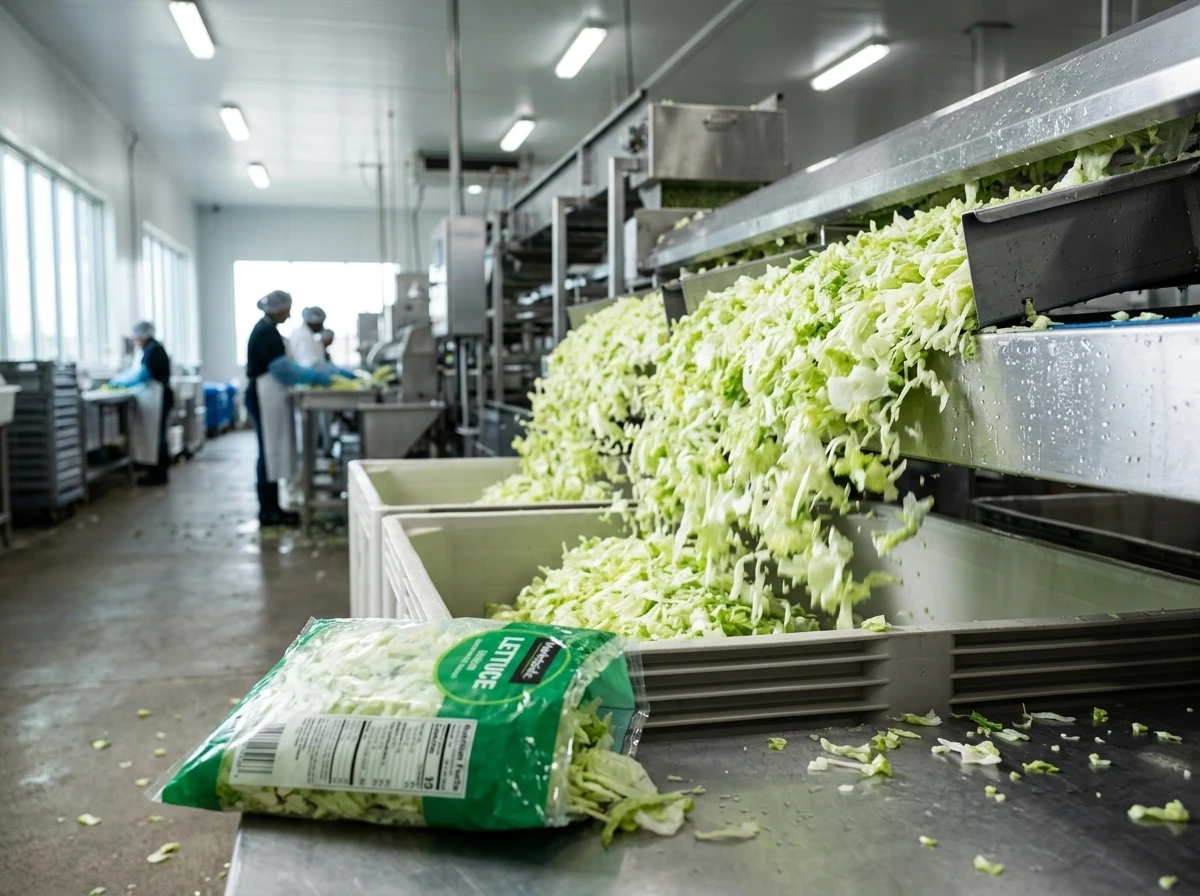
Traceback converged on shredded iceberg lettuce processed by Taylor Farms de Mexico in Guanajuato and supplied to Taco Bell locations and food-service customers. Retail packs under the Marketside brand reached select Walmart stores. Distribution of recalled product covered dozens of states for restaurants and retailers alike.
- Food-service shipments ran June 29 through July 16 into at least AL, AR, CT, FL, GA, IA, IL, IN, KS, KY, LA, MA, MD, MI, MO, MS, NC, NH, NJ, NY, OH, OK, PA, SC, TN, TX, VA, WI and WV.
- Retail Marketside Iceberg Salad (12-oz and 24-oz) and Shredded Lettuce (8-oz and 16-oz) carried Best if Used By dates from mid-July into early August.
- Taco Bell stopped using the supplier on July 17; the chain was the earliest common exposure identified by state interviews.
- FDA increased border screening once the supplier was identified and continues sampling.
The shipment window lasted less than three weeks, yet the product moved through a dense restaurant and retail network. Shredded form made the lettuce easy to portion at high volume, which also made a single contaminated lot capable of reaching many plates before anyone noticed a pattern.
Consumers who still hold recalled iceberg lettuce product details are told to discard it or return it for a refund and to sanitize surfaces the product touched.
Best if Used By dates stretching into early August mean some packs could still have been in home refrigerators after the recall notice went out. Agency guidance therefore stays focused on disposal and surface cleaning rather than on any assumption that the product has already cleared household shelves.
Michigan Bears the Heaviest Load
Southeast Michigan saw the steepest early rise. Local health departments reported that ingredient analysis of Taco Bell meals showed roughly 90 percent of interviewed patients had eaten the iceberg lettuce. The state’s case load dwarfs every other jurisdiction and accounts for a large share of the additional unconfirmed reports still being sorted by CDC.
Snapshot of the Michigan pressure:
- State-reported cases (including probable) climbed past 11,000 by early August.
- Hospitalizations exceeded 190 in mid-summer updates.
- Two deaths linked to the national outbreak, both in people with serious pre-existing conditions.
- Outbreak contribution forms a major but incomplete share of the state’s total; other Cyclospora clusters remain under separate investigation.
The 90 percent figure from meal interviews gave investigators an early epidemiologic anchor. Once that signal locked onto iceberg at Taco Bell, traceback and supplier records could move faster than they would have in a more mixed exposure pattern.
Dr. Juan Luis Marquez, medical director for Washtenaw and Livingston County health departments, noted the practical barriers that slow containment: long incubation, difficult laboratory work on the parasite, and the labor of interviewing every patient. He also pointed to thinner staffing at federal, state and local levels.
There have been staffing cuts at all levels of public health, federal, local, state, so there are less resources and capacity generally available.
Marquez, who also teaches at the University of Michigan, made the comment in a statement as case counts accelerated.
Probable cases push Michigan’s internal tally far above the laboratory-confirmed numbers that feed the national lettuce-linked total. That gap is a reminder that confirmed counts trail the lived burden in the hardest-hit jurisdictions, especially while other local clusters remain under separate review.
Why Cases Keep Climbing After the Recall
The July 17 recall and production halt removed the implicated product from commerce, yet confirmed numbers continue to rise. Two structural facts explain the lag.
- July 14-17: Early multistate signal around Taco Bell in five states; Taylor Farms begins removing product and issues the broad recall of all central Mexico iceberg.
- July 18-19: FDA reports then retracts a positive product sample as a false positive; epidemiologic and traceback evidence still converges on the same supplier.
- July 24: Case count in the linked cluster reaches 1,947 across nine states; hospitalizations at 98.
- August 5: Expanded interviews push the linked total to 6358 illnesses reported from 15 states; hospitalizations 278; two deaths recorded.
Incubation can stretch days to weeks. People who ate contaminated lettuce in early or mid-July only recently sought care or received laboratory confirmation. CDC estimates a six-week reporting lag between onset and inclusion in national tallies. That arithmetic alone guarantees additional cases will appear on future updates even if no new contaminated product remains on shelves.
A second layer is multiple independent clusters. FDA is tracking five separate Cyclospora outbreaks; the Taylor Farms iceberg event is simply the largest. Many of the 12,255 additional cases still under review have no identified vehicle yet.
Between the July 24 and August 5 updates the linked count more than tripled, and the state list grew from nine to fifteen. That jump reflects interview backlog clearing into the official total, not evidence of product still shipping after the recall.
Public Health Capacity Meets a Hard Season
Cyclospora thrives in warm months. The U.S. season runs May through August. This year the parasite found an efficient vehicle in a high-volume shredded product that moved quickly through restaurants and grocery coolers. Detection is slower than for bacterial pathogens because whole-genome sequencing tools used for Salmonella or E. coli are not available for this parasite; investigators rely on epidemiologic interviews and limited molecular markers.
Those interviews take time. When public-health departments are already short-staffed, the backlog grows. Dr. Ulysses Wu, chief epidemiologist for Hartford HealthCare, told CBS News last month that even after one lettuce source is identified, other produce items can still be circulating. “I don’t think we can say that this is under control yet.”
The 2019 season produced about 4,700 reported illnesses and stood as the prior record. This year’s domestic confirmed total alone has already more than doubled that figure, with the additional pending cases pushing the overall picture higher still. Similar pressures appear in other jurisdictions facing rising pathogen loads; recent pathogen surge patterns in other regions show how detection and staffing gaps can amplify seasonal waves.
Without whole-genome sequencing, linking cases depends on patient memory of meals and on the slower work of matching limited molecular markers. Staffing cuts described by local directors compound that technical limit. Each new interview competes for the same reduced pool of investigators already managing multiple clusters at once.
Industry Moves and the Supply Chain Chill
Taylor Farms has suspended all iceberg lettuce sourcing from central Mexico, halted production at the implicated facility, and hired independent experts for a full review of protocols. The company states it invests more than $200 million a year in food-safety systems and notes that FDA has reported no confirmed positive product samples after the false-positive episode.
Broader ripples appeared quickly:
- Sysco, the largest U.S. food distributor, stopped buying iceberg lettuce from Mexico and told customers to destroy remaining stock.
- Taco Bell severed the supplier relationship on the day of the recall.
- At least one fast-casual chain cited the resulting drop in leafy-green foot traffic as a contributing factor in a bankruptcy filing.
- Retailers and restaurants across the distribution footprint scrubbed inventories and switched suppliers where possible.
Shoppers on social platforms swapped fridge-check photos and restaurant-avoidance notes within hours of each case update. The practical advice from agencies remains simple: discard any remaining recalled packs, wash hands and surfaces, and seek care for prolonged watery diarrhea, especially if it follows a meal that included shredded iceberg in the prior two weeks.
The false-positive sample episode left industry and regulators without a confirmed product test to point to, even as epidemiologic and traceback lines stayed fixed on the same supplier. That mismatch helps explain why companies moved to suspend sourcing and destroy stock on the strength of interview data and distribution records rather than waiting for a laboratory match that never fully materialized.
This Season Leaves the 2019 Record Behind
The prior domestic high-water mark of about 4,700 reported illnesses no longer frames the scale of the problem. Confirmed cases through early August already sit above 10,000, and the large pending pool has not yet been fully sorted into outbreak columns.
| Season benchmark | Reported picture |
|---|---|
| 2019 full season | About 4,700 reported illnesses (prior record) |
| This season through early August | 10,468 laboratory-confirmed domestic cases |
| Pending review | 12,255 additional cases still being sorted |
| Lettuce-linked share | 6,358 confirmed across 15 states |
Even if a share of the pending cases ultimately fall outside Cyclospora or outside any identified cluster, the confirmed total has already more than doubled the old record before the season’s traditional August close. The Taylor Farms event supplies the single largest block inside that total, while four other outbreaks tracked by FDA add further confirmed illness on separate tracks.
Warm-season timing magnifies the comparison. The U.S. Cyclospora window runs May through August; this year’s surge filled that window with a high-volume shredded vehicle and with enough parallel clusters to keep national charts rising after one major recall.
How Reporting Lags Shape the Next Updates
Six weeks can pass between illness onset and a case’s appearance in national tallies. Onset dates for the lettuce-linked cluster already reach July 31, so the arithmetic of that lag points to further additions on later CDC updates even with the product out of commerce.
Several forces stack on top of incubation alone:
- Milder illnesses often go untested and never enter laboratory-confirmed counts.
- Interview backlogs delay the epidemiologic link that places a confirmed case inside a named outbreak.
- Five separate investigations compete for the same laboratory and epidemiology capacity.
- Staffing limits at federal, state and local levels stretch the time needed to close each record.
Dr. Wu’s caution that control cannot yet be declared fits this structure. One pipeline closed on July 17; other produce items can still circulate, and cases already in the incubation or reporting queue will continue to surface. Future updates will therefore mix late-linked lettuce cases with whatever new signal emerges from the clusters that still lack a vehicle.
CDC surveillance shows 10468 laboratory-confirmed domestic cases through early August, plus the large pending pool. Because of the reporting lag, those numbers will keep rising for weeks. The Taylor Farms recall closed one pipeline. The second-order costs, stretched local health departments, industry-wide caution on Mexican greens, and a public that now eyes every shredded salad with suspicion, are still being counted.
 Apple’s August 26 Invite Window Locks the Ternus iPhone Debut
  Sandisk Beats Big but Rally Leaves No Room for Soft Guide
  Galaxy Z Fold 8 Pre-Orders Top Every Samsung Record
  SpaceX AI Bill Crowns Nvidia as Stock and AMD Take the Hit
  Hotel WiFi Hacks Hit Travelers Harder Than Hotspot Tips Admit
  iOS 27 Messages One-Tap Suggestions Quietly Build Task Pipelines