
 Ishan Crawford
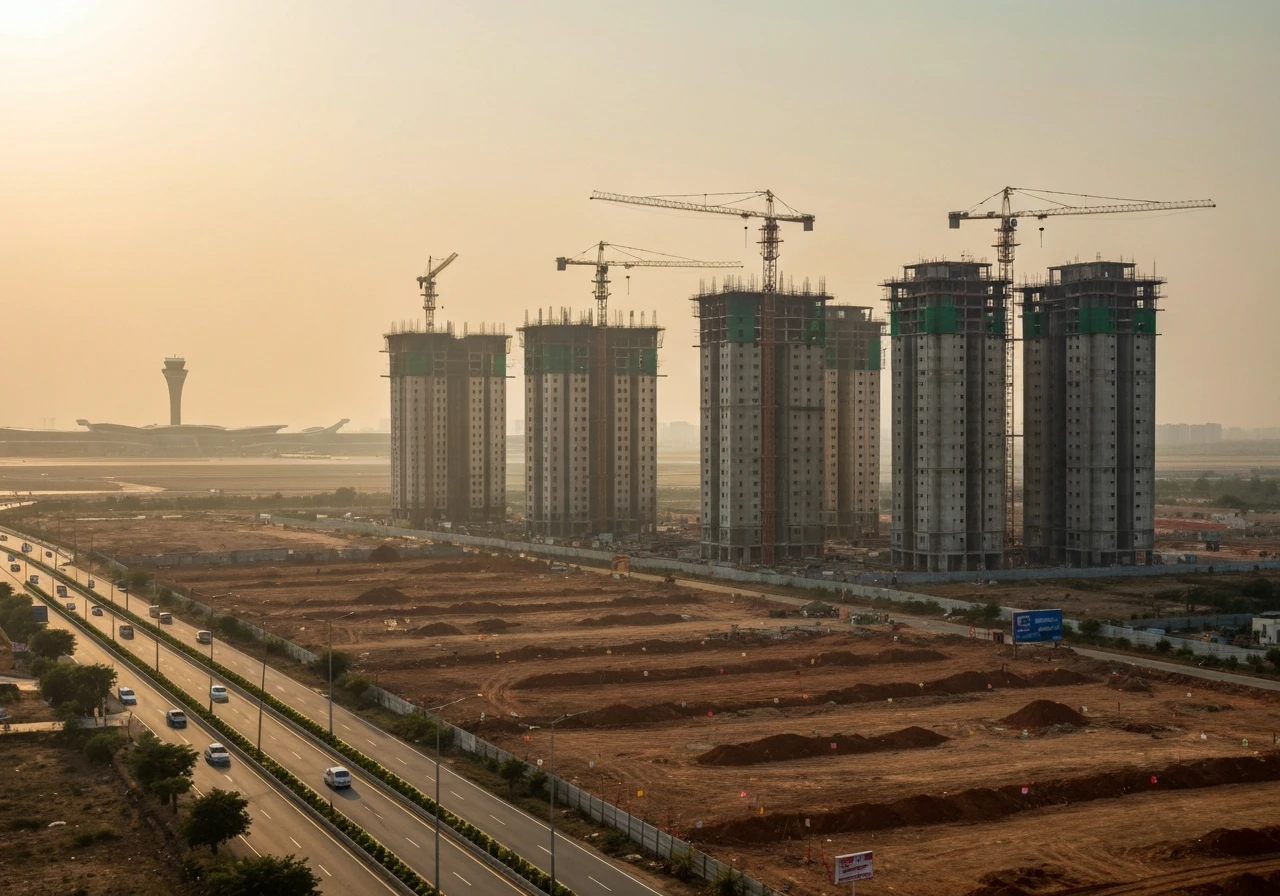
 Godrej Properties said on June 1 that it has won an e-auction for a 23.2-acre residential plot in the Delhi-Mumbai Industrial Corridor (DMIC, one of India’s largest infrastructure programmes) integrated township in Greater Noida, a site the developer values at more than ₹7,000 crore (about $820 million at roughly 85 rupees to the dollar) in revenue potential. The 93,905-square-metre parcel will host a group housing project of premium apartments, the company told the stock exchange.
That single auction sits inside a bigger shift. Godrej has now added three projects in this stretch of Greater Noida within one financial year, and the win lands just weeks after the Noida International Airport at Jewar began operating nearby.
Godrej’s ₹7,000 Crore Bid for a 23-Acre Greater Noida Plot
The land falls inside the DMIC integrated township, a 750-acre plug-and-play development run by DMIC Integrated Industrial Township Greater Noida Limited (IITGNL), the state-backed body that conducted the auction. Godrej outbid rival developers to secure the site for group housing, and it expects to fill the plot with apartments of varied configurations aimed at the premium end of the market.
Spread across 23.2 acres, the revenue figure works out to roughly ₹300 crore of expected sales for every acre, a number that shows how richly land near the new airport is now being priced. The bid extends a buying streak in the National Capital Region (NCR), said Gaurav Pandey, managing director and chief executive of Godrej Properties, in the company’s stock-exchange disclosure.
We have witnessed consistent demand for our existing projects in Noida, and we remain bullish on this market. This will further strengthen our development portfolio in NCR and fits well with our strategy of deepening our presence in key micro markets across India’s leading cities.
Pandey added that the firm was happy to bring the project into its portfolio. The bullish tone is easy to read: Godrej has spent the past year treating Greater Noida as a market to load up on rather than test.
Why the DMIC Township Drew a Top Bid Now
Timing explains much of the appetite. The Noida International Airport at Jewar was inaugurated by Prime Minister Narendra Modi on March 28, and commercial flights are expected to begin within 45 to 60 days of that opening. An operating airport changes how buyers and lenders price land that, until recently, sat on the edge of the city’s daily commute.
The DMIC plot also leans on road infrastructure that already exists. Its pitch to bidders rests on a short list of connections that move people and freight in several directions at once.
- The Eastern Peripheral Expressway, the ring road that lets traffic skirt Delhi
- The Noida-Greater Noida Expressway linking the parcel back to the older urban core
- The Jewar airport, now open and ramping toward commercial service
- The 750-acre IITGNL township itself, sold as smart plug-and-play industrial and urban land
Airports tend to pull residential demand toward them in waves: first land speculation, then construction, then the slower arrival of households and offices. Greater Noida is at the front of that curve, which is exactly why a developer is willing to anchor ₹7,000 crore of future sales on one site.
The township is one node of the Delhi-Mumbai Industrial Corridor programme, the manufacturing-and-logistics belt the central government has pushed for over a decade. The corridor’s promise to bidders is jobs and freight first, homes second, and Godrej is betting the homes will follow.
A Single Win Inside a Record Land Year
The Greater Noida bid is not a one-off purchase. It is the latest entry in what was the busiest land year in the company’s history, and the scale of that buying is the part most headlines skip.
- 18 land parcels acquired across India in 2025-26
- ₹42,100 crore in combined revenue potential from those deals
- Nearly 80 million square feet delivered since 2017-18
- ₹34,171 crore in FY26 bookings, up 16% year on year
Godrej buys land in two ways, taking plots outright through auctions like this one and partnering with landowners on a revenue-share basis. The mix let it build a forward pipeline far larger than its FY26 guidance had called for, which is why a parcel worth ₹7,000 crore can land without moving the company’s stated targets much.
How FY27 Targets Compare With the FY26 Binge
Here is the tension the auction win sits inside. Godrej’s own guidance for the new financial year points to a slower pace of land buying, even as it keeps pushing sales and launches higher.
| Metric | FY26 result | FY27 guidance |
|---|---|---|
| New business development (revenue potential added) | ₹42,100 crore | ₹20,000 crore |
| Booking value (pre-sales) | ₹34,171 crore | ₹39,000 crore |
| Launch value | Not specified | ₹48,000 crore |
| Customer collections | Up 17% year on year | ₹24,000 crore |
The headline gap is in land buying. FY26 business development came in at more than twice its ₹20,000 crore guidance for that year, and the FY27 target sets the bar back at ₹20,000 crore. In plain terms, the company is signalling that it does not plan to repeat last year’s land spree.
Sales tell the opposite story. The FY27 booking-value target of ₹39,000 crore is about 14% above the FY26 figure, which means Godrej intends to convert the land it already owns into homes faster than it adds new plots. The Greater Noida win, in that light, is fuel for the launch engine rather than a fresh acceleration of buying.
What Greater Noida Means for Godrej’s NCR Map
Godrej has leaned hard on the Delhi region for growth, and Greater Noida has rewarded it. The company had already launched two projects in this same area during FY26, each delivering sales of about ₹1,500 crore.
That track record matters because the NCR housing story has long been dominated by Gurugram, the office-and-luxury hub southwest of Delhi. Noida and Greater Noida have spent years as the value alternative, cheaper land, longer commutes, thinner premium demand. The airport is the lever buyers think can close that gap.
For Godrej, deepening here spreads its bets across the capital region instead of concentrating them in one micro market. The strategy of buying repeatedly in a single corridor also lets it build brand recognition and pricing power among local buyers, a pattern visible across its wider national development portfolio.
The risk is concentration of a different kind. Three projects in one stretch of Greater Noida means three projects exposed to the same corridor, the same authority, and the same bet that an airport will pull demand the way the brochures promise.
What the Jewar Corridor Still Has to Prove
The land is bought and the airport is open, but the demand that justifies ₹7,000 crore of planned sales is still a forecast, not a fact. Commercial flights have to start and scale, the surrounding road and metro links have to mature, and households have to choose Greater Noida over the established pull of Gurugram.
If flights ramp on schedule and the corridor’s other projects sell through, Godrej’s repeated bets here look early and smart, and the FY27 launch targets become easier to hit. If the airport’s passenger growth lags or premium buyers stay west in Gurugram, a plot priced at roughly ₹300 crore an acre becomes the kind of land bank that looks expensive long before it looks profitable.
 FPIs Pull Rs 2.25 Lakh Crore From India as Asia’s AI Rally Wins
  Rupee Opens Higher at 94.97 as Asian Peers Slide on Dollar
  China’s Oil Stockpile Is Cushioning It Through the Iran War
  Why RBI Is Reviving the Plastic Banknote Plan It Once Shelved
  Gold Stays Flat as Fed Rate-Hike Bets Outweigh Iran War Risk
  HCLTech Loses Xerox BPM Contract as Work Shifts to Philippines