
 Ishan Crawford
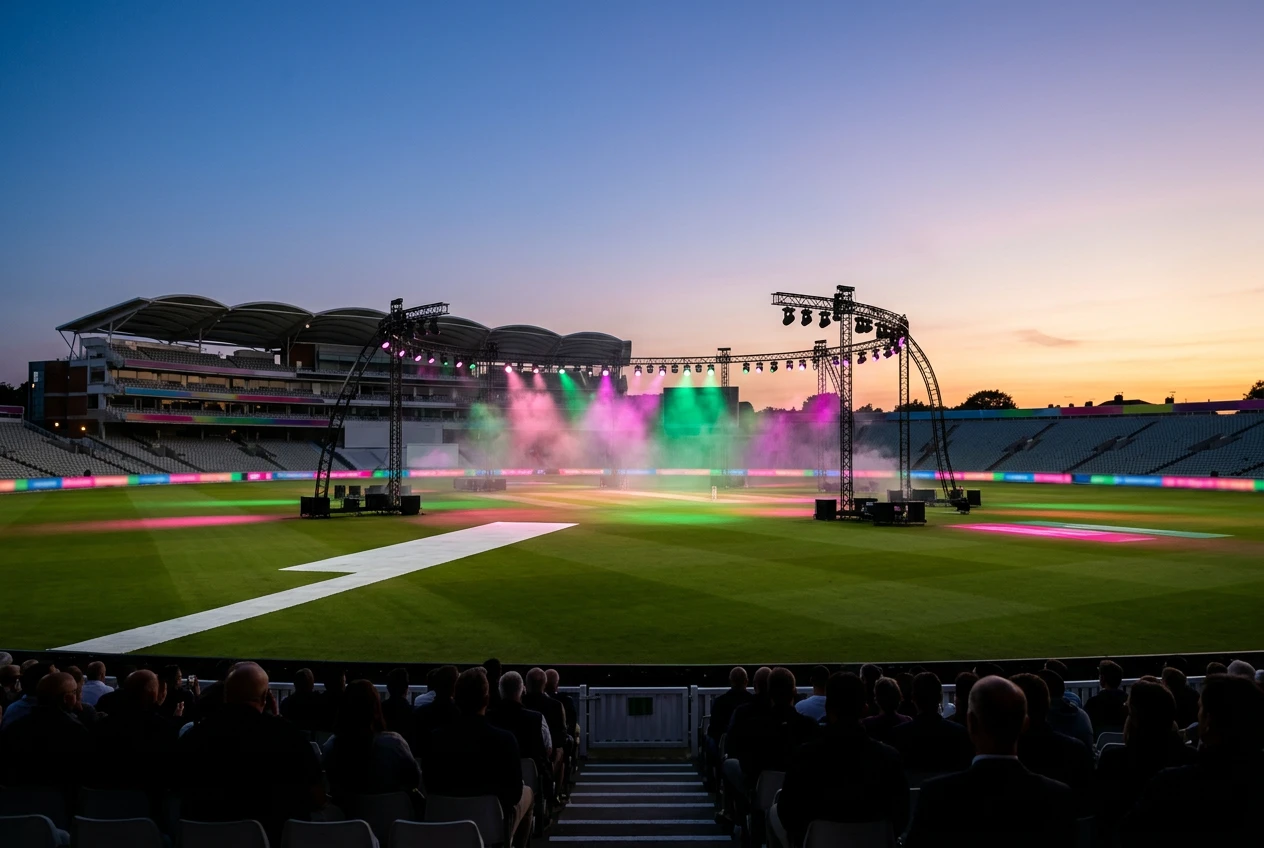
 The full cast of Wicked will perform at Edgbaston on 12 June before England’s Women’s T20 World Cup opener against Sri Lanka, the International Cricket Council confirmed on Wednesday. Emma Kingston as Elphaba and Zizi Strallen as Glinda will lead the West End company through the musical’s signature songs in front of a packed Birmingham crowd and a Sky Sports global broadcast. The performance also marks the kickoff of the show’s 20th anniversary year in the West End, where the production has played more than 7,500 times since 2006. It is the first opening ceremony to fuse a major live-theatre company with a global cricket tournament.
The headline move belongs to Sanjog Gupta, the former JioStar executive who took over as ICC chief executive on 7 July 2025. This is his first marquee staging of a strategy he has spent months articulating, one that frames the governing body’s flagship women’s event as a culture and commerce platform built to compete for the same global audience as a pop tour or a streaming premiere. With more than 150,000 tickets sold three weeks out and a record $8.76 million prize pool, the bet is already partially booked.
Wicked Cast Books a One-Night Stand at Edgbaston
The 12 June curtain raiser will run before the first ball of England against Sri Lanka, the opening fixture of a 33-match competition that runs through 5 July across seven English and Welsh venues. Edgbaston seats roughly 25,000, and Warwickshire County Cricket Club’s stadium has been the planned curtain raiser since the tournament’s venue allocation went public. Birmingham gets the opener; Lord’s hosts the final.
Sky Sports holds the UK broadcast rights and will carry the performance free to air on Sky Mix, the Sky Sports App, and YouTube, in addition to its subscription channels. That distribution decision is a deliberate widening of reach. The segment is engineered to be sampled by viewers who would not otherwise tune in to a women’s group-stage cricket fixture on a Friday evening.
- Opening fixture: England against Sri Lanka, the first match of Group A, Edgbaston, Birmingham.
- Performers: Emma Kingston as Elphaba, Zizi Strallen as Glinda, and the full West End company.
- Broadcast carry: Sky Sports paid channels plus free-to-air Sky Mix, the Sky Sports App, and YouTube.
- Tournament window: opening night through 5 July, 33 matches across seven grounds.
- Defending champions: New Zealand, who took the 2024 title in the United Arab Emirates.
The governing body’s tournament hub lists Edgbaston, Old Trafford, Headingley, the Hampshire Bowl, the Bristol County Ground, The Oval, and Lord’s as the seven host venues. Twelve teams will compete in two groups of six, with the top two from each advancing to the knockout rounds.
Sanjog Gupta’s Culture and Commerce Playbook
Gupta arrived at the ICC after building JioStar’s sports operation into one of the world’s largest live-sport streaming businesses by paid viewers. His brief from the ICC board was explicit: grow the women’s game, expand into emerging markets, and modernise the federation’s commercial model. The Edgbaston partnership is the first piece of public choreography matching that brief.
In the announcement, the chief executive laid out a four-pillar framing for ICC tournaments: content, community, culture, and commerce. The athletic competition remains the core product. Everything around it, opening ceremonies included, is now treated as a separate inventory item with its own audience and its own commercial logic. That mirrors what the National Football League’s halftime show became in the United States, and what Formula One’s Las Vegas weekend has tried to replicate on the motorsport calendar.
We want to blend sport, music, and culture in a way that transcends the traditional boundaries around our competitions. With this performance, we aim to create an immersive, globally resonant moment that drives deeper interest for the event, targets wider cohorts of fans and fosters an enriched sense of community.
That was Gupta in the federation’s Wednesday statement. The framing matters because it tells host broadcasters and sponsors how the next rights cycle will be sold: not as a 33-match programme, but as 33 matches plus a stack of attached entertainment moments, each priced separately.
The Numbers Behind the Bet
Ticket sales tell the cleanest version of the story. The ICC said more than 150,000 tickets had sold three weeks before first ball, a figure that exceeds the 136,549 total fan attendance recorded across the entire 2020 edition in Australia. That earlier number was the previous benchmark for the women’s tournament.
The prize purse moved in the same direction. The governing body raised the total pot to $8.76 million for the 2026 edition, a 10 per cent increase on the 2024 tournament in the UAE (United Arab Emirates). The winners take home $2.34 million, against $2.45 million for the 2026 men’s T20 World Cup champions, India. That gap reflects different match counts, not different fee structures; the ICC’s 2023 equal-pay decision still holds.
- 150,000+ tickets sold three weeks out, eclipsing the 2020 edition’s total attendance.
- $8.76 million total prize pool, up 10 per cent on the 2024 women’s tournament.
- 192 million global viewing hours logged for the 2023 edition in South Africa, an ICC record for a women’s event.
The viewership math is what makes the entertainment-spend pivot defensible to ICC member boards. If the 2023 baseline holds and the Birmingham opener over-indexes through the West End carry, the broadcast lift is measurable and the federation has something concrete to take into its next rights tender.
How Rugby and Football Set the Template
Cricket is late to this party. Women’s rugby and women’s football both staged headline-act opening shows in the 2023 to 2025 window, and the FIFA men’s tournament starting on 11 June 2026 has gone further still with a multi-city opening trilogy across Mexico City, Toronto, and Los Angeles.
At the Women’s Rugby World Cup opener in Sunderland last August, pop singer Anne-Marie performed before England played the United States. World Rugby paired the show with the O2 telecoms brand as title sponsor, a configuration the ICC has not yet matched on its Birmingham night. The broader women’s sport calendar through 2027 now layers these moments across rugby, football, and cricket in roughly six-month cycles.
| Tournament | Opener Date | Opening Act | Venue |
|---|---|---|---|
| Women’s Rugby World Cup 2025 | 22 Aug 2025 | Anne-Marie | Stadium of Light, Sunderland |
| FIFA Men’s World Cup 2026 | 11 Jun 2026 | Katy Perry, J Balvin, Michael Bublé (3 cities) | Mexico City, Toronto, Los Angeles |
| ICC Women’s T20 World Cup 2026 | 12 Jun 2026 | West End cast led by Kingston and Strallen | Edgbaston, Birmingham |
The cricket choice differs in one structural way. Where rugby and football reached for stadium-pop chart names, the ICC reached for a 20-year-old theatre property that is also a film franchise grossing record numbers, betting that narrative density beats radio frequency.
Why This Show, Why Now
The musical is in the middle of its own commercial peak. The first film of Universal’s two-part adaptation opened on 22 November 2024 and became the highest-grossing movie based on a Broadway musical in history. The sequel, Wicked: For Good, opened on 21 November 2025 and sits third on the same all-time list.
The West End production has been seen by over 13 million people in London alone and is the ninth longest-running show in British theatre history. The 20th anniversary West End company began performances on 19 May 2026 at the Apollo Victoria Theatre, with anniversary-weekend gala dates set for 26 and 27 September. Birmingham, on that calendar, is a national showcase three weeks into the new company’s run.
For the ICC, the timing means a cast at peak rehearsal sharpness and a film franchise still in cultural rotation. For the production, it means an open-air audience reach the Apollo Victoria’s roughly 2,400 seats cannot deliver in a single sitting, and a billboard moment on the eve of the anniversary cycle.
The Gamble That Outlasts One Night
The harder question for the governing body sits past the closing notes of Defying Gravity. Spectacle openers move ticket sales and social-media reach for one fixture. They do not, on their own, lift the back end of a 24-day tournament.
Beth Barrett-Wild, the tournament director for the local organising committee, has been blunt that the show is a setter rather than a finisher. The 24 days of competition that follow opening night still have to do the retention work themselves, and the broadcast audience the federation wants to keep is the one tuning in for Group B matches at 11am on a Wednesday. The musical moment is a recruitment tool. The retention work happens in the cricket.
Other levers are in place. The expansion to 12 teams guarantees more fixtures involving Pakistan, the West Indies, and the qualifier nations, deepening the bilateral storylines available to broadcasters. The equal-pay prize structure removes a recurring negative talking point that haunted men-versus-women coverage for years. New Zealand arrive as defenders carrying a credible title narrative.
If the Birmingham opener over-indexes through the Sky carry and the free-to-air slots lift digital reach by even ten per cent on the 2023 baseline, the ICC has a rights-cycle story it can take to its next tender. If the opener spikes the night and the audience evaporates by the quarter-finals, the entertainment pivot becomes one more dressed-up first night that did not change the underlying economics. The first hard read arrives on 13 June, when Sky publishes overnight figures for the opener. The second comes on 5 July, when Lord’s hosts the final.
 Scotland’s Facial Recognition Push Sparks Mask Ban Call
  Galaxy Z Flip 8 Hits $799 Only If Your Trade-In Qualifies
  If England Had Kept Water Public Like Scotland
  Samsung Smart Switch Now Moves Passwords and eSIM From iPhone
  Old Firm Spend Pulls Clear as Premiership Rivals Patch Squads
  Chinese Studios Quietly Seize the Gamescom Stage