
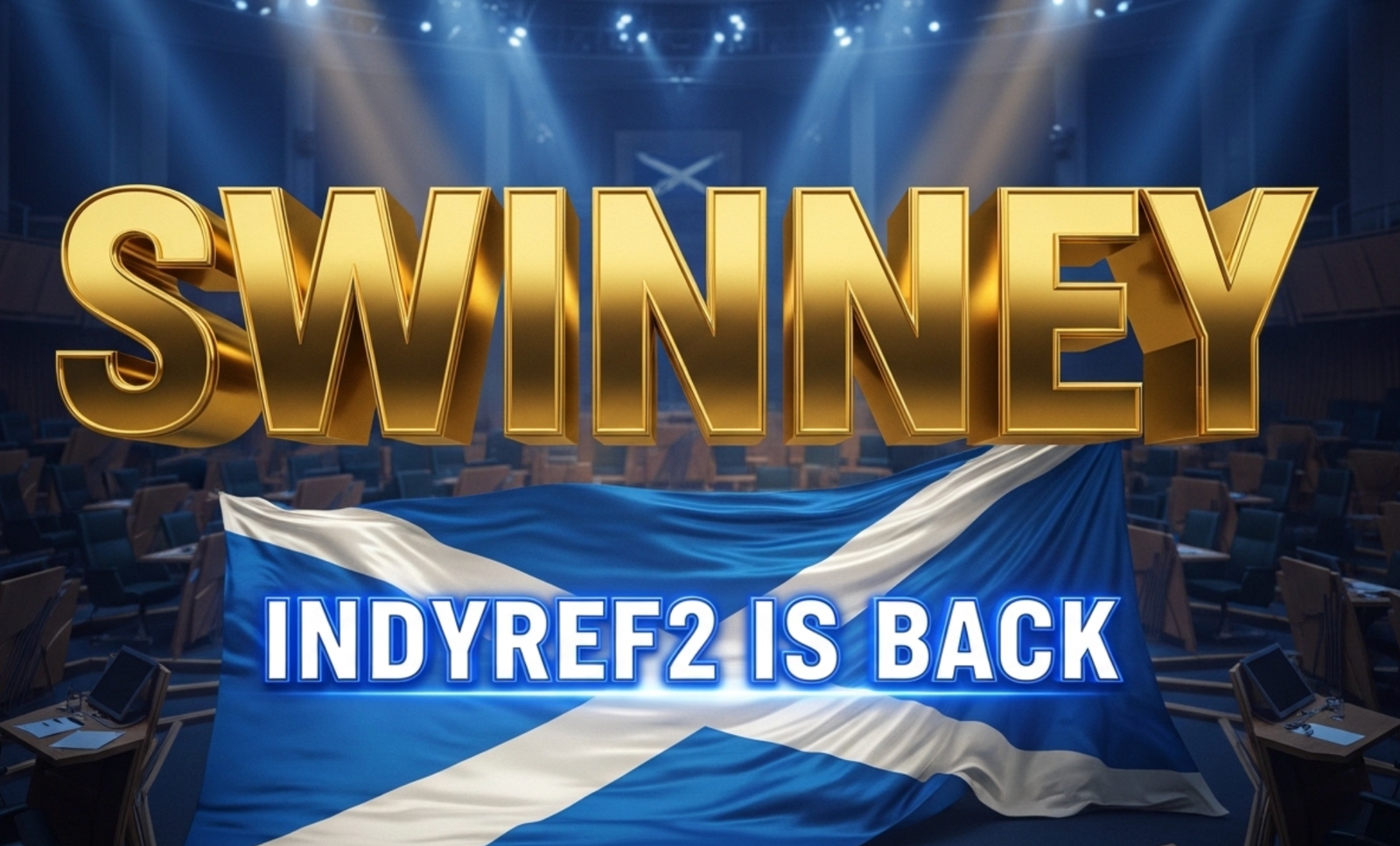
First Minister John Swinney dropped a political bomb on Sunday morning television: win a majority in the May 2026 Holyrood election and the SNP will treat it as a cast-iron mandate to demand a second independence referendum.
The message was blunt, deliberate and aimed straight at the heart of every yes voter in Scotland.
“Be in no doubt,” Swinney told Sky News
Speaking to Trevor Phillips, the First Minister said voters must deliver the SNP a majority if they want Scotland to become independent.
“If people in Scotland want Scotland to become independent, the SNP has got to do really well in this forthcoming election,” he said. “It’s got to achieve a majority in the Scottish parliament.”
He then pointed to history. In 2011 the SNP won 69 seats and an overall majority. Three years later Scotland held the 2014 referendum. Swinney wants voters to see the same path opening again in 2026.
What happens if Keir Starmer says no?
Phillips asked the obvious question: what if the Prime Minister refuses a Section 30 order?
Swinney gave a two-part answer that will rattle Westminster.
First, he said the UK is meant to be a partnership of equals and Scotland has a democratic right to choose its future.
Second, he delivered a line that stopped the political world in its tracks.
“If I win a majority in the Scottish parliament elections in May of this year, I don’t think Keir Starmer will be the prime minister.”
The comment instantly lit up social media and dominated Sunday politics shows. Labour sources called it “desperate stuff.” SNP activists treated it like rocket fuel.
Where the SNP stands right now
The party currently holds 60 of the 129 seats at Holyrood (down from the 64 it won in 2021 after losing some members).
Latest polls show a tight race. A Redfield & Wilton survey published last week put the SNP on 33% for the constituency vote and 25% on the list, with Scottish Labour close behind on 31% and 23%.
On those numbers the SNP would struggle to reach a majority alone. It would need Green support or a dramatic swing in the final months.
Yet Swinney’s team believes the independence question itself can shift the campaign. They point to the 2021 election when the promise of indyref2 helped secure pro-independence parties 72 seats combined.
The constitutional collision course is set
Westminster’s position remains unchanged: now is not the time for another referendum. Keir Starmer repeated that line as recently as December.
But Swinney is deliberately building the case that a democratic event in May 2026 could make refusal politically impossible.
Senior SNP sources say they will demand immediate transfer of power to hold a legal referendum the moment the election results are declared, if they win a majority.
If Starmer still says no, the Scottish Government plans to test the issue in the Supreme Court again, this time armed with a fresh mandate instead of the 2022 reference that was rejected.
This is now the central battle of Scottish politics
For the next fifteen months every council by-election, every budget vote, every opinion poll will be judged against one question: can the SNP get back above 65 seats?
John Swinney has made it crystal clear what he believes the answer must be.
Scotland, he says, faces a simple choice in May 2026: vote SNP for independence, or accept the constitutional status quo forever.
The starting gun has been fired. The fight for Scotland’s future begins now.