

Scotland might not be the first place that springs to mind when you think of snorkelling. But for those who’ve braved the kelp-rich coastlines and chilly tides, it’s a full-on love affair with some of the UK’s most spectacular marine life—and it’s a lot warmer than you’d think.
Elouise Dalziel, who works with the Scottish Wildlife Trust, spends her days building snorkel trails around the country. Yet even off the clock, she finds herself back in the water, mesmerised by everything from sea urchins to soaring raptors overhead. Turns out, wetsuits and woolly hats make quite the adventure pairing.
Not Just for the Med: Scotland’s Snorkel Scene Grows
Snorkelling in Britain sounds like a dare, not a leisure activity. But Elouise disagrees—strongly.
Yes, the water is cold. In May, the sea temperature hovers around 9°C, creeping up to a surprisingly tolerable 15°C by late summer. And yes, you’ll absolutely need a wetsuit. But no, it’s not just for the brave or the bonkers.
More and more, locals and tourists alike are embracing this low-barrier way to explore the Scottish coast. It doesn’t require heavy gear or training, and in many spots, you don’t even need to swim far from the shore.
She puts it plainly: “Some of the best snorkelling I’ve done is in water I could stand up in.”
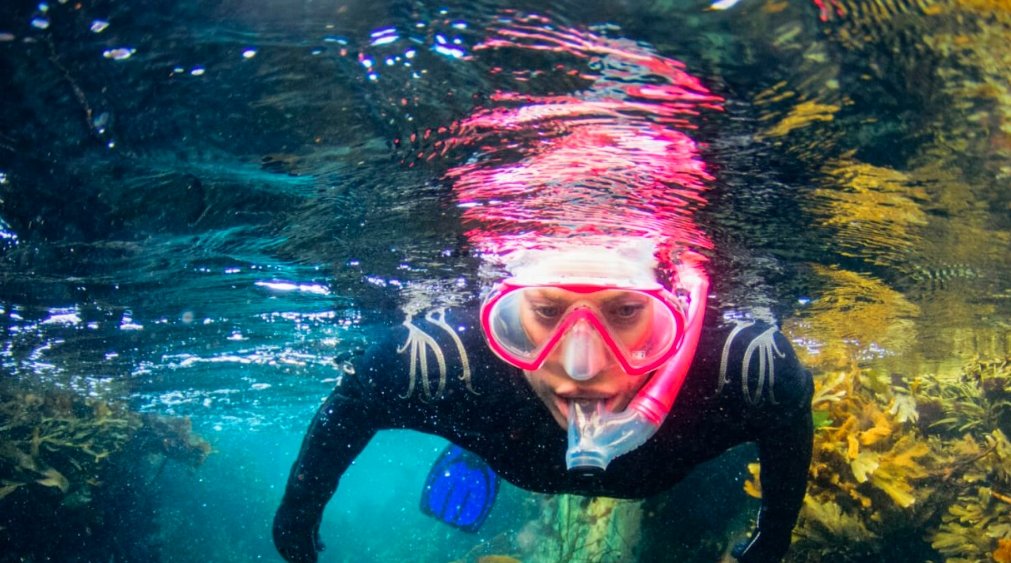
What’s Under There? A Whole Other World
You’d think the cold water would mean fewer creatures, less color, less activity. Quite the opposite.
The Scottish coast—especially around the Hebrides, Shetland, and west coast sea lochs—is bursting with life. One of Elouise’s favourite spots is a kelp forest, where you glide over golden fronds that sway with the waves like slow-motion flames.
Just below the surface, there’s a whole miniature city of marine life:
-
Tiny fish darting through the kelp
-
Brittle stars scuttling across the sand
-
Bold, red beadlet anemones waving in the current
-
Fat, velvety dahlia anemones clinging to rocks
And sometimes, just sometimes, things go cinematic. One day, Elouise was snorkelling over a shimmering school of sand eels when a pod of dolphins rolled through the shallows. As if that wasn’t enough, sea eagles appeared overhead, slicing the sky above the beach.
Snorkel Buddies, Hot Chocolate, and Seals on the Shore
One of the underrated perks of snorkelling? It’s a social sport.
“You should never snorkel alone,” Elouise says. It’s not just safety—it’s camaraderie. Whether you’re bobbing heads in a sea loch or drifting past kelp canyons, it’s something you share. Laughing about fogged-up masks, trading sightings of crabs or jellyfish, and warming up afterward with hot drinks—it’s all part of it.
One-sentence break: Nobody does a post-snorkel flask of hot chocolate like the Scots.
And on the quieter beaches, the only audience might be seals. Sometimes curious, sometimes shy, they’ll watch from the rocks or even slide into the water, trailing you at a distance. It’s both surreal and calming—like snorkelling with ghostly dogs.
It’s Affordable, Accessible – and Criminally Underrated
Scotland isn’t trying to become a snorkelling mecca like the Red Sea or the Maldives. But what it offers is arguably more intimate.
You don’t need a plane ticket or a scuba certification. You don’t even need to be a strong swimmer. Just a wetsuit, a decent mask, and a healthy respect for the tides.
And compared to more “tropical” destinations, Scottish snorkelling is refreshingly low-key. You won’t be elbowed by other tourists or stuck behind boatloads of cruise visitors.
Here’s a quick comparison of what’s needed for snorkelling in Scotland vs. abroad:
| Item/Requirement | Scotland | Typical Tropical Destinations |
|---|---|---|
| Equipment | Wetsuit, mask, snorkel | Swimsuit, mask, snorkel |
| Cost | Low to moderate | Often high (resort pricing) |
| Crowds | Minimal, remote spots | Frequently crowded |
| Marine Life | Unique cold-water species | Tropical coral reef species |
| Accessibility | Many trails near car parks | Often need boat rides |
| Training Required | None | None (usually) |
This accessibility isn’t just practical—it’s philosophical. As Elouise puts it, “We often think we need to go somewhere far and expensive to feel connected to nature. But the truth is, it’s right there, under our noses. Or under our noses in the water, anyway.”
Conservation, Curiosity, and a Different Kind of Adventure
Elouise’s work with the Scottish Wildlife Trust isn’t just about writing guides or plotting GPS routes on maps. It’s about shifting how people see the sea.
By creating snorkel trails, she’s hoping to turn curiosity into care. When people experience marine life firsthand—when they lock eyes with a wrasse or get startled by a crab—they tend to want to protect it. It’s the same idea that transformed hiking into hillwalking, and wild swimming into a full-blown movement.
A quick word of advice, though: always check local tide times. And always—always—respect wildlife. Don’t touch. Don’t chase. Watch, float, enjoy.
“I think people are shocked by how much they see,” she says. “They expect grey rocks and seaweed. But they end up seeing starfish, crabs, seals, sometimes even rays.”
Snorkelling in Scotland doesn’t scream adrenaline. It’s more of a slow-burn thrill. A quiet hum of awe.