

A historic silver coin from the 1130s, believed to be the first ever minted in Scotland, has been discovered by a metal detectorist and now preserved for the public. This rare find from King David I’s reign, unearthed in 2023 near Penicuik in Midlothian, offers fresh insights into Scotland’s early economy and has been acquired by National Museums Scotland after a legal process.
Discovery in Midlothian Woods
In 2023, a metal detectorist stumbled upon the ancient silver coin while exploring a wooded area near Penicuik, a town in Midlothian just south of Edinburgh. The finder followed Scottish law by reporting the treasure to authorities, sparking excitement among historians and archaeologists.
Experts quickly identified it as a coin from the second half of the 1130s, during King David I’s rule. This period marked a turning point when Scotland began producing its own money, moving away from relying on foreign currencies like those from England or Viking traders.
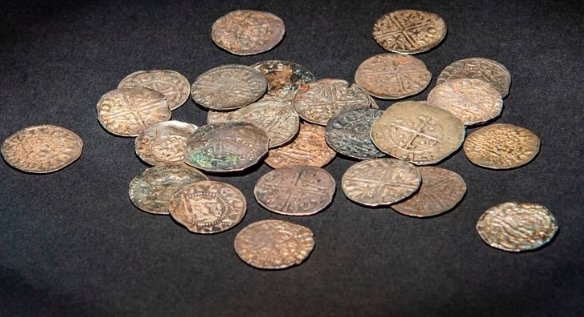
The coin’s condition, despite nearly 900 years in the ground, allowed for detailed study. It shows signs of wear but clear markings that confirm its origin.
Historical Importance of David I’s Coinage
King David I, who ruled Scotland from 1124 to 1153, introduced the nation’s first native coins to strengthen trade and royal power. Before this, people in Scotland used a mix of Roman, Viking, and English money for daily exchanges.
Historians once thought all of David I’s early coins came from a mint in Carlisle, which he controlled in the 1130s after capturing it from England. But this new find proves otherwise.
This particular coin was minted in Edinburgh, making it the earliest known example produced within Scotland’s core territories. It highlights how David I expanded minting operations as his kingdom grew.
The discovery challenges old ideas about medieval Scottish economy. It suggests faster development of local currency than previously believed, tying into broader European trends where kings used coins to assert control.
Recent studies link this to David I’s reforms, inspired by his time in England. He brought Norman influences, including advanced minting techniques, which helped modernize Scotland.
Acquisition and Reward Process
Under Scotland’s Treasure Trove system, finds like this must be reported, and a panel decides their fate. The Scottish Archaeological Finds Allocation Panel reviewed the coin and assigned it to National Museums Scotland.
The coin received a valuation of 15,000 pounds, which was paid as a reward to the finder by the King’s and Lord Treasurer’s Remembrancer. This process ensures fair compensation while keeping artifacts in public hands.
National Museums Scotland plans to use the coin for research, with hopes of displaying it soon. Curators say it will join other medieval treasures, educating visitors about Scotland’s past.
This system has preserved many artifacts over the years, from ancient jewelry to weapons. It balances private discovery with national heritage protection.
Here are key steps in the Treasure Trove process:
- Report the find to authorities within a set time.
- Experts assess historical value and condition.
- A panel allocates it to a museum or returns it if not significant.
- Finder gets a market-value reward if acquired.
What the Coin Reveals About Medieval Scotland
The silver coin, small and round, features designs typical of the era, including a profile that may represent the king. Made from silver, it was likely used for trade in markets or taxes.
Analysis shows it weighs about one gram, standard for pennies of the time. Its minting in Edinburgh points to a growing urban center, even in the 12th century.
This find connects to other recent discoveries, like Viking hoards in Scotland, showing a rich numismatic history. It also ties into 2025 trends in archaeology, where metal detecting has led to more public involvement in heritage.
Experts predict more such finds as technology improves. For instance, advanced detectors now uncover items buried deeper than before.
| Aspect | Details |
|---|---|
| King | David I (ruled 1124-1153) |
| Mint Location | Edinburgh, Scotland |
| Date | Second half of 1130s |
| Material | Silver |
| Value Today | 15,000 pounds (reward) |
| Discovery Year | 2023 |
| Current Holder | National Museums Scotland |
Future Research and Display Plans
National Museums Scotland aims to study the coin further, using modern techniques like X-ray analysis to learn about its composition without damage. This could reveal trade routes for the silver used.
Plans include possible exhibitions, allowing the public to see this piece of history up close. It might feature in displays about medieval Scotland, alongside artifacts from the same era.
The acquisition comes at a time when interest in Scottish heritage is high, boosted by popular media like historical dramas. Museums report rising visitor numbers for such exhibits.
Broader Impact on Archaeology
This coin’s story inspires amateur historians and detectorists across the UK. It shows how everyday people can contribute to big discoveries.
Similar finds in England and Wales have rewritten history books, like Roman coins unearthed in fields. In Scotland, it builds on a tradition of protecting treasures, supported by laws that encourage reporting.
As climate change affects soil and exposes more artifacts, experts expect an uptick in discoveries. This could lead to new understandings of ancient economies.
Share your thoughts on this historic find in the comments below, and spread the word by sharing this article with fellow history enthusiasts.