
 Ishan Crawford
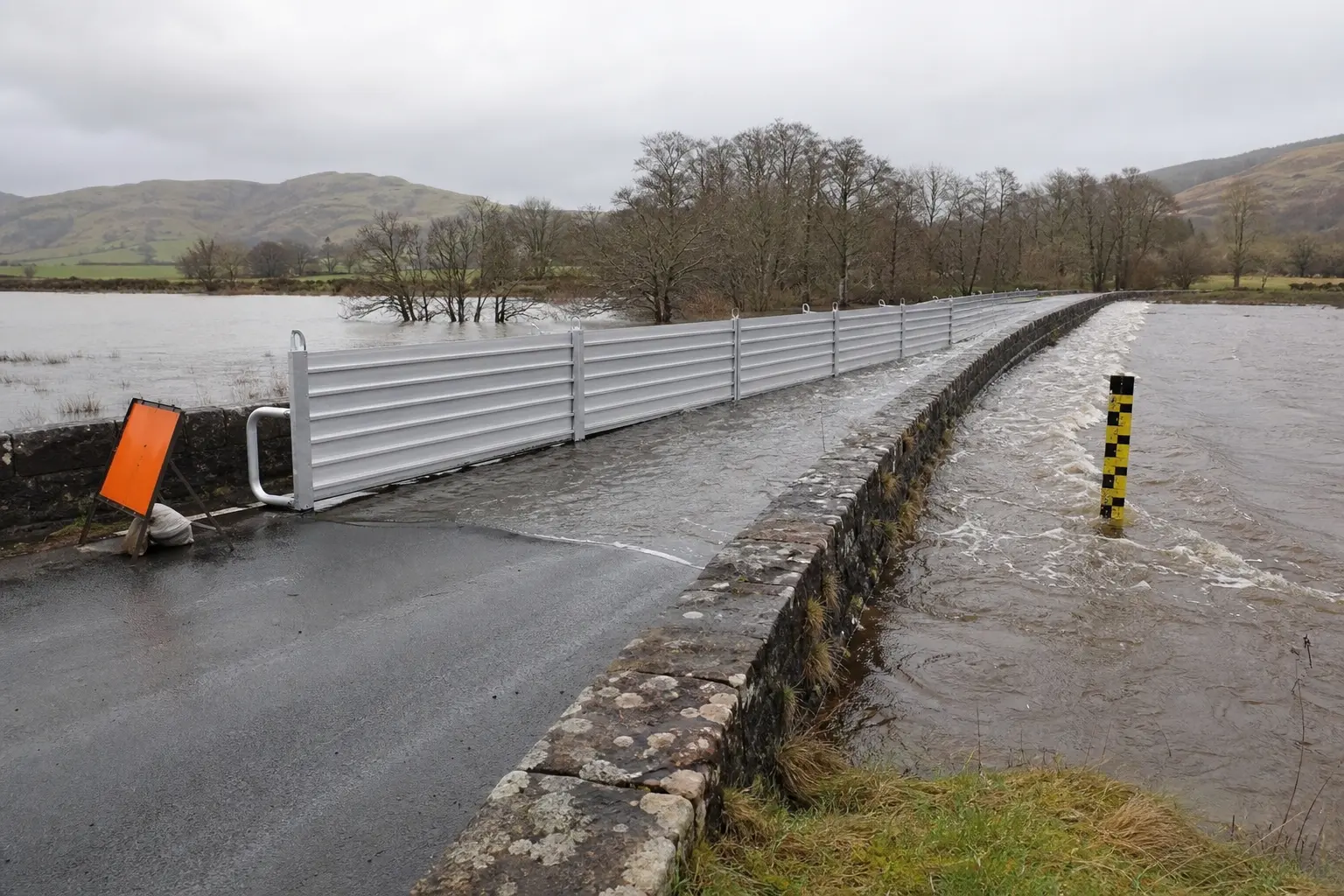
 Flooding already costs Scotland an estimated £500 million a year, up from £310 million in 2018. New research from ClimateXChange and the University of Strathclyde says the country now needs another £7.8 billion to £14.2 billion in climate adaptation spending by 2040 just to keep that bill from climbing further.
The study is the first to put a comprehensive price tag on adaptation across five sectors: agriculture, communities and flooding, the natural environment, transport, and water. Only one of those five, agriculture, is broadly on track. Flood resilience, transport and nature restoration are already falling behind what the next fifteen years will demand.
Scotland’s Flood Bill Was Already Climbing
The £500 million annual flood cost is not a projection. It is what the Scottish Environment Protection Agency (SEPA) says the country is paying right now, and the number has grown by roughly £190 million since 2018.
SEPA’s flood risk data shows the exposure widening alongside the cost. Its most recent national assessment puts 400,000 properties now at medium flood risk, up from 284,000 in 2018. That figure is projected to reach 634,000 by 2100 as the climate keeps shifting.
That is the backdrop the new research was built against. Scotland was already absorbing a rising flood bill before anyone tried to price out what fixing the underlying resilience gap would actually cost.
Researchers Put the First Full Price Tag on Adaptation
The study puts total adaptation investment need at £7.8 billion to £14.2 billion between 2026 and 2040, or the equivalent of £566 million to £1.03 billion every year across the five sectors. Scotland’s overall adaptation needs, the researchers note, are likely higher still once sectors outside the five studied are counted.
Louise Brett led the work while in the University of Strathclyde’s department of civil and environmental engineering and as a ClimateXChange fellow. The research is the first comprehensive estimate of adaptation needs Scotland has produced, drawing on a five-sector investment needs analysis covering eight subsectors in total.
Preparing Scotland for climate change will require significant long-term investment, but our research shows that acting early is likely to cost less than responding after climate impacts occur. The cost of adaption may be substantial, but the costs of inaction are likely to be greater.
Brett’s conclusion is blunt: paying for resilience now beats paying for recovery later. She said the report’s core message is that investing in adaptation is more beneficial and more cost-effective than failing to adapt at all.
Agriculture Keeps Pace While Three Sectors Fall Behind
The report’s most useful contribution may be the sector-by-sector split. It shows exactly where Scotland’s current spending already matches what the science says is needed, and where it does not.
| Sector | Investment Status, 2026 to 2040 | Supporting Evidence |
|---|---|---|
| Agriculture | Broadly aligned with needs | The only one of the five sectors the researchers found on track |
| Communities (flooding) | Falls short | Current flood damage already running at £500 million a year, per SEPA |
| Transport | Falls short | Flagged as needing extra investment just to hold current risk levels, not reduce them |
| Natural environment | Falls short | Covers nature restoration; Scotland’s wider climate exposure already includes wildfire hotspots that lingered in the Cairngorms a year after the country’s record blaze |
That table reads as a warning about compounding risk. Roads and rail lines built for a different climate, flood defenses sized for an older rainfall pattern, and habitats already stressed by heat and drought are exactly the systems the report says are not getting enough money to keep pace.
The Growth Hit Compounds by Decade
The report also tries to answer a harder question: what does inaction cost the whole economy, not just the sectors directly affected. Its GDP estimates get steadily worse the further out they run.
- 2030s: climate impacts could shave 0.3 to 0.4 percent off GDP each year.
- 2050s: that annual drag widens to 1.2 to 1.6 percent.
- 2070s: losses could reach 1.6 to 3.3 percent of GDP a year.
Those are central estimates, not worst cases. The pattern is steep: a fourfold jump in the low estimate between the 2030s and the 2070s, and roughly an eightfold jump at the high end.
Who Ends Up Paying
Kit England, senior adaptation specialist at Paul Watkiss Associates and a visiting research fellow at the London School of Economics, said “As costs of adaptation rise, we will need a greater focus on who pays and why.”
England’s point is that the bill is not abstract. Adaptation costs are already being shared across society, he said, and there is room to borrow financing models from elsewhere in the world to spread responsibility more fairly across the public sector, households and businesses. Right now, funding for adaptation in Scotland runs predominantly through central and local government, covering transport, flood management, water infrastructure, agriculture and the natural environment.
England co-directs the UK Adaptation Investment Framework work under a project building a UK climate adaptation investment framework, known as ATTENUATE, which also helped support the Scotland research. Its stated aims are threefold.
- Build the economic evidence base on the costs and benefits of specific adaptation policies
- Work out how government can shape the conditions that pull in private finance
- Identify and tackle the behavioural barriers still holding back investment in resilience
The Fourth Adaptation Plan Becomes the Next Test
The research was designed to feed directly into government planning. Scotland is currently operating under the current 2024 to 2029 national adaptation plan, its third since the process began, and work is already underway on a fourth.
Christopher White, professor and head of the University of Strathclyde’s centre for water, environment, sustainability and public health, said “Without a clearer picture of adaptation investment needs, it is difficult to plan strategically, allocate budgets effectively or make the case for mobilising private alongside public investment.”
White called the report an important starting point for closing that evidence gap, while acknowledging that estimating future adaptation needs involves real uncertainty. The timing lines up with a bigger UK-wide milestone: the statutory fourth UK Climate Change Risk Assessment is due to be laid before Parliament in early 2027, and Scotland’s fourth adaptation plan is expected to follow shortly after, this time with a price tag already attached to it.
Frequently Asked Questions
What Is ClimateXChange?
ClimateXChange is described in the research as Scotland’s centre of expertise on climate change. It commissioned this adaptation investment study and works with the Scottish Government to build the evidence base behind national climate policy.
How Often Is the Scottish National Adaptation Plan Updated?
The plan is published every five years, timed to align with the latest UK Climate Change Risk Assessment. The current version runs from 2024 to 2029, and a fourth plan is already in development.
What Does the ATTENUATE Project Do?
ATTENUATE is funded by a £1.9 million grant from UK Research and Innovation and Defra under the Maximising UK Adaptation to Climate Change programme. It is led by the London School of Economics’ Grantham Research Institute alongside partners including the Environment Agency, the Green Finance Institute, Paul Watkiss Associates and the University of Bath.
Could the Economic Impact Be Worse Than Estimated?
Yes. The researchers say their GDP figures do not fully capture low-probability, high-impact or catastrophic climate events, which could produce substantially greater losses than the central estimates suggest.
Who Pays for Climate Adaptation in Scotland Today?
Funding currently runs predominantly through central and local government, covering adaptation-relevant spending across transport, flood management, water infrastructure, agriculture and the natural environment. Researchers say that balance will need to shift to include more private and household contribution as costs rise.
 ONGC licence frees Venezuela cash and operatorship talks
  Anthropic Hits $65 Billion Run Rate and Flips the AI Cash Test
  Supreme Court grounds the fare free-for-all with three-week clock
  Gold Nears $4400 as Soft Data Meets Oil Inflation Risk
  Nifty Slips as Zaggle Circuits and Dhoot Debuts Big
  Diesel Crack Tops $100 as Iran Rhetoric Lifts Crude