
A powerful new report warns that rural communities risk being forgotten again as Scotland heads to the crucial Holyrood election in May 2026. Families in Dumfries & Galloway and the Scottish Borders are trapped in low pay, sky-high fuel bills and crumbling transport links while politicians focus on urban battlegrounds.
The Centre for Social Justice (CSJ) report Voices from the Margins lays bare a crisis that official statistics have hidden for years. It shows working households forced to choose between heating their homes or feeding their children, with one charity worker saying bluntly: “You can’t eat grass.”
Wages Lag Far Behind Urban Scotland
Median hourly pay in Dumfries & Galloway and the Scottish Borders sits 13 percent below the Scottish average, among the lowest rates in the entire country.
Even where employment looks healthy on paper, the jobs are often seasonal, zero-hours or part-time. Underemployment is rife. People want more hours but cannot get them.
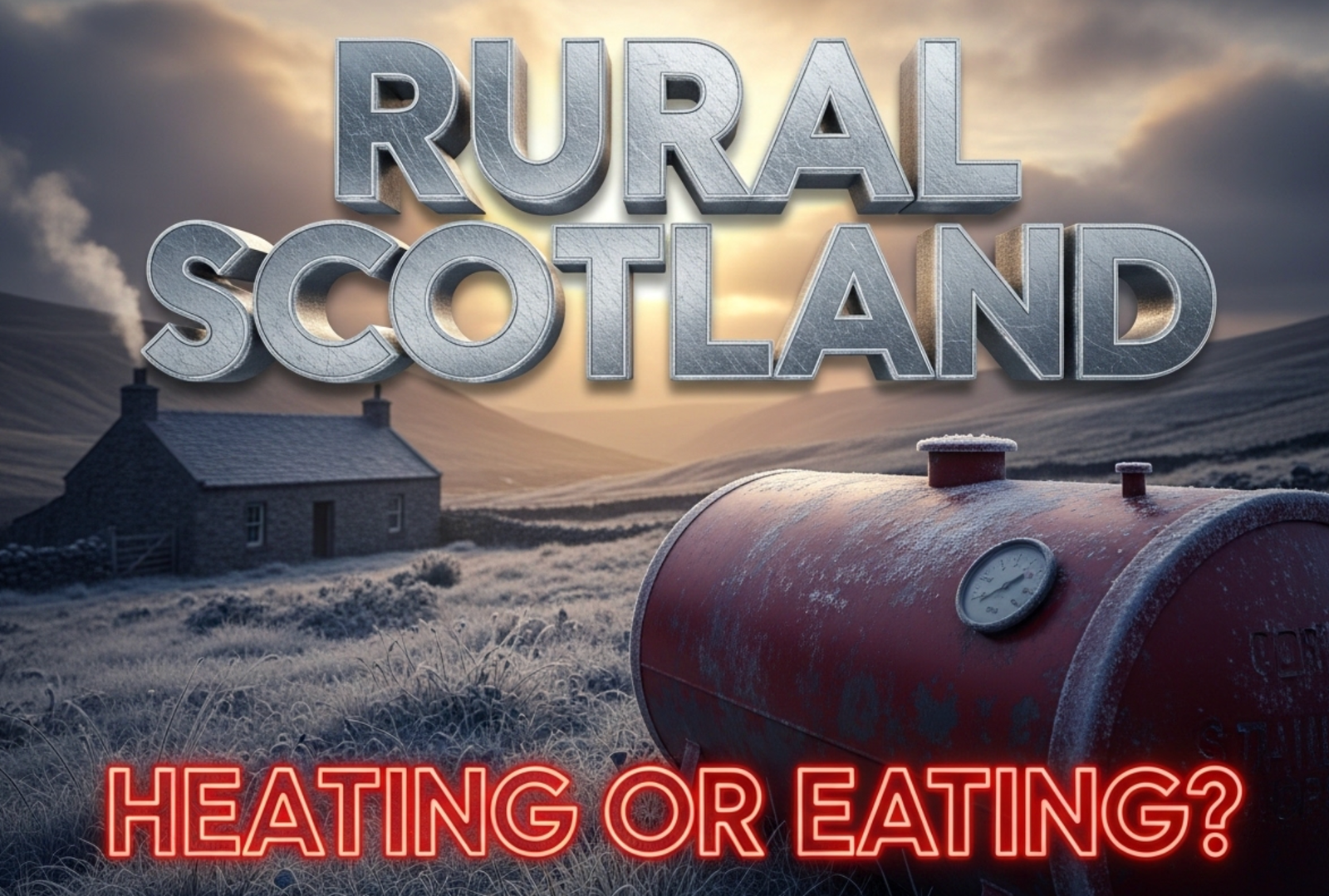
Higher transport costs and off-grid heating pile on extra pressure. The report found almost one in three households in these areas live in fuel poverty, a figure that spikes brutally when heating oil prices jump in winter.
Transport Poverty Traps Families
Getting to work, college or hospital appointments can take hours and cost a fortune.
Bus services have been slashed in many villages. Timetables do not match shift patterns or college start times. Young people routinely spend three or four hours a day travelling.
One parent told researchers her child leaves home at 6.30am to reach college for 9am and does not get back until after 6pm. Missing a connection means missing a whole day of learning.
Without a car, many appointments are simply skipped. Health suffers as a result.
Official Measures Miss the Real Picture
Scotland’s Index of Multiple Deprivation (SIMD) ranks areas by postcode. In cities, poverty clusters in certain neighborhoods and shows up clearly.
In rural Scotland, hardship is scattered across wide areas. A struggling family might live next door to a wealthy retiree, so the postcode looks fine. Entire communities fall off the radar.
The CSJ report calls this “dispersed deprivation” and says it leaves rural poverty invisible to policymakers in Edinburgh.
Community Groups Fill the Gaps
Across the south of Scotland, small charities and community organisations have become lifelines.
They run food larders from church halls, deliver firewood to elderly residents, provide tablets and data to children cut off from online learning, and offer warm spaces when heating becomes unaffordable.
These groups know every family by name. They spot problems early and respond fast. Yet most survive hand-to-mouth on short-term grants.
One worker in Stranraer told the CSJ team: “We are exhausted, but if we stop, people go under.”
What Rural Scotland Actually Needs
The report lists practical solutions that are already working on the ground:
- Long-term funding for community anchor organisations instead of year-by-year applications
- Proper rural proofing of every new policy from Edinburgh
- Serious investment in affordable housing that is not tied to farms or estates
- Electric bus networks linking villages to towns and colleges
- Subsidised heating oil buying clubs and faster roll-out of renewable alternatives for off-grid homes
- Better digital connectivity so people can work and study from home
These are not radical demands. They are basic fairness.
With the Holyrood election just four months away, every party now has a choice. Keep treating rural Scotland as scenic backdrop or finally give it the priority it deserves.
When rural communities get the investment and respect they need, families stop making impossible choices every winter. Young people stay instead of leaving. Local businesses grow. Scotland as a whole becomes stronger and fairer.
The message from the south of Scotland is clear: stop talking about us warmly and start acting like we matter.
What do you think politicians should promise rural Scotland in their manifestos? Drop your thoughts in the comments below.