
 Ishan Crawford
 India has cleared the Reserve Bank of India (RBI) to print two billion polymer banknotes, more than a decade after a nearly identical plan collapsed because cash machines could not read the plastic. The government told Parliament on Monday it has approved 1 billion pieces each of the ₹10 and ₹20 note in polymer for field trials, with regular issuance to follow if those trials succeed.
The announcement came from Minister of State for Finance Pankaj Chaudhary, in a written reply to the Lok Sabha. It reads like routine housekeeping. It is actually round two of an experiment India already tried and walked away from once.
A Written Reply Clears Two Billion Notes
Chaudhary told the Lok Sabha that the RBI, acting on a recommendation from its own Central Board, sent the government a proposal under Section 25 of the Reserve Bank of India Act, 1934, the provision governing the design, form and material of the country’s currency. “The proposal has been approved by the government,” he said.
The plan covers two steps. First, 1 billion ₹10 notes and 1 billion ₹20 notes go into circulation as a trial. Second, if that trial works, the RBI moves to regular polymer issuance in both denominations. Chaudhary was explicit that paper is not going anywhere: the polymer notes will circulate alongside paper-substrate currency, not instead of it.
Business Standard first reported in May that the RBI was weighing polymer notes to stretch banknote lifespans and keep pace with surging cash demand. RBI Governor Sanjay Malhotra confirmed in June that a proposal was under consideration, though he described it as being at a preliminary stage with no final call made and the central bank still weighing the tradeoffs.
The Five Cities That Killed the Last Attempt
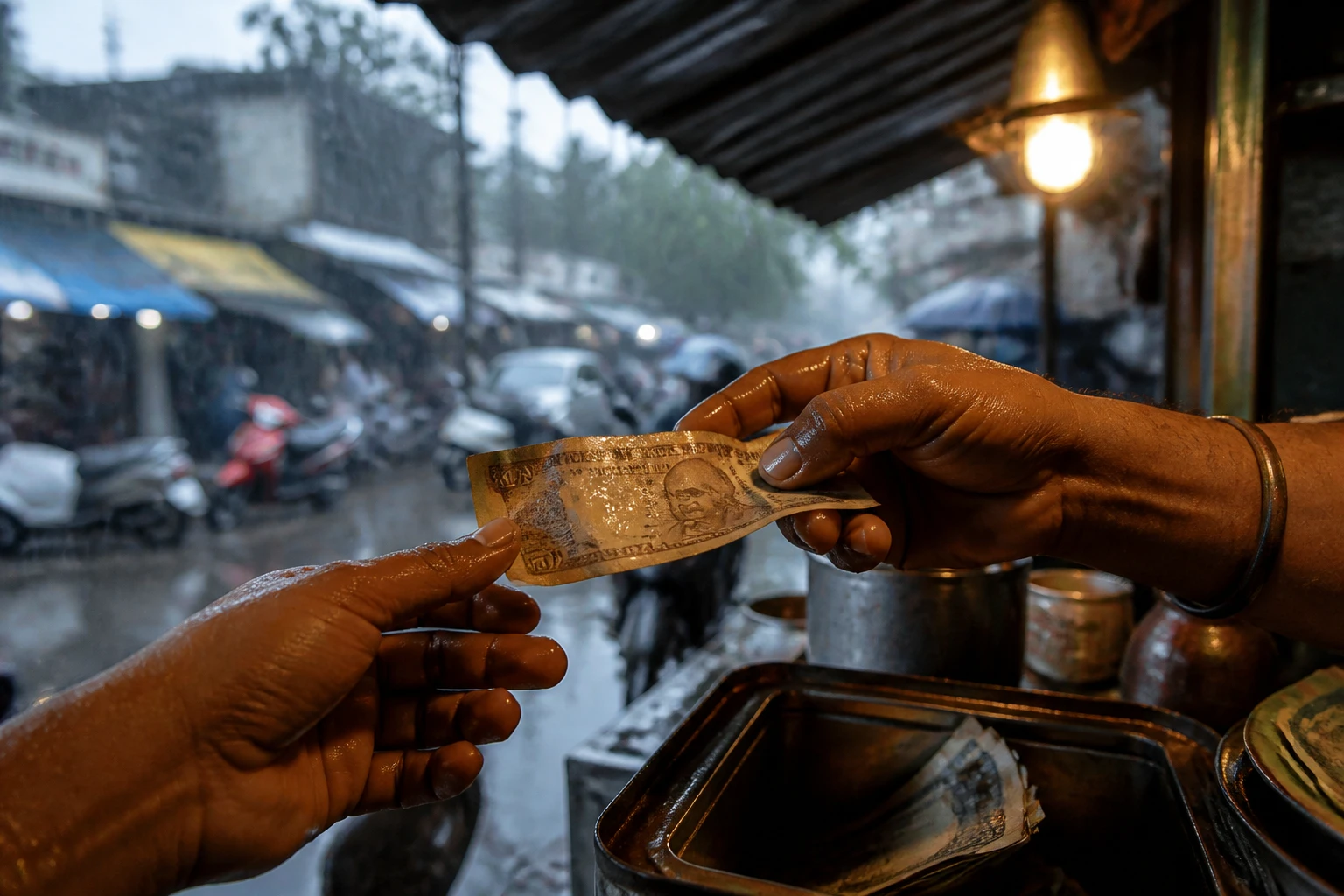
India did not invent this idea in 2026. It first tried polymer notes in 2012, printing 1 billion ₹10 notes and running field trials across five cities chosen for contrasting climates: Kochi, Mysore, Jaipur, Bhubaneswar and Shimla.
The pilot ran into hardware, not chemistry. ATMs and note-sorting machines built for paper struggled to reliably identify and dispense the thicker, slicker polymer sheets. The texture that makes polymer notes durable, a smooth, water-resistant film rather than cotton-fibre paper, was exactly what confused machines designed decades earlier. The project was shelved.
Fourteen years is a long gap for what was, on paper, a simple durability fix. It suggests the 2012 failure was never really about whether polymer notes work. It was about whether India’s cash infrastructure, at the time, could handle them.
What Changed Since the ATMs Rejected Plastic
Two things moved since 2012. Machines got better, and the cost math got worse.
On the hardware side, the ATM and sorting-machine limitations that sank the first pilot have largely been resolved; current-generation machines can identify and dispense polymer notes reliably. On the cost side, the RBI’s own annual report shows what paper is starting to cost. Securely printing currency notes ran to ₹6,372.8 crore in FY25, up 24.9% from ₹5,101.4 crore the year before, driven mainly by a bigger printing order to meet demand.
Chaudhary cited the RBI’s position that “as per international studies, the life span of polymer banknotes is significantly higher than that of paper banknotes.” The numbers back that up. Research the Reserve Bank of Australia (RBA) published in its own cost-benefit analysis of polymer banknotes found its paper notes were lasting just six to twelve months in circulation before the country switched. Canada’s central bank says its own polymer notes run about four times longer than the paper bills they replaced, projecting an 11-year life for a $10 note and 16 years for a $20. Other research puts the multiple closer to 2.5 times paper’s lifespan, depending on climate and handling.
| Detail | 2012 Attempt | 2026 Trial |
|---|---|---|
| Denominations | ₹10 only | ₹10 and ₹20 |
| Notes printed for testing | 1 billion | 2 billion (1 billion each) |
| Test cities named | Kochi, Mysore, Jaipur, Bhubaneswar, Shimla | Not yet disclosed |
| Outcome | Shelved after ATMs and sorting machines failed to process the notes | Pending; regular issuance follows successful trials |
The gap in that bottom-right cell matters. The government has approved volumes and denominations. It has not yet said where the 2026 trial will run or how long it will last.
Sixty Countries Got There First
India is a very late adopter here, not a pioneer. Roughly 60 countries have already put polymer banknotes into circulation, and the pattern in how they got there looks a lot like India’s own stated reasoning today.
- 1988: Australia issues the world’s first polymer banknote, a ten-dollar bill, after finding its paper notes lasted just six to twelve months in circulation.
- 1990s: Singapore, Indonesia, Thailand and Malaysia follow with polymer notes of their own.
- 1999: Romania becomes the first European country to issue a polymer banknote.
- 2011: Canada begins converting its currency to polymer.
- 2012: India runs a one-billion-note ₹10 polymer pilot across five cities, then shelves it.
- 2026: The government clears the RBI to try again, this time with both the ₹10 and ₹20 note.
The United Kingdom offers the clearest recent template for how a mature note-issuing authority manages the switch. The Bank of England now sources the material for its £5, £10 and next £50 notes from two competing suppliers rather than one, a decision it announced to remove the risk of relying on a single source. It is a model India’s own currency planners will likely have studied.
Who Profits From Plastic Rupees
A shift this size does not stay confined to the RBI’s ledger. A handful of players stand to gain or absorb costs long before any note reaches a customer’s wallet.
- Global substrate suppliers – firms such as CCL Secure and De La Rue dominate the world’s polymer banknote film business, with CCL’s Guardian substrate alone used in more than 160 denominations across 24 countries. A rupee-scale order would be a significant new account for whichever supplier lands it.
- ATM and note-sorting machine makers – the hardware that rejected plastic notes in 2012 has since been upgraded, and any national rollout means further recalibration and replacement work across banks.
- Small cash vendors – tea stalls, auto-rickshaw drivers and street markets handle the most worn ₹10 and ₹20 notes every day and would feel a durability upgrade before anyone else does.
- Currency press operators – polymer notes need different ink, presses and quality checks than paper, a shift with its own cost curve regardless of who wins the substrate contract.
None of these stakeholders featured in Chaudhary’s written reply. All of them will shape whether the trial actually scales.
Is Cash Being Replaced by Plastic?
No. The government has been explicit that polymer notes supplement paper currency rather than replace it, and there is no proposal to phase paper out.
Chaudhary also addressed the question of what a durability upgrade to cash means for India’s digital payments boom. He said the effect, if any, could only be measured once polymer notes are regularly issued, and offered a simple framing for how the two are meant to coexist.
Banknotes and digital payment systems are complementary payment tools available to the public.
Chaudhary made the remark in his written Lok Sabha reply, addressing concerns that a cash durability upgrade might work against India’s push toward digital transactions.
The clarification matters because confusion had already spread once. A viral claim that all paper currency would be scrapped for plastic starting June 30, 2026, circulated widely online before the Press Information Bureau, the government’s own fact-checking arm, declared it false.
What we know:
- Approved: 1 billion ₹10 and 1 billion ₹20 polymer notes are cleared for field trials, with regular issuance to follow success.
- No replacement: paper notes continue in parallel; there is no plan to withdraw them.
- Debunked: the claim that paper currency would vanish by a fixed 2026 date was false, per the Press Information Bureau.
What’s unconfirmed:
- Trial locations and timeline: the government has not named cities or a completion date for the 2026 trial.
- Substrate sourcing: whether India will use a domestic or foreign polymer supplier has not been disclosed.
- Digital payments impact: the government says any effect on digital transactions can only be measured after regular issuance begins.
The trial’s outcome, not the announcement, is what actually decides whether ₹10 and ₹20 notes go plastic nationwide.
Frequently Asked Questions
Will paper currency be phased out in India?
No timeline exists for any such move, and none is planned. The government has said polymer ₹10 and ₹20 notes will circulate alongside paper currency, and no proposal to withdraw paper notes has been made at any stage of this process.
Which countries currently use polymer banknotes?
About 60 countries have issued polymer banknotes, including Australia, Singapore, Indonesia, Thailand, Malaysia, Romania, Canada and the United Kingdom. Australia was first, in 1988, and Romania was the first in Europe, in 1999.
Are polymer notes better for the environment than paper ones?
Evidence from other countries suggests yes, largely because they last longer and get replaced less often. A UK study by the Carbon Trust found a polymer five-pound note carried a 16% smaller carbon footprint than the paper note it replaced, while a ten-pound polymer note’s footprint was about 8% smaller.
What is Section 25 of the Reserve Bank of India Act, 1934?
It is the legal provision governing the design, form and material of India’s banknotes. It requires the RBI’s Central Board to recommend changes like a new note material, with final approval resting with the central government, which is the exact mechanism Chaudhary cited for this approval.
Do polymer notes cost more to produce than paper notes?
Yes, upfront. Polymer substrate and its added security features cost more per note to manufacture than paper. Central banks that have already made the switch, including Australia’s, argue the math still works because polymer notes need replacing far less often, cutting long-run printing and distribution costs.
 ONGC licence frees Venezuela cash and operatorship talks
  Anthropic Hits $65 Billion Run Rate and Flips the AI Cash Test
  Supreme Court grounds the fare free-for-all with three-week clock
  Gold Nears $4400 as Soft Data Meets Oil Inflation Risk
  Nifty Slips as Zaggle Circuits and Dhoot Debuts Big
  Diesel Crack Tops $100 as Iran Rhetoric Lifts Crude