
 Ishan Crawford
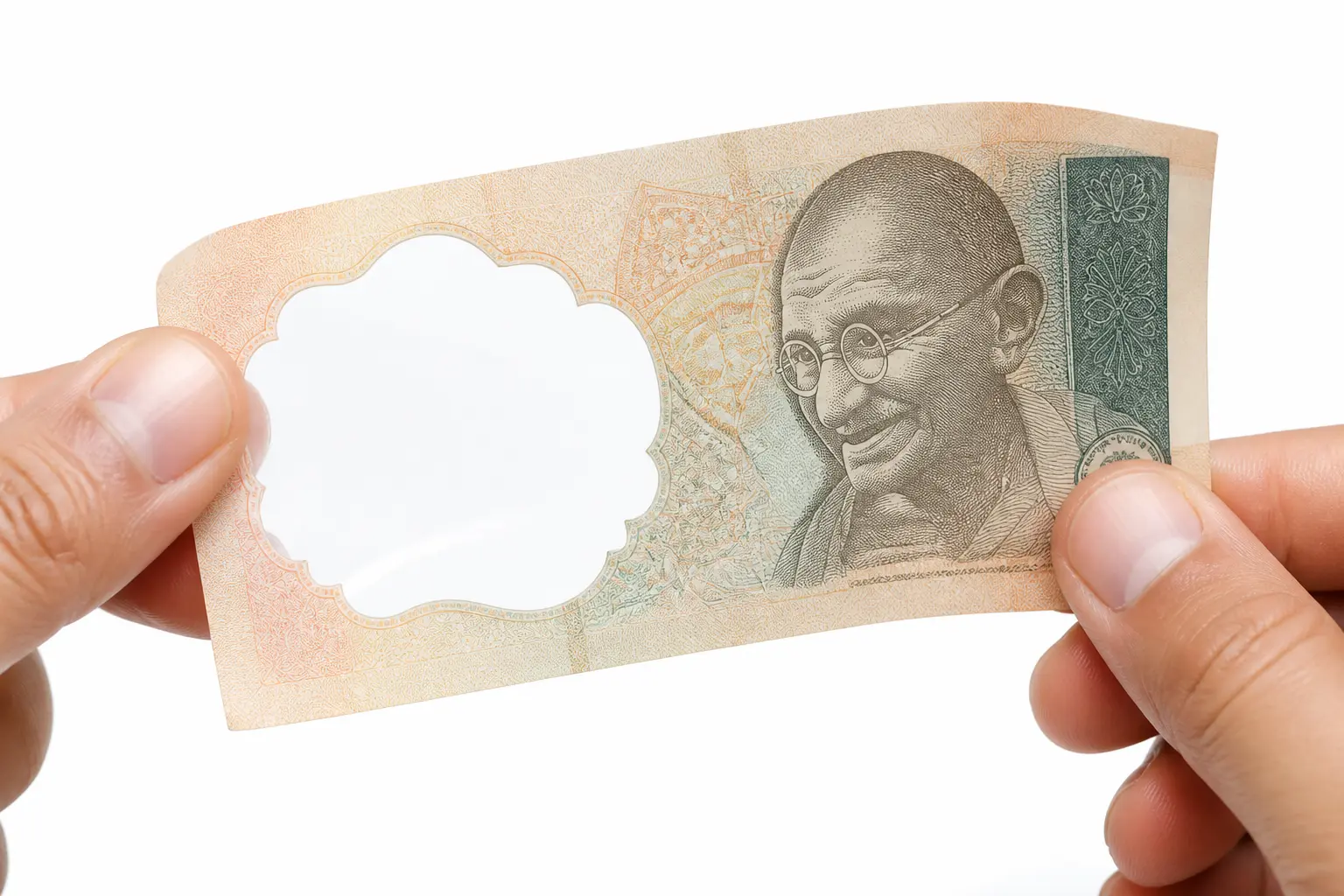
 The government has authorised the Reserve Bank of India to print 2 billion polymer banknotes for field trials, one billion each of Rs 10 and Rs 20. Minister of State for Finance Pankaj Chaudhary told the Lok Sabha the notes will run alongside paper currency, with no plan to scrap paper notes.
BRBNMPL, the RBI’s printing arm, has already floated a global tender for the special plastic substrate. The move revives a pilot first floated more than a decade ago.
The 2-Billion-Note Pilot Takes Shape
Chaudhary said the RBI will print the initial batch after security standards are locked and material links to China or Pakistan are ruled out. Rollout could take several months. Both polymer and paper will circulate together.
The denominations chosen are the ones that soil and tear fastest in daily use. At the end of the last financial year they made up nearly one-fourth of all banknotes by number but only 1.4% by value.
- 2 billion total polymer notes approved for trials
- 1 billion each of Rs 10 and Rs 20
- 68,000 reams of substrate sought in the first phase
- Printing spend already fell to Rs 4,875 crore in 2025-26
RBI data show currency in circulation still climbed 12% to Rs 41.23 lakh crore by end-March 2026 even as fewer notes were printed.
Why the Small Notes Come First
Low-value notes turn over fastest. They pass through more hands, wallets and markets than higher denominations. Paper versions therefore need replacement more often.
| Denomination share | By number of notes | By value |
|---|---|---|
| Rs 10 + Rs 20 combined | Nearly 25% | 1.4% |
| Overall CIC end-March 2026 | – | Rs 41.23 lakh crore |
| Print spend 2025-26 | – | Rs 4,875 crore (down ~25%) |
International studies cited by the RBI find polymer lasts significantly longer than paper. That gap is widest for the notes people handle every day.
The 2012 Pilot That Never Took Off
This is not India’s first look at plastic currency. A Press Information Bureau release of 13 December 2012 said the RBI and the Centre had examined polymer substrate and decided on a pilot of one billion Rs 10 notes across five cities.
- December 2012: PIB announces RBI-Centre plan for 1 billion polymer Rs 10 notes on pilot basis.
- Around 2013: Limited field trial references appear; full rollout never follows.
- June 2026: RBI Governor notes the polymer proposal remains under evaluation.
- July 2026: Government clears 2 billion notes for new field trials; BRBNMPL floats tender.
Contemporary accounts point to ATM compatibility, handling and technology hurdles that stalled the earlier effort. Officials now say those issues have been reassessed.
What Sixty Countries Already Proved
Australia issued the world’s first polymer note in 1988 and completed a full series by the mid-1990s. A Reserve Bank of Australia cost-benefit study later found the switch produced net savings of close to $1 billion over 25 years in inflation-adjusted terms. Low denominations broke even inside four years because paper versions often lasted only six to twelve months.
The Bank of Canada moved to polymer from 2011. Its own fact sheets state the notes last at least 2.5 times longer than cotton-paper ones and cut processing and replacement costs. An IMF review of the technology noted that polymer notes last more than twice as long as paper, with higher denominations lasting even longer.
| Country / region | Polymer milestone | Reported life advantage |
|---|---|---|
| Australia | First full series 1992-96 | Paper low-denom ~6-12 months; large net savings |
| Canada | Transition from 2011 | At least 2.5× paper life |
| United Kingdom | Polymer series rolled out | Default modelling 2.5× |
| ~60 countries total | Some or all denominations | Generally 2-5× longer life cited |
Thailand, Vietnam, Malaysia, Singapore and New Zealand also use polymer for part or all of their series. India would be late among large economies but would start with the highest-turnover notes where the payback is quickest.
Tender Rules Shut Out China and Pakistan
Bharatiya Reserve Bank Note Mudran Pvt Ltd issued a global EOI for polymer substrate sheets on 17 July 2026. Bids close 18 August. The call is for 68,000 reams of Biaxially Oriented Polypropylene-based opacified polymer (34,000 reams per denomination), each ream 500 sheets. Material must carry features such as a clear window with portrait, metallic numeral, magnetic pseudo thread, shadow image and iridescent pattern.
- Suppliers need government security clearance
- Any China or Pakistan operations must be isolated from the India contract
- Raw materials for Indian substrate cannot originate in China or Pakistan
- India-specific substrate cannot be supplied to any third country
- Bidders must have supplied security-embedded polymer substrate to central banks or printers for at least the last three years
- Minimum capacity proof: 20,400 reams (30% of the indicated need)
Larger orders are expected only after successful field trials. Presses at BRBNMPL and SPMCIL will handle the printing.
RBI has informed that as per international studies, the life span of polymer banknotes is significantly higher than that of paper banknotes. The introduction of polymer banknotes is currently in a preliminary phase.
Pankaj Chaudhary told Parliament those words while confirming the dual circulation model.
Printing Costs Already Fell While Cash Demand Rose
RBI’s annual report shows note-printing expenditure dropped nearly one-fourth to Rs 4,875 crore in 2025-26 from Rs 6,372.8 crore the year before. The main reason was a lower indent. At the same time the value of notes in circulation rose almost 12%.
That combination makes the polymer bet logical for the notes that wear out fastest. Up-front substrate cost is higher, yet replacement cycles lengthen. Australia’s experience showed the biggest gains precisely on the transactional low denominations India is testing first.
Crowd reaction on X has been largely practical. Users note the notes should resist monsoon moisture, dirt and folding better than paper, and that keeping paper in parallel avoids any public scare. Several point out that ATM cassettes and sorting machines will need checks under real Indian conditions before any wider order.
Field Trials Will Decide the Next Order
The substrate tender is only the first step. Successful bids lead to technical evaluation, procurement, printing and then circulation tests. Officials want data on soiling, tear rates, machine handling and public acceptance before committing to larger volumes.
Paper notes remain legal tender with no withdrawal timetable. Coins of Rs 10 and Rs 20 have also been pushed in recent years. Polymer simply adds another durable option for the notes that make up the bulk of daily transactions.
If the trials match the longevity seen in Australia and Canada, the long-run printing bill for the most heavily used notes should fall even while cash demand stays firm. That is the quiet arithmetic behind the revival of a plan first written in 2012.
 ONGC licence frees Venezuela cash and operatorship talks
  Anthropic Hits $65 Billion Run Rate and Flips the AI Cash Test
  Supreme Court grounds the fare free-for-all with three-week clock
  Gold Nears $4400 as Soft Data Meets Oil Inflation Risk
  Nifty Slips as Zaggle Circuits and Dhoot Debuts Big
  Diesel Crack Tops $100 as Iran Rhetoric Lifts Crude