
 Ishan Crawford
 India’s Ministry of Electronics and Information Technology has ordered Meta to remove all paid Instagram adverts and content promoting or facilitating child sexual abuse material. The company has 7 days to explain how the ads were approved in the first place. The notice, issued Saturday evening, follows an investigation that documented the Instagram CSAM adverts linking to child sexual abuse material for sale on Telegram. It’s the second regulatory intervention against Meta in India in a week, and lands alongside a question from the Indian government over whether safe harbour protection for online platforms covers paid advertising at all.
The Indian government has summoned Meta executives to appear in person, and is preparing to test whether the legal shield that has long protected online intermediaries from liability for third-party content extends to ads the platform reviews and is paid to host. A retired Justice of India’s Supreme Court told the BBC that the matter is serious enough for the top court to take suo moto cognisance, the procedure in which a court initiates legal proceedings on its own, and to push the government to act.
The Notice and the Seven-Day Clock
The Ministry of Electronics and Information Technology has instructed Meta to disable the CSAM adverts and content promoting or facilitating access to child sexual exploitative and abuse material, a senior official in the federal ministry said. The government demanded a “detailed explanation on the action taken and other relevant information within seven days.” A notice in that regard was issued on Saturday.
The order followed a directive from India’s IT Minister Ashwini Vaishnaw to senior ministry officials, according to multiple Indian outlets. The same sources told NDTV that failure to provide the information could result in legal action under the Information Technology Act and the POCSO Act, 2012. The notice also demanded “immediate corrective action against the ‘algorithmic amplification’ of CSEAM,” the Indian government’s term for child sexual exploitative and abuse material. The IT Minister’s directive was reported by The Hindu on Sunday, the day after the notice was issued.
What the BBC Eye Investigation Documented
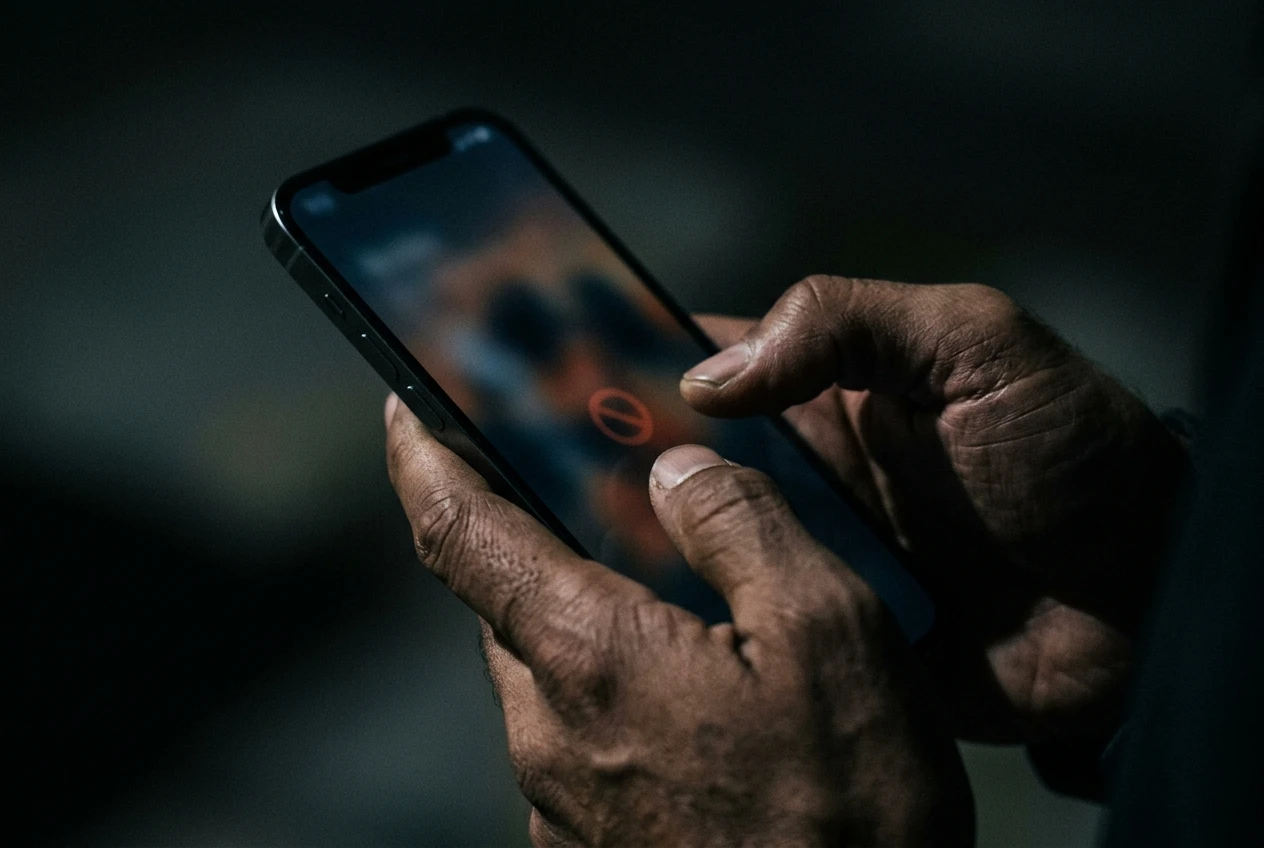
The BBC World Service investigation, published on July 3, found that Instagram had been running paid adverts promoting child sexual abuse material in India. Investigators set up a new alias account after noticing that the platform was pushing sexually suggestive content to users who had not searched for it. Once the test account followed 10 profiles of women posting in revealing clothing and using sexual innuendo, Instagram started showing paid adverts featuring adult pornography in less than a week. Days later, it began showing adverts of children with adults in sexually suggestive situations, with links to Telegram channels where the material was offered for sale.
One ad showed a boy and a girl, both of whom appeared to be about 12 years old, engaging in a sexual act. Another showed a man with his arm around a girl, with text saying he was 52 and the girl was 12, linking out to a Telegram channel. The BBC reported an advert to Instagram showing a very young girl in tears, with wording indicating that she had been sexually assaulted, and the platform replied 24 hours later that the advert did not violate its community standards.
The investigation also found that India was the second-largest recipient of child sexual abuse material reports in 2025, behind only the United States. Shikha Goel, director of the Cyber Security Bureau in the Indian state of Telangana, said that Instagram and Facebook, both owned by Meta, generated the most reports, though she noted this did not necessarily mean they hosted the most such content. Telegram told the BBC that it had removed hundreds of thousands of groups and channels related to child sexual abuse material in 2026. The Dubai-based company is not a member of the National Center for Missing and Exploited Children, the centralised global reporting system for online child sexual exploitation, though it joined the Internet Watch Foundation in late 2024.
By the Numbers
- ~30 unique adverts promoting child sexual abuse material appeared on the BBC’s test account
- ~20 adverts for adult pornography appeared alongside them
- 99 rupees (about 80p): starting price for child sexual abuse videos on Telegram, per the BBC
- 1.9 million: India CSAM reports received in 2025, second to the United States
- 274,000+: Telegram’s reported removals of CSAM groups and channels in 2026
Meta’s First Answer, and the Reversal
When the BBC reported one of the adverts to Instagram, the social media platform responded 24 hours later saying the post did not violate its “community guidelines.” It was only after the BBC approached Meta directly for comment that the company said it had already disabled several adverts and suspended the accounts posting them. Meta told the BBC it had removed additional ads, disabled more accounts, and blocked URLs for other content that violated its policies in response to the findings.
In a statement, Meta said “child exploitation is a horrific crime” and that it works aggressively to fight it on its apps. The company called it “categorially inaccurate” to suggest that Meta knowingly and deliberately targeted adverts featuring children to users with an inappropriate interest in such material, and denied prioritising revenue over safety. Meta added that in 2025 it automatically disabled more than four million accounts for showing “enough signals of potentially suspicious behavior,” and that “while determined criminals try to evade detection, our expert teams are constantly working to improve our defenses, develop new technology to root out predators, block links to violating websites, and share intelligence with other companies so they can take action too.” The government hasn’t accepted that defence: a senior government source told Indian media outlets that Meta “can’t hide behind the ‘third-party content’ argument or defence” if the allegations involve paid adverts promoting child sexual abuse material, and “if the allegations are found to be true, they will be held accountable for the advertisements, for which the platform receives revenue.”
This is a serious enough issue for the Supreme Court of India to take suo moto cognisance and get the government to act against any social media platform. The platform cannot, cannot shirk its responsibility.
Madan Lokur, retired Justice of India’s Supreme Court, in comments to the BBC.
The Legal Framework Behind the Order
India’s IT Ministry has been laying the legal scaffolding for a notice like this for years. In a written reply to the Lok Sabha last year, IT Minister Ashwini Vaishnaw noted that the IT Act of 2000 provides punishment for publishing or transmitting obscene material in electronic form, and “provides for stringent punishment for publishing or transmitting material depicting children in sexually explicit acts in electronic form.”
Section 67B of the IT Act specifically deals with online child sexual abuse material. The IT (Intermediary Guidelines and Digital Media Ethics Code) Rules, 2021 enforce due diligence obligations on social media intermediaries, and platforms that fail to observe them lose the safe harbour exemption for third-party information hosted by them. Intermediaries are required to remove unlawful content within 24 hours of being notified by a court or government agency.
The Protection of Children from Sexual Offences (POCSO) Act, 2012, is the criminal statute that sits on top. Failure to provide the information MeitY has now demanded could invite prosecution under both the IT Act and POCSO, sources told NDTV. The Ministry of Home Affairs runs the National Cyber Crime Reporting Portal to receive complaints against cybercrimes against children, and has set up the Indian Cyber Crime Coordination Centre (I4C) to deal with such offences. Authorities have previously used the portal to coordinate with the Central Bureau of Investigation, India’s national nodal agency for Interpol, on cross-border child exploitation cases.
The government has, from time to time, blocked websites containing child sexual abuse material based on lists from Interpol received through the Central Bureau of Investigation. The same legal architecture sits at the centre of the case against Meta, with the new question being whether the safe harbour shield that has long protected online intermediaries also covers paid advertising the platform reviews and is paid to host.
Indian Laws Applied to Online CSAM
| Law / Rule | Year | Key Provision |
|---|---|---|
| IT Act, Section 67B | 2000 | Punishment for publishing or transmitting material depicting children in sexually explicit acts in electronic form |
| IT (Intermediary Guidelines and Digital Media Ethics Code) Rules | 2021 | Intermediaries must remove unlawful content within 24 hours of a court or government notice; loss of safe harbour for non-compliance |
| POCSO Act | 2012 | Criminal statute on sexual offences against children, with prosecution available against platforms that fail to act |
| National Cyber Crime Reporting Portal / I4C | – | Receives and processes cybercrime complaints against children in India |
The Ad Money Powering the Debate
Meta earns almost all of its money from advertising. In January, the company reported that almost 98% of its $200bn (£152bn) revenue for the financial year ending 2025 came from advertising. Analysts estimate that ads account for more than 90% of Instagram’s revenue. Standard posts are generally checked by Meta’s technology only after they are published. The same company says every advert is reviewed before being allowed onto its platforms, with the review system relying primarily on automated technology to check images, video, text, and audio, as well as who the ad is targeting and where links send them to.
That is the gap the BBC investigation sat inside, since adverts are the most heavily screened content on Meta’s platforms and the content that ended up paying Meta to push child sexual abuse material to users. In March, Meta announced it was reducing its reliance on third-party human moderators and increasing the use of AI, adding that “experts will design, train, oversee, and evaluate our AI systems,” a shift Brian Boland, the former Facebook vice-president who testified against the company in the New Mexico trial, said reflected a culture that “didn’t care about users anywhere.”
The Crack in the Safe Harbour Shield
The legal shield of “safe harbour” under Section 79 of India’s IT Act protects online platforms from liability for third-party content, provided they remove unlawful material once notified. The Indian government is now testing whether that shield should extend to paid advertising.
“It cannot be a case where a social media platform is allowed to host such deeply problematic advertisements, and have no consequences due to safe harbour protections,” an official told Indian media, adding: “We are discussing whether advertisements on social media should have the same protections as regular content.”
The safe harbour debate lands inside a wider pattern of platform scrutiny in India. MeitY took the same step in October 2023, when it sent notices to X, YouTube, and Telegram warning them to remove child sexual abuse material from their services. The current case adds a new dimension: it asks whether an advert, which a platform has actively approved and is paid to host, can ever be treated as third-party content at all. In the United States, a New Mexico court this year ordered Meta to pay $375m (£279m) after a trial in which Boland testified against the company over its handling of children’s safety on its platforms. Meta has said it disagreed with the verdict and intended to appeal.
The Countdown and the Stakes
MeitY’s summons gives Meta until next week to file its explanation, after which “further course of action will be decided after reviewing the reply,” a government source told Indian media. The New Delhi ministry has already summoned Meta executives to appear in person, Indian outlets reported, citing sources. The IT Ministry’s intervention is the second against Meta in a week: earlier, the Centre had asked WhatsApp, which Meta also owns, to pause its planned username feature over concerns that it could materially increase online fraud, phishing, digital arrest scams, and impersonation attacks, and WhatsApp has agreed to defer the rollout pending consultation.
The BBC’s investigation has been reported to the Indian authorities, and the Telegram channels identified in the reporting have been forwarded to the appropriate law enforcement agencies. Sitting inside the broader framework now in play is the Ministry of Home Affairs’ Indian Cyber Crime Coordination Centre, set up to coordinate the response to cybercrimes against children. A retired justice of the Supreme Court has called for the court to take suo moto cognisance of the case. The next week is the test the BBC report and the IT Ministry have set for Meta: respond within 7 days, or risk the regulatory channel turning into a criminal one under the IT Act and POCSO.
Frequently Asked Questions
What did India’s IT Ministry order Meta to do?
India’s Ministry of Electronics and Information Technology has ordered Meta to disable all paid Instagram adverts and content promoting or facilitating access to child sexual abuse material, and to file a detailed explanation of how such adverts were approved in the first place.
How long does Meta have to respond?
Meta has 7 days to file a detailed explanation with MeitY. The notice was issued on Saturday evening, days after the BBC Eye investigation that triggered the order was published on July 3.
Can Meta face criminal charges under Indian law?
Yes. Sources told NDTV that failure to provide the information could result in legal action under the Information Technology Act and the Protection of Children from Sexual Offences (POCSO) Act, 2012. Section 67B of the IT Act specifically criminalises publishing or transmitting material depicting children in sexually explicit acts in electronic form.
Why is the Indian government questioning safe harbour protections?
Safe harbour under Section 79 of India’s IT Act protects online platforms from liability for third-party content, provided they remove unlawful material once notified. The government is asking whether paid adverts, which a platform actively reviews and is paid to host, should enjoy the same protection as user-generated posts. An official told Indian media that the ministry is “discussing whether advertisements on social media should have the same protections as regular content.”
What did the BBC Eye investigation find?
A BBC World Service team set up a new alias Instagram account in India, followed 10 profiles of women posting in revealing clothing, and within a week began receiving paid adverts for adult pornography, followed by adverts for child sexual abuse material linking to Telegram channels. The BBC reported all of the ads and the channels to the Indian authorities.
 ONGC licence frees Venezuela cash and operatorship talks
  Anthropic Hits $65 Billion Run Rate and Flips the AI Cash Test
  Supreme Court grounds the fare free-for-all with three-week clock
  Gold Nears $4400 as Soft Data Meets Oil Inflation Risk
  Nifty Slips as Zaggle Circuits and Dhoot Debuts Big
  Diesel Crack Tops $100 as Iran Rhetoric Lifts Crude