
 Ishan Crawford
 A chartered accountant’s client, an IIT graduate on a package above Rs 1 crore for five straight years and the owner of three houses, still had to borrow Rs 15,000 to pay outstanding tax and file his return before the July deadline. CA Pratibha Goyal (posting as @PratibhaGoyal) said the young man asked her to wait until August salary day, then borrowed the money once he grasped that delay meant extra interest.
The viral post describing the client racked up hundreds of thousands of views in two days and turned a routine ITR filing into a national argument about cash, property and what “rich” actually means on paper.
The Filing That Stopped the Timeline
Goyal wrote that she had just filed the return for the IITian. His package sat at 1 crore plus for five years. He held three houses; two projects remained work-in-progress. He told her he had no money for the Rs 15,000 tax and wanted to wait for August salary.
Just filed ITR of one of my IITian client! He is a young guy having package of 1Cr plus since 5 years. Has 3 houses out of which 2 projects are WIP. He told me he had no money to pay taxes of Rs. 15K and wanted me to wait till August so that his salary comes and we can pay the taxes. Later he borrowed money to pay tax and file ITR because August meant more interest! It’s high time we need Financial literacy in our country!
That is the full account Goyal posted on 27 July 2026. The client did borrow and clear the bill in time. NDTV and other outlets carried the claim the next day. Some readers immediately doubted the story’s details or the client’s privacy. Others said they see the same pattern every filing season among people earning well above average.
Three Houses and Almost No Loose Cash
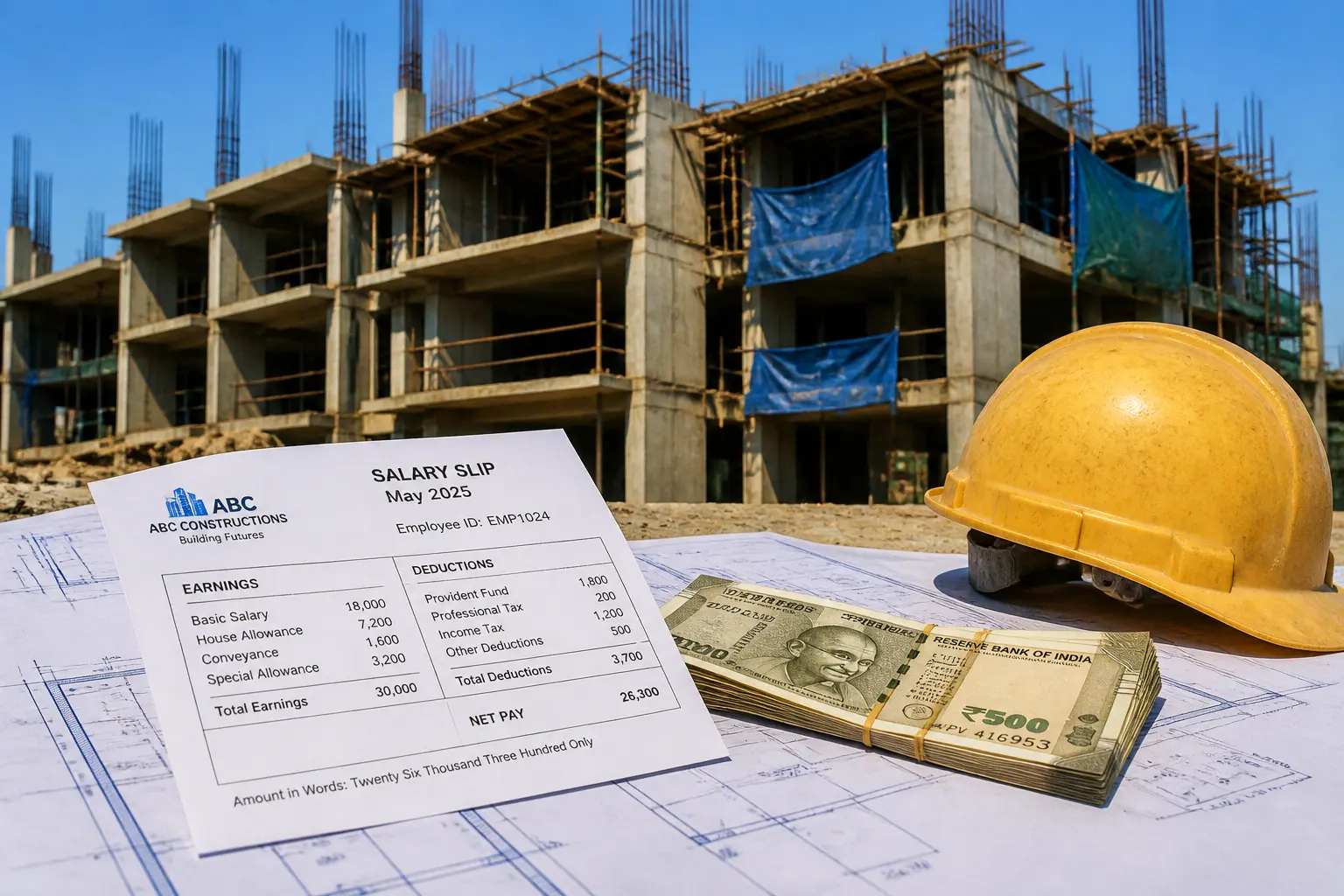
Two of the three properties were still under construction. That single fact explains most of the squeeze. Money already paid to developers sits locked. Construction-linked loans or EMI schedules keep running. Possession, rental income and any resale option stay months or years away. The third house, if self-occupied or yielding low rent after tax and maintenance, adds little monthly liquidity.
High earners in Indian cities often stretch into multiple properties because real estate still carries cultural weight as the safe, status-bearing asset. The result is a balance sheet that looks solid and a bank balance that can fail a Rs 15,000 test in late July.
- Down payments and construction tranches pull large lumps out of salary years before the asset generates cash.
- Home-loan EMIs commonly take 30-40% or more of take-home pay once two or three loans stack.
- Maintenance, property tax and incomplete-project delays keep draining accounts with no offsetting rent.
- Advance-tax shortfalls or last-minute self-assessment tax then arrive exactly when cash is already committed.
None of this requires reckless spending. It only requires the standard Indian preference for parking wealth in unfinished or leveraged bricks.
The Interest Clock That Forced the Borrow
Most salaried individuals filing ITR-1 or ITR-2 face a 31 July 2026 deadline for FY 2025-26 (AY 2026-27). Miss it with tax still unpaid and 1% monthly interest under Section 234A starts from the due date until the return is filed. A fraction of a month counts as a full month. Late-filing fee under Section 234F reaches Rs 5,000 once income exceeds Rs 5 lakh. Belated returns stay open until 31 December 2026, yet the interest meter keeps running and loss carry-forwards can vanish.
| Item | Rule for most individuals | Cost if missed |
|---|---|---|
| Primary ITR due date | 31 July 2026 (ITR-1/2) | Interest + fee risk |
| Non-audit business/professional | 31 August 2026 | Same interest logic |
| Section 234A interest | 1% per month or part on unpaid tax | Simple interest from due date |
| Section 234F late fee | Rs 1,000 (income ≤5L) / Rs 5,000 (above) | Fixed once late |
| Belated return window | Until 31 December 2026 | Interest continues; some benefits lost |
Goyal’s client faced exactly that arithmetic. Waiting for August salary would have pushed him past 31 July. On a Rs 15,000 unpaid balance the interest looks small at first, yet it compounds with any other shortfall and signals loose compliance. He borrowed, paid, and filed. The ITR due dates for FY 2025-26 leave little room for “salary comes next month” thinking once the liability is known.
Reactions Split Between Literacy and Incentives
Replies and quote posts ran in two clear directions. One camp treated the episode as proof that even IIT-trained minds can fail basic cash-flow math. “Can’t believe an IITian who are good at handling complex logic couldn’t manage income, expense math,” one user wrote. Another answered that asset-rich, cash-poor clients above Rs 50 lakh packages are routine in CA offices.
The second camp smelled performance or privacy breach. Some called the tale too neat. Others said any high earner short Rs 15,000 is either hiding spending or staging a story for the CA’s feed. A few noted that content-driven CAs now turn every filing into a morality play. Both readings can sit together: the liquidity crunch is common, and public airing of a named profile (IITian, crore package, three houses) invites doubt.
Crowd observation rewritten here: many salaried Indians in the top income bands run so close to their EMI and lifestyle edges that a modest self-assessment tax feels like an emergency. That pattern does not need an IIT degree to appear; the degree only makes the irony sharper.
House-Poor Professionals Are Not Rare
Financial literacy surveys still show limited competence. The NCFE 2019 exercise put overall adult financial literacy in India at roughly 27%. High formal education does not automatically raise that score when the dominant advice from family and peers remains “buy property, then buy another.”
Experts have long warned that housing costs above roughly 40% of income create the house-poor condition: valuable assets, thin cash buffer, vulnerability to any timing mismatch. Under-construction inventory multiplies the risk because the buyer services debt on an asset that cannot yet be sold or rented easily. In that setting a Rs 1 crore package can still leave July cash short.
Parallel high-earner stories surface often. One recent profile tracked another young Indian hitting crore earnings through AI work; the income side looks similar, yet without the same multi-property drag the cash position can stay far healthier. Currency and liquidity tools matter too: an RBI window that moves dollar liquidity reminds us that even official facilities focus on keeping cash mobile when markets tighten. Individual balance sheets need the same bias toward mobility.
- 27%, approximate share of Indian adults measured as financially literate in the last major NCFE survey.
- Rs 15,000, the tax sum that forced a crore-plus earner to borrow.
- 1% per month, Section 234A rate on unpaid tax after the due date.
- Two of three, houses still WIP and therefore cash-negative or cash-neutral.
Where the Real Trap Sits
Call it literacy if you like. The sharper mechanism is incentive and habit. Real-estate marketing, family pressure, tax treatment of home loans in the old regime, and the social signal of multiple properties all push capital into illiquid form. Salaried tax rules then demand precise cash on fixed calendar dates. When the two collide, the borrower appears, even at the top of the income tables.
Goyal closed her post with a call for financial literacy. The client’s own fix was simpler and immediate: he found Rs 15,000 from somewhere, paid the tax, and stopped the interest clock. That move worked for this return. It does not unwind two unfinished projects or reset EMI ratios. Those choices keep producing the same July surprise for the next high earner who looks wealthy on paper and thin in the account.
Frequently Asked Questions
What interest applies if tax stays unpaid after the ITR due date?
Section 234A charges simple interest at 1% per month or part of a month on the unpaid tax, running from the original due date until the return is actually filed; a 10-day delay still counts as a full month.
When is the ITR deadline for salaried individuals in AY 2026-27?
For most people filing ITR-1 or ITR-2 the date is 31 July 2026; non-audit business or professional cases using ITR-3 or ITR-4 generally have until 31 August 2026 unless an extension is later notified.
Why do under-construction houses create cash shortages?
Buyers keep paying EMIs or construction-linked instalments while the property generates no rent and cannot be sold easily, so large slices of income leave the bank account for years with no offsetting cash inflow.
What is the difference between being asset rich and cash rich?
Asset rich means the balance sheet shows valuable property, equity or other holdings; cash rich means enough liquid money sits in accounts or short-term instruments to meet near-term bills without selling assets or borrowing.
Can a belated ITR still be filed after 31 July?
Yes, a belated return can be filed until 31 December 2026 for FY 2025-26, but late fees, continuing 234A interest on any unpaid tax, and loss of certain loss carry-forwards still apply.
 ONGC licence frees Venezuela cash and operatorship talks
  Anthropic Hits $65 Billion Run Rate and Flips the AI Cash Test
  Supreme Court grounds the fare free-for-all with three-week clock
  Gold Nears $4400 as Soft Data Meets Oil Inflation Risk
  Nifty Slips as Zaggle Circuits and Dhoot Debuts Big
  Diesel Crack Tops $100 as Iran Rhetoric Lifts Crude