
 Ishan Crawford
 Honda is recalling 880,514 SUVs and pickup trucks in the United States over a rear subframe defect that federal regulators say can fracture, cause drivers to lose control, and raise the risk of a crash. The campaign covers certain 2014-2020 Acura MDX, 2016-2022 Honda Pilot, 2017-2023 Honda Ridgeline, and 2019-2023 Honda Passport vehicles sold new in 23 states and Washington, D.C. NHTSA assigned the campaign recall number 26V365000.
Honda’s own estimate is that only 1% of the recalled vehicles actually carry the defect. Where the corrosion has taken hold, dealers will inspect the rear subframe, install a reinforcement kit, and repair or replace components as needed, all at no cost to the owner. Owner notification letters are scheduled to go out July 7, 2026. The company has, as of May 28, 2026, recorded no warranty claims and no reports of injury or death tied to the issue in the U.S.
What the Recall Covers and What the Defect Is
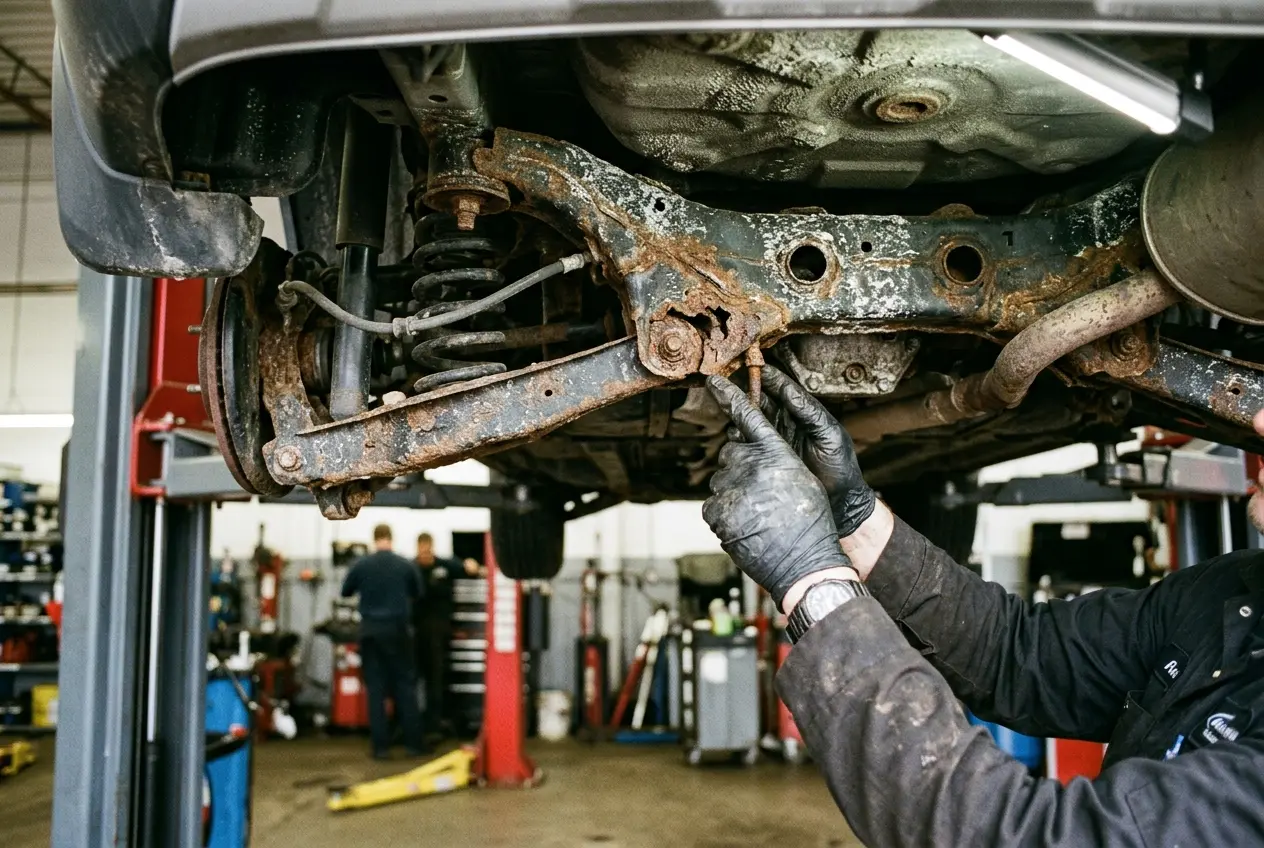
The rear subframe is the steel cradle that ties the rear suspension to the body of the vehicle. According to the recall announcement listing affected model years, the defect sits in the coating on that subframe rather than in the suspension itself. Federal regulators say the failure can cause drivers to lose handling, stability, and braking performance, which raises the risk of a crash.
Per the detailed defect description and Canadian scope Honda filed in its parallel Canadian recall, the subframes were manufactured with improper coating specifications, so paint near the arm bracket weld area may not adhere and can peel. Once the protective paint fails, the exposed steel corrodes. In regions where de-icing salt is heavily used, that corrosion progresses faster. Material thinning and driving vibration can then cause the mounting area to fracture.
When the mounting points for the rear control arm or lower arm fail, the rear wheels can become misaligned or inadequately retained. That, in turn, can change how the vehicle rides and brakes. The remedy is straightforward: a dealer inspects the subframe, installs a reinforcement kit, and repairs or replaces components as needed, all at no cost to the owner.
Why the Recall Stops at 23 States and DC
The recall is geographic in a way most are not. Honda limited the population to vehicles originally sold new in 23 states and Washington, D.C., and the list is a near-perfect match for the country’s road-salt belt. From Maine to Iowa and down through Virginia, the affected jurisdictions cover nearly every state where state and municipal crews use chloride de-icers in significant volume each winter.
The full list of states, as reported by federal regulators, runs alphabetically. Texas, Florida, California, and the rest of the Sun Belt are absent, as are most of the Mountain West. Vehicles of the same model years originally sold new in those states are not part of the recall. The recall population was set to capture vehicles that operate where de-icing salt is heavily used, the conditions under which the coating defect accelerates.
- Connecticut
- Delaware
- District of Columbia
- Illinois
- Indiana
- Iowa
- Kentucky
- Maine
- Maryland
- Massachusetts
- Michigan
- Minnesota
- Missouri
- New Hampshire
- New Jersey
- New York
- Ohio
- Pennsylvania
- Rhode Island
- Vermont
- Virginia
- West Virginia
- Wisconsin
From a December 2021 Discovery to a 2026 Recall
The corrosion problem did not surface overnight. According to TFLcar’s report on the NHTSA filing, Honda first identified the issue in December 2021.
From that point, the automaker monitored and surveyed vehicles in the field for more than four years, weighing whether a recall was warranted. The company continued building the affected subframes until at least January 2023, when, according to the Canadian recall filing, the supplier increased coating thickness on the rear subframe as part of a durability push. A pre-paint treatment process had also been tightened in August 2022, the same filing says.
The U.S. recall itself, though, was announced only this month. American Honda’s June 10 release says the company had, as of May 28, 2026, recorded no warranty claims and no reports of injury or death tied to the issue in the United States. Honda Canada, running the parallel campaign, said it had received one reported claim as of the same date.
Owner notification letters are scheduled to go out July 7, 2026. Until then, owners can check whether their vehicle is included by entering a VIN at the company’s recall site, calling (888) 234-2138, or using the campaign number 26V365000 at NHTSA’s recall portal.
How Many of Each Model, Built When
The recall is not split evenly across the four nameplates. The Honda Pilot makes up just over half of the population, with the Acura MDX close behind. Together those two SUVs account for 680,770 of the 880,514 units in the campaign.
The Ridgeline pickup and Passport two-row SUV round out the list, and they sit at the smaller end of the count. The MDX is the oldest of the four: it began production in April 2013, meaning some of those vehicles have been on U.S. roads for more than a decade. Build dates for the Ridgeline and Passport run into January 2023, after the supplier had already tightened the pre-paint treatment. The full build ranges, drawn from the NHTSA filing as reported by TFLcar, are set out below.
| Model | Build range | Units |
|---|---|---|
| 2016-2022 Honda Pilot | May 4, 2015 to December 12, 2022 | 463,253 |
| 2014-2020 Acura MDX | April 23, 2013 to December 22, 2020 | 217,517 |
| 2017-2023 Honda Ridgeline | April 5, 2016 to January 10, 2023 | 110,070 |
| 2019-2023 Honda Passport | November 13, 2018 to January 12, 2023 | 89,674 |
What an Owner Should Do, and When
For owners in the affected 23 states and D.C., the path is the same as for most recalls: wait for the letter, then visit a dealer. Letters go out July 7, 2026.
Anyone who does not want to wait can move faster. Honda runs two VIN lookup portals, recalls.honda.com and recalls.acura.com, and a phone line at (888) 234-2138. The owner-facing recall lookup tool accepts a VIN and returns the campaign result. NHTSA’s recall portal at nhtsa.gov/recalls accepts the campaign number 26V365000 for the same purpose; the campaign 26V365000 recall lookup page is the direct link.
Once at the dealer, a technician inspects the rear subframe and then either installs the reinforcement kit alone or repairs and replaces the affected components, depending on how far any corrosion has progressed. The work is free. Honda has also assigned internal recall codes AOU and AOT to the campaign, which show up on the company’s own lookup tool in addition to the NHTSA number. Owners should bring the vehicle in as soon as the letter arrives, and sooner if the warning signs appear.
What a Failing Subframe Sounds and Feels Like
A corroding subframe rarely fails without warning. The defect develops slowly, often over months and years. Paint adhesion breaks down first, then the steel beneath begins to oxidize. The affected bracket thins under road vibration and the chemistry of road salt. Only then does the driver begin to feel or hear it.
Drivers who detect any of the warning signs should bring the vehicle in sooner, before the corrosion reaches the mounting points. The warning signs to watch for, as set out in the company’s Canadian recall notice, are:
- Abnormal noise from the rear suspension
- Vibration from the rear suspension
- Changes in vehicle handling
Owners noticing any of these should arrange an inspection rather than wait for the July 7 letter, because the corrosion can continue to progress in the interim.
This Recall Has a Predecessor in the First-Gen Pilot
This is not the first time a Honda SUV has corroded where the rear subframe meets the body. First-generation Pilot SUVs built from 2003 through 2008, TFLcar notes, were notorious for rust around the rear subframe. The current campaign reaches back almost as far: the 2014-2020 Acura MDX on the recall list started production in April 2013, meaning some of the affected vehicles have been on the road for more than a decade.
The 880,514-unit scale of the current recall puts it in a different league from the earlier Pilot rust complaints. The underlying mechanism is the same one Honda has wrestled with before.
In the meantime, owners outside the salt-belt list have no remedy to seek under this campaign, even if their Pilot, MDX, Ridgeline, or Passport has logged similar winters in a non-listed state. The recall’s scope is set by the 23-state geography, and there is no parallel campaign for the same model years sold new elsewhere in the country.
Frequently Asked Questions
What vehicles are included in the Honda rear subframe recall?
Certain 2014-2020 Acura MDX, 2016-2022 Honda Pilot, 2017-2023 Honda Ridgeline, and 2019-2023 Honda Passport vehicles originally sold new in 23 states and Washington, D.C., per NHTSA campaign 26V365000.
How do I know if my vehicle is part of the recall?
Enter your VIN at recalls.honda.com or recalls.acura.com, call (888) 234-2138, or check the campaign number 26V365000 on the NHTSA recall portal at nhtsa.gov/recalls.
When will I be contacted, and when can I get the repair?
Owner notification letters are scheduled to be mailed July 7, 2026. Dealers can begin inspections once an owner brings the vehicle in; the inspection, reinforcement kit, and any needed repair or replacement are free.
Is the defect related to road salt?
Honda’s filings say the subframes were built with improper coating specifications, and that premature corrosion is most likely to develop in regions where de-icing salt is heavily used, which is why the recall is limited to 23 salt-belt states and the District of Columbia.
Has anyone been hurt?
As of May 28, 2026, American Honda said it had no warranty claims and no reports of injury or death related to the issue in the U.S. Honda Canada, running a parallel campaign, said it had received one reported claim as of the same date.
 Scotland vs Haiti: Two Gambles That Could Shape Group C
  RBI’s FCNR(B) Swap Window Returns, but the 2013 Spread Has Halved
  Flexi-Cap Inflows Halved in May, but Money Is Still Pouring In
  Nvidia Vows 50% Free Cash Flow Return, $80 Billion Buyback
  OnePlus 15 Picks Up AirDrop Support Over Android’s Quick Share
  Samsung One UI 8.5 Stable Rollout: Full Galaxy Device List