
 Ishan Crawford
 Micron closed 2.3% lower on Monday after tumbling as much as 7% during the session. Sandisk dropped 11%. SK Hynix’s American depositary receipts (ADRs), the U.S.-traded shares that stand in for its Seoul-listed stock, slid 7.5%. The reason sits nine time zones away: ChangXin Memory Technologies, a Hefei-based memory chipmaker known as CXMT, saw its shares rocket 466% on their first day of trading in Shanghai, instantly making it China’s most valuable publicly listed company.
The two moves look like a clean handoff of fortune from the old memory leaders to a new Chinese challenger. Richard Windsor, founder of research firm Radio Free Mobile, says the boom lifting CXMT rests on a global memory shortage he expects to reverse, which means Monday’s winner and Monday’s losers could trade places again before long.
A $484 Billion Debut in Shanghai
CXMT priced its initial public offering at 8.66 yuan a share, raising 57.92 billion yuan ($8.6 billion) in the largest listing on Shanghai’s STAR Market and the second-biggest mainland Chinese IPO on record, trailing only Agricultural Bank of China’s 2010 offering. The stock opened at 49.50 yuan and kept climbing, closing up 466% for a market capitalization of roughly $484.6 billion, according to LSEG data. That valuation vaulted past Intel’s in a single trading session, turning a decade-old DRAM maker into mainland China’s most valuable listed company.
Ahead of pricing, the Shanghai Stock Exchange had flagged the deal as one of the STAR Market’s largest offerings on record, projecting proceeds near $4.3 billion. CXMT ended up raising exactly double that.
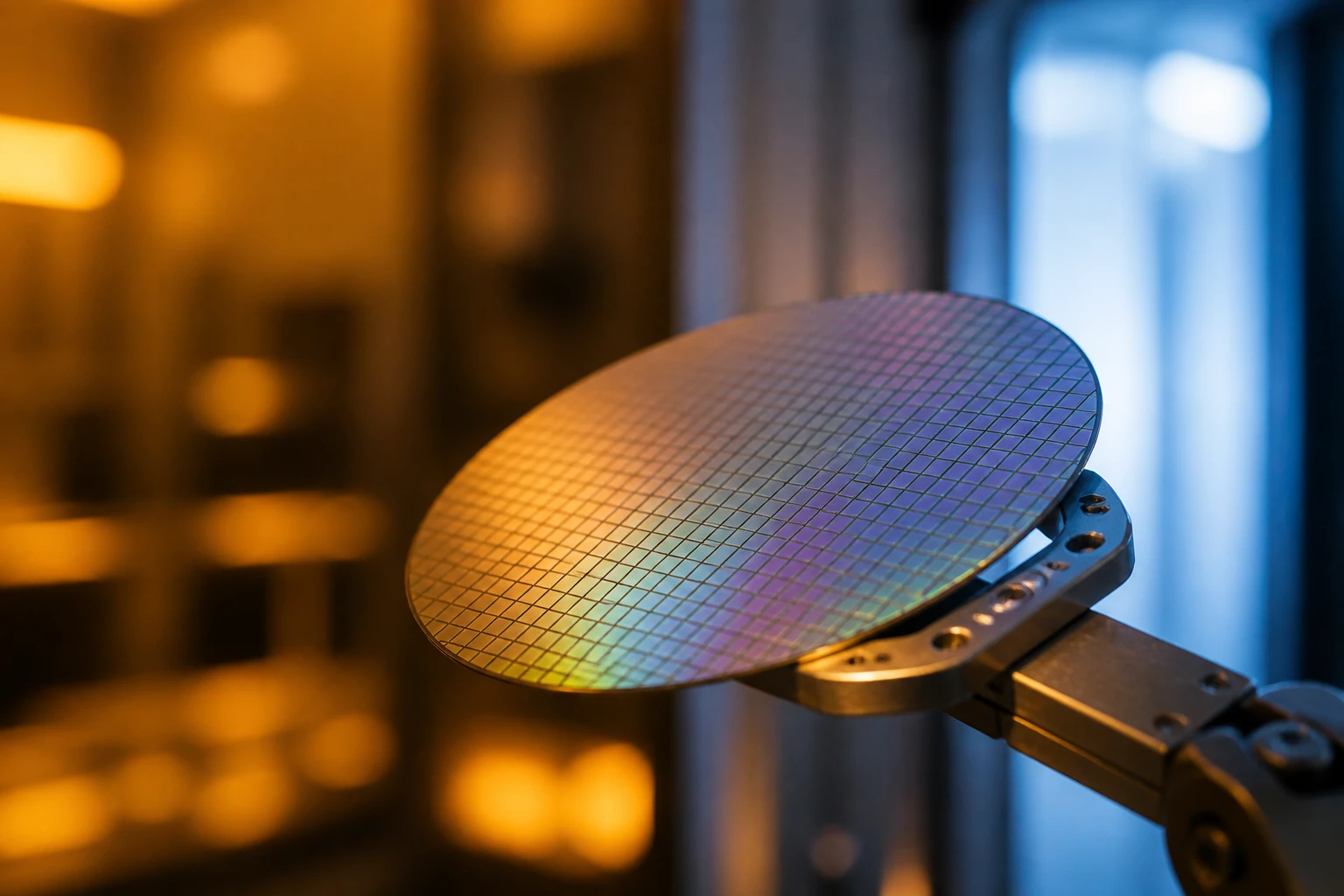
CXMT ranks fourth worldwide in dynamic random-access memory (DRAM) production, behind SK Hynix, Samsung Electronics and Micron. DRAM chips hold data temporarily in phones, laptops and servers. Without access to ASML’s extreme-ultraviolet (EUV) lithography systems, which are restricted from sale to China under U.S. export rules, CXMT cannot yet manufacture the high-bandwidth memory, or HBM, that has become the chip industry’s most profitable segment.
Micron, Sandisk and SK Hynix Take the Hit
The rest of the memory sector did not share in CXMT’s celebration. Micron, Sandisk and SK Hynix all sank, and the selling spread into the equipment makers that supply the whole industry.
| Company | Monday Move | Why It Moved |
|---|---|---|
| Micron | Closed down 2.3% (down as much as 7% intraday) | World’s No. 3 DRAM maker, closest U.S. rival to CXMT’s segment |
| Sandisk | Down 11% | Steepest decline among U.S.-listed memory names |
| SK Hynix (ADRs) | Down 7.5% | Nvidia’s top HBM supplier, world’s No. 2 DRAM maker |
| ASML | Down nearly 6% | Sole maker of EUV gear; new domestic DUV tools raise long-term questions |
| Nvidia | Down 5% | Just pledged over $500 billion partly to secure memory supply |
| Broadcom | Up about 0.3% | Only riser, buoyed by its own new Samsung memory pact |
ASML’s near 6% drop stood out from the rest. The Information reported Monday that a state-backed Chinese operation has begun mass-producing its own deep-ultraviolet (DUV) lithography machines, raising the possibility that Chinese chipmakers could eventually need less of ASML’s equipment than investors have assumed.
The Shortage CXMT Was Built to Exploit
The rally and the rout share a root cause. Memory makers led by Samsung, SK Hynix and Micron have spent the past year shifting factory capacity toward HBM, the stacked chips that feed Nvidia’s AI accelerators, because HBM carries far fatter margins than ordinary DRAM. Windsor said that pivot left a hole in the commodity DRAM market, and that hole “is the gap that CXMT is filling.”
Windsor does not expect the arrangement to last. He said he expects “a big correction” for CXMT once DRAM supplies normalize.
Between then and now, it looks like good times are ahead.
Windsor, founder of Radio Free Mobile, on the window CXMT has to work with before supply catches up.
Why Is DRAM So Expensive in 2026?
Memory makers have spent the past year moving factory capacity away from ordinary DRAM and toward high-bandwidth memory for AI accelerators, which sells at far fatter margins. That reallocation shrank the commodity supply feeding phones, laptops and game consoles, and prices for everyday RAM and storage have climbed sharply as a result.
- 110% – the rise in consumer DRAM prices during the first quarter of 2026 as AI buyers crowded out ordinary purchases, per hardware trade press.
- 147% – the jump in SSD prices over the same stretch.
- $788 – the going price for a 64GB DDR5 desktop memory kit that sold for around $195 in 2025.
- 35% – the share of a PC’s bill of materials now taken up by memory, according to HP, up from roughly 15% to 18% before the shortage.
Dell, HP and Lenovo have all raised PC prices in response, Supply Chain Connect reported, and the increases are showing up on store shelves well before any relief in the underlying chip supply.
Betting Big on Their Own Suppliers
Nvidia and Broadcom answered the shortage by locking up their own suppliers rather than waiting it out. Nvidia said Friday that it and South Korea’s SK Group had signed letters of intent for a partnership worth more than $500 billion, spanning AI data centers and next-generation memory development.
- Nvidia and SK Group – letters of intent covering AI factory construction and memory supply, including a 2-gigawatt Nvidia Vera Rubin DSX AI factory that SK Telecom plans to bring online in 2027, alongside a push with SK Hynix to co-develop next-generation HBM.
- SK Hynix’s supply pledge – a commitment to ship $750 billion in memory chips to United States companies, Nvidia among them, under long-term agreements, detailed in a joint announcement with Nvidia.
- Broadcom and Samsung – a memorandum of understanding signed Saturday to expand advanced memory and foundry work, including packaging for AI and networking chips, in a partnership expected to be worth more than $200 billion through 2030.
Bernstein analyst Mark Li wrote that the deals “are more for memory and indicate the need for Nvidia & Broadcom to secure memory supply.” The partnership announcement posted to Nvidia’s newsroom frames the tie-up as spanning AI factories, sovereign AI services and memory supply all at once.
Nvidia’s stock still fell 5% on Monday, caught up in the broader chip selloff despite the new supply deal. Broadcom, whose pact with Samsung landed a day earlier, rose about 0.3%, the only gainer among the group.
China’s Lithography Workaround Still Trails ASML
The lithography news behind ASML’s stock drop is real but still small in scale. A state-backed Shanghai operation, which drew engineers from several domestic firms including a startup called Shanghai Yuliangsheng Technology, has begun mass-producing immersion DUV lithography machines, Tom’s Hardware reported. The first units are due this year to SMIC, Hua Hong Semiconductor and CXMT itself.
A separate domestic toolmaker, SMEE, has already sold about ten units of its own 28-nanometer immersion DUV system, the SSA800. The newer machines target the same 28-nanometer node using a single exposure, though engineers believe repeated multi-patterning exposures could push them down to 7 nanometers and possibly 5.
Output stays modest for now: five machines this year and roughly 20 more in 2027, with yields at the most advanced nodes still behind what ASML’s tools deliver.
Frequently Asked Questions
Is Micron Stock a Buy After the Sell-Off?
Bernstein analyst Mark Li called the pullback a good entry point, noting that consensus forecasts put annual memory revenue at $1.3 trillion in both 2027 and 2028. His view rests on memory overtaking logic chips as the more important driver of AI hardware demand, which he sees as a bullish sign for Micron, SK Hynix and Samsung even after Monday’s declines.
What Is the STAR Market, and Why Does CXMT’s Listing There Matter?
The STAR Market is the Shanghai Stock Exchange’s board for homegrown technology listings, built to fund science and semiconductor firms central to Beijing’s push for chip self-sufficiency. CXMT’s offering became the board’s largest ever, a sign that Chinese investors will pour record sums into domestic chipmakers even where they still lag Western technology.
When Will Memory Chip Prices Return to Normal?
Industry supply timelines point to no meaningful relief before mid-to-late 2027, since Micron and its rivals have committed existing fab expansions to AI-focused output rather than consumer memory. That makes the 2027 holiday shopping season the earliest point analysts expect ordinary RAM and storage prices to ease.
What Is HBM, and Why Is It Reshaping the Memory Industry?
High-bandwidth memory, or HBM, stacks multiple DRAM dies on top of each other and links them with vertical wiring, letting data move far faster than standard memory chips allow. That speed is what Nvidia’s AI accelerators need, and it is why memory makers now charge premium prices for HBM and have redirected factory space toward it at the expense of ordinary DRAM.
Disclaimer: This article is for informational purposes only and is not investment advice; semiconductor and memory stocks carry significant volatility, and readers should consult a licensed financial adviser before making investment decisions, with figures accurate as of publication.
 ONGC licence frees Venezuela cash and operatorship talks
  Anthropic Hits $65 Billion Run Rate and Flips the AI Cash Test
  Supreme Court grounds the fare free-for-all with three-week clock
  Gold Nears $4400 as Soft Data Meets Oil Inflation Risk
  Nifty Slips as Zaggle Circuits and Dhoot Debuts Big
  Diesel Crack Tops $100 as Iran Rhetoric Lifts Crude