
 Ishan Crawford
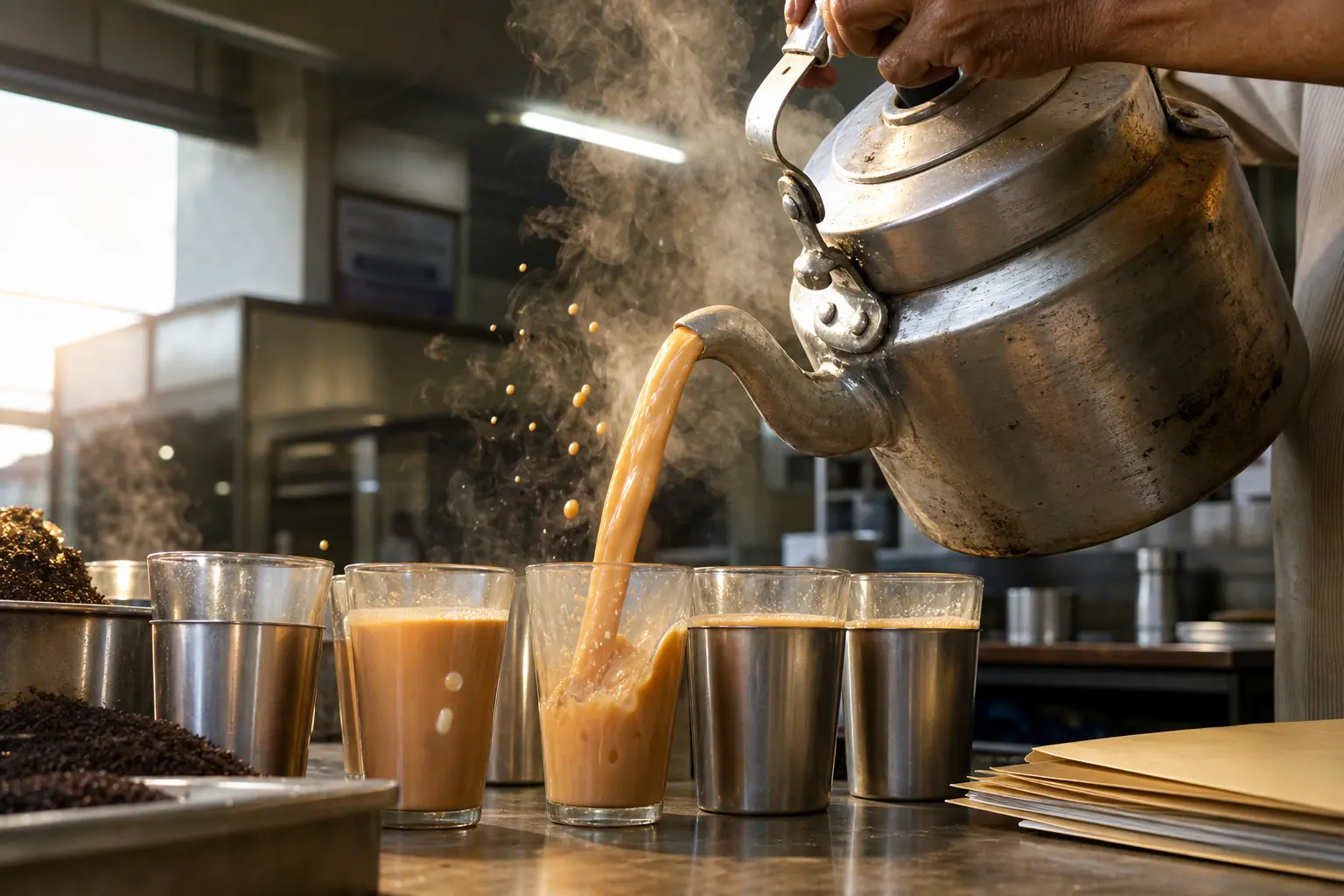
 Shares of Andrew Yule and Company jumped nearly 20 percent on Monday after the government ordered its own ministries to serve the state tea maker’s brew in their canteens. The stock touched an intraday high of Rs 30.50 on the BSE before profit booking pulled it back toward Rs 28.11 by early afternoon, up 10.28 percent on the day and extending a two session run.
The order to stock Yule Tea in every ministry canteen is being pitched as institutional support for a strained public sector undertaking (PSU, a company majority owned by the government). It also happens to be a rare public admission of how much help Andrew Yule and Company Limited (AYCL) needs just to keep functioning.
A Government Circular Moves a Thinly Traded Stock
The move traces back to a communication from the Ministry of Heavy Industries, which asked all central ministries and departments to serve Yule Tea at official meetings, conferences, canteens and government functions. AYCL sits under the ministry’s administrative control as a Central Public Sector Enterprise (CPSE, a company where the union government holds a majority stake).
Friday’s close on the BSE was Rs 25.49. From there, Monday’s Rs 30.50 intraday peak marks a gain of 19.65 percent exactly, before sellers stepped in. At the peak, the company’s paper market value briefly added roughly Rs 245 crore to Friday’s market capitalisation of about Rs 1,246 crore, before the retreat to Rs 28.11 trimmed that gain.
The Directive Behind the Rally
AYCL owns and runs tea estates across Assam and West Bengal and produces Darjeeling, Dooars and Assam teas in orthodox, CTC, green and flavoured variants under the Yule Tea label. It already supplies tea to Parliament through the Tea Board, and sells directly to consumers online.
The ministry’s note said the products have been well received by customers, then added, in the same breath, that AYCL is facing financial stress for a mix of reasons. It cited a recommendation from the Department-related Parliamentary Standing Committee on Industry, which had urged ministries to coordinate on wider promotion and adoption of Yule Tea. The ministry framed greater institutional buying as a way to give the company, described on its Schedule B enterprise under its control, a push toward operational and financial stability.
The Numbers Behind the Need for a Circular
Those numbers are rough. AYCL’s consolidated net loss for the March 2026 quarter came in at Rs 30.51 crore, according to Business Standard, a sharp deterioration from an Rs 8.80 crore loss the quarter before and just Rs 0.61 crore a year earlier. For the full 2026 fiscal year, the consolidated net loss widened to Rs 19.19 crore from Rs 2.84 crore in FY25.
| Period | Net Result | Change |
|---|---|---|
| Q4 FY25 (Jan-Mar 2025) | Loss of Rs 0.61 crore | Baseline quarter |
| Q3 FY26 (Oct-Dec 2025) | Loss of Rs 8.80 crore | Widened from the prior quarter |
| Q4 FY26 (Jan-Mar 2026) | Loss of Rs 30.51 crore | Sharply wider than a year earlier |
| Full year FY26 | Loss of Rs 19.19 crore | Compares with a Rs 2.84 crore loss in FY25 |
Quarterly revenue told its own story. Net sales for the March quarter fell to Rs 92.72 crore, down from Rs 98.49 crore a year earlier, according to MarketsMojo’s analysis of the results. Interest costs rose to Rs 6.38 crore, the highest in recent quarters, and the operating profit to interest coverage ratio fell to negative 7.57 times. In plain terms, operating earnings were not just thin. They were negative, and nowhere near enough to cover what the company owes lenders.
Why Can One Circular Move the Stock This Much?
Because government ownership leaves almost nothing left to trade. The Centre holds about 89.25 percent of Andrew Yule and Company, so only a sliver of shares changes hands on the open market. When a wave of buyers piles into that sliver on a single piece of news, the price swings far more violently than it would in a widely held stock.
That is the mechanical reason Monday’s move looked so dramatic. Shareholding data on Equitymaster’s holds just over 89 percent of the company confirm the free float sits near 11 percent of outstanding shares. A tiny float means retail traders chasing a government headline are really just trading among each other, bidding up a fixed, small pool of stock. The pullback from Rs 30.50 to Rs 28.11 within hours fits that pattern. Early buyers took profits once the initial jump ran its course.
Tea Gardens Older Than the Republic
A Managing Agency Turned State Company
Andrew Yule’s roots go back further than almost any company on the Indian exchanges. By its own account, the firm traces its history to an 1863 managing agency in Calcutta, built by a young Scottish trader named Andrew Yule.
- 1863: Andrew Yule sets up a trading and managing agency in Calcutta.
- 1913: The firm becomes India’s largest managing agency house, controlling dozens of jute, tea, coal and cotton businesses.
- 1969: India abolishes the managing agency system; the company’s coal and insurance interests are nationalised soon after.
- 1974: The government acquires a 49 percent stake in the company to keep it stable.
- 1979: Andrew Yule formally becomes a central public sector enterprise.
- 2026: The Ministry of Heavy Industries tells every ministry and department to serve Yule Tea.
Fifteen Gardens, Thousands of Livelihoods
AYCL now runs 15 tea gardens across Assam and West Bengal and stands as the only CPSE left in India’s tea industry. Tea is just one line in a broader, equally strained portfolio. The company’s other businesses include:
- Transformers for power transmission and distribution
- Regulators and rectifiers
- Circuit breakers and switches
- Industrial fans
- Tea processing machinery and turnkey engineering projects
None of that shows up in a share price chart. The trade publication World Tea News has reported that ongoing troubles at the company put roughly 8,000 tea garden workers at risk, workers who hold no stock, feel no rally, and depend entirely on estates actually staying open rather than on a memo about canteen menus.
A Memo Cannot Fix a Balance Sheet
A procurement circular changes who buys the tea. It does nothing to the debt, the interest bill or the cost base behind Monday’s Rs 30.51 crore quarterly loss. Guaranteed institutional demand can support sales, but a negative interest coverage ratio is a financing problem, not a marketing one.
Some analysts are still willing to bet on a longer turnaround. Simply Wall St has suggested the stock could climb toward Rs 60 by 2027 if operations improve and new orders pick up, a projection that is speculative and years away from being tested. The nearer test comes sooner. Andrew Yule’s next quarterly results, due later this year, will show whether ministry canteens actually started buying Yule Tea, or whether Monday’s rally was just a circular doing what a thin float always does when good news, and bad news, arrive in the same sentence.
Disclaimer: This article is for informational purposes only and does not constitute investment advice; small cap and PSU stocks carry high volatility risk, and readers should consult a certified financial adviser before trading, with all figures accurate as of publication on July 27, 2026.
 ONGC licence frees Venezuela cash and operatorship talks
  Anthropic Hits $65 Billion Run Rate and Flips the AI Cash Test
  Supreme Court grounds the fare free-for-all with three-week clock
  Gold Nears $4400 as Soft Data Meets Oil Inflation Risk
  Nifty Slips as Zaggle Circuits and Dhoot Debuts Big
  Diesel Crack Tops $100 as Iran Rhetoric Lifts Crude