
 Ishan Crawford
 Shares of ChangXin Memory Technologies rocketed as much as 531% within hours of their Shanghai debut on Monday, a surge that briefly made the Chinese memory chipmaker worth more than Intel. Trading as CXMT on the Shanghai Stock Exchange’s STAR Market, the stock eased slightly into the close but still finished the session up roughly 470%, making it mainland China’s most valuable listed company on its very first day of trading.
The party has a backstory Washington did not intend to write. CXMT exists in its current form largely because years of US export controls tried to keep advanced memory technology out of China’s hands. Those same controls are now watching their target become a stock market phenomenon, even as they quietly cap what that phenomenon can become next.
A Debut That Briefly Outpriced Intel
CXMT priced its initial public offering at 8.66 yuan a share (about $1.21) and never traded near that level again once the opening bell rang. The stock tore through the morning session, cooled off by the close, and still finished the day comfortably clear of Intel’s entire market value, a benchmark almost no Chinese listing has cleared on debut day.
- $8.55 billion raised in the offering, pricing it as Asia’s largest IPO of 2026.
- 531% intraday peak gain over the issue price, reached by the midday trading break.
- $541 billion peak market capitalization at that midday high, above Intel’s $465.6 billion.
- 470% closing gain, leaving CXMT valued near $487 billion at the end of the session.
The midday peak numbers, a share price of 54.65 yuan against an 8.66 yuan issue price, came from state broadcaster China Daily’s own tracking of the session. By the close, CXMT had displaced established industrial and financial giants to become the single most valuable company on China’s A-share market, a market of more than 5,000 listed firms.
Washington’s Containment Push Built Its Own Rival
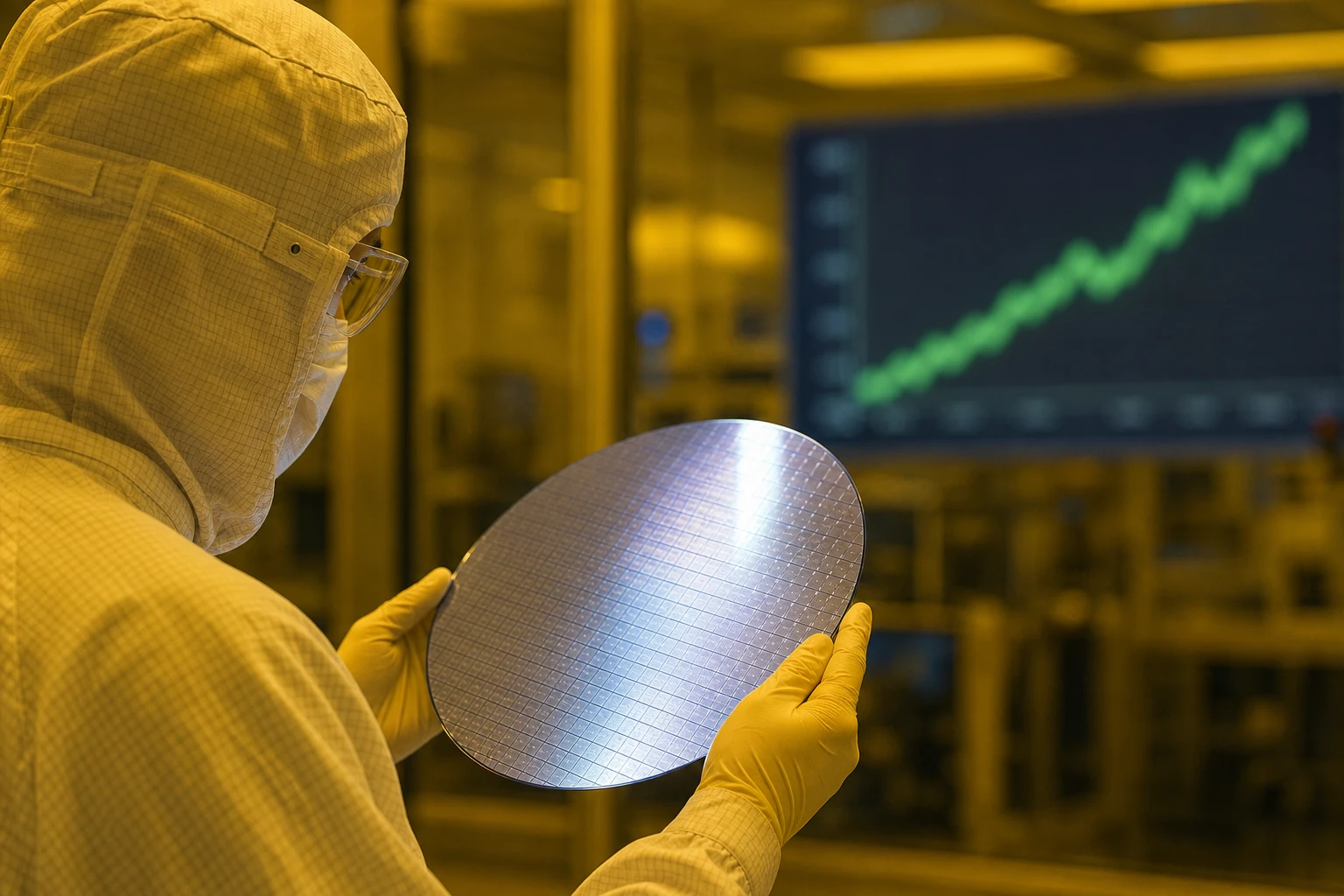
CXMT makes dynamic random-access memory, or DRAM, the chips that hold data a processor is actively using, alongside newer high-bandwidth memory used in AI servers. It builds that memory in Hefei and, soon, Shanghai, and until Monday it was known mainly as a symbol of Beijing’s semiconductor self-sufficiency drive rather than a market darling.
That drive did not start by choice. Washington spent years tightening semiconductor export controls aimed at slowing China’s chip industry, and in 2024 the Bureau of Industry and Security, the US agency that administers those controls, widened the net to add China-wide restrictions naming high-bandwidth memory and DRAM production tools directly. The goal was to deny CXMT the equipment to compete at the cutting edge. The effect was to give Beijing a reason to fund it harder.
- 2020 to 2024: Washington builds a multi-year campaign of semiconductor export controls, culminating in 2024 rules that add China-wide restrictions naming high-bandwidth memory and DRAM production tools directly.
- 2025: Roughly 13 Chinese chipmakers, CXMT among them, sign onto a five-year plan targeting 80% semiconductor self-sufficiency by 2030.
- Early 2026: CXMT begins mass-producing HBM3 chips, with trade publications reporting it had closed a three-year technology gap with Korean rivals.
- July 2026: CXMT lists on Shanghai’s STAR Market and briefly becomes more valuable than Intel.
Every step on that list is a policy reaction. China is not hiding it, either. State media covered Monday’s debut as vindication of the self-sufficiency push in as many words.
Samsung, SK Hynix and Micron Feel the Squeeze
Global DRAM remains a three-company game, and Monday’s valuation spectacle does not change that overnight. But the share numbers behind it show real movement, not just a stock chart getting ahead of itself.
| Company | Global DRAM Market Share (Q1 2026) | Market Rank |
|---|---|---|
| Samsung Electronics | 38.6% | 1 |
| SK Hynix | 28.8% | 2 |
| Micron Technology | 22.4% | 3 |
| CXMT | About 8%, up from about 3% a year earlier | 4 |
CXMT’s own IPO prospectus put its share at 7.67% based on fourth-quarter 2025 sales alone. Quarterly tracking from Counterpoint Research shows that figure still climbing into 2026, and Morningstar now expects CXMT’s global DRAM share to approach 10% by the end of the year. Every point CXMT adds is a point subtracted somewhere else, mostly from the volume segments where Samsung, SK Hynix and Micron compete on price rather than cutting-edge specs.
Betting Big on HBM3
The bigger ambition is not commodity DRAM. It is high-bandwidth memory, the stacked chip technology that feeds AI accelerators and that CXMT only began mass-producing in early 2026.
CXMT is targeting total production capacity of 300,000 wafers a month in 2026, with roughly 20%, or about 60,000 wafers a month, dedicated to its HBM3 line. Beyond that, CXMT is building out a second plant in Shanghai designed to run two to three times the capacity of its home base in Hefei, with equipment installation planned for the second half of 2026 and production starting in 2027.
The strategic logic is straightforward. China’s homegrown AI accelerators need memory to pair with their processors, and Washington’s separate restrictions on advanced AI chip exports have already pushed Chinese firms toward domestic alternatives. A domestic HBM supplier closes one more link in that chain.
The Technology Ceiling Nobody’s Pricing In
Here is the part Monday’s rally glossed over. The same export rules that named DRAM and HBM equipment also limit tool sales for sub-18-nanometer DRAM processes and target advanced packaging technology, the exact machinery needed to build the densest, fastest memory chips on the market.
That leaves CXMT able to compete hard in mainstream DRAM while still working to close the gap at the very top of the market, the segment Nvidia’s most advanced AI accelerators actually need. Morningstar’s own read on the IPO price itself was that shares looked undervalued heading into the debut. Separately, CNBC reported investor concern about a cash drain at CXMT ahead of the listing, a nod to the sheer cost of running and expanding two wafer fabs at once while chasing a moving technology target.
Is CXMT a Threat to Samsung and SK Hynix Yet?
Analysts agree CXMT’s DRAM business keeps growing and disagree on what that growth is worth. One camp points to a tight global memory market that rewards any credible new supplier. The other likes the DRAM growth story but doubts CXMT reaches the most advanced, highest-margin AI memory chips anytime soon.
- TrendForce (Ellie Wang): the global memory market stays tight enough that price increases should continue through 2027, with customers actively diversifying suppliers in ways that directly benefit CXMT.
- Morningstar (Jing Jie Yu): CXMT’s DRAM share keeps climbing, but a technology gap tied to restricted equipment access will likely cap its reach into the higher-margin AI memory segment.
- State media (China Daily, Global Times): frame the listing as validation of Beijing’s self-sufficiency strategy, emphasizing CXMT’s new status as mainland China’s most valuable listed company.
Amid persistent supply shortages, many customers are seeking to diversify their memory supplier base, which should significantly benefit CXMT and create more business opportunities.
Ellie Wang, an analyst at TrendForce, said the memory market remains tight enough that price increases should continue through the end of 2027.
Morningstar still expects CXMT’s global DRAM share to climb toward 10% by the end of 2026. Whether that growth ever extends to the most advanced AI memory chips depends on tools Washington has no current plans to let China buy.
Frequently Asked Questions
What Is the Shanghai STAR Market?
The STAR Market is the Shanghai Stock Exchange’s technology board, built to fast-track listings for hard-tech companies in sectors like semiconductors, biotech and aerospace that China treats as strategic. It already lists chipmakers such as SMIC, and its rules allow far wider price swings on listing day than Shanghai’s main board, one reason a debut-day surge like CXMT’s was possible at all.
What Is High-Bandwidth Memory and Why Does It Matter for AI Chips?
High-bandwidth memory, or HBM, stacks multiple DRAM chips vertically and wires them together for far faster data transfer than standard memory allows. It is the component paired with top-tier AI processors, currently dominated by SK Hynix and Samsung, which is why CXMT’s push into HBM3 production carries more strategic weight than its DRAM share alone.
Can Foreign Investors Buy CXMT Shares Directly?
Not easily. CXMT trades in yuan on the STAR Market, historically limited mostly to mainland Chinese investors and qualified foreign institutions. Overseas retail investors typically need a broker with Stock Connect or QFII access, or exposure through a fund tracking China’s A-shares, rather than a standard international brokerage account.
Is CXMT China’s Only Major Memory Chipmaker?
No. YMTC, based in Wuhan, makes NAND flash memory, a different storage technology than CXMT’s DRAM, and both companies have moved to expand output amid what industry reporting describes as a global memory supply crunch. Together they anchor China’s push to build a domestic memory supply chain outside Samsung, SK Hynix and Micron.
Disclaimer: This article is for informational purposes only and is not investment advice. CXMT trades as a Chinese A-share and carries the volatility, currency and access risks typical of newly listed stocks. Figures reflect its July 27, 2026 Shanghai debut and may have changed since publication. Consult a licensed financial adviser before making investment decisions.
 Coal India, BEL Miss Estimates as India’s Mid-Caps Surge Ahead
  HCLTech’s Neo.AI Unit Chases the Business Its Mid-Tier Rivals Built
  Nvidia in Talks to Guarantee $250 Billion for OpenAI’s Data Hub
  HDFC Bank Fines CEO and CFO, Refers MSRDC Case to RBI
  Hyderabad Gold Rate Rises as India’s New 15% Duty Bites
  Maruti Brezza Facelift Prices Fall Thanks to a Tax Rule