
 Ishan Crawford
 India signed a $200 million deal in Jakarta on Tuesday to supply Indonesia with two batteries of the BrahMos supersonic cruise missile, making Jakarta the third country to buy the system after Manila and Hanoi. The contract was announced by the Indonesian presidential palace after talks between Prime Minister Narendra Modi and President Prabowo Subianto, and sits inside a wider package of pacts that includes air-to-air missiles, critical minerals, and steel. The same week, half a world away, a Mumbai widow is preparing to sue Scottish and Indian authorities over a 22-year-old wrongful arrest that she says killed her husband slowly, painfully, and completely.
Modi told the Indonesian parliament that the relationship is now a “pledge of trust in the stability in the Indo-Pacific, strength of the Global South and in a shared future of the world.” In Glasgow, the arrest warrant Sougat Mukherjee’s family has fought since 2014 has now been formally cleared for years, and the family is still counting what it cost them.
Two BrahMos Batteries, $200 Million and a Third Customer
India is set to supply Indonesia with two batteries of BrahMos supersonic cruise missiles under a defence deal worth approximately $200 million, according to senior Indian officials cited by The Indian Express. The contract was signed on Tuesday at the Indonesian presidential palace in Jakarta, part of the package that brought Modi to the city for his first visit since 2023.
A standard BrahMos battery generally consists of four launchers and 12 ready-to-launch missiles, along with supporting vehicles and equipment, although the exact configuration can vary depending on whether the system is deployed for land-based operations or coastal defence. The deal covers two batteries under a phased acquisition model that bundles missile systems, supporting infrastructure, operator training, and maintenance services needed for long-term deployment, according to Reuters sources briefed on the talks.
The missile is built by BrahMos Aerospace Private Limited, a joint venture between India’s Defence Research and Development Organisation and Russia’s NPO Mashinostroyeniya. With Tuesday’s signing, Indonesia becomes the third country to buy BrahMos after the Philippines, which purchased three batteries in 2022, and Vietnam, whose deal was finalised earlier this year. Defence Secretary Rajesh Kumar Singh confirmed the Vietnam contract at the Shangri-La Dialogue in Singapore. He said countries typically export advanced military systems only to trusted strategic partners, the framing Modi repeated in Jakarta when he called the wider relationship a “Comprehensive Strategic Partnership” forged in 2018 that is now taking a “new flight.”
The Combat Test That Sold the System
Demand for BrahMos accelerated after India used the weapon system in combat for the first time during its four-day conflict with Pakistan last year, according to Reuters. The strike validated the missile outside test ranges and reset how potential buyers weighed its reliability. Reuters reported on Tuesday that India will supply not just BrahMos but also the Astra beyond-visual-range air-to-air missile to Indonesia, with the latter integrated onto Russian-made Sukhoi fighter jets already in service with the Indonesian Air Force.
Indonesia first entered advanced talks in 2023, when BrahMos said the deal could be worth between $200 million and $350 million. The contract signed this week lands at the lower end of that range. India has signed agreements to sell BrahMos to Vietnam and the Philippines, and has received interest from more than half a dozen other countries, including the United Arab Emirates, according to Reuters.
- $200 million: value of the two-battery BrahMos contract signed Tuesday
- 4 launchers and 12 ready-to-fire missiles per battery
- $28.15 billion: India-Indonesia bilateral trade in 2024-25
- 3: number of BrahMos export customers after Tuesday’s signing
Beyond Missiles: The Wider Jakarta Package
The missile contract was the headline of a larger slate signed in Jakarta on Tuesday. Indonesia’s Republikorp, a defence private holding company, and India’s Bharat Dynamics signed a separate agreement on air-to-air missiles. Steel Authority of India and Indonesia’s Krakatau Steel agreed to set up a joint venture for stainless-steel slab making in Indonesia. Memorandums of understanding covered strengthening supply chains in critical minerals, steel, and agriculture. Modi and Prabowo said they would also accelerate preferential trade agreement talks.
Indonesia is now India’s second-largest trading partner in the Association of Southeast Asian Nations. Modi told parliament that “our partnership is not merely a relationship between two countries, it is a pledge of trust in the stability in the Indo-Pacific, strength of the Global South and in a shared future of the world.” Prabowo, speaking alongside Modi, kept his remarks to the wider partnership. “We’re two of the largest democracies in the world,” he said. “Partnerships between us will bring benefits to the region.” Neither leader mentioned BrahMos in their public remarks, with the announcement on the contract handled separately through the Jakarta presidential palace announcement. Modi is set to leave Indonesia for Australia and New Zealand on Wednesday, the final stops of a trip framed as advancing his “Act East” policy and SAGAR vision.
Modi called this “a new flight” for the 2018 partnership and pointed to the symbolism of the moment. “I am confident that a golden chapter of India-Indonesia partnership begins today,” he said.
A Glasgow Cold Case Cracks Open
On 24 November 1997, Tracey Wylde, 21, was found dead at her flat in Barmulloch, in north-east Glasgow. A post-mortem later confirmed the police’s finding of manual strangulation. Wylde was the sixth sex worker murdered in Glasgow between 1991 and 1999, a string of cases that proved notoriously difficult to prosecute and left Police Scotland pursuing separate suspects in each. Two decades on, the case that ultimately cracked open the Wylde file had nothing to do with her real killer.
At the time of Wylde’s death, Sougat Mukherjee was a 19-year-old student at the Glasgow College of Nautical Studies, in the city on a student visa since autumn 1996. He worked part-time in grocery stores and restaurants and stayed in a flat in Partick. Three months after Wylde’s body was found, Sougat dropped out of college and flew home to India. Years later, that early departure would be treated as evidence against him, as the long-read tracing Sougat Mukherjee’s arrest details. The Indian Express spent months piecing together how a suspicion in Glasgow became a sentence for a Mumbai family.
Twenty-Two Years on a Wrong Trail
Police Scotland’s Cold Case Review Team began a fresh review of the Wylde murder in 2013. A sketch of the suspect, drawn in part from descriptions of “protruding teeth,” would soon become the foundation for naming Sougat. In December 2014, the Crown Office declared it had “sufficiency of corroborated, reliable and credible evidence,” and Glasgow’s Extradition Section moved to arrest him.
On 9 January 2015, a team from Mumbai Police, led by a woman officer, arrived at the Mukherjee home in Malad before the children left for school. Sougat, then a business development professional, was recovering from a leg injury. He spent more than three weeks at Arthur Road Jail before being granted bail on 30 January 2015. For the next six months he reported every Monday to the office of the inspector of the Extradition Cell; from 13 July 2015 he reported bi-weekly.
The warrant for his provisional arrest accused him not only of murder but of four counts of public indecency of a sexual nature. His lawyer, Senior Advocate Hitesh Jain, later said those counts were proven false in the 2015 bail appeal proceedings. “In spite of the fact that no extradition request had been received, the police placed him under arrest merely on the basis of a Red Corner Notice issued on suspicion,” Jain told The Indian Express.
- 24 November 1997: Tracey Wylde, 21, found dead at her Barmulloch flat in north-east Glasgow; manual strangulation confirmed
- February 1998: Sougat Mukherjee, then 19, drops out of Glasgow College of Nautical Studies and flies home to India
- 2013: Police Scotland’s Cold Case Review Team reopens the Wylde file
- December 2014: Crown Office declares “sufficiency of corroborated, reliable and credible evidence” against Sougat
- 9 January 2015: Sougat arrested at his Mumbai home by the Detection Crime Branch CID Extradition Cell
- April 2019: Zhi Min Chen pleads guilty to Wylde’s murder after a 2018 DNA match
- 1 May 2019: India’s Ministry of External Affairs officially exonerates Sougat
What the Arrest Took from Sougat Mukherjee
The family spent Rs 14.5 crore fighting the case, according to The Indian Express. They sold homes in Kandivali and Nerul to keep up. The reputational damage was just as corrosive. Extended relatives grew quiet, and invitations to family functions came with a whispered condition, Sapna said: “Please Sapna, don’t bring your husband. You and your children can come.”
Background checks kept returning the case, and prospective employers stopped calling back. Sougat distanced himself from Sapna and their three children, sleeping in the living room, losing his temper, plunging into depression. He developed epileptic attacks that bruised his tongue badly. He drank heavily. Acute liver cirrhosis followed, and repeated hospital visits. Sapna became the sole earner.
I might have failed my course, but it doesn’t make me a killer. I was declared a rapist and a killer. I was treated like a monster. I was in prison for 24 days alongside dangerous criminals. The pavement in Glasgow was 100 times cleaner than the floor I was sleeping on. I was in jail for nothing. I’ve never even killed a cockroach.
Sougat told The Scottish Sun in 2019, eight months after Zhi Min Chen, whose DNA matched the forensic profile from Wylde’s flat, pleaded guilty to the murder and was sentenced by the High Court in Glasgow to life imprisonment with a minimum term of 20 years. On 17 January 2023, Sougat died in West Bengal at age 44.
The exoneration from India’s Ministry of External Affairs had arrived on 1 May 2019, almost four years earlier. Sougat had been formally cleared in writing, but by then the Crown Office’s declaration of sufficient evidence had already done its work on his life.
Sapna’s Letter to Modi, and the System She Blames
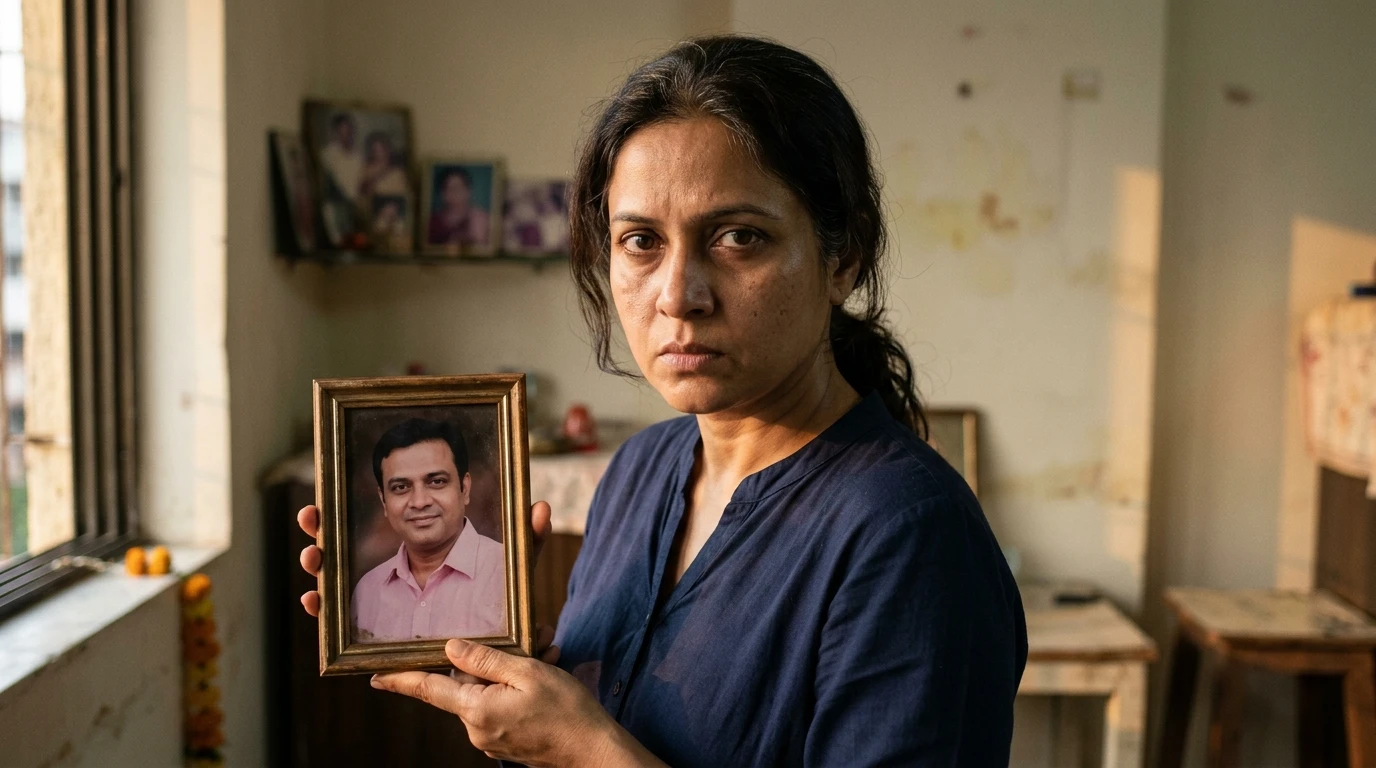
Sapna Mukherjee, now 45 and a sales manager at a technology firm in Mumbai’s Malad, has written to Prime Minister Narendra Modi asking the Indian government to back the family’s bid to sue Police Scotland and the Crown Office and Procurator Fiscal Service, as Sapna Mukherjee’s call for legal action documents. She wants compensation and a formal inquiry by the Ministry of External Affairs into how her husband came to be labelled a murder suspect in the first place.
Police Scotland said it does not comment on legal proceedings. The Crown Office, asked for its position, said it had nothing to add to a 2019 statement in which it said “Crown Counsel instructed that there should be no further proceedings against Sougat Mukherjee.” Sapna has questioned why it took four years to exonerate Sougat once a DNA match ruled him out. “My husband was an innocent man,” she told BBC Scotland News. “He committed no crime. He harmed no-one. He co-operated with authorities. He trusted the system. And the system killed him, slowly, painfully, and completely.” She put the same point to the Indian Express more plainly: “I really didn’t want to. But the repercussions of the case, the financial and mental toll on my family and children, have been so huge.”
The world needs to know that an innocent man’s life was completely and irreversibly destroyed, and that his family is still suffering the consequences today.
The BrahMos contract was announced the same week Sapna’s legal team started preparing its filings. Modi’s government is being asked to support the lawsuit even as it celebrates the third export customer for its flagship cruise missile. Sapna’s pursuit of accountability now runs through the courts and the diplomatic channels of two governments at the same time.
 moto g77 POWER Launches in India at Rs 23,999 With 7,000mAh Battery
 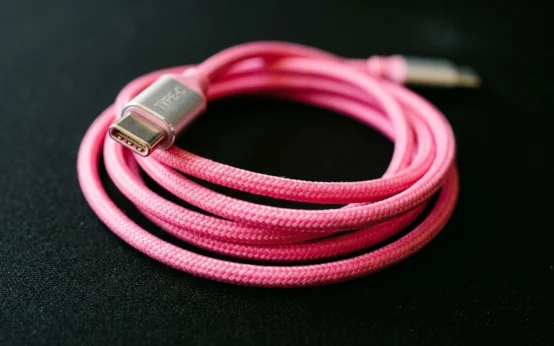 Beats Power Pink Woven Cables: Specs, Price, and Color Match Play
  Redmi Note 17 Series Confirmed for July 14 China Launch
  Meta’s Glasses Update Guards the Camera, Not the Bystander
  India’s Retail GCC Hub Now Outscales Five Peers Combined
  Dundee to Host First Scotland StreetCar Festival Alongside Eco Rally