
 Ishan Crawford
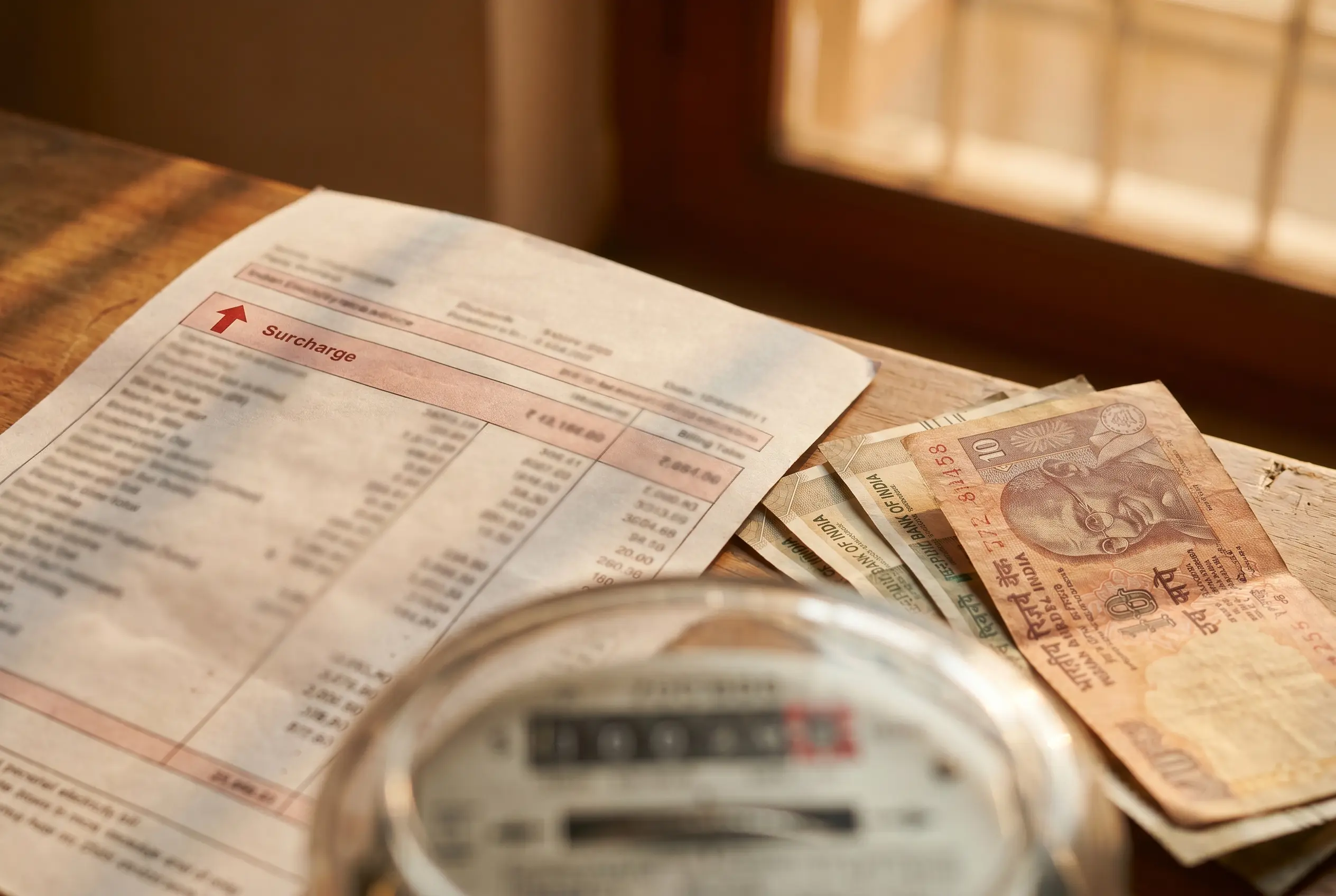
 Electricity bills across Uttar Pradesh will rise by 10% in the June billing cycle after the state power utility invoked a fuel surcharge for the first time under tariff rules written in 2025. The Uttar Pradesh Power Corporation Limited (UPPCL, the state’s electricity distribution holding company) confirmed the levy in a notification on Saturday, May 30, and it lands on every consumer category, from a one-room household to a steel plant, across roughly 37.3 million connections.
What reads as a single jump is the debut of an automatic mechanism that recalculates every month, which makes the June charge less a one-time decision than the first instalment of a system built to push fuel-cost swings straight onto household bills.
What the June Surcharge Adds to Your Bill
The charge has a name that explains its job. It is the Fuel and Power Purchase Adjustment Surcharge (FPPAS), a top-up that lets distribution companies recover the gap between the fuel and power-buying costs they were allowed to plan for and what they actually paid. For June, that gap translates into a flat addition to bills issued during the cycle.
UPPCL is aiming to claw back a specific sum. The numbers behind the levy are blunt.
- ₹1,610.57 crore is the amount UPPCL plans to recover through the June cycle.
- 37.3 million consumer connections carry the charge.
- 10% is the maximum monthly rate the rules allow, and it has been applied in full.
- All categories pay, with no exemption for domestic, commercial, agricultural or industrial users.
For a household whose energy charges run to about ₹3,000 in a billing cycle, the surcharge works out to roughly ₹300 extra, before taxes and fixed charges. The exact rupee figure scales with consumption, so the heavy-use summer months land the hardest hit.
The 2025 Rule That Made Fuel Risk Automatic
The surcharge did not appear out of nowhere. It is the product of a regulatory framework the Uttar Pradesh Electricity Regulatory Commission (UPERC, the state’s tariff watchdog) notified on March 26, 2025. The rulebook, formally the Multi-Year Tariff (MYT, a multi-season tariff-setting framework) Regulations of 2025, handed distribution companies a standing tool to recover fuel and power-purchase swings without filing a fresh tariff petition each time.
Pankaj Saxena, chief engineer of UPPCL’s Regulatory Affairs Unit, laid out the timeline in the utility’s own letter. The structure is what makes the charge durable rather than exceptional.
How the Three-Month Lag Works
Under the framework, any extra power-purchase and transmission cost a discom absorbs in a given month is billed to consumers three months later. The cost recorded in March 2026 therefore surfaces on June statements. The mechanism runs on a rolling basis, so each month’s procurement bill seeds a future surcharge, and the lag simply moves the pain forward on the calendar rather than removing it. You can read the framework on the UPERC tariff regulations portal.
Why It Applies to Every Category
Clause 16(4) of the MYT rules sets the calculation and the ceiling, and it draws no line between consumer types. Saxena said the March figure was worked out under that clause and would be added to bills issued in June across all categories. That universality is deliberate: the surcharge is framed as a cost-recovery pass-through, not a tariff revision, so it sidesteps the category-by-category debate a normal tariff order would trigger.
Why March 2026 Power Cost So Much
The trigger was a procurement squeeze. UPPCL was cleared to buy power at an average of ₹4.94 per unit, but in March it ended up paying private generators closer to ₹5.86 per unit, a gap of nearly one rupee on every unit it bought. Multiplied across the state’s demand, that difference is the ₹1,610-crore hole now being passed on.
| Metric | Regulator-approved | What UPPCL paid (March 2026) |
|---|---|---|
| Average power-purchase rate | ₹4.94 per unit | ₹5.86 per unit |
| Implied fuel surcharge | 0% | 20.61% |
| Rate applied to June bills | Not applicable | 10% (regulatory cap) |
Here is the catch buried in the math. The full calculated adjustment for March came to 20.61%, more than double what consumers will see, but the rulebook caps any single month’s recovery at the lower figure. The balance does not disappear. UPPCL’s order signals the unrecovered portion will be rolled into later billing cycles, which is why the elevated bills could stretch well into July.
The Surplus Consumers Say They’re Owed
Consumer advocates argue the timing exposes a deeper dispute. The Uttar Pradesh Rajya Vidyut Upbhokta Parishad, the state’s statutory consumer body, has been pressing a claim that distribution companies are sitting on a ₹33,122 crore surplus owed back to consumers, and it had proposed a 45% cut in tariffs on that basis before the surcharge landed.
The Parishad’s chairman, Avadhesh Kumar Verma, who also sits on the State Advisory Committee, accused the utility of bundling old dues into a fresh fuel charge. The consumer body claims nearly ₹1,400 crore in financial dues from the previous two years has been folded into the March calculation, and it has asked UPERC to halt recoveries and order a procurement audit.
This is nothing but a backdoor strategy to pre-empt our proposal and shift the burden onto consumers.
That was Verma’s reaction, delivered as the Parishad pushes the regulator to investigate why UPPCL signed high-rate contracts with private power producers instead of drawing down cheaper supply.
Who Pays, and the Politics Already Building
The surcharge arrives in the worst possible season for it. Households are running air conditioners through a heatwave while contending with inflation and patchy supply, and the bill increase hits exactly when consumption peaks.
The political response was immediate. Samajwadi Party Member of Parliament Awadhesh Prasad tied the surcharge to the state’s smart-meter rollout and warned the combination could push bills far higher than the headline figure suggests.
- Domestic users face the steepest proportional pain because summer cooling drives up the units the surcharge is applied to.
- Commercial and industrial consumers absorb the same rate on far larger loads, feeding into operating costs.
- Agricultural connections are not carved out, despite the sector’s political sensitivity.
- Smart-meter households sit at the centre of a separate billing-accuracy fight that the surcharge has now amplified.
“The smart meter installed by the government will further increase the bill, not just by 10% but up to 100%. These smart meters must be removed before it ruins everything,” Prasad said, in remarks carried by the ANI wire service. Consumers can track their category and tariff on the UPPCL consumer services portal.
What June’s Bill Signals for the Summer
The single most important number in the order is not the rate that shows up in June. It is the 20.61% that was calculated and then capped, because that gap is now scheduled to resurface. With procurement still running above the approved rate and the three-month lag feeding April and May costs into the pipeline, the surcharge is set up to recur rather than reset.
If fuel and power-purchase costs ease and the carried-forward balance clears quickly, the elevated bills fade after a cycle or two. If procurement stays expensive and the rollover keeps refilling, UP consumers are looking at a surcharge that returns month after month, with the surplus dispute unresolved in the background.
Frequently Asked Questions
Why are UP electricity bills increasing in June 2026?
Bills are rising because UPPCL has applied a 10% Fuel and Power Purchase Adjustment Surcharge to recover roughly ₹1,610.57 crore in higher fuel and power-purchase costs it absorbed in March 2026. The charge appears on statements issued during the June billing cycle.
What is the Fuel and Power Purchase Adjustment Surcharge (FPPAS)?
FPPAS is a top-up charge that lets UP distribution companies recover the difference between the power-buying cost they were allowed to plan for and what they actually paid. It was created under the UPERC Multi-Year Tariff Regulations notified on March 26, 2025, and recovers each month’s gap three months later.
How much extra will I pay on my June electricity bill?
The surcharge adds 10% to the applicable charges, so a consumer whose bill runs to about ₹3,000 would pay roughly ₹300 more, before taxes and fixed charges. The rupee amount rises with consumption, so high summer usage means a larger addition.
Will the surcharge continue after June?
It can. The full March adjustment was calculated at 20.61% but capped at the maximum monthly rate, and UPPCL has indicated the unrecovered balance will be rolled into later cycles. Because the mechanism recalculates monthly, similar surcharges can reappear through the summer if procurement costs stay high.
Which consumers does the surcharge apply to?
All of them. The levy covers every category, including domestic, commercial, agricultural and industrial connections, with no exemptions, affecting an estimated 37.3 million consumer connections across the state.
Why was the surcharge capped when the calculation was higher?
Clause 16(4) of the MYT Regulations limits how much can be recovered in a single month, which is why the 20.61% calculated figure was trimmed to the regulatory ceiling for June. The capped portion is not waived; it is carried forward to be billed in subsequent cycles.
 Illinois 3D Silicon Stack Could Stretch Moore’s Law for Years
  Tata Sons FY27 Roadmap Stakes ₹29,000 Crore on Deep Tech
  Oil Sheds Almost 10% in a Week on a Ceasefire Nobody Signed
  Hero’s E85 Splendor Launches Before the Fuel Exists
  India Orders 30-Day LPG Reserve as Hormuz Exposes Storage Gap
  India’s Rupee Hits Record Low as AI Boom Leaves It Behind